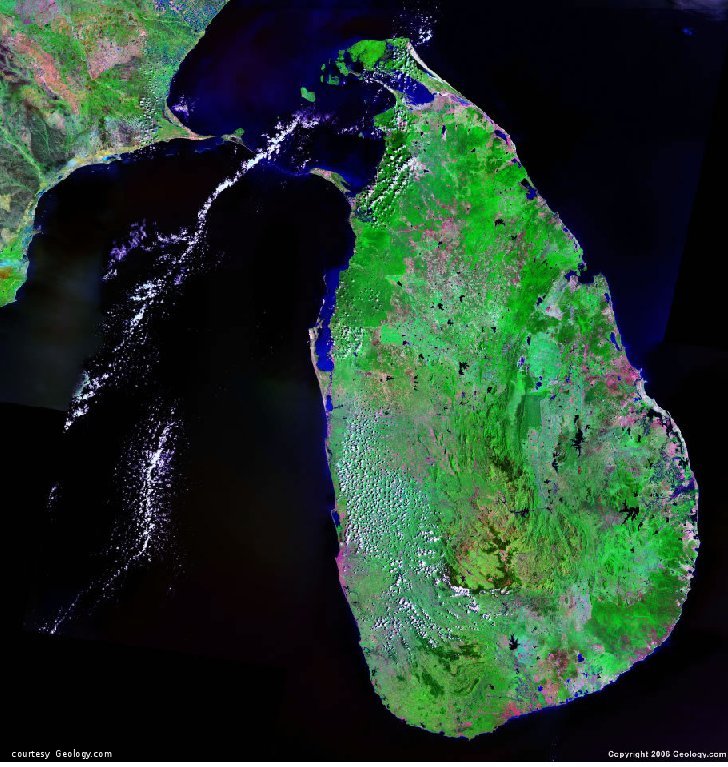
Ethno-botany, an adjunct to Place-Names studies
වෙසෙස් ලිපි
Place-names Maps
Place-names Main page
සිංහල තෙක්න වදන්
සෞඛ්යය, ව්යායාම, ආහාර
| Botanical Names, (English) | Sinhala | Sanskrit (Pali) | Tamil | Toponyms, Notes, Links |
| Abelmoschus angulosus, A.moschatus (Muskdana, Ambrette,Musky-seeded hibiscus, Okra, Ornamental Okra) | Kapukinissa | latakasturika- | varttilai kasturi- | The seeds of this Okra like plant are scented, and the oil is
used in perfumes. It is used in Asian-Indian medicine as being effective against "Pheglm ('sem" in Sri Lanka), and "Air"(Vaatha)., and for aphrodisiac, opthalmic, cardiotonic, digestiveand other applications in herbal medicine, snake-bite therapy etc. Images |
| Abelmoschus esculentus (Okra, ladies Fingers, Bhindi) | Bandakka The sinhala name is believed to have arisen from "Bhindhi-okra &rightaroow; Bhindakka → Bandakka " Bhindi (Hindi, Nepali, Marathi, Urdu etc), or variants like Bhendi (Orya), Bhindo(Gujarati), are common in Indian languages. Originally, this was used more as a constituient of Ayurvedic medications. It became more fashionable as a vegetable probabaly with Western invasions, and the name bhindi-Okra may have been brought to Portuguese Ceylon from the Portuguese-Indian cooks who served Western masters. The name Okra is used in Romance languages for this vegetable. Gumbo is the name of a dish containing Okra, shelfish, ham etc, popular in Latin Countries and southern USA. The Word Bhindi may have come to India with Moghals and moors, as early arabic names were close to it. |
pitali, asra-patrka, catuspundra, karaparna and many other names. Names begining with God Rama-, e.g., Ram-thora in Nepali and Marathi, also exist, as the plant was treated as a medicinal herb. | vendai (வெண்டை), Vendaikkaay The tamil name vendai, a corruption of Bhindi is common in South India. Note that in Tamil the 'B' sound is replaced vy the 'V' sound. The form Vendaikkay or Vendakkai, probably arising from the Sinhala Bandakka, is more common in Sri Lankan Tamil. |
Images and write up Claims of traditional (herbal) medicine ETC. | Abrus melanospermus, Abrus pulchellus | Ela Olinda | - | - | A slender perennial twiner, glabrous with long internodes, stems slender, cylindrical,
branched with smooth wrinkled brown bark; leaves alternate with stipules.
"the leaves are by far the sweetest part of the plant, and from them a tolerable extract may be made, but in most parts of India, where true liquorice is obtainable in any quantity as an article of commerce, it would be much more expensive to collect them than to use liquorice. The roots of Taverniera nummularia, and Alysicarpus longifolius, are sweet like liquorice, and are called liquorice in India."(Dymcock, Warden, Hooper) - |
| Abrus precatorius | Olinda | raktika kakachinchi | kunri,Adisamiyai | Seeds are most poisonous- Images |
| Abutilon indicum (indian mallow) | Beheth Anoda, Wal Anoda | Athibala,- | thuththi | The plant may grow to two meters, with golden yellow flowers. The powdered parts of the leaf are eaten with honey in alternative medicine. Herbal medicine. For example, its leaves are used for treating skin infections. |
| Acacia Arabica (babul tree, Indian gum tree, Gondh) Fabaceae plant family |
Baabulu, gam | babbula, Vabbula, Kimshuka or Palasa or flame of the forest. |
Karuval, Kinthirikkam (Malayalam) | A species of Acacia all of which yield a gum resin which is used both medicinally and for various economic purposes. Acacia gum has astringent, styptic, and tonic properties, and of these varieties Acacia gum and Acacia Catechu are much used in medicine. It is added to pharmacy preparations as a filler or base. Images and write up - |
| Acacia caesia | Hingurupatta vel, Hingurupaththa vael | Nikunjika | indu, intu, vellintu, inkakkai | - |
| Acacia catechu (Wattle) See also Dichrostachys cinerea | katu andara, Kaippu (?) see also Prosopis cinerea, known as "vanni-andara". |
- | karunkali, karangalli | A large shrub with thornes used as a hedge plant.
Flowers in axillary. Seeds in thin pods.
-Woody branches are used as toothbrushes.
The pod powder is a
substitute for soap.The leaf is used as a vegetable. The
powdered bark is also a substitute-soap and its decoction
is used as a lice killers.
see Soloman eraju et al., current science, vol. 91, NO. 7, 10 OCTOBER 2006 It has been claimed that Scottish scientists have found the closely related shrub Dichrostachys cinerea to be a valuable source of activated charcoal which is much better in quality (finer grain size) than the activated charcoal from oconut and much cheaper as well. Strathclyde University scientists end marabu weed nightmare However, its use as a possible charcoal source seems to have been known in Cuba, And in 2011 charcoal exports reached a value of 6 million USD: Charcoal Making in Cuba |
| Acacia chundra, Acasia sundra | Sinhala: Kihiri, Rat Kihiriya | Sanskrit:- | Tamil: karangali | A small tree with a dark brown bark and purple young shoots. |
| Acacia concinna, Acacia hooperiana, Acacia sinuata (Soap-pod)
Family: Fabaceae, or mimosaceae (Touch-me-not family) Image and write up |
Sinhala name: Seenidda | Bahuphenarasa, Bhuriphena,Charmakansa, Charmakasa, Phenila Image and write up |
cikkay, Shikakai |
The tree is food for the larvae of the butterfly Pantoporia hordonia. For an effective hair tonic, a decoction of Seenidda (acacia concinna) makes an excellent hair wash. The powdered pods can be used as natural shampoo. Shikakai has a natural low pH and very mild and ideal to wash hair.Lunuwila can be used as a substitute. Both herbs promote the growth of hair, kill lice and do away with dandruff.- |
| Acacia cornigera(Cockspur) | kukul-katu andara A forbidding , low thorny shrub found in the Ambalanthota dryzone area at one time. We are not very certain of this identification of "kukul katu" andara as Acacia cornigera. If you have informatyion, please write to chandre.dharma@yahoo.ca |
- | - | Sometimes called the Bullhorn or Cow Thorn, this plant has a symbiotic relationship with an aggressive and painful species of ant (Pseudomyrmex ferruginea). The ants live in its thorns and protect the tree from encroaching plants, trying to grow near its trunk or leaves high in the canopy. The ants also emerge from the thorns to attack other insects, humans and animals that come in contact with the tree.- |
| Acacia farnesiana | Seenidda | - | velvel | - |
| Acacia ferruginea | Ela Kihiriya | - | See underRath Kihitiya | - |
| Acacia leucophloea | Katu Keena, katu kihiri | - | velvelam, karuvel, | The 'katu' in sinhala may have the meaning of thorn or forest-brush, while keena also means sharp. The word "veal" in tamil means "thorn" and karuveal virtually means "dark thorns"- |
| Acacia nilotica (gum arabic tree) | Katu kihiri | babbula,Varvrurha | tiritapicam , kathira maram | The gum arabic was introduced to S. Asia by Arabs in medieval times. |
| Acacia tomentosa | Ali katu | - | Aani mulla | - |
| Acalypha indica | Kuppamenia, Kuppamenia The name is probably from the Malayalam kuppameni |
haritamanjari | kuppaimeni | An annual herb-leaves simple, alternate, 3.7~cm long, The same name is confusingly used for Nepeta cateria or Catnip in the local languages of Sri lanka. Acalypha is used against asthma, piles, rheumatoid arthritis etc. Image |
| Acanthus ilicifolius holly-leaved acanthus, holly mangrove | ikiri | Harikusa (Sanskrit) | Kaludaimulli Images and description |
a Mangrove |
| Acetosa agrestis Raf., Rumex Acetosa, Rumex fontanopaludosus Sorrel | Sinhala:? Not known in Sri Lanka. Found in tem,perate and medeterranian climates | Sanskrit ? - | Tamil ? - |
See Indian sorrel (Oxalis corniculata) which is found in warmer climates |
| Achillea millefolium
commn Yarrow, millefeulle, thousendleaf Distantgly related to daisy and sunflower. Yarrow is a very adaptive plant generally found at elevations of 1200-3350 m but can also be found as low as sea level although virtually unknown in Sri Lanka. Pictures and short descripton |
Sinhala: raajamaari ? | Sanskrit- pushpaskanda ? | Tamil - Achchiliya |
The plant (Yarrow species) is found in the South Asian region in northern Jammu & Kashmir, Himachal Pradesh, Uttarakhand in an altitude range of 1050-3600 m. It has many medicinal properties including use in reducing estrogen levels in controlling endometriosis |
| Aconitum heterophyllum Indian Atree, Monk's hood, Himalayan Monkhood Pictures and Bief description This medicinal plant is not normally found in Sri Lanka, although it may be found in herbaria. |
Sinhala name: No sinhala name is used, mostly one of the sanskrit names e.g., Athivisha is used. | Sanskrit: Ativish, Bangura (Pankura), Sitashringi are some of the many names used. The herb is a threatened plant even in its north Indian Habitats. | Tamil name: The most common Tamil name, Atividayam is derived from the Sanskrit name. Other names, e.g., Akuculapu, are also used. | There are also varieties with greenish flowers as well as bluish flowers. The dried root of Indian Atees is the part which is believed to have analgesic and anti-inflammatory properties. It is also claimed to be antipyretic and have astringent properties. Pharmocology |
| Acorus calamus (Sweet Flal, Calamus) | Wadakaha, Vad(h)akaha - වදකභ Traditionally used against depression, mental disorders and general debility. Acorus calamus is also combined with Polygala root to help maintain mental and intellectual health of the elderly and dementia or memory loss (cognitive disorders. Phytotherapy Research 17, 1-18. Howes, M.R., Houghton, P.J., 2003. Plants used in Chinese and Indian traditional medicine for improvement of memory and cognitive function. Pharmacology Biochemistry and Behavior, vol. 75, 513-527). |
Vacha,Sadgrantha Medicinal plant; An aromatic, marshy herb with a stout creeping and branching rootstock- In Sanskrit, vaca means "speaking". It is claimed to stimulate expression and intelligence. The Ayurvedic Sarasvata choorna, which contains vaca is commonly used in epilepsy, hysteria etc. Maharishi Charaka , the ancient Indian medical writer, had ascribed exceptional properties to it. |
vacampu, vasambu | During the 1955 total solar eclipse visible in Sri Lanka
the astrologers even claimed that drinking a
concoction of "Vadhakaha" would change dark complexioned skin to fair
complexion.
Hence the "Baila" song "Bivva ne~da vadakaha sudiya~".
Image Abe Sebaluvan (our soldiers); Listen to 2010 election song written to the tune of "vadhakaha sudiya" |
| Acronychia pedunculata | Ankenda | Gandha rusa- | - | Medicinal: Fractures,Ulcers,Purgatives,Scabies-
Acrovestine, a cytotoxic principle has been found in the stem and roots. Ayurvedic oils.Pyranocoumerins have been isolated. Popular as a Bonsai ornamental plant. |
| Actaea racemosa, Cimicifuga racemosa. Black cohosh, black snakeroot Family Name: Ranunculaceae Imager and write up |
? | - | - | Used mainly as a herbal source for medications used to relieve hot flashes during menopause ( a concoction of the root is also consumed). It was a component of 19th century `Miss Pinkham's vegetable compound for female complaints etc'. Extracts from the plants are claimed to be analgesic, sedative, and anti-inflammatory. Not native to Sri Lanka. native to USA. |
| Adansonia digitata Baobab tree, Bottle tree | Aliya Gaha- | - | - | A very large tree with a smooth, pinkish-grey bark;
leaves alternate, palmate compound, deciduous. The Baobab trees found in Mannar (Mannarama) are a land mark. The tree is endemic to Madagascar and neighbouring Africa. The leaves are eaten as a vegetable. The timber stores water to met the drought. |
| Adenanthera aglaosperma Alston | Masmora ? | - | - | classification Reference: Adenanthera aglaosperma Alston [Ann. Roy. Bot. Gard. (Peradeniya) 11:204. 1929] (= Adenanthera bicolor Moon ex Thwaites) - |
| Adenanthera pavonina, Adenanthera microsperma Teijsm (Red beadtree) | Madatiya, Madhatiya, මදටිය | kusandana | tilam, manjadi | Large Tree. The deep red seeds are similar to "Olinda" seeds. The "madetiya" seed
was used in traditional medicine as a weight measure known as manchaadi or madeta, as the
seeds are rather regular in size, and do not dry up due to the
thick shell. In England Barley seeds were used as a weight, with 480 grains
being one ounce. According to H. W. Codrington (Ceylon coins and currency, 1924) a "madeta"
or manchaadi was roughly 3.3-3.4 English grains, while a Kalanda was 20 "madeta" or "manchadis". The Oil, leaves, bark, seed etc. are used in traditional herbal treatments. This tree is also sometimes known as "Red Sandlewood tree", However, red sandlewood is Pterocarpus santalinus (see write up under the letter P). Image |
| Adhatoda vasica, Adhatoda zeylanica, Justicia adhatoda (Malabarnut tree, Pavatta) | Vang Aepala, Agaladara, Agalaadaara, Adathoda The older sinhala name "Vang Aepala" වං අᒡපල is now rarely used. Agalaadaara is more frequent. The form Aadathoda, derived from Tamil is also frequently used. B. Clough's 19th century dictionary, p 680 cites Vang Aepala as well as Agala Aadara but not Aadathoda. The names "Sinhaasay" and "Sinhamukhi", and "Sinha-parni" have also been used in Sinhala medical texts as the flowers of this plant are compared to the face of a lion. |
vrasa, Vasaka | Atatotai, Adatodai, Adadodai (Malayalam- Adalodakam) |
This is a dense shrub with a yellowish bark; grows to a height of 1.2 to 2.4
meters with many long ascending branches. The elongated lanceolate leaves are
dark green and paler beneath.The white (also pinkish) flowers are borne in short dense
axillary spikes. The fruits are prune-shaped. A quinazoline alkaloid known as l-vascine (i.e., 1,2,3,9-tetrahydropyrrolo[2,1-b]quinazolin-3-ol), and other alkaloids (l-vasicinone., deoxyvasicine, maiontone, some minor alkaloids viz. Vasicol, adhatodinine and vasicinolare) are found in the leaves and other parts of the plant. The phramocologically activity of l-vascine in dilating the bronchial tubes is well known. Important medicinal herb, used for relief of chest colds, bronchial asthma etc. An infusion of Adathoda leaves, ginger, and honey, or decoctions of Agalaadaara Katuvael batu (Solanum Jacquini), Elabatu (Solanum Indica), ginger and Tipplili (piper niger) are also used, as home remedies, in Sri Lanka. The product is sold in syrup form in south Asia. Large doses are claimed to abort pregnancies. See |
| Adiantum capillus-veneris, (black maidenhair fern) | Vaelvaenna, Walwenna, Walawenna | Parna- | - | Common houseplant in the west. Not native to Sri Lanka. Used as a medicinal herb (for cough) but now ferns are recognized as possibly carcinogenic and toxic. Used externally against snakebite. |
| Adina cordifolia | Kolon | - | mancal katampu, kadambai | See also Xanthochymus pictorius, Xanthocymus pictorius regarding "Kolon gaha" and false etymologies based on regarding the place-name "Colombo". - |
| Aechmea fasciata (bromeliad, urn plant, fancy-pineapple, pineapple fern) |
Sinhala: Mal Annasi (?) Bromeliads are a generic name for a whole group of plants. Tillandsia sprengeliana is an example of a well-known bromeliad. A very popular Pineapple-like plant is Aechmea fasciata. Urban ornamentals have attracted the attention of mostquito contols in Sri Lanka as their leaf bases may collect water, becoming breeding grounds for mosquitoes. The plants are not native, and the name "mal annasi" may be a recent invention by local horticulturalists. There may be other such "in-trade names". |
Sanskrit: - | Tamil: - |
The ability of about half the species to live epiphytically -i.e.,
on top of tree branches, c.f., Orchids - allows them to obtain more sunlight.
Here we note that "orchids" have been known in literary sinhalese as
"Uda-vaediya" where the word "uda" means "higher level"
(cf. sanskrit: udisita) and "vaediaa" means "that which grows"
(cf Sanskrit: Vrdha)in the given context. However,
the word "orchid" has come into current use in Sinhalese.
The pineapple is the most common bromeliad. It is unusual as it is terrestrial and produces the only known edible bromeliad fruit of over 3000 species. Medicinal uses claimed for Bromeldiads Aechmea fasciata , images and write up for a popular Bromeliad |
| Aegiceras Corriculatum | Heen Kadol | - | Vithilikanna | related to mangroves |
| Aegle marmelos
(Beli fruit)
Images and write up
A large tree with fruit-shell containing a yellow sweet pulp. Flowers and tender leaves are used to make herbal tea. Fruit helps digestion. Beli is used in the Dashamoola Arishtaya. |
Beli බෙලි |
ShreePhal,Adhararuha, Sivadrumah, Tripatre
In India the Beli tree is deicated to Shiva and considered to be sacred. |
kuvilam, Vilvam |
The place name "Beligala" is mentioned in the Kadaimpotha
acoording to: Journal of the Ceylon branch of the Royal Asiatic Soc., Volume 8, Issues 26-29
"The principality of Beligala appears in the Kadaimpoth, or "old boundary books", among the
districts of the Maaya division". Beligala was included in the 13
great temples where Bodhi treas were planted by Chulabhaya. When the Tooth relic was
brought from Kothmale by Wijayabahu III (13th century), after concealment during
the time of the Magha-Kalinga, the relic went to dambadeniya (Jambudroni) and then to Beligala.
The famous Bhuvaneka Bahu Pirivena probabaly existed here. The text
Rajaratnaakaraya reports useful historical details which complement the
sparse discussion in the Plai chronicles. |
| Aerva lanata | Polpala, pol-kuduplala, pahanabaya, pusswenna | - | cirupilai, thengapookeerai | Medicinal herb, diuretic taken as a tisane.
Annual herb, 60-75 cm tall, often woody at base ; stems green, erect or
prostrate, with numerous, slender, cylindrical, more or less cottony, hairy
branches leaves simple, alternate, 1.2-2.5 cm long, 0.9-2.5 cm broad, oval or spathulate-oval-
effects of polpala on the structure and function of urinary tract of rats, by HMDR> Herath et al, Cey. J. med. Sci., 2005. |
| Agave vera-cruz (Agave, Century plant)) | Pathok-hana- | Kantala- | Alagai- | - |
| Ageratum conyzoides(Billygoat-weed, Chick weed, Goatweed, Whiteweed;) | Hulantala- | - | appakkoti | Common weed, some times used in herbal medicine. But now it is known to be dangerous to the liver and could be toxic in other ways. |
| Ageratina Adenophora (Croton weed) and Ageratina riparia Mist flower Asteraceae family,Wiki |
- | - | Larvicidal activity reported in Tamil Nadu studies. | These are weed species that have invaded Sri Lanka, esp. Knuckles etc,. History and distribution of .... Article by Lalith Gunasekera |
| Aglaia roxburghiana | Puwangu, Puvangu | - | cokkalai, kannikkompu | Place name: Puvangudiva, puvangudoova, mentioned in the
Pali chronicles.; Morphology: A moderate-sized or large tree (mahogany family) with a smooth, dull grayish orange bark and young parts covered with minute ferruginous scales; leaves compound, alternate, exstipulate, pinnate, rachis ~5 cm long. An anti-inflammatory. see also Myristica horsfieldia ,. Many Aglaia species are similar and Aglaia odorata (Chinese Rice Flower) is sometimes said to be "puvangu". The tree known as "Mal-Karanda" (Millettia pinnata) may also have been the ancient "Puvangu" . |
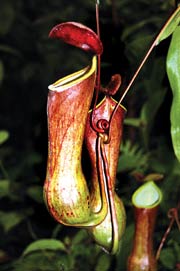
| Agrostistachys Indica , Agrostistachys hookeri Shrub or tree. The leaves were used for thatching huts. However, the treee has become nearly extinct. It is in the IUCN red list 2006. Agrostistachin, a cytotoxic constituent of this plant has been characterized as a rare diterpinoid of the casbane class. Anti-tumour agents, ellagic acid derivatives etc, are being investigated from the extracts of this plant. Descriptions Three leaf types of the Beru tree are said to be found in Sri Lanka. The name Agrostistachys ciricacea " has been listed in an Asia-Pacific database but we don't know what it is - Images and botany write up |
Beru The name is probabaly pronounced with a long "e", බේරැ |
- | Mancharei Although the village of beruwala has been used by Arab traders, there has been no attempt to generate an Arabic or Tamilized place name here. |
Toponym: There are two possibilities for the origin of the name: (1)The name of the small fishing village on the south western coast known as "Beruwala" බේරුවල is likely to mean "the thicket of Beru trees, viz., Beru - vala", where "vala" means "vanaya", (and not pit) in Sinhalese. Henry Yule (Scottish historian and Geographer of the 19th century) used the name Perivils for the port of Beruwela. The name "Perivil" may itself have been a europeanization of the sinhala name "Beru-vala", as the change of B ↔ P, as well as "vil &harr: vala" are common. (2) A folklore etymology claims that the name comes from "Be -ruvala", i.e., "drop the sail", where "Be" is said to represent baanava, and ruvala is sail. If this etymology is to be consistent, the name should be "Baeruvala"- බෑරුවල. Further more, sails are lowered long before the boat reaches land, and no such name is found in any other fishing harbour in Sri Lanka. Hence we strongly discount this etymology. History According to Prof. W. I. Suraweera (Sunday Observer, August 2nd, 1998), this fishing village has been one of the earliest Arab-trader settlements in Sri Lanka. Thus, From John de Marignolli's account (14th century) it may be inferred that Beruwala had accepted Moor settlers. He states that the administrator at Perivills was Coya Jhan, apparently the name of a Moor chief. From the Sandesa poems it can be ascertained that Beruwala was a Moor trading centre in the fifteenth century with many mansions and large shops. The Beruwala mosque and the village were destroyed by the Portuguese. Today the area has a population of Muslims, Sinhalese Catholics and Buddhists. Article on Beruwala in the Island Newspaper June 2011 Beru-kaetiya is another place names associated with Beru. "Kaetiya" is a standard sinhala word meaning "agglomeration" or "golla". |
| Grewia Asiatica, Grewia hainesiana,
Grewia obtecta, Grewia subinaequalis phalsa or falsa Pictures and short description |
Sinhala: parushaaka | Sanskrit: Parushaka, Mridupha
Research: Molecules. 2013 Mar; 18(3): 2663–2682. doi: 10.3390/molecules18032663 Grewia asiatica L., a Food Plant with Multiple Uses Muhammad Zia-Ul-Haq,1 Milan S. Stanković,2 Komal Rizwan,3 and Vincenzo De Feo |
Tamil: Unnu | It is said that phalsa, a small shrub with berries found in the Varansi region in India spread along the silk route as the berries were favoured by Buddhist monnks for their Ayurvedic properties for relieving the stomach, and as it froms a pleasent drink or sherbert. It is neglected in Sri Lanka, |
| Alangium lamarkii, Alangium lamarkii, Grewia Damine- | Sinhala: Ruk-Anguna, Damaniya (?) | Sanskrit: Ankota. Dhalakura | Tamil:chadachchi | A small tree, used in indegeneous medicine for skin diseases, dysentry fever etc. The leaves have been shown to reduce inflammation. Image and writeup |
| Alangium salviifolium (sage-leaf Alangium, Sage Dogwood) | Ruk-Anguna- | Amkol | alincil,sainkolam | tall thorny tree, - In Ayurveda the roots and the fruits are used for rheumatism, and hemorrhoid.Externally used for the treatment of animal bites |
| Alastonia scholaris- C.f., Alstonia scholaris (L.). Echites scholaris L. Devil tree. Milkwood pine Images and write up |
Ruk Attana - | Sapta-parni | Elilaipalai, Mukam palei, Palai, Palegaruda- | Place names: Aettampana (Adampan)., Kok-aththana-kulama etc., the name in these cases probably refers to Datura species. Rukattana is a large tree, with a white exudate and whorls of simple narrow oblong leaves. The Sanskrit name may be associated with the presence of whorls of leaves. |
| Albizia amara (Oil cake tree)- | Iha - | Krishnasrirsh | Vunja- | Images and write up - |
| Albizia lebbeck | kumba-maara, Sooriya Mara Pictures and Description |
Siris | Tamil: Siridam | Flowers are Mimosa-like, rounded clusters near stem tips, 5-6 cm across, cream or yellowish-white. The fruit is flat and pod-like, as in the flamboyant tree (Delonix regia "Maara" in sinhala) and almost a foot long. |
| Albizia odoratissima | Sooriya Mara, Albezia, Girizeeniya, Girisidia | sirisa | karuvagai | Morphology:A very large tree with a thick, grey bark, spreading branches and
pubescent young parts;leaves alternate, bipinnate compound, large,
10-15 cm long, pubescent with a single large sessile gland near the base
and generally one between bases of termi. This tree has gained significance in Dendro bio-energy applications as it laps up the sun (sooriya) and grows quickly |
| Allamanda cathartica (Golden trumpet) | Val Ruk Attana - | Chashakapushpi - | - | Ornamental plant, but the milky latex is poisonous. Although claimed to be from Brazil, it is known in Sanskrit. Image - |
| Allium ascalonicum (red onions, shallots) Liliaceae family. |
Rathuloonu- | Lasuna, rasona - | Vellaippuntu- | - |
| Allium sativum (Garlic) | Suduloonu - | - | puntu, vellulli | Garlic is a valuable component in good cooking.
Claims have been made that consumption of garlic reduces stomach, intestinal and colo-rectal cancers, lowers blood pressure, lowers cholesterol etc., esp by proponents of alternative medicine. The picture is not unequivocal although there seems to be some evidence in favour of these claims. Some scientific studies on garlic |
| Allophylus cobbe, A. zeylanicus (Tit berry) | Kobbe, kobbae කොබෙයි ගභ - | Triputa- | Amalai- | Native to Sri Lanka. The bark is used, peeled down towards the roots, to make bandages in traditional orthopaedic treatments. Images and write up. |
| Alocasia indica, ( Taro) | Sinhala: Habarala - A cultivar of this, Xanthosoma sagittifolium oso known as Alocasia talihan Elmer ex Merr called "kiri-habarala" is cooked into a curry. It is important to correctly identify the "habarala" as many varieties are toxic. | Sanskrit: - it contains may sapotoxin and calcium oxalate which can induce neurological and gastrointestinal disorder after ingestion of most parts of the plant. However, the variety Xanthosoma sagittifoliumhas probabaly least risk. Tha plant Alocasia Macrorrhizos is much more risky. See entry under its name. |
- | Place names Habarana, Habaraduwa, Habarakada, Haburu gala,
Sabaragamuwa are well known The name "habarala" is used loosely in sinhala for Colacasia and Xanthosoma species as well. Habarala is etymologically "Haburu ala". The name "Haburu" tends to be used for "Gahala" interchangeably. A robust herb with bright green, large, triangular-sagittate, slightly repand leaves with strongly marked, whitish midrib, strong, pale secondary nerves. Alocasia plants differ from Colocasia by having the leaf stalk (petiole) join the leaf blade nearer the basal notch. In Colocasia, the petiole is attached closer to the center of the blade. Some varieties of gahala are edible if boiled sufficiently to get rid of hydrogencyanide which is generated from the Cyanogenic Gulocside contained in these tubers. Ginger contains linamarase-like compounds capable of releasing hydrocyanic acid from the glucoside (e.g., see: Kodagoda N, Marcus V, Ambalavaner S. Some observations on the liberation of hydrogen cyanide from manioc. Proceedings of the Annual Sessions of the Sri Lanka Association for the Advancement of Science 1973; 1: 38.). Hence sometimes it us recommended to avoid Ginger with Manioc, Gahala, Habarala, Hondala and other tubers which contain glucosides associated with poisonous acids. On the other hand, if ginger helps to release the cynaide, it is best to cook it with giner and let the cynaide escape during cooking. In Kerala people seem to do just that. - |
| Alocasia cucullata (Chinese Taro, Buddha hand) | Panu-habarala - | - | - | "Leaves heart-shaped ; In Sri lanka used medicinally and as an ornamental plant. Image |
| Alocasia macrorrhizos (giant taro, elephant-ear taro, Variegated Upright Elephant Ear) | Nai Habarala, Habarala, Ali habarala - | Hastikarni - | Parum sembu - | The leaves can grow to three meters and
is said to be the largest known undivided leaf.-large handsome variegated
leaves : used only in native medicine.
Images Images and notes Alocasia macrorrhiza, Giant Taro, Giant Elephant Ear, Upright Elephant Ear, Pai Alocasia alba is the smaller, common species in Sri Lanka. |
| Alocasia sp. (Chinese Taro, Buddha hand) | Mapil-habarala - | - | - | A medicinal species, distinct by a spotted leaf-stalk, the vernacular name is said to be derived from the supposed resemblance of the latter to the "Mapila" snake (cat snake Boiga ceylonensis, or Boiga barnesii ). Maspil habarala image |
| Aloe species- | Vel Komarika Vael Komarika kirikawelu |
- | - | (see also Clough's dictionary) A perennial herb with a very short, thick, cylindrical, simple, woody stem sending out at the base numerous stolons; roots fibrous and fleshy; leaves not very- numerous, sessile, densely crowded on the short stem with wide, dilated bases, spreading below. The most commonly used preparation from this herb is the aloe gel, a thick viscid liquid found in the interior of the leaves. The leaves are used in the treatment of burns etc. See Komarika |
| Aloe vera - littiralis | Komarica, Komarika | - | - | Pulp of thick leaf has medicinal applications. See Aloe Vera Images and claims of use in traditional medicine |
| Alpinia calcarata | Heen Araththa- | - | - | Medicinal herb used in Sinhala medicine. Seee Arambawela et al., Journal of Ethnopharmacology Volume 95, Issues 2-3, December 2004, Pages 311-316 |
| Alpinia galangaThai Ginger The names galanga, galangal are believed have come from Chinese, through Arabic "kulanjan". |
Sinhala: Maha Araththa, Arratta, Gandhanakuli (Clough P153), Kaluwala (p114 of Clough), siyam kaha. | Sanskrit: DhooMala Pictures and Description. There are several other types of Galanga: Kaul araththa (black Galanga), Hinaraththa (lesser Glanaga) |
Tamil: akkulati, anaivacampu, arattai,perarattai | Tuberous medicinal plant related to Turmeric, mentioned in
the books of the medieval Herbalist St. Hildegarde de Bingen “Les cures selon Hildegarde de Bingen”,Epeautre.net Used in Thai cooking. |
| Alstonia macrophylla | Havari Nuga | - | - | Similar to Ruk Atana (see A. Scholaris) |
| Alstonia scholaris, c.f., Alastonia S. (milkwood pine, Indian Devil tree) | Ruk Attana | saptaparna | elilaippalai | Large Tree. see also under Datura Attampana (Adampan), Attampanthala (Adampantalavu) Podidompe (Sinnadampan) Seeds are highly poisonous and alters consciousness. The bark and latex are used in herbal medications. |
| Alstonia venenata | Midella | raja-adana | sinnappalai, palamunnipalai | - |
| Alternanthera sessilis | Mukunuwenna, Mukunuvaenna | matsyaksaka | ponnankanni, kotuppai | A prostrate herb with numerous, subquadrangular, glabrous stems, 15-60 cm long.- valuable SRI Lanka leaf-food, in "Kola kaenda"(leaf broth) and "Maellung"(cooked salad). Medicinal uses in herbal medicine. Images and write up |
| Alysicarpus ovalifolius, A. vaginalis (white moneywort, Alyce clover) | Aswenna Aesvaenna used in ayurveda- |
- | - | A semi-woody herbaceous annual with numerous long stems ~60 cm long, ascending, branched, wiry, glabrous, often rooting at the base; leaves alternate, 1-foliate, variable, ~1.2 cm long, on petioles about a third as long, varying from linear-lanceolate.- |
| Amaranthus oleraceus, A- paniculatus, A-spinosus. Red Amaranth | Thampala The name is likely to be effectively "Dampala", දම්පලා |
- | - | See Amaranthus Tricolor for the common "Tampala". A- paniculatus is a tall annual, ~1.2 m high with stout, grooved and striate, glabrous or slightly pubescent stems ; leaves simple, alternate, ~5 cm long, ~2.5cm broad, elliptic lanceolate, acute or acuminate, base cuneate, nerves slender, numerous. A. Spinosus is much shorter, green. - |
| Amaranthus polygonoides | vael Tampala- | - | - | A prostrate, glabrous herb with many spreading branches ; leaves small, 0.7 cm long, 0.5 broad, obovate or obovate-lanceolate or spathulate, obtuse or rounded at apex, sharply apiculate. tapering to the petiole.- |
| Amaranthus tricolor Amaranth. Click here for write up and picture. | Thampala, The sinhala name is likely to be equivalently "Dampalaa", දම්පලා since the word "dam" refers to the purplish color of the stalks. Note "dam" and "Jambu" in Sanskrit. | Alpamarisa, marisa, meghananda, panysaaka. The seeds of Amarantha, esp. seeds of Amaranthus caudatus are used in Mexico, Peru etc., and have now become a "health food" grain like "quionia" and "Chia" seeds. The seeds are free of gluten. Amaranth species, many grasses and sugar cane use the C4 mechanism (known also as the Hatch-Slack mechanism.) for carbon dioxide absorption for photsynthesis, unlike most plants which use the C3 mechanism (known as the Calvin mechanism). Such plants are more efficient to mitigating global warming via more efficient carbon fixation. C3 and C4 carbon fixation and photsynthesis. |
Tamil: cerikkirai,thandukkeerai |
Palahena (Palachenai)
Palamotte (Palamoddai)
Thampalagama (Tampalakamam) The seeds of the red amaranth, as well as the plant itself were a major food in early cultures. Its genes (Amaranth Albumin 1, AmA1) have now been introduced by Indian scientists into potatoes, to produce transgenic potatoes which contain between 35 and 60 percent more protein than unmodified potatoes. They also contain increased levels of amino acids, notably lysine, tyrosine and sulphur, which are usually limited in potatoes. However, amaranth grain is deficient in essential amino acids such as leucine and threonine |
| Amaranthus viridis | Koora Thampala | tanduliyah | kuppaikkirai, vakucakkirai | - |
| Amorphophallus campanulatus Bl., Amorphophallus paeonhifolius Dennst. (Elephant-foot yam, Carrion flower, Devils tounge) | Kidaran, kidaaran -කිඩාරං | Surana | karakarunai, boomi sallaraikilangu | The plant is an aroid or arum, i.e., a plant of the family Araceae; having small flowers massed on a spadix surrounded by a large spathe. It has "habarala-like" tubers which can be eaten if properly cooked. If improperly cooked, the tubers are poisonous. When the plant flowers, a very unpleasant odor is given out, resembling that of carrion, and flies cover the club of the spadix with their eggs. Images and write up Image |
| Ampelocissus indica - | Rata Bawlath Vael, Val midda vael ? - | - | - | Image- A vine with grape-like fruit (poisonous) probabaly containing oxalates. |
| Anacardium occidentale (Cashew) | Kadju, kaju | kajutaka | muntiri, andimangottai | Popularized by the Portuguese, initially as a soil improver. |
| Anoectochilus setaceus Blume, Anaectochilus setaceus | Sinhala: Vana raja mala, WanaRaja mala The sinhala name means "forest-king-flower". |
Sanskrit: - | Tamil: - | Exceptional ground Orchid, still found in the Sinharaja forest reserve. Christie Alwis: "beautiful Orchids |
| Amyrus agallocha | Sinhala: Gugulu | Sanskrit: - | Tamil: - | This is a type of balsam tree, as per Clough's dictionary, p163; also the name "gugulu" seems to have been used for murunga. |
| Anamirta cocculus (Poison berry, Fish berry) | Thiththawel - Thiththavael | Anamurthi- | kakkai-k-kolli, Nanju in malayalam | - A woody climber shrub. The kidney shaped seeds turn red when ripened.
The name "Cocculus indicu" has also been used, especially for the seed. The seeds contain 2 alkaloids - Menispermine and paramenisperme and the fat from the seeds contain Palmitic, stearic, Oleic and Linoleic acids. Its leaves, seeds and fruits are used in Ayurvedic preparations. The fruits are bitter and poisonous. However, they are used in various parts of south asia as Astringent, Expectorant, Antifungal, Anthelmintic and in controlling head lice, scabies etc. The powdered seed is used as a fish poison (in South India), and adversely destroys all aquatic life. It causes cause trembling, tetanic convulsions in animals and may even kill cattle. Image of climbe Additonal images |
| Ananas comosus (Pineapple) | Annnasi | bahunetra, paravati | anashap-pazham, poonthazham pazham | Popularized by the Portuguese. Native to the Amazon with
the Tupi name Nana
However, some sinhala writers have argued that "Anna-asi"
is derived from the words "sword (asi) which cuts (digests)
the food (anna)". Names of fruits, plants etc are, unfortunately,
never realistically originate from such clear etymological bases! Pinapple is one of the few ground growing Bromeliads, and it is also one of the few edible-fruit bearing members of this group of plants. Pineapple which contains Bromelian enzyme is well known for its valuable digestive properties, and in controlling purine buildup in the blood (Gout formation) etc. It is also used as a meat tenderizer. Medicinal uses claimed for Bromeldiads |
| Ananas sativus | Annasi | anannasa, ama | annaci | see Ananas comosus |
| Anaphalis subdecurrense | Maha Sudana | - | - | - |
| Andrographis paniculata | Heen Kohomba- | - | nilavembu, nilavempu | see also: Azadirachta indica |
| Andropogon contortus | Itana | - | kavattampul? | a grass |
| Andropogon muricatum | Savandara, Saevaendara,Sawandara | Birana (Pali), laamajjaka (Pali), Virana, Usira (sanskrit) | - | Fragrant grass, mentioned in Pali and Sanskrit texts. |
| Andropogon squarrosus | saevandara | - | - | a grass |
| anethum graveolens, Peucedanum graveolens, anethum sowa Dill Plant | Sinhala: En-duru,එඳුරු (i.e., a type of duru or "jeera", and also Dhil, දිල් borrowed from the English. "Satakuppa", probabaly borrowed from Tamil, and Shathapushpa borrowed from Sanskrit. | Sanskrit: Shatapushpa Dill seed is used as a spice as well as a component of local herbal medicine. |
Tamil: -i Cathakuppi, சதகுப்பி, Kuppai குப்பை | This is part of the "Thuna-paha", or three-and-five" curry powder used in Sri Lanka. The first three spices, namely "Lunu (salt), Duru (jeera or cumin), and Miris (pepper or chillies)" are mandatory, while the remaining five species may dependent on the localitiy and may involve "sooduru, kaluduru, koaththamalli, aba, uluhal", or some of these may be dropped and "asamodagam" and "sathapusha" may be substituted |
| Angel mamelos, Angel marmelos see Aegle marmelos | Beli | - | - | -see Aegle marmelos | Anisochilus carnosus | Kapparavalli | - | karppuravalli | Medicinal: Stimulants,Coughs,Expectorants |
| Anisomeles indica - | Yak Wanassa - | - | - | - |
| Anisophyllea cinnamomoides - | Welipiyan, Vaelipiyan- | - | - | found in swamp forests, connected to the mangrove family- |
| Annona Muricata
(sour-sop, custard apple) This fruit "anoda" contains the toxic compound annonacin. Reg. annonacin, Wikepedia says: Use of annonacin products in Guadeloupe often lasts from early childhood through old age, and daily consumption is not uncommon. It was discovered in Guadeloupe that atypical Parkinsonism was predominant in elderly males, who regularly consume annonacin-containing herbal teas. Of 87 people with Parkinsonism transferred to one clinic between 1996 and 1998, 25% had Parkinson's, while 36% had progressive supranuclear palsy and 39% had atypical Parkinsonism. |
Sinhala: Katu Anoda,,Anona, Katu-Aaththa, Katu-anoda The name Katu-Aaththa is closely related to the Bengali name Aththa, also used in Portuguese. The Tamil name is clearly derived from the Sanskrit. Note that these names are used indiscriminately for Annona Muricata and Annona squamosa which is very similar (squamosa is correctly Vaeli Aththa, while muricata is Katu-Anoda or Katu-Aaththa) This is a well-known Sri lankan fruit with a very special falvour, due to the presence of various aliphatic esters which may be useful in food flavoring (2-hexenoic acid methyl ester 23.9% is dominant; Jirovetz et al.,J. Agric. Food Chem., 1998, 46 (9), pp 37193-720 ). |
Sanskrit: sitaphal- The tree is small and fast-growing. The skin of the rather large fruit is thin and is covered with conical nibs. The white, pulpy flesh, which contains juice, is peppered with small shiny, black inedible seeds, and has a pleasant, sweet-acidic taste. As it is rather fibrous, its squeezed juice makes a better choice, and has, in fact become more popular than the fresh fruit as such. Soursop has few seedless varieties, but they are rare. |
Tamil: Seetha palam | Claimed untreated control group were still alive and lung tumor sizes were then measured. The adriamycin group showed a 54.6% reduction of tumor mass over the control group-but 50% of the animals had died from toxicity (three of six). The mice receiving annonacin were all still alive, and the tumors were inhibited by 57.9% -slightly better than adriamycin and without toxicity. This led the researchers to summarize; "This suggested that annonacin was less toxic in mice. On considering the antitumor activity and toxicity, annonacin might be used as a lead to develop a potential anticancer agent." . See also anecdotal reports on anti-cancer activity in Katupila. However, Katupila is not the same as Katu-Anonda (Anona Muricata) We identify Katupila with Fluegea Leucopyrus (Euphorbiaceae) |
| Annona reticulata | Sinhala: Vaeli Anoda |
Sanskrit: lavani- |
Tamil: aninuna, manilayatta |
Notes: See under Anona muricata for more details, and the presence of annonacin in these fruits and the possibly advrese health effect of regular consumption of these fruits. |
| Annona squamosa | Sinhala: vaeli-Aththa, Anona See under Anona muricata for more details, and the presence of annonacin in these fruits and the possibly adverse health effect of regular consumption of these fruits. |
Sanskrit: sitaphala | Tamil: atta, sitapalam | Various medicinal properties have been claimed for the fruit, though not adequately substantiated. Thus it is claimed to be an insecticidal, an anti-tumor agent, anti-diabetic, anti- oxidant, anti-lipidimic and anti-inflammatory agent etc. Ma et al, 2017 Am. J. of Chinese Medicine. |
| Anogeissus latifolia | Sinhala: Dawu, Davu - produces a resin. Dummala, Resin used in Sri Lanka |
Sanskrit: - | Tamil: namai,vekkali | A small or medium-sized tree with an erect trunk, very smooth whitish-grey bark and glabrous young parts; leaves simple, alternate or subopposite without stipules.- |
| Antiaris toxicaria | Riti gaha | - | nettavil | A tall evergreen tree about 40-45 m tall with a straight, trunk buttressed at the base and vertically panelled, mottled black and white bark; leaves simple, alternate, 10-20 cm long, oblong or oval-oblong, acuminate, mucronate, cuspidate, subcaudate, entire.- |
| Anthurium andraeanum; Araceae (arum family) | Anthurium | - | - | 800 odd species, Introduced to Sri Lanka, by horticulturalists, as it is an
important component of the cut-flower industry. ERach plant yields 4-6 flowers per year.
It is a "Habarala"-like plant with
glossy leaves. The heart-shaped flower bract surrounds the spike-shaped spathe at the center.
Images and short write up
|
| Antidesma montanum,Antidesma pubescens IUCN redlisted |
Karawala-kabella, Kaeballa is Antidesma thwaitesianum |
- | peyicci
is Antidesma menasu |
Bot. specimen |
| Aponogeton crispus, Aponogeton natans | Kekatiya Aponogeton jacobsenii, A. rigidifolius are also known as "Kekatiya", and regarded as threatened species (IUCN red list). ke-kaetti, and kotti are also used, esp. in Tamil speaking areas. - |
- | Kotti |
Bot. specimen |
| Archidendron bigeminum, Abarema abeywickramae Kosterm is a synonym. |
Kalatiya | - | - | - |
| Asclepias eriocarpa, (Monarch milkweed) |
Varaa, Wara is a sinhala generic name for varieties of Asclepias, and also sometimes for Calotropis varaieties |
- | - | - Asclepias eriocarpa also an ornamental plant, or grown in gardens to attract Monarch butterflies |
| Aponogeton crispus, Aponogeton natans | Kekatiya Aponogeton jacobsenii, A. rigidifolius are also known as "Kekatiya", and regarded as threatened species (IUCN red list). ke-kaetti, and kotti are also used, esp. in Tamil speaking areas. - |
- | Kotti This word may be derived from the Prakrit form Kaeti, where "kaeti" means cluster in sinhala. |
A submerged, fresh-water herb with a tuberous, subspherical, stoloniferous
rootstock, leaves long-petioled. -
makes one white flower.
Kekatiya images etc
See also closely related (or equivalent) aquatic plant: Aponogeton monostachyum See name resolutions at The plant List |
| -Aporosa lindleyana | Kebella, Kaebaella,Kaebella, Kabella | - | Kodali, Vettikan, Vettil, Vittil, Vitti | Place names
Keballa,
Kebellakumbura
Kebedduwa
Kebellaketiya
Kebiliyapola, Kebellewela
Kebellagoda
Kebellagodawela
Kebellawita
Kebella-agare
Kebellawita
Kebellawitagama
Kebellegama
Kodalikallu (Kaebellagala)
Kodalikkallu
Kodaliparichchan (Kaebella-pirihena, කැබෙල්ලපිරිහේන)
Kodarikulama,
etc
Scepa lindleyana Wt. is synonymous. Large tree with smooth bark, with simple, alternate leaves., Flowers unisexual, dioecious; male flowers in axillary catkins; female flowers in condensed cymes. Root and bark extracts, crushed leaves etc., are used as anti-infectious medications, analgesics in alternative medicine. Antioxidant activity in root extract has been reported. It is used as a prop. in betel (Piper betel L.) plantations. |
| Aquilaria agallocha Roxb. (Agar wood) | Sinhala: Aegilla (?), often confused with "Valla Patta" This is NOT "Walla Patta" |
Sanskrit: Kalani-niryaasa (Sanskrit name of the resin), Aguru- | Tamil: ? | Notes: Used in perfume products as the wood resin is valued see under Gyrinops walla "Walla Patta" in Sinhala |
| Aranthera Bartha Braga (Scorpion orchid) | Sinhala: Gonusu mal | Sanskrit: - | Tamil: - | Common orchid in SL. See orchids |
| Arbus pecatorius | Sinhala: Olinda, Gajaparaka, Gajaparaaka However, this is NOT "olinda". |
Sanakrit: gajaparaka | Tamil: - | Plant bearing red seeds, with a black mark, very similar to Olinda |
| Arachis hypogaea (Pea nut) | Ratakaju | - | verkkatalai, nilakkatalai | This is a plant introduced to Sti lanka. The modern peanut and its ancestry- Scientific American |
| Arachis duranensis (wild peanut) | wal ratakaju, val ratakaju ? | - | kattukkatalai | - |
| Ardisia humilis - | Balu Dan - | - | - | - |
| Ardisia solanacea (Shoe button Ardesia) Images and description |
sinhala:aradeesiya- | Sanskrit:- | Tamil: kozzikottai, kolurucci | Not well known in SL |
| Arctium lappa, Lappa officinalis,, Burdock, cocklebur - | Sinhala Name not available. The plant is not common in Sri Lanka. Prefers higher altitudes and temperate climates. Pictures and short description |
Sanskrit: Sarpakshi The prickly heads of these plants (burrs) easily attach to fur and clothing, forming a method of efficient seed dispersal. The prickly heads inspired the creation of the "Velcro" attaching system. The roots and even leaves are claimed to have medicinal uses (diuretic, control of excessive perspiration, and also claimed to be "blood purifying" agent although these calims are not based on good clinical trials). |
Tamil: Marul-u-mattai For an excellent set of images, see Flicker images |
The taproot of young burdock plants are eaten as a root vegetable, popular in East Asia. pictures and Wikipedia write up. An interesting write up including how to control this invasive plant, its origins and folklore may be found at Happy DIY: How to control Burdock weed. |
| Areca catechu | Puwak, Puvak | puga, kramuka | kamugu, pakku | - |
| Areca concinna (Thw.)- | Len taeri, Len-teri - | - | - | Species native to Sri Lanka, related to the famous Betel Nut palm,
and threatened by habitat loss. (IUCN red list)
The best-known member of the genus is A. catechu, (the arecanut palm). Several
types of Areca nuts, known for their stimulating and tangy taste, are
used for chewing, especially in combination with the leaves of Betels. |
|
Argyreia nervosa, Argyreia populifolia (Elephant creeper,Woolly Morning Glory. ) Family: Convolvulaceae | Girithilla | samudraphalaka, vriddadaru, Vidhara, murva,- | kakkatan, katar-palai, samuttira-p-pala |
Images and write up
Its use in traditional medicine in Sri lanka is reported in "Lanka Chronicle" as:
"Various parts of the plant, including the latex, are used externally on the gums and
wounds. The root of this pounded and boiled in coconut milk applied with excellent results to
inflammation or swelling after dog bite. It is used also in cases of mad dog bites in
order to prevent hydrophobia." The plant is specific and native to Sri Lanka.
It is classified as a schedule III depressant by the DEA (US drug enforcement administration), although the substance has hallucinogenic/psychedelic properties. and the sale of seeds is banned or controlled. |
| Arisaema leschenaultii - | Wal Kidaeam Val Kidaeam, Val Kidaram- Arisaema constrictum (Barnes) is said to be "Ati-udayang" |
- | - | Monoecious or dioecious, luberous herb, tuber globose, about 5 cm diameter roots from the upper side of the tuber stem about 15 cm long, clothed with long mottled sheaths; leaf solitary ; petiole stout. 30-60 cm long, pale green. mottled and handed with red.- |
| Aristolochia bracteata | sapunda species? | - | atutintappalai | Aristocholia plants are carcinogenic. |
| Aristolochia bracteata | Sapunda species? | - | pankampalai | Aristocholia plants are carcinogenic. |
| Aristolochia indica (Indian Birthwort) | Sapunda, Sapsunda, Sapasanda | Ishwari, Ahigandha - | perumaruntu, Perularundu | It is a creeper plant found in Sri lanka and South India, and grows on host trees.. Used in herbal medicine, e.g., to Attenuate fever,and as an emmenogouge, although it is believed to have carcinogenicity, contains aristolochic acid which is highly nephrotoxic. Is sapunda dangerous? It has been claimed that Stephania tetranda should be used in herbal preparations instead of Aristolchia fanghi or A. Indica. |
| Artabotrys hexapetalus | Yakada-wel, Yakada Vael | - | manoranjitham, tiga-sampangi | Threatened species. |
| Artanema longifolium - | Gas Kothala, Gas Kotala, Gas Kethala | - | Kolivalan, Vathom-varetti, Vayalchulli (Malayalam names) | Leaves are edible, some medicinal uses.
See Kerala plants |
| Artemisia indica (Mugwort), Artemisia dracunculus, Oligosporus dracunculus (Tarragon) | sinhala: "Tarragon" is not known is Sri lanka. But varieties of Mugwort ("Nagadamana) may be known to ayurvedic practitioners. However, see Pictures and discussion |
Sanskrit: Nagadamani, capable of "dominating a naaga", i.e., serpents. |
Tamil: Machipatchai, Palau | Tarragon is not found in topical habitats. This is a herb widly used in French and Mediterranean cooking. Mugwort ("mudWurtz") is used in Chinese medicine; it kills insects, larve and worms. Mugwort is also used in Ayurveda. Mugwort pollen causes hayfever and allergies. |
| Artemisia annua (sweet wormwood), Artemisia chamomilla Image | Naagadamana, Indhana ? The name "naaga damana" may indicate that the juice of this plant, when thrown at a snake, makes the snake slow and weak (we have no confirmation or rebuttal of this). Although used in alternatuve medicine and as an antimalerial, it should be adminstered only by a prescription as it has toxic componets. Toxicology of Atesimia anna |
Indhana Plant extract used in traditional Chinese medicine as a tea has been proposed for Covid-19 treatment, and used in Madagascar,but no conclusive evidence exists. |
Makkippu | Sometimes treated as a weed, it is a highly aromatic ornamental shrub. It is a much branched, glabrous,
sweetly aromatic annual plant which may grows to a height of
about 2 meters. The leaves are bi- or tri- pinnatified, linear to lanceolate.
The flowers are yellow, appear in loose pinnacles. Images and write up Used in traditional Indo-Asian medicine in infusions etc., and believed to reduce fever, and even act as an anti-malarial medication (esp. against Plasmodium falciparum malaria). Its anti-malerial properties were discovered by the Vietnamese scientist Tu Youyou who was awarded the 2011 Lasker Prize and 2015 Nobel Prize in Physiology or Medicine. It is well known in Chinese traditional medicine as Qinghaosu The plant contains an essential oil Artemisinin (a sesqiterpenelactone), and flavanoids. |
| Artemisia moderaspatana, Grangea maderaspatana, Perdicium tomentosum (Madras carpet) | Mastharu, | Masipathri- | - | Regarded as a weed, Images and write up Used in traditional Indo-Asian medicine as a stomach ant-spasmodic, in infusions etc. |
| Artocarpus Altilis | Dell, Del | - | palavu, Palaa, pila | There are many species of breadfruit. They are hybrids of Artocarpus Altilis and Artocarpus mariannensis. Artocarpus Nobilis is said to be "Lapus" in sinhala. |
| Artocarpus mariannensis | Wal Dell ? | - | palavu, Palaa, pila ? | There are many species of breadfruit. They are
hybrids of Artocarpus Altilis and Artocarpus mariannensis. read about varieties of bread fruit See also Jack fruit |
| Artocarpus heterophyllus (Jack fruit) | Herali, Kos, Vaela, (Waraka see Artocarpus Indica) We have no information on the origin of the sinhala word "Kos" (note, Assamese and Bengali: name: Kothal, Kathal, Thai: Kahnoon ), it may have originated from Kothal →. Koth → Kos . Another possibility is a relationship to the words "koholla" (latex-like extrusion), or "kossa", giving rise to "Kos". The name "Herali" is even more intriguing. If some reader has any information on thier "nishpanna" (origins), or early literary references to "Kos", "Herali",etc., please write to us at chandre.dharma@yahoo.ca |
Panasam (sanskrit) The Mayalam work Chakka is believed to be the origin of the English name. Image and write up It is claimed that "Vaeli kos aeta", (seeds) are good for diabetes - anecdotal sources only. The dried jack-fruit leaves are used in a tea-like brew, and said to have medicinal properties alleviating allergies and asthma. Just as with beens and other seeds, cooked eating jack is very nourishing but may produce intestinal gas. |
pila, pala, Palavu (Tamil) | Polos-ambul, Kalupol maelluma are preparations using unripe Jack when used as a vegetable. Atu kos, i.e., jack dried on the hearth ("Atuva") is shredded, smoked jack fruit which may be used in curry, or made into deserts with sugar syrup. The timber is highly valued. "Vaela", "Waraka" are varieties of Jak, but "vaela" is often use for the ripe, sweet stage of Kos. "Herali" is mostly used for the unripe stage of the fruit. | Artocarpus Indica
Note that Artos (greek) means "bread", and "carous" means "fruit". |
Varaka | muraja-phala | muracapalam, Varukkai | See also Artocarpus heterophyllus given earlier in this list. | Artocarpus lakoocha(Monkey Jack tree) | Lakucha, kahagonna (?), | - | irappala, tinippalavu | This is more like a species of "Del" (breadfruit tree) as far as the fruit goes. |
| Arundina graminifolia | Udawediya Mal, Udavaediya Mal | - | - | - |
| Asparagus gonoclados | Hathavariya, Hathaavaariya, Hathawariya, Hathawaariya, Saathamul | Shatavari | thanneervittan kizhangu, Sirumal | see below, Asparagus racemosus |
| Asparagus officinalis Asparagus | Hathavariya, aesparagas, aspara-goba This is the common vegetable, available in the spring. A good account is found in the Wikipedia. This is not native to Sri Lanka. |
Shatavari, Shooksmapatra | catavari, thanneervittan kizhangu, Sirumal | The young shoot is eaten lightly steamed or gently cooked, and contains antioxidants, potassium, folates, and vitamins, fiber etc. The medicinal qualities attributed to wild asparagus (see below) have been claimed for culinary asparagus as well. The juice of the root is used in Ayurvedic medicine (Narayana Taila, satamulyadi lauha, satavari Ghrita in India). |
| Asparagus racemosus (wild asparagus, sparrow grassm climbing asparagus) Images and description. |
Sinhala: Haathavariya, Hathaavaariya, Hathawariya, Hathawaariya, Saathamul, Hathamul |
Sanskrit: satavari, shatavari, shathamulya The Sanskrit name Shasta-vari is a modification of the more classical name "harista", i.e., green to shasta. The name may mean "green colouring agent", and is similar to that of the indigo plant ( Indigofera tinctoria named "neelavari" in sinhala as well, and probably means "blue coloring agent" (varni → vari ?). |
Tamil: Tannir-vttaan, catavari, kilavari, Sandavari. | Other names (liliaceae family) are:
Asparagus Sarmentosus, Asparagus Gonoclados, Asparagus Adscendens Used in traditional medicine, esp. for unrinary problems, menopausal symptoms and increases of lactation, and other "feminine problems". Claims have been made that asparagus helps to reduce the risk of cancer and even AIDS. It is also claimed to reduce the tendency for gout, kidney stones etc. It has also been claimed as an aphrodasiac. Image and write up Ayurveda, based on an ancient (now outdated) theory of lack of "balance of tri-dosha" (thre humours) as the cause of all diseases other than those due to planetary influences or evild spirits, claims that wild asparagus can balance the vata(air or breath) and pitta (phglem) "doshas". Many health benefits are claimed in Ayurvedic texts like Charaka Samhita & Ashtanga Hridyam . It is said to addresses imbalances of dosha, increases longevity, improve cognitive function, vigour and vitality, deal with stress and stress-related immune disorders. diabetes, psoriasis, rheumatoid arthritis, gastritis, gastric ulcers As usual, no adequate double-blind experiments are available in most cases but a strong case may exist for further research. However, asparagus is a common food and hence it can be used very safely. |
| Aspidium viviparum | Ganga-meevana, Gangameevana | - | - | Place name Meevanna also exists.
A species of shield fern. |
| Asteracantha longifolia, (Hydrophila auriculata, Hygrophilia spinosa) | Ikiriya, Katu-Ikiriya, Neeramulliya, kokila | kokilaksa | nirmulli | Diuretic, native remedy for kidney stones,
HerbalTeas Typical folk recepies go some what like "The simple herb Neeramuliya is ideal for treating prostate problems. If a male nearing the Biblical age of three score and ten finds some tightening whilst urinating, take a handful of Neeramuliya in eight cups of water, boil and reduce to one cup, strain and drink, twice a day, until the tightness disappears. Avoid the dried herb found in most outlets. The fresh herb is available in wayside markets. A perennial herb with an ascending rhizome ; stems numerous, 60-120 cm tall, erect, nearly unbranched, somewhat compressed, thickened at nodes and hispid with long hair between nodes leaves simple. sessile. whorled.- |
| Asystasia coromandeliana, Asystasia gangetica (Creeping foxglove, Chinese violet, Asystasia) |
nil-puruk (?) However, see also under Ruellia |
- | medday keerai, peyppatchotti | Several related species: A. variabilis (Nees). A. chelonoides Nees
Woody perrenial. Images |
| Atalantia monophylla | Wal Dehi, Val dehi- | - | kurundu | There is also a variety known as "Gadaa dehi", with a rough skin, known as Kaffre lime. |
| Atalantia ceylanica, A. zeylanica
Pictures and short description |
Sinhala name: Yakinaran, yak-naaran Literarily, the name means "Naran (Citrus crenatifolia) of the devil. "Naran" is similar to a "Tangerine" (Citrus reticulata) common in medeterranian cliamtes. "Yakinaran" is used in "Pideni", offerings to evil sprits and in "Devil dances" used to exorcise evil spirts who are claimed to have "taken possession of the sick". This species was described as it occurs in Ceylon by Trimen (1893, p. 227) Hooker (1875, p. 511) described it as follows: "leaflet obtuse, notched or 2-lobed, rarely obtusely acuminate, flowers very shortly racemed, calyx 4-lobed, filaments free or 2 or 3 of them more or less combined, ovary 2-celled, ovules 2-collateral." According to these authorties and as we can observe, Yakinaran has nearly dry fruits, with the very few pulp-vesicles which are crowded out by the large, plump seeds that almost completely fill the locules. |
Sanskrit name: Not known According to the research article (2014) by Charmira D. Fernando and Preethi Soyza, who investigated its claimed usefulness in treating liver disease, "Atalantia ceylanica (Family: Rutaceae) locally known as Yakinaran is a dicotyledonous densely branched shrub up to 2.5 m height distributed in Sri Lanka and Southern India [7]. The juice of the leaves is used in the preparation of pills administered for catarrh, bronchitis and other chest complaints [8]. The root is used in the treatment of ague [8]. Decoction prepared from leaves of Atalantia ceylanica is used in the treatment of liver diseases by traditional medical practitioners of Sri Lanka. see: Total phenolic, flavonoid contents, in-vitro antioxidant activities and hepatoprotective effect of aqueous leaf extract of Atalantia ceylanica. |
Tamil name: Pey-k-kuruntu In Tamil kuruntu and peru-n-kuruntuare used for "wild lime. This Tamil name is virtually unknown in Tamil Nadu, and seems to have originated among the tamils and tamil-speaking Muslims living in the southern parts of Sri Lanka and in the Puttalam region. So, interestingly it is not even "Jaffna-Tamil" although it now has a place in Tamil lexicons. |
Atalantia rotundifolia (Thw.) Tanaka is also listed as Yakinaran. Citrus collection |
| Atropa belladonna (deadly nightshade) | visa-batuvael ? | - | - | This well-known source of atropine alkaloids
does NOT seem to have an accepted Sinhala (Visa batu vael ?-
a name touted by a planter but we have found no basis.)
or Tamil name. Perhaps only habitats in the
up-country dry zone would support this plant which does
not seem to be natively known in Sri Lanka.
Its poison was used since antiquity as a death portion, or for inducing hallucinations. The plant (small berries on a wine, with flowers very similar to the flower of egg plant) is in the aubergine, tomato and potato family In India it is found mainly in regions like Kashmir. It is known under various names in Northern India : bantamaku, sag-angur, yebrui, girbuti. It is a strong narcotic, sedative, diuretic, hallucinogen. |
| Austroeupatorium Inulifolium, Eupatorium inulifolium Kunth
Daisy family Siam weed, crofton weed. Image of Eupatorium inulifolium Eupatorum Odoratum from Waellavaya, Ella |
Sudda, සුද්ද Valsudda Not to be confused with vathusudda, Wathusudda or Watusudda (Ervatamia divaricata). |
- | - | Family: Asteraceae. Austroeupatorium inulifolium is an aggressive species that rapidly colonizes areas cleared for planting new crops, agricultural fields, fallow fields, waste lands and roadsides. This was introduced it to Sumatran rubber plants. It has been introduced to Sri lanka in the 1930s. Write up and Image, Lalith Gunasekera Antifunfals have been isolated from E. riparium by Bandara et al. |
| Sinhala: Bilin The fruit is quite acid and "hangs" in bunches from the trunk itself. |
Sanskrit: Karmaraka, Karamaranga, Siralam, Krama, Amlee, Karukha | Tamil: Ilumbanpuli, Bilimbi, Ayurvedic Physicians recommend it for: pacifiying vitiated "vaata", "pitta", indigestion, anorexia, fever, scurvy, vomiting, hepato-splenomegali, hypercholestremia, poison, gingivitis, anemia, hemorrhoids, ringworm and internal hemorrhage. |
Origin in the Malayan region, perhaps endemic to Sri lanka as well- Tree has small fruit used in chutneys and "Biling Achchcaru" etc. Images, write up | |
| Avicennia marina, A. officinalis (Mangrove) | Manda | - | Kanna | - |
| Azadirachta indica (Margosa), Neem.
Family: Meliaceae (mahogany family) WARNING Herbal preparations using Neem leaves are found in "alternative medicine" stores. Neem has strong bioactive potentially toxic compounds (that account for its antiseptic and anti-parasite action). If Neem products are taken with Western Medicine, toxic reactions may arise. Antidiabetic Medications: Taking it with drugs like Metformin, Glipizide, or Insulin can cause blood sugar to drop too low. Antihypertensive (Blood Pressure) Drugs: Combining it with medications such as Amlodipine, Enalapril, or Beta-blockers could cause your blood pressure to drop suddenly. Anticoagulants (Blood Thinners): neem can interact with drugs like Warfarin or Aspirin, increasing the risk of bruising or bleeding Immunosuppressants: Cyclosporine or Prednisone Liver-Metabolized Drugs: Neem can change how the liver breaks down various medications (via the CYP450 enzyme system). |
Sinhala: Kohomba It is medicinally and ritualistically important in Sri Lankan culture. "Kohomba Kankaariya" is a well-known low-country exorcist ritual dance. The Kohomba Kankariya begins with an invocation to the deity of the Kohomba tree, and NOT to the Buddhist 'Tun Sarana' as in most other Sri Lankan exorcism dances. Sinhalese homes make "Milk rice", to be eaten with jaggary, during the Sinhala new year (Bak masa ulela). The "Kohomba" leaves are crushed and applied on the body at an "auspicious" time, but not eaten. |
Sanskrit: Pakvakrita, nimbaka, nimba- Images and write up from "Flowers of India In Indian yogic and Ayurvedic traditions, consuming neem balls and turmeric balls together on an empty stomach is a standard morning ritual intended to purify the system and prepare the body for "spiritual" practices. Neem is known for its powerful antibacterial, antifungal, and antiparasitic properties. Together with turmeric, it helps eliminate harmful microorganisms and parasites from the alimentary canal, promoting a "clean colon". Neem extract has been successfully used for the control of white-fly infestations that destroy coconut plantations. |
Tamil: vempu, vembu, veppa "Pachchadi" is a "sambol" (savoury spicy mixture) made of the flowers of Margosa, the sour mango, and sweet jaggery. Sweet rice (made with new red rice, jaggery, cashew nuts ghee, and plums) was eaten together with this sambol during Sinhala-Tamil new year (Hindu homes). Neem balls, made using about one tea spoon of ground (young) neem leaves mixed with a spoon of water and a dash of honey are routinely consumed in India on an empty stomach. Removing micro-organisms and parasites (e.g., roundworm, hookworm, whipworm, threadworm) is very important in the Indian context as a major proportion of people do not use latrines but defecate on roadsides etc. |
Open defecation and the lack of proper footwear are typical of
many areas in India, and create a direct environmental cycle that facilitates the spread of soil-transmitted helminths (STHs), or intestinal parasitic worms. This cycle is particularly prevalent in rural and low-income urban areas where human faeces containing parasite eggs contaminate the soil. Eggs may also enter when children play in contaminated areas. So, consuming a significantly toxic substance (Neem) is needed for Indians to get rid of intestinal parasites. But this practice should not be blindly followed
by people of other countries who listen to U-tube videos of various "Gurus".
Some place-names with Kohomba- Aratikohombe (Aladiwembu) Maha-Vaedi-Kohombe (Mavidivembu) Kohombagamathota (Kombanachchi) Kohombaweva (Veppankulam) Kohombavaella (Veppanveli) Read "About Kohomba" . Neem extract is an eco-friendly insecticide and pesticide. It is manufactured in India and other S. Asian countries. As far as we are aware, in Sri Lanka, Kohomba extract is manufactured and distributed mainly by the Island Marketing Services (pvt), Nawala, Sri Lanka |
| Azolla pinnata,(Mosquito Fern,
Duckweed fern, Water fern, Fairy moss) Duckweed in a Pollonnaruwa Tilapia Pond |
sinhala: pas-penda, kaerli penda? කැරලි
පෙඳ පස්
පෙඳ
Azolla Pinnata has been proposed as a source of"natural" N esp. by organic farmers. But the facts are not all that positive: N and P content of A. Pinnnata: 1986 study in the Philipphines show: The N and P concentrations in azolla were expressed on an ash-free dry matter basis. The average N concentration was at most 4.5% and the median less than 4.5%. The average P concentration was 0.385% and the median 0.332%. |
sanskrit: Pasubhojya, Plavini.
DOI:10.1016/0269-7483(90)90036-RCorpus ID: 86493029 Bioenergy potential of eight common aquatic weeds S. A. Abbasi, P. C. Nipaney, G. Schaumberg 1990 Abstract: Eight common aquatic weeds Salvinia molesta, Hydrilla verticillata, Nymphaea stellata (water lilly), Azolla pinnata, Ceratopteris sp. (Indian water fern or water sprite) Scirpus sp. (bu;rush) Cyperus sp. (papyrus), and Utricularia reticulata (bladder wort) were digested anaerobically to produce methane. The carbon to nitrogen (C/N) ratio, carbon to phosphorus (C/P) ratio, and the volatile solids (VS) content of the weeds varied widely. No trend between these factors and the methane yield was discernable; the possible reasons are discussed. The energy potential of the weeds per unit area of the weed crop was worked out. Natural stands of salvinia, such as the one employed in the present investigation, would yield energy (methane) of the order of 108 Kcal/ha year. |
Tamil: name in Tamil not known. 2021 study by Sajjad H. J. Al-Bdairi1 and Jawad A. Kamal1 College of Agriculture - University of Al-Qadisiyah Read report Brief summary: application of azolla (Azolla pinnata L.) at 20 tons ha-1 .... Also, phosphate fertilizer at 42 kg P ha-1 was significantly superior and gave the highest results. In addition to, the application of nitrogen fertilizer at 184 kg N ha-1 had the highest results of the content. We can concluded that the application of Azolla pinnata L. reduced the amounts of phosphate and nitrogen fertilizer by 50% of recommended amounts and led to improve the growth traits of rice. |
Notes: Azolla filiculoides, Azolla caroliniana, Azolla anabena are related species of
agricultural importance. It has been used in south asia for a
long time in rice-paddy cultivation as a manure (bio-fertilizer).
Its manure action is
related to its N-producing nodules and symbiosis with green algae
(cyanobacterium Anabaena), and in
making compost. It is also used as a cattle and paultry feed due to its high protein content.
However, it is also an accumlato of heavy metals (Pb, Hg, Cd etc) and its use
needs to be monitored. Lenduwa Lokuge of SJP University, Sri Lanka has studied
the bioaccumulation of heavy metals by this aquatic fern (2016).
Images and notes Efforts to use azolla in Tamil Nadu Regulation of nitrogenase activity by light in the azolla-anabaena symbiosis by S. A. Kulasooriya et al., Peradeniya Botany dept. and IFS. J.Natn.Sci.Foundation Sri Lanka 2016 44 (2): 111-128 DOI: http://dx.doi.org/10.4038/jnsfsr.v44i2.7992 |
| Botanical Names, (English) | Sinhala | Sanskrit (Pali) | Tamil | Toponyms, Notes | |
| Baccurea mottleyana (Rambi) | Gaduguda | - | - | The plant (Rambi) probabaly originated in Java - Indonesia. The fruit is eaten raw, consumed as juice or jelly etc. The plant has been studied within a Sri Lankan context by Pushpakumara and H. M. P. Gunasena" under-utilized fruit plants Pictures of fruit RE: The book " A Selection of Fruits of Sri Lanka by J. and T. Fernando 1997" Medicinal: fruit is used in dermatology. | |
| Bacopa monnieri | Sinhala: Lunuvila, Lunuwila small herb which grows in wet places, and used as a purge, and in medciial shampoos. It is claimed to "accumulate toxins like Cd from the soil". It is also supposed to "improve memory" It has been used together with Aralu, Bulu, Nelli in purging the stomach, esp. in rural settings where poor people defecate in the open and also walk barefoot, leading to intestinal infections of hookworm, round worm etc. Lunuwila, Diya avariya etc are included in such vermifuge purges, but are not as effective as modern alternatives. See acute and chronic toxicity of Luniwilagiven in next column |
Sanskrit: Brahami B. monnieri has been shown to cause side effects in the gastrointestinal tract i.e., nausea, increased stool frequency and abdominal cramps [Morgan A, Stevens J. Does Bacopa monnieri improve memory performance in older persons? Results of a randomized, placebo-controlled, double-blind trial. J Altern Complement Med. 2010;16(7):753–9. doi: 10.1089/acm.2009.0342]. Severe liver toxicity has been reported after taking ayurvedic preparations including B. monnieri Teschke R, Bahre R. Severe hepatotoxicity by Indian Ayurvedic herbal products: a structured causality assessment. Ann Hepatol. 2009;8(3):258–66.. |
Tamil: pirami, piramiyam, carumam The capacity of lunuwila to accumulate metal toxins should be taken into account when it is used as a herbal medicine. That is, it should be grown in pristine clean soil. |
Place names:
Lunuvilaweva (Panemiyankulam); Medicinal: Aperients, Diuretic. As alreaady mentioned, its use as a memory enhancing drug, and as a laxative and vermifuge are known in traditonal medicine. However, its acute and chronic toxicity effects also must be considered in the dosage. The traditonal practice of using a stomach purge every month is harmful to the intanstinal microbiome. The "tripala" laxative (see herbal or "senekot" type laxatives are much safer and provide a mild easying of stomach condtions. |
|
| Balanocarpus brevipetiolaris (Thw.) Alston ,br> synonym Shorea brevipetiolaris | Dunmala | - | - | Threatened IUCN list. see also Balanocarpus kitulgallensis (Kosterm} | |
| Balanophora fungosa | Thippili | - | yanai, thippali | - | |
| Baliospermum montanum | Deththa - | Danthi - | peyamanakku | Has been used in indian medicine. e.g., one prescription (clear;y toxic in view of modern knowledge) says: Naraaccha rasa.1 Take of mercury, borax and black pepper, one part each, sulphur, ginger and long pepper two parts each, seeds of Baliospermum montanum nine parts; powder the ingredients and make into two-grain pills with water. These are given in constipation and tympanites. (source Hindu-materia Medica) | |
| Ballota disticha | Heen Yak-wanassa mint-like plant |
- | - | Burman, Johannes, Thesaurus zeylanicus, t. 71 (1737) Image | Bambusa Banbos, Bambusa arundinacea (Retz.) Arundarbor agrestis (Lour.) Kuntze Arundarbor arundinacea (Retz.) Kuntze Indian Thorny bamboo, Reed bambo, spiny bamboo. | Sinhala: Katu Una, literarily means, throny bamboo. It is an introduced type of bamboo, now naturalized and found in most areas of the dry zone. |
Sanskrit: name not known. Although Katu Una is a plant introduced to Sri Lanka from India, the Katu Una grove at Ruwanwell is a very old growth of some historic significance; it is protected by the Department of Archaeology. A popular narrative is that King Rajasinghe of Sitawaka died (in 1591) of an infection caused by being pierced by a thorn from this bamboo grove at the Pethangoda Royal Garden. There were no antibiotics prior to the advent of penicillin (discovered in 1928); these came to wider use by the 1940s. |
Tamil: mullumangila, mulmankil | Sorting out names of Bamboo species is rather complex. For details, see the University of Melbourne website: sorting out Bamboo varities. The Rajavaliya mentions the story of King Rajasingha's demise. Pethangoda Bamboo Grove |
| Bambusa vulgaris (Bamboo) | Una, උන unabambu, උනබම්බු | Vamsah, Venuh- | Mulmankil | Bambo is a fast-growing, prennial woody grass. It is a part of South Indian
culture, with the Bamboo flute figuring early in Sanskrit works. The name "Una"
appears in many Sri lankan place names like "Una-Pandura", "Unagalla, Unapaana".
It is of immense economic importance but it has been extremely under exploited in Sri Lanka. See Kariyawasam on bamboo utilization Much can be learnt from the way Bamboo is used in China, Japan and in India. It is used: (i)To prevent soil erosion on hillsides and as a wind barrier(ii)Earth-quake resistant buildings (iii)Wood for furniture, fuel, poles, scaffolding, pulp, paper, composite planks, fabric, curtains, match sticks, incense sticks etc. (iii)Bamboo shoots are used as food. (iv)As a "Dendro" bio-fuel since bambo re-grows fast. India's National bamboo mission The young shoots of the tree are claimed to b be useful in stomach disorders. Pickled or cooked, they serve as an appetizer. In many parts of India the leaves of the tree are used in the from of decoction to treat diarrhoea, worms etc. Bamboo sticks are used in massage therapy. See also Bata lee - |
|
| Barleria L | Sinhala /Tamil names everal of these woody perrenials, shrubs,have not been identified. They are often known as "katu-kurundu". | - | - | Some Barleria species: B. involucrata Nees, B. lanceata (Forssk).{= B. noctzpora L.}, B. nitida Nees, tB. nutans Nees, see below for others. | |
| Barleria buxifolia (Box-leaved Barleria) | katu-nelu, katu nelu | Iksura | kattimullu | This plant (Acanthaceae) is mentioned in B. Clough's dictionary Box-Leaved Barleria is a shrub 5-6 ft tall, with strong spines under the leaves. Leaves are nearly stalkless, with hairs on both sides scattered, white, short. Spines below the leaves are 6-6 mm long, simple and straight. Flowers arise mostly solitary, purple blue. Bracts are 6-8 mm long, reduced to simple spines. Flower-tube is 1.8-2.5 cm long, slightly widened upwards. Images and notes | |
| Barleria cristata (Philippine violet , Bluebell barleria or Crested Philippine violet) |
Godame~riya | - | nilamparam, udamulli | Shrub. different parts of Barleria Cristata have been used traditionally for the treatment of variety of diseases including anaemia, toothache, cough and as a hypoglycemic agent. Roots and leaves were used to reduce swellings in inflammation. Images and details of the plant Today it is'used in landscaping because of its attractive blue to white flowers, although it has the risk of becoming a weed. It grows best at heights of 1000 meters. | |
| Barleria lupulina - | Ranvan Katukarandu - | - | - | - | |
| Barleria prionitis -(Porcupine flower, Barleria ) | Katu Kurandu, Katukarandu - | Vajradanthi | Kundan, cemmulli, Varamulli - | A small shrub, ~0.6-1 m tall, much branched, branches cylindrical,
swollen above nodes labrous with sle er, very sharp spines in leaf axils, each
with 3-ivaricate branches leaves simple. It is claimed to have medicinal properties similar to "Aaadathoda". Images and write up The flower may be deep yellow to very pale yellow or whitish. |
|
| Barleria mysorensis Roth | katu-nelu- | - | ikkiri, kikkiri, kirimulla | Small dry-zone shrub | |
| Barringtonia acutangula - | Ela Midella, Diya Midella - | - | - | - | |
| Barringtonia asiatica | Midella | - | - | - | |
| Basella alba (Ceylon spinach, Malabar nightshade), c.f., Brassica alba | Nivithi, Niwithi, Gam nivithi | upodika | venpacali, sivappu vasalakkirai, pasali | Niwiitigala of the Sabaragamuwa province is a place name with
"Nivithi". A slender climbing perennial, with succulent stems and leaves, which may be used as a potherb or spinach, for which they are a good substitute. It is often cultivated in the low-country. Propagated by seed sown during the rains, preferably in rows, sticks being provided for support to the vines.- | |
| Bassia latifolia, B. longifolia, Madhuca loggifolia (Honey tree, Honey-nut tree) |
Mee, Madupa | Madhupa | iluppai, kattu iluppai | Ranmeeweva (Irana-illupaikulam), Madhupahena (Illupayadichenai)
Meepathota (Illupaikadavi) see Madhuca longifolia Bassia Nerifolia is "Gang-mee". | |
| Bauhinia malabarica Roxby | mal kaluwara (?), maila kaluwara (?) Description and Pictures | Ashmanthaka, Ashmayukthai, Amalpathrah | Puli-y-atti,vatt-atti, Malai-y-atti Reference: Flora of Tamil Nadu, VOL. I, 1983, Biodiversity Documentation for Kerala Part 6: Flowering Plants, N. Sasidharan, 2004. |
-"Mountain ebony", Deciduous trees, upto 15 meters high, bark 1-2 cm thick, brown, rough, shallow with vertical and horizontal furrows. Leaves simple, bilobed, alternate;Flowers bisexual, 6-8 mm across, cream coloured, in axillary corymbs | |
| Bauhinia purpurea | Sinhala: ratu kanchana (?) | Sanskrit: RaktaKanchana | Tamil: mandarai | An "orchid tree" with beautiful fragrant flowers that last awhile. pictures and description. | |
| Bauhinia racemosa Bidi leaf | Sinhala: Maila, Maligas Description and pictures |
Sankrit: anupushpaka- svetakanchanai, yamalaptharakah small tree with bifold leaves, i.e., shaped like a cow's hooves. |
Tamil: atti, vellai mantarai | Mahilaweva (Mahilankulam)
Mahiyapitiya (Mahiyapitti)
Mahilataenna (Mylanthanai)
Maligaspitiya (Mayilagasthidar)
Vakulavaedda (Makilavettuvan)
Maligaspe (Mailakaspai) Mali-gas-pe literally means the village with Maila trees A small tree with a thick, knotted trunk, much branched, bark blackish, very rough and much furrowed; leaves simple, alternate, small, conduplicate, 3.1-3.7 cm long, broader than long, truncate at base, cut 1/3 down into two broadly oval, rounded lobes. |
|
| Bauhinia tomentosa (Yellow orchid tree) | Sinhala: Petan, Kaha Penath, Kaha-Petan
also used for Bauhinia acuminata |
Sanskrit: asmantaka | Tamil: kattatti,tiruvatti | Images and write up | |
| Bauhinia variegata (mountain ebony, Orchid tree) | Sinhala: Koboleela, a type of Udavaedia plant. |
Sanskrit: Raktha Kanchana | Tamil: segappumandrai, tiruvatti | Used for reforstation, wood board, production of gums and fibers, and also in alternative medicine where a decoction of the bark etc. is used.. Review | |
| Benincasa hispida | Alu Puhul | Rasaksa ? | Poosani, Pusalikkai, Vaidyakumbalam | Puhulvaella (Pullawali) Pulmoddai (Puhulmotte) Puhuleliya (Puloli) | |
| Begonia cordifolia | Gal Ebala | - | - | - | |
| Begonia malabarica | Maha Hakabala (Mal) | - | - | - | |
| Begonia suave-oleans | Kumburu wel, Kumburu Vael | - | - | creeper with a trumpet-like flower | |
| Begonia tenera (Dry) | Bim-hakambala | - | - | Threatened creeper, IUCN red list | |
| Berberis ceylanica Schnei. (berberry) | Suvana, Daruharida | Daruharidhra Research Article (Rumaninan study): Berberine: Botanical Occurrence, Traditional Uses, Extraction Methods, and Relevance in Cardiovascular, Metabolic, Hepatic, and Renal Disorders, Neag et al., 2018 The fruit, leaves and other parts of the plant contain Berberine, an alkaloid with therapeutic uses. For example, it is claimed to help increase insulin sensitivity, and suppress obesity. It is also believed to be useful for treating jaundice. |
keezhaa nelli (?) Image and write up on Berberis vulgaris | Shrub up to 3 m tall, yellow flowered. Found in up-country Sri Lanka. A "kasaaya" (decoction) made of the bark is used as a purge by tea-estate workers. The fruits may be eaten. The bark is a valuable source of Tannin in India. | Berrya cordifolia | Halmilla Timber tree |
- | Chamndalai, Chavandalai, Kambamaram | ToponymsHalmillavatta (Camulaiyativattai) |
| Biophytum sensitivum Images and write up wood-sorrel family, sensitive plant. |
Gas nidikumba | Jhullipuspa, Lajjaluka, Panktipatra, Pitapushpa, Vipareetalajjaalu | tintanali, nilzccurunki | One of the ten flowers (`dasha-pushpam') of aurveda and sidha medical systems of south-asia | |
| Bignonia salina | - | - | Mentioned by Charles Pridham | ||
| Birixa orilana | Ratakaha | karachhada- | varagumanjal, mantiravanci | Medicinal applications. | |
| Bixa orellanaachiote tree The achiote tree is easily identified by its bristly, heart-shaped red seed pods. In contrast, Memecylon edule whose leaves (not seeds) also produce a similat dye (used for textiles, not food), is known for its clusters of tiny blue or purple flowers and dark blue-black berries. |
Sinhala: Anaththa, Rata Kaha, confused with Kora-kaha It is a shrub or small tree, often called the "lipstick tree" because its spiny red fruits contain seeds used to produce a natural red-orange dye, commonly known as annatto or by its Indian names like Sinduri. |
Sanskrit: Sinduri, Sindurpushpi, Raktabija, Karchchandha | Ramil: Sappira, Kongaram, Kumkum Beej (seed). | Very important source of food dye used in Kraft cheese and similar products where the dyes from Achiote, Paprika and Tumeric are used. | |
| Blepharis repens - | Samadana - | - | - | A slender, perennial herb with prostrate, hispid-hairy, slightly branched, wiry stems; lea sessile, in a whorl, two of each whorl larger than others, oblong, 0.8-1.5 cm long, 0.3 cm broad, obtuse or rounded at apex, glabrous or slightly scabrid, fleshy and pale.- | |
| Blumea balsamifera (Ngai Camphor) Family: Asteraceae (sunflower family) - |
kapuru -? | Kukundara; Kukkura-dru- | - | The plant is a strongly aromatic (camphor-like) herb that grows tall and erect. Its height ranges from 1.5 to 3 meters, with stems that grow for up to 2.5 centimeters. It is an anti-urolithiasis and work as a diuretic. It is used in alternative medicine for kidney disorders.- | |
| Blumea mills Family: Asteraceae |
Kukura, kapuru - Blumea pictures | - | - | A camphor source. An annual herb (aromatic) with an erect stem ~30 cm high, branched above.- | |
| Blumea lacera (Kakaronda) Asteraceae (Sunflower family) |
"Kukundara" is a name used by sinhalese ayurvedic practitioners. | -Kukkuradru, Kukundara | kattumullangi | Images and write up
Its hot pugngent (turpentine/camphor-like) ordor is used to drive away flies etc, and the plant is used in local medications. | |
| Boerhavia diffusa (pg weed) | Pita sudu sarana, Saarana | - | mukkirattai | The leaf is used in "maellung" (cooked salad). | |
| Boesenbergia rotunda, Curcuma rotunda L., Kaempferia pandurata finger root, chinese ginger, lesser galangal Widely used in southern China to Thailand (krachai), Java and India. It is both a spice and a medication. Used to make Tampeh (fermented soya). Pictures and description |
Sinhala: haran kaha This spice is not frequently used in sinhalese cooking. However, it is used in traditonal herbal medicine. The origin of the name "haran" is not clear. Whether it came from "galan", a name used in Indo-china, or if it refers to its color as "ha-ran" is not clear. Informative article with pictures |
Sanskrit: Malayavacha, chandramulika, sugandhavacha It has been used in traditonal medicine for: Poor digestion (carminative), Intestinal ulcers, e.g., Gastric ulcers are caused by H. pylori bacteria; Sexual dysfunction, improvement of male libido; Cancer, fingerroot extracts have been used against prostate and breast cancers. However, careful studies are lacking. |
Tamil: Aruttai, Kacholum, Pulankilanku | It has also been proposed as an antidote for Corona-SARS-2 virus infections:
Kanjanasiritrat et al, 2020, Nature Reports, High-content screening of Thai medicinal plants reveals Boesenbergia rotunda extract and its component Panduratin A as anti-SARS-CoV-2 agents They conclude that "Since B. rotunda is a culinary herb generally grown in China and Southeast Asia, its extract and the purified panduratin A may serve as the promising candidates for therapeutic purposes with economic advantage during COVID-19 situation. However, the authors also claimed "the high efficacy of hydroxychloroquine in the inhibition of SARS-CoV-2 infectivity in Vero E6 cells and encouraged to use this drug as the validated control in further experiments", where as hydroxychloroquine has now been rejected as ineffective after wide ranging tests. |
|
| Bombax ceiba | Katu-Imbul, Pulun Imbul | Shalmali, purani- | mullilavu, ilavu | See: Ceiba pentandra | |
| Bombax malabaricum | Katu Imbul | mahavriksha ? | purani, mullilavu, Poolai | Imbul weva (Ilavankulam) Pulunkaduva (Poolaakkaadu) | |
| Borassus flabellifer | Tal gaha | - | panai | - | |
| Borayo Zylanica (borago) | Yon-thumba, Yon thumba | - | - | A small plant, sometimes referred to as Sithadrona in sinhala medicinal texts. | |
| Boswellia serrata (Indian Olibanum tree) |
Salake, Galaba Gaha ?, Gajapriya | glabra, Shallaksi | vellai kunkiliyam, muraiyidam, muruntapali, Sambrani Maram | A deciduous, medium-sized tree with an ash-coloured, papery bark which peels off in
thin flakes; young shoots and leaves pubescent ; leaves alternate, crowded at the ends
of branches.- The name Gajapriya is given in Clough's 1892 dictionary. The name
Shallaki is used in Indian preparations. Salake is claimed to be
the Sinhala name. According to Prof. S.P. Samarakoon, (Ruhuna University),
the name Salake is in the List of Vernacular names given in the Journal of Sri Lanka Forester. Preparations from this plant are used to relieve arthritic joint-pain and other inflammation related ailments. The bark is used to make a sweet tea, claimed to help in allergies (Asthma), sore throat etc. It produces a gum-resin (frankincense) similar to the "Dummmala" used as an incense in Sri Lanka. Clough gives the name Gugul for such gum-resins, in the context of Amyrus agallocha. See Images, write up and the use of Boswellia Serrata in Indian Medicine |
Boswellia Sacra, thurifera (Frankincense tree, incense tree ) Image and write up |
Sallaki
(this name is given in B. Clough's 19th-century Sinhala dictionary, p671) Kuntharuka |
Kundarika | muruntapali 1 | This tree also produces 'frankincense', used in incense and perfumes. There are four |
| Bougainvillaea spectabilis | Katurolu | - | kirusnakeli,kiruttinakeli | - | |
| -Brachiaria mutica | Diya Tana - | - | - | - | |
| -Brachystelma lankana (Asclepiadaceae) | Pathan ala | - | - | Critically endanagered, but was known to exist in the Knuckles region, and listed
in Dassanayake and Fosberg. It is a small herb simple stem or with a few branches. Consisting one tuber underground, with small leaves tapering at both ends and laceolate in shape, small flowers. Sunday Observer images and write up |
|
| Brassica alba (Ceylon Spinach), see Basella Alba - | -Nivithi | - | - | Excellent source of iron. This is a very valuable leafy vegetable.
Toponyms Nivithigala (sabaragamuva province), Nivitigama (North-cental) |
|
| Brassica campestris | rapa | sarshapa- siddhartha | karuppukkadugu | - | |
| Brassica juncea (indian mustard) Brassicaceae family ( old family name: Cruciferae) |
Aba, kaluaba, gang-aba ගං අබ | - | katuku | used in "Achcharu" (pickel), in medicine, poultices etc. | |
| Brassica Oleraceia (Kohlrabi) Image and write up |
Raabu, Rabu, රාබු | - | Kolrapi, கோல்ராபி | Eaten cooked, curried, salads, sambahr etc. It is also used in "Achcharu" (pickel), in medicine, poultices etc. It is a vegetable introduced to Sri lanka. Traditionaally said to be good for gout and arthritis. | |
| Bridelia retusa (kino tree) | Kaetakaela, Katakela | ekavira- asana | adamarudu, mulvengai | -A small Tree with a smooth, pale yellowish-grey bark and rusty;
leaves simple, alternate, numerous. Bark has anti-fungal activity. | |
| Brugmansia suaveolens (no longer classified as a Datura) |
Aththana | - | - | see also Datura fastuosa | |
| Bruguiera cylindrica, B. sexangula (Mangrove) | Mal Kadol | - | - | - | |
| Bruguiera gymnorrhiza (Mangrove) | Mal Kadol | - | - | - | |
| Buchnera asiaticaSynonym of Striga asiatica (L.), Striga lutea
(Asiatic witchweed, a type of figwort?)
Family: Scrophulariaceae |
Sinhala: Sudu Dadinnaru; also, B. Euphrasioides is `Dadinnaru; pictures and description | Sanskrit name not known. Other varieties of Strigia are parasitic to rice. | Tamil: milagaranaii, Pallipoondu, kollaippalli, Chirakachitam, Chirakacitappuntu | This plant is parasitic to sugarcane. Said to be used for treating intestinal parasites, and for arthritis owing to anti-inflammatory properties. | |
| Buchanania latifolia, Buchanania lanzan (chirauli-nut, Cuddapah almond)
Family: Anacardiaceae |
Piyaa gaha | - | Modamaram?- | A medium-sized nearly evergreen tree reaching 13-18 m in height. with a straight trunk and young branches clothed with silky hairs; leaves simple, alternate entire, thickly coriaceous, ~12.5 cm long, ~6.2 cm broad, broadly oblong Fruit a drupe, ovoid-reniform, size of a small cherry, purplish-black. USES Seeds used as a sweetmeat, rich in oil. Tha bark contain tannin and the gum have medicinal properties, Mentioned by B. Clough, 1890 | |
| Bunchosia Argentia Silver peanut butter tree Bunchosia argentea, known as silver peanut butter fruit, is a species of flowering plant in the acerola family, Malpighiaceae, that is native to Venezuela, Colombia, Peru, Brazil, Guyana and Suriname. It produces small orange-red fruits that are sericeous (finely haired) of pleasant taste similar to peanut butter (source: Wikidepia) |
Sinhala:--- Bunchosia argentea, also known as peanut butter fruit, is traditionally used for medicinal purposes, primarily for its potential anti-inflammatory, antioxidant, and heart health benefits. The plant has shown antibacterial and anti-inflammatory properties, with inclusive studies suggesting it may help in managing infectious and inflammatory diseases. Additionally, it's believed (without any conclusive evidence) to aid in heart health by potentially reducing cholesterol levels as well as blood-sugar levels. |
Sanskrit:--- | Tamil: | The bush is found in local gardens and grows well. |
|
| Butea frondosa | Pulas, Palas | Parasan | palacu, palasu, Murukku | Parasanweva, Pulasweva (Parasangkulam) | |
| Butea monosperma | Gas kela, Galkaela - | - | palacu | - |
| Botanical Names, (English) | Sinhala | Sanskrit (Pali) | Tamil | Toponyms, Notes | |
| Caesalpinia bonduc (gray Nickar bean, Niker tree, Fever nut) | Kumburu, Kumburu vael, Katukeliya see picture in: found also in many Pacific Islands, and used in the Philippines alternative medicine, Ayurveda etc. - |
Latakaranjah- Putrakaranjah | kalarci, kazhar-shikkay - | A stout climbing shrub with finely grey pubescent stems and straight small prickles; leaves alternate, very large, compound, main branches ~12.5 cm long, cylindrical, finely woolly-pubescent.- | |
| Caesalpinia crista - | Diya-vavlaetiya, (Wavlatiya)- | - | - | See also goda-vavlaetiya | |
| Caesalpinia echinata (Brezel wood) | Diya-vavlaetiya, (Wavlatiya)- | - | - | See also goda-vavlaetiya | |
| Caesalpinia enneaphyllum, Mezoneurum enneaphyllum - | Goda-vavlaetiya, (Goda Wavlatiya)- | - | - | Clough, 1892, p168 and Annales botanices systematicae, Volume 4 By Wilhelm Gerhard Walpers, p591 | |
| Caesalpinia longana (peacock flower) | Monara Pila | - | - | See images of varieties of "Peacock flower -caesalpina varieties | |
| Caesalpinia major - | Kalu Wavlatiya, Kalu Vavlaetiya - | - | kazarci kalichikai | An extensive climber with finely grey, downy branches armed with hooked and straight, hard, yellow prickles; leaves large, abruptly pinnate, 30-60 cm long, petiols prickly- | |
| Caesalpinia sappan (Sapanwood, Indian redwood ) Family: Fabaceae |
Patangi - This sinhala name is derived from its sanskrit/prakrit forms. Image Write up and images |
Patranga- | Pathimukham- | A medium-sized tree 6' high with a prickly stem ~15cm diam- The heartwood is used to make a valuable reddish dye called brazilin, used for dyeing fabric as well as making red paints and inks. The wood takes a high finish and is resistant to termites. It is used for inlaying work, cabinet making, violin bows and for walking sticks. | |
| Cadaba indica (indian cadaba) Picture and write up shrub with simple oblong leaves and greenish flowers. |
Ira vara, Irawara, wara, Ira Varaa | - | manatukkurntu, | Uses in local medicine: Stimulant, antiscorbutic and aperient. Decoction of leaves of C. Indica is used as anthelmintic in round worms. The juice of C. Trifoliata is given in dyspepsia in children. Leaves are used as purgative, emmenagogue and antiph- logistic, combined with myrobalans and ginger, or with senna and Epsom salt. In amenorrhaea and dysmenorrhoea a decoction of the leaves, combined with castor- oil and turmeric, is found useful. It is also given in syphilis, scrofula and rheumatism. Externally the leaves are used as varalians with the leaves of odina wodier to relieve rheumatic pains, and as a poultice to boils to promote suppu- ration. The leaves are used by local people in preparing medicated oils. - (source: Materia-medica of india) | |
| Cajanus cajan (Pigeon Pea, Pea Dhal, Tur-dhal, Toor dal, Tuvar dal) | Sinhala: thora-parippu | Sanskrit: adhaki | Tamil: tuvarai, popular component of soup-like Sambara and Rasam preparations of South Asia. | syn. Cajanus indicus Pigeon peas are a very important part of food. Sometimes Thora is used specifically for the yellow peas, while parippu is specifically used for Dhal, i.e., mansoor dhal. However, the Dhal is grown in Saskatchewan. Canada, exported to India for dehulling etc., and Sri lanka imports it from India ! It is a part of Colombo's Baila culture with criket and Rugby songs like: Thora parippu, thora parippu, go Royal go, ... Sri-lankan Dhal Curry commonly uses Lens Culinaris or mansoor dal. The epithet "Parippuva" is also used as a mild insult, to refer to a person of low means, reduced to eating Dhal curry and rice. Many Pea varieties have been introduced by agriculturalists. The variety "Prasada" is recommended in Sr Lanka. Farm machinary for dehulling etc., have been developed in Sri lanka, and some have been exported to Africa. Dhal processing, Dept. of Agriculture, Sri lanka | |
Calamus species cane, rattan
|
|
vetra- vetasa | perambu, vaniram | rattan or cane is used extensively in basket weaving, furtnture and other applications. Image, Calamus rotang | |
| Calendula arvensis (Indian Marigold) | Sinhalese: Daas-pethi, Daas mal, Das mal gaha A popular garden flower and a member of the daisy family. A common component of garlands in Sri lanka, India and other South Asian countries. Images and write up |
Sanskrit: Sthulapushpa Farmed as a cash crop in India for extracting oleoresin, used in the nutraceutical industry. Calendula oil is a major component of pain-relieving oinments (muscular pain). It contains Quercetin (flavanoid), terpinoids, coumarins etc. According to An Updated Review on the Multifaceted Therapeutic Potential of Calendula officinalis L. by Shahane et al 2023 |
Tamil: Sendigai Poo- "Calendula has also been referred to as the “herb of the sun”, considering the efflorescence of Calendula flowers in the morning and their shriveling in the evening. For a long period, this traditional herb has been used to treat minor burns, wounds, and skin problems. Currently used Calendula medicines include pot marigold tincture and carophyllenic ointment, which both contain carotenoids derived from the flowers. It is one of the ingredients of the branded homeopathic drug Traumeel®, which is intended to relieve the pain and swelling brought on by sudden musculoskeletal injuries. Moreover, many sources suggest using Calendula petal powder as an economical substitute for saffron because its coloring and flavoring aided in food products in early times" |
Marigold brings cheers to farmers of Thanjavur
It is claimed that "The four months old crop comes for first harvest in two months itself and from then onwards four to five harvests could be done. The production would be six to eight tonnes per acre of land. While the cultivation cost was only Rs.5000 to Rs.6000 per acre (Indian rupees, in 2006), a farmer could get Rs.10,000 to Rs.12,000 per acre as profit. Besides medicinal value, the crop kills nematodes in land when cultivated. The suitable time for cultivation of this flower is November to March." The plant is not commercially exploited in Sri lanka. | Callicarpa tomentosa | Eela Gaha, Illa Malgaha | - | kattukkumil, vettilaipattai | - |
|
|
Naga Champa- | Punnai is C. Inophyllum listed in Sinhala as "Domba". See next entry. | Calophyllum bracteatum is a species of flowering plant in the Calophyllaceae family. It is found in Sri Lanka, papua new Guinia
All are threatened IUNC red listed species.
Image and description Varieties of keena are identified in some detail in Sinhala presumably because of its importance as a timber, esp. for sea-faring applications ? | |
| Calophyllum inophyllum (Alexandrian Laurel) There are some 200 species of Calophyllum, a medium sized timber tree. Calophyllum cordato-oblongum and Calophyllum cuneifolium are species of the Calophyllaceae family found only in Sri Lanka (2006 IUCN Red List of Threatened Species). |
Domba "Tel Domba", "Batadoma" and "Pithi Domba" are variates, whose exact botanical names are yet to be listed. "Batadombalena", or "Batadomba-lena" is the place name of a rockshelter in the rainforest of southwestern Sri Lanka. It has yielded some of the earliest evidence of Homo sapiens in South Asia. Early human foragers were present at Batadomba-lena from ca. 36,000 cal BP to the terminal Pleistocene and Holocene. See Dorian Fuller et al |
punnaga, Naga-champa The Sanskrit name "Pun-naga" is sometimes claimed to have a "dravidian" etymology. In reality, it means "small" naaga tree, where "Pun" is cognate with the English "Puny" [French puî né :younger (sibling)"),Latin Postia, i.e., secondary], or small ("podi" in Sinhala). In Sanskrit "puna" means a "repeat form", in this case, of the Ironwood tree. Hence "Pun-naaga" is meant to indicate a secondary type of Ironwood ("naa tree in Sinhala). However, botanically Ironwod and Domba are not related. In any case, the Sanskrit name "Punnaga" is a true Sanskrit/Prakrit word, and the Tamil name (first seen in the Cankam period literature) comes many centuries after the occurance of words like "puna" and "Naga" in Prakrit. Hence the Dravidian languages may have acquired it from older Indic languages. It is noteworth that the Sinhala name "Domba" is derived from the "Champa" form of the nme, and not the punnaaga form. |
punnai, pinnai, nagam The name "Punnai" in Tamil and its cognates found in other Dravidian languages such as Punna (Malayalam), Ponne, Honne (Kannada), Ponne (Tulu), and Ponna (Telugu) are sometimes regarded as words of Dravidian etymology. However, the word has no clear meaning in Tamil (while "Ponna", etc., could mean gold), although it has a clear meaning in Sanskrit/Prakrit. Hence the name may have come into the Dravidian languages via Prakrit to Tamil Prakrit, with the first recording in the Cankam period, that is, much later than the Sanskrit forms. |
Place names: Dombape (Punanai) Dombatuva (Punanaitupe) Dombape (Punnalai) Dombakaduva (Punnalakadduvan) Bata-Domba-lena The sinhala name "Domba" is most probabaly a distortion of the Sanskrit "Champa" which is possibly used in Pali as well. According to the "lanka chronicle" write up: "The fruit has a hard shell and the kernel yields an oil which is used as a medicine for rheumatic pains and is also one of the five kinds of oil known as Pas-tel . In some parts of India the oil has a reputation as a cure for Scabies. The bark of the tree is used as an antiseptic; internally, preparations of the bark are used in cough.". The Domba latex is said to contain an anti-HIV agent (a coumarine). [see report by Sino, Dodier and Sotheesvaran, Bioorganic & Medicinal Chemistry Letters, vol 8, 3475 (1988)] Hanna, L. "Calanolide A: A Natural Non-Nucleoside Reverse Transcriptase Inhibitor." Bulletin of Experimental Treatments for AIDS. April 1999. Sarawak MediChem Pharmaceuticals, Inc. PRNewswire. February 5, 1998; September 30, 1998. Wilson, E.O. The Future of Life. Alfred A. Knopf. New York: 2002 See entry under Calophyllum Lanigerum. "Calophyllum antillanum" is a "Domba" species valued for its timber. known (a Costatolide, or Calanolide B) Images and write up |
|
| Calophyllum Lanigerum - | "Domba" species | - | - | The plant is in the same family as "Domba" of Sri lanka, has strong similarities to "Domba", but it is not the same as the Domba plant which is Calophyllum inophyllum. This plant has leaves which are longer and more spear-shaped than "Domba". We have tentatively called it "Pithi Domba" The plant extract is claimed to contain an anti-HIV agent, calanolide A. ANTI-HIV COMPOUNDS FROM THE RAINFOREST Image, Calophyllum Lanigerum | |
| Calophyllum tomentosum | Keena, Tel-Keena - | Bitangor(am) (indian name) | - | "Domba family" timber. Native to Sri lanka,
and red-listed as threatened. xanthenes and
tri-terpenes have been extracted from this trea components by
Peradeniya University Researchers, some of them being
our academic collegues.:
Subadra Karunanayake, Subramanian Sotheeswaran,
M. Uvais, S. Sultanbawaa and Sinnathamby Balasubramaniam Phytochemistry Volume 20, Issue 6, 1981, Pages 1303-1304 - |
|
| Calotropis gigantea (crown flower, giant milkweed) | Wara, Vara, varaa, වැල් see also: Asclepias varieties |
Sooryapathra, arka | erukku, erukkam | Some varieties attract Monarch butterflies. The name "Elawara" or
"Ganarupa" is also used. But Vara-names are not systematic and
used without differentiation in common sinhala usage. The plant is Used in Homeopathy. Photos | |
| Calotropis procera, Asclepias procera, Calotropis wallichii, rubber-latex bush, french cotton |
kiri wara, Vaeli Wara? Monarch butterflies vist the Waxy white flowers, (five petals and purple tipped inside). The grey-green bandakka-like fruit has numerous seeds with tufts of long silky hairs at one end so that the seeds float away. Phots and description |
adityapushpika, alarka, | vellai erukku | Shrub may grow to several meters. The stem oozes milky sap when cut or broken. The bark and leaves are used for the treatment of leprosy and asthma, also as for insecticidal use. | |
| Calycopteris floribunda, Getonia nitida Roth,Getonia nutans Roxb Rangoon creeper, Ukshi |
Varaa Vael වැල් වරා, වරා වැල් |
Shetha Dhataki, Susavi | therulankodi, Pullanti Valli, Minnarakoti, minnaragodi | Vine or Climing Shrub. The vines retain water, and may be eaten or sucked to quench thirst. | |
| Camellia sinensis, China tea Images and short write up Family: Theaceae (Tea family) It was known in China from ancient times. |
The (as in Thébes), තේ The gaha, The Kola Tea was introduced into Sri Lanka in the 19th century when the previous cash crop, Coffee, suffered disease. James Taylor, a Scottish planter who arrived in Sri Lanka in 1852 developed `St Clair', Talawakele as a tea plantation, and the first shipment to London auctions was in 1875. A monument to him by sculptor Sarath Chandrajeewa stands their today. `Ceylon Tea' soon became the major export of the country, and the best tea comes from the highest elevations in the hill country. Nuwara Eliya tea, close to Talawakele where the Tea Research Institute (TRI) is located, is a very high-quality tea. Low grown teas are less falvourful but richer in body (mostly due to tanins). The commercial teas are a blend of high-grown and low-grown teas. There are six main varieties of tea; white, yellow, green, oolong (half-fermented variety), black (fully fermented), and post-fermented (Pu-erh) tea, yellow and Pu-erh are not usually available in the market.80% of the tea consumption is black, though in China and Japan the most popular is green tea. Iced tea is the most popular tea in the US; it is consumed in large amounts but is very unhealthy healthy as it is full of sugar! |
Syamaparni The Japanese `tea ceremony' is a highly important iconic Japanese cultural practice. Here green-tea powder is used in a ritualistic way. |
thayilai, Tey After picking, tea leaves begin to oxidize and darken due to the breakdown of chlorophyll, the green pigment, by enzymes in the cells which releases tannins. This process called fermentation can be stopped by heating and resultant wilting. The method of preparation affects flavor as well as the nutritional content. Black tea is made from leaves that are wilted and fully oxidized, oolong is wilted and only partly oxidized, green is wilted but not oxidized while white tea is neither wilted nor oxidized, made from very tender buds before they acquire chlorophyll. Tea plant has a high sensitivity to and absorption of environmental pollutants like fluoride and aluminium, old leaves containing high levels of both. Though the danger from aluminium is only theoretical, it is advisable for people living in high fluoride areas to moderate tea consumption but in low fluoride areas this may be an advantage, preventing tooth decay. |
Tea has many health benefits.
The powerful antioxidant property of tea is likely to help in many ways: Drinking three or four cups of tea daily has been shown to reduce the chance of having a heart attack. (Tea also reduces the level of cholesterol and fat in blood though in small amounts). A Japanese study has shown that those who drank more than five cups of green tea daily had a 26% reduction in death from a heart attack or a stroke compared to those who drank one cup or less. The effect was more pronounced in women. A review in 2009 of 51 green tea studies showed drinking three to five cups a day lowered the risk of ovarian, colorectal, lung and prostate cancers. Drinking one to four cups of black or green tea has been linked with a lower risk of Parkinson's disease, according to the National Institute of Health of USA. There is data to show that tea reduces lung damage in smokers and prevent lung cancer but it is better not depend on tea to do the prevention but give up the killer fag! |
|
|
Canarium zeylanicum, Aleurites triloba (candle nut tree) The nuts of this tree have been used by ancient indegenous people who inhabited Sri Lanka. Thus, excavations in Bata-domba-lena, a rock shelter used by early Homo Sapiens, have yielded Canarium nut residues. See Dorian Fuller et al |
Kekuna, Kaekuna, kakuna | - | Pakkilipal- | The name is recorded in Clough, 1892, p 139. There is a sinhala saying: "Val oouro kaekuna thalana vita haban kukulanta magul" A very large tree, with a pale, smooth, thin bark, buttressed roots and densely fulvous pubescent young shoots. leaves pinnate compound, alternate, Leaflets 3 pairs and a terminal. The relationship of this tree to Canarium species in Madagascar, Andaman Ils and Mauritius has been discussed. See Canarium Madagascariense No images of C. zeylanicum are currently available. For images of related species see Images This is an increasingly rare tree, and produces a gum-resin similar to "Dummala". see Dummala, traditional resin The place names based on "Kaekuna" are, as far as we know, found only in the North-western province and southern province. Those in the North-Western province are: Kekunagahakotuwa, Kekunagolla, Kekunawala, Kekunewa Those in the Southern province are: Kekanadura, Kekunawela, Kekunawila However, the tree has been recorded in other areas including the Matale district. | |
| Canavalia obtusifolia | Mooduvara | - | - | - | |
| Canna indica (canna lilly, Indian shot) | Buth Sarana, "caennas" | - | kalvalai | - | |
| Canna indica (Indian shot) | "Cannas" | - | puvalai | Introduced to SL by horticulturists. Seeds used as beads in "natural-seed jewelry" comes from a beautiful wildflower native to the Caribbean region and tropical America. | |
| Cannabis sativa (Marijuana) Psychedelic drug which became well known after the "hippie" movement of the 1960s; this is described as "Triloka Vijayam" in Sanskrit texts. Ganja is included in some traditional herbal prescriptions. The active ingredient is Tetrahydrocannabinol or THC. |
Ganja, Kansa | ganjika- bhanga | kanja, kanca | The US La Guardia report in the 1970s was the first to propose decriminalization of the personal use of Cannabis. The first discussion of this in Sri Lanka was sponsored by the Institute of Chemistry, in 1973 with Dr. Ramakrishna (chair, Colombo Chemistry Dept.), Dr. Kottagoda (Pharamacology), Prof Channa Wijesinghe (Psychiatry), Dr. Chandre Dharmawardana (Chemistry, Vidyodaya University), and the Government Analyst (Mr. Nithkunanathan) as panelists. Dr. Kottagoda and especially Dr. Wijesinghe took a strongly anti Cannabis point of view, while Dr. Dharmawardana argued that tobacco is a far greater public menace ignored by the authorities who put in much effort trying to control Cannabis, while profiting from tobacco sales. A "vedamahaththaya" (sinhala herbal doctor) who was in the audience strongly pitched for its decriminalization for medical use in "sinhala vedakama" (sihala herbal medicine). Two Cannabis plants (resembling "daas mal gas", Indian Marigold, Calendula arvensis ) were provided by the police (with the help of Mr. Mahinda Rajapaksa, the then member of Parliament for Hambantota who had been working at Vidyodaya prior to becoming an MP. He had obliged to a request from Dr. Dharmawardana for two plants). The plants were for demonstration and identification purposes. Raid on a Cannabis Plantation Image of plant | Canthium coromandelicum | Kara | - | - | - |
| Capparis horida, Capparis moonii,Capparia moonii, Capparia zeylanica | Wellangiriya, Vellangiriya | - | turatti | A climbing shrub with long, divaricate branches, leaves simple, alternate, oval-lanceolate or oblong, 4. 2- 5 cm long. - | |
| Capparis zeylanica (Ceylon capper) | Welangiriya | Vyaghranakhi, kinkani, tapasapriya | adondai atontai | Large shrub, 2-5 m high, showy flowers. Image and description - | |
| Capsicum annuum (chilli, chili, chillies) There are a large number of varieties and hybrids. Those best used in Sri Lanka are hybrids appropriate to Sri Lanka, developed by the SL Deprtment of agriculture(SL-DOE). Department of Agriculture has recommended 10 open pollinated chilli varieties up to now namely MI-1, MI-2, KA-2, Arunalu, MI- Hot, MI Green, Galkiriyagama Selection, MI waraniya 1, MICH 3, MIPC 1. The potential yield of these varieties is 10-15 t/ha as green chilli, but the national average yields is around 5.13 t/ha. Such low yields are mainly due to high incidences of pest and diseases, moisture stress, use of inferior quality seeds, poor crop management and high input costs. First local chilli hybrid, MICH HY 1 developed by the Department of Agriculture released in year 2015 with the yield potential of 32 t/ha as green chilli. SL-DOE document on Chili cultivation, probabaly published in 2016. Pictures and description Tamil Nadu also has a well developed Chili-growing program: Tamil Nadu AgriTech Portal on Chili cultivation. Pictures and descriptions |
Sinhala: Miris, Malumiris The word "miris" is used somewhat indiscriminately. |
Sanskrit: raktamaricam, maricam | Tamil: mulaga, milakai | This a large "bell-pepper" used in Sri lankan cooking mainly as a stuffed-pepper preparation, sometimes battered as in a "Baedun" (tempura). | |
| Capsicum variety (Birds-eye chili, Thai chili, Chilli is UK spelling) | Sinhala: "Kochchi miris", cochchi miris This is a very hot chili with a Scoville index of 50,000 t0 100,000 compared to the value for common Bell Pepers (sweet pepers) with a Scoville Index of less than 100. |
Sanskrit: - | Tamil: kanthari mulagu (malayalam), milagai- | This is a very hot, small chili found in Sri lanka, Thailand etc., but
attributed to a Chera-Cochin origin in Sri Lanka.
The botanical name "Capsicum frutescenes" has also been previously ascribed to it.,
and it was simply
regarded as a variate and points Upwards. See below.,
under Miris. The Capsium chinense
(bonnet pepper) however has a very bonnet shape and other taxonomic characteristics,
and the issue of classification is not completely clear. A very hot pepper wtih a scoville index of over a million (used in pepepr sprays) has been created as a hybrid of several hot peppers, viz., Naga Chili"-hottest chili? A form of tear gas known as OC is an oily extract from hot pepper plants. It is emulsified in water and propylene glycol or dissolve it in organic solvents to make aerosol pepper spray. They may also compound it into a powder. OC extract is mostly composed of capsaicin, the active ingredient in chilli. Sriracha, a hot sauce is between 1,000 and 2,500 on the Scoville scale, OC pepper sprays are at least 2,000,000 on the same scale. |
|
| Capsicum frutescenes (chili pepper, Thai pepper, Thai chili) Pictures and short description | Sinhala: Kochchi miris (Note the Sinhala name is some waht vaguely applied to several "Kochchi" varieties. Miris is an essential part of Sri Lankan cooking, and the main ingredient of "Lunimiris". It is also used in preparations and sprays for riot control. The "hotness" of a chili sample can be measured using the so-called "scovil test" which scans the presence of astringent chemicals like capsaicin. "Cochchi miris", similar to Tabasco peppers, is a hot, small sized version of the normal "miris" which is slender, elongated and mostly used in "Chili Powder". |
Sanskrit: maricam- | Tamil: milagai | Miriswatte, Mirisa-vaetiya, Mirrissa are known place names. Mirisa Vaetiya is
an important Anuradhapura Shrine mentioned in the Mahavamsa. Miris extracts are found to be protective against stomach ulcers (based on experiments on rats, with ulcers induced by aspirin.) The following report is found on the Internet (we do not endorse everything said in it): The dried fruit is a powerful local stimulant with no narcotic effect, it is most useful in atoning the intestines and stomach[4]. It has proved efficacious in dilating blood vessels and thus relieving chronic congestion of people addicted to drink[4]. ..(sic)...The fruit is also antihaemorrhoidal, antirheumatic, antiseptic, carminative, diaphoretic, digestive, sialagogue and stomachic[7, 165, 171]. These pungent fruited peppers are important in the tropics as food preservatives[238]. The fruits contain 0.1 - 1.5% capsaicin[254]. This substance stimulates the circulation and alters temperature regulation. Applied to the skin it desensitizes nerve endings and so has been used as a local anaesthetic[254]. The seed contains capsicidins[254]. These are thought to have antibiotic properties[254] click for full report | |
| Carallia Brachiata, Carallia integerrima (Fresh water mangrove) | Davata, Dawata | - | Andimiriam | Images and write up This is a somewhat salt-tolerant trea. Place names like: Dawatagahamulatenna (Central province), dawatagolla, and Davatagama (Uva Province) are found in Sri lanka. This is a timber tree with beautiful foliage. The bark has been valued as an anti-inflammatory, in wound healing etc. Indian Journal of Pharmaceutical Sciences vol 71, no. 5, 576--577 (2009) - | |
| Carallia calycina | Ubberiya | - | - | It is a threatened (red listed) species of plant in the Rhizophoraceae family.
The wood is used for furniture, floor paneling etc. It has two varieties in Sri Lanka.
One of them is found in the Sinha-Raja forest. The second variety is in the higher elevations,
above 1000 meters. It is a tall Mid-canopy tree up to 39 m tall and 1 m girth. Stipules ca. 18 mm long, dropped early. Leaves opposite, simple, penni-veined, glabrous, leaf margin toothed. Flowers ca. 4 mm diameter, white-yellowish, placed solitary or in branched inflorescences. Fruits ~4 mm diameter, yellow-red, drupes Carallia integerrima (Dawata), is a related, beautiful tree. | |
| Carum carvi(Caraway, Persian cumin, black cumin) Carrot family Family: Apiaceae Images and write up Caraway seeds are confused with other simlar spice seeds in India and Sri Lanka by many people. Hence the local usages are not precise. |
Sinhala: No well established sinhala name for Caraway, although kalu duru කළු දුරු and the name karun duru ? have been mentioned. It is not widely used in Sri lankan spice users. | Sanskrit: Krishna Jeeraka, Karavi In india the seeds from C. carvi (large seeds), C.gracile (smaller seeds), and C. bulobocastranum (finer and darker seeds) and even Nigella sativa (fennel) are all lumped together. |
Tamil: Appakacaccompucceti, Appakacam "Planet Ayurveda write up on Caraway (Carum carvi) |
Often confused with fennel (maa duru) and so it is also sometimes
erroneously called Maa duru මාදුරු. This plant prefers dry higher altitude areas, and is not known in Sri Lanka although grown in horticulture. | |
| Careya arborea (Wild Guvava, Ceylon Oak) | kahata | Bhadrendrani, Khumbi- | Puta-tanni-maram, Aima, Karekku- |
"Kahata-gaha-handiya", and such place names are found in Sri lanka.
Kahata-gas-yaya is a place name near Galoya national park (Eastern Pr.). Kahatagahamaditta, Kahatamaditta, Kahatamba, Kahatapitiya, Kahataruppa, Kahatamba, Kahatawela are all in the UVa province. There is a Kahatapitiya in the Sabaragamuwa Pr. Kahatana, Kahatowita, kahatapitiya, and Kahataduwa are found in the western province. Kahatadanda, Kahatagaha aswaedduma, Kahatagas thaenna, kahatapitiya, are found in the central Pr. Kahatagahadigiliyya, Khatagahaweva, Kahatagollewa, are in the North-central Pr. The bark is used in indigenous medications. Images and write up |
|
| Cardiospermum halicacabum, C microcarpum | Wel Penela, Vael Penela | jyotismati- indravalli | kottavan, mutakkarran | Medical uses as a tisane- | |
| Careya arborea | Kahata - | - | kumbi | - | |
| Carica papaya (Papaya, Papaw) The Papaya Leaf contains the fermenting agent myrosin, alkaloids, rutin, resin, tannins, carpaine, dehydrocarpaines, pseudocarpaine, flavonols, benzylglucosinolate, linalool, malic Acid see details, methyl salicylate, another enzyme, chymopapain (latex and exudate), calcium, iron, magnesium, manganese, phosphorus, potassium, Zinc beta-carotene, B-vitamins and vitamins A, C and E. It has been promoted recently as a "miracle" nurtricicle" (miracle health food). However, the papaya seeds, fruit etc., have not yet been adequately researched, especially against chronic toxicity. "Papaya leaf, bark, root, and seeds have also shown the insecticidal and repellent activities, implying some toxicity to humans, as already known from the presence of annonacin in the seeds and skin. Recently, papaya and different parts are used for nanoparticle synthesis which has shown numerous applications. |
Sinhala: Paepol, Gaslabu Warning: Both the skin and seeds of pawpaw fruit are toxic to humans. When eaten over a long period, they can lead to severe issues like nerve damage. These reactions are caused by a toxin known as annonacin. Regarding annonacin see the entry under katu anoda, anona muriatica where it is indicated that consumption of products containing annonacin regularly can elad to chornic neurological diseases. Allergic reactions to pawpaws are also possible. But the ripe orange-coloured fleshy part of the fruit is a good source of many vitamins and minerals, and the twigs of pawpaws are being studied in cancer treatment drugs. So one should avoid certain parts of the fruit and irregular use is more prudent than regular use. Read More: https://www.tastingtable.com/795705/the-reason-you-should-never-eat-pawpaw-skin-or-seeds/?utm_campaign=clip Papaya is traditonally used in local medicine in Sri lanka. However, there are always attempts to claim all kinds of miraculous medical properties in internet writings of enthusiasts who have little or no medical or pharmochemical knowledge. We have covered some of this in the following but warn the reader that they have rarely been established to be true by proper clinical trils. See: Webmed.com 1.Papaya is taken by mouth for cancer, diabetes, a viral infection called human papilloma virus (HPV), dengue fever, and other conditions. But there is little scientific evidence to support its use. 2. Consuming fermented Papaya can lower blood sugar. Some people may be allergic to the latex, and to papain. Those with thyroid problems should avoid it. Those who are on medications (e.g., wharfarin) to slow down blood clotting should avoid papaya. | Use and side efefcts of Papaya Juice: Slaon Kettering center Papaya leaf extracts should not be used in cancer patients or for low platelet count until more is known about dosing, safety, effectiveness, and adverse effects in humans. |
Tamil: pappayi, pappali young papaya leaves are cooked and eaten. |
Notes This tree has male and female plants, and may grow to 6-8 meters in
tropical well watered slightly acidic soils. Its leaf and milky latex contains
Papain, an enzyme which breaks down meat. Hence papaya leaves are used to
tenderize meat. Using papaya leaf in salads is said to
help heart-burn, and indigestion, against worms, herpes, prostrate inflammation.
meat tendarizer It is included in commercial preparations as a meat tenderizer and often used for that purpose in restaurants, and it also used commercially in chewing gums and as a stabilizing agent that is used to clarify beer. Papaya Leaves were even fed to animals to tenderize their flesh. Dengue Papaya juice has been traditionally used in the Philippines for various types of viral fever including Dengue. The juice from crushed Payaya-leaf has been claimed to normalizes blood platelet in Dengue patients in Sri Lanka. Rajapaksa et al, Carica papaya extract in dengue: a systematic review and meta-analysis in BMC Comp. Alt. medicine, 2019 see also for other claimed herbal cures for Dengu fever. It has also been claimed as an anti-cancer agent. Sunday Observer 25-July2010 report of clinical trial with controls | |
| Carissa carandas Images and write up "The Heen karamba ( Carissa spinarum ) is a shrub found typically in undergrowth in secondary forest in the dry zone and is a plant with multiple uses. It has jasmine like white flowers, edible fruits, and the oil extracted from the leaves is used for wounds and for relieving skin irritations such as itchiness. A fence made from the branches of this shrub are said to be a deterrent even to an elephant." |
Karanda, Maha Karamba | karamardaka- | kila, kala | A small tree or a large shrub, with numerous, divaricate branches and vcry sharp horizontal spines, often branched. | |
| Carissa spinarum (Conksberry or Bush plum) | Karamba,Heen karamba | karamarda | chirukila, sirukila |
toponyms Karambavila (Siruvilan) Karambapona (Karampon) Karambapitiya (Siruppiddy) Heen karamaba write up, national herbarium, The herberium website was established in 2004 | |
| Carmona microphylla - | Heen Tambala - Carmona retusa is sometimes identified as Heen Thambala | - | Kurivinci | A shrub, l-1.3 rn tall with numerous, slender, divaricate branches with a reddish >brown - cracked bark leaves simple, small. ~0.7 cm long, ~0.6 cm broad.- | |
| Carum Ajowan,
Trachyspermum roxburghianum ,Pimpinella lateriflora,
family: Apiaceae (Carrot family)
The names Trachyspermum ammi, Trachyspermum copticum have also
been mentioned but not confirmed. Wild celery (Ajwan Carom, Ajowan, Bishop's Weed, Ajwan; falsely lovage seeds ) |
Sinhala: Assamodagam අසමෝදගම් This name is clearly from the sanskrit "Ajamoda". The name "sahaduru" (සහ ;දුරු) is also said to have been used. Pictures and description The seeds are a bit like sooduru, or caraway (Carum carvi) in appearence. Interestingly, the name "Shah jira" is used in Bengali, and close to the name "sahaduru" that has not been noted but not confirmed. |
Sanskrit: Ajamoda, Yavanaka, yavani, may imply that the seed is of Greek origin.
The Hindi name Ajvan is the root of the'English name "Ajwan". |
Tamil: Asamtavomam, Amam, Omam This is part of the "Thuna-paha", or three-and-five" curry powder used in Sri Lanka. The first three spices, namely "Lunu (salt), Duru (jeera or cumin), and Miris (pepper or chillies)" are mandatory, while the remaining five species may dependent on the localitiy and may involve "sooduru, kaluduru, koaththamalli, aba, uluhal", or some of these may be dropped and "asamodagam" and "sathapusha" may be substituted |
For write up and images, please see Ajwain and its many names | |
| carya glabra pignut hickory | Not well known in Sri Lanka | - | The related Pecan (Carya illinoinensis or illinoensis = Pecan) is known in Tamil as Pekkan | valuable timber | |
| Caryota urens | Sinhala name: Kithul, Kitul, කිතුල් The Kithul tree is celbrated for the syrup (Kithul Paeni, කිතුල් ;පැනි) or "treacle" produced from its sugary sap. Kithul Paeni is the preferred accompaniment of of the dessert of the Sinhala South - Buffalo curd and Kithul Paeni. The jaggery (Kithul Hakuru) made from Kithul paeni is preferred over that from the coconut palm (Pol Hakuru). A flour made from the pith of the tree is also well known, esp. in the Kandyan area, where a pan cake ("roti", ;රොටි), a gruel ("thalapa", තලප ) containing Kitul flour, and coconut, are consumed. A sweet gruel is also made. A "vatalappam-like" sweet is also made with Kitul piti (kitul flour), jaggery etc. The fiber is used to make a very strong rope. The timber is used as rafters etc. |
Sanskrit nameL mada- sritalah Kitul syrup, also known as kitul peni, is a natural sweetener made from the sap of the Kitul palm in Sri Lanka. The flower of the palm is tapped to collect the sap which is boiled down to create a thick, sweet, dark brown syrup resembling mapel syrup. This can also be further processed into Kitul jaggery, viz., Kithul Hakuru, a type of palm sugar. Pictures and description. |
Tamil name: kuntarpanai, talippanai Tapping: Tapping the inflorescence (flower cluster) of the Kitul palm. The collected sap is called sweet toddy. Boiling: The sap is boiled over an open wood fire until it reduces to a thick, sticky syrup. We have no accurate estimate, but it takes about 35-45 liters of sap to make one liter of Kitul Paeni. A liter of kitul Panei may cost (in 2002) between $5-$10 in Asian grocery shops in North America Kitul Jaggery The syrup is further boiled and molded into blocks of Kitul jaggery. Versatile Use: Kitul syrup is used in various Sri Lankan dishes and desserts, as well as in the production of alcoholic beverages. Natural and Pure, with distinct flavour It's made entirely from the natural sap of the Kitul palm. It has a unique flavor with woody, floral, smoky, and savory notes. |
Kithulgala is the location for the classic movie "Bridge over River Kwai". Alexander von Humbolt wrote ("Travels in the equinoctial regions of America) in 1853 that: "The nutritious fecula or medullary flour of the sago trees (Sagus Rumphii) is found principally in a group of palms which M. Knuth has distinguished by the name of Calameae. It is collected, however, in the Indian Archipelago, as an article of trade, from the trunks of the Cycas revoluta, the Phoenix farinifera, the Coryphen umbruculifera, and the Caryota urens (Ainslie, Materia medica of Hindustan, Madras, 1813 )". Kitul Industry in Sri Lanka The gycymic index of Kithul food-preparations has been studied at Sri-jp university, Sri Lanka. Glycimic index It is a tall unarmed palm, trunk ~13m tall and ~0.3m diam., cylindrical, annulate, not soboliferous, flowering when full grown from axils of leaves beginning with the upper and thence successively downward, a male and female spadix alternating and then dying.- | |
| Casearia zeylanica - | Wal Waraka, Val varaka - | - | - | - | |
| Cassia alata, also Cassia didymobotrya Cassia genus |
Eth Thora, Aeth thora | - | - | "Aeth thora" means "elephant lentil" in sinhala. The plant is a large shrub with very thick, finely downy branches; leaves large, sub-sessile, 30cm long, pinnate, leaflets 8-pairs, each 5 cm long.- | |
| Cassia amara | Sinkona | - | - | See how ever, Cinchona officinalis | |
| Cassia angustifolia, see Cassia senna | Sinhala:Seneha Kola | - | - | A small shrub with stems 0.6 m high, erect, smooth pale green somewhat zigzag with long spreading branches.- | |
| Cassia auriculata, Senna auriculata (Tanner's cassia) Images and write up Cassia divaricata (now known as Senna divaricata), is a mildly toxic plant, that may be erroneously used instead of C. auriculata (now known as Senna auriculata). |
Sinhala: Ranavara, Ranawara රණවරා An infusion/tea made of ranawara buds and flowers is popular in the dry zone, esp. in the southern province of Sri Lanka. |
Sanskrit: avartaki The tender leaves are cooked and eaten in as a "maellum". This is even given to children claiming that it improves their "immunity". An example of what appears to be medically incorrect recommendations based on folk medicine, regarding "Ranawara", or Cassia auriculata Consequences of misidentifications of medicinal herbs, Lankasena et al 2024 But, as we note further down (Arsekulartne et a, 1988), the regular use of this herb can lead to chronic illnesses. |
Tamil: avarai, avaram A large, much branched shrub with smooth cinnamon-brown bark and closely pubescent branchlets. The herb is mportant in Ayurveda and traditional herbal medicine. It is used as a herbal tea of medicinal value, mainly for urinary and digestive problems. |
However, This plant, used in local herbal medicine and Ayurveda, has been found to contain pirrolizidine alkaloids that cause liver damage, disruption of centrilobular veins, and histopathology of lungs and kidney. Arsekularatne, Gunatilaka and Panabokke, in a study of 50 medicinal herbs suggest that pirrolizidine alkaloids present in many of them, and their use in herbal medicine, could be the cause of high incidence of chronic liver disease including primary hepatocellular cancer in Asian and African countries | |
| Cassia fistula (Indian laburnum, golden shower tree) Fabaceae family. Image and write up |
Aehaela, Ehela ඇහැල | Aragvadha- meaning "disease killer", and it is used as a laxative, and in a variety of ayurvedic preparations for so-called "bllod conditions". |
konrai, konnai, Mullaimaram | Placename Ehelapola
was the village of a rebellious Adigar (Chieften) of the Last king of Kandy who
gradually became a cruel tyrant. A small or moderate-sized tree with slender branches and pale grey bark when young, brown and rough when old; leaves alternate, stipulate, abruptly pinnate compound, large. Showy golden clusters of flowers. The wood of Aehala is used to make temple drums, and Aehaela trees and flowers are an integral part of Sri Lankan Buddhist culture, and Indian culture. The tree has strong and very durable wood, and has been used to construct "Ehela Kanuwa", a site at Adams Peak, Sri Lanka. Ehaliyagoda is a placename linked to the Ehela tree. | |
| Cassia kleinii | Sinhala: Bim Siyambala, Bin Siyambala | Sanskrit: Kharjughna, Dadrughna | Tamil- Taghrai | Used in Ayurveda | |
| Cassia obvata (neutral henna) | Seneha cola? | Hemapushpi- | - | In Ayurved, used to cure skin allergies, leprosy, fever, reducing phlegm and as a digestive aid. Used in removing black spots on skin. It is an anti-dandruff shampooing, or to make the hair shine. See also cassia angustifolia | |
| Cassia occidentalis | Pani Thora - | - | peyavirai,ponnavirai | A coarse annual, 30-90 cm high, stem slightly branched. nearly glabrous, furrowed, purplish.- | |
| Cassia roxburghii (ceylon senna, Red cassia) Fabaceae/Leguminosae (bean Family) Cassia genus |
Wa, Waa, Ratu wa, rathu waa, Vaa | - | Vakai | Images and write up The seeds have been evaluated for its medicinal value as a "liver tonic" against hepatitis. | |
| Cassia senna, Cassia angustifolia, Senna alexandrina | Sinhala: Seneha kola Images and description |
Sanskrit: Svarnapathri - | Tamil: Alakalam, Alakalampokki, Alakalampokkicceti. | In Ayurveda, used to cure skin allergies, leprosy, fever, reducing phlegm and as a digestive aid. Used in removing black spots on skin. It is an anti-dandruff shampooing, or to make the hair shine. | |
| Cassia siamea ( Kassod Tree ) | Wa | - | mancatkonrai - | Image | |
| Cassia sophera | Sinhala: Uru Thōra, Ooru thōra | Sanskrit:- | Tamil: ponnavirai- | "ooru thora" means, in sinhala "pig dhal". | |
| Cassia spectabilis, Synonyms: Senna spectabilis, Cassia amazonica, Cassia carnaval, Cassia edulis, Cassia excelsa (Spectacular Cassia) | Aehala, Kahakona, kaha-kona This has been claimed to be an invasive plant | - | - | Used as a shade tree in Tea plantations See under Vassia fistula | |
| Cassia surattensis (sunshine tree) | Wal Ehela, Val Aehala | - | - | Images of cassia - - | |
| Cassia tora, Senna Tora Sickel senna, ring-worm plant, Stinking cassia | Sinhala: Peti Thora, Pethi-thora, පෙති තෝර
gandha thora Pictures and description |
Sanskrit: Prapunnaad, Edagaj, Dadrughna, Chakramardak, Padmaat, Uranaakhya. The many names indicate its importance in herbal medicine | Tamil: thagarai, Senavu | "Pethi" in sinhala means "slice-like" and "thōra is a generic name for "lentil" or "dahl". The plant is used as an "organic pesticide" | |
| Cassine balae | Kabella, Kaebella | - | - | see Aporosa lindleyana | |
| Catha edulis (Khat plant, Bushman's tea) Celastraceae `spine-thorn' family Click here for description and pictures of this shrub |
Not grown in Sri lanka, but well-known within some Muslim communities. European countries and USA have banned Khat (it is a mild stimulant) but used widely in East Africa and the Arabian Peninsula apart from Saudi Arabia, where it is legal. Wiki article | The western ban is debatable and partly due to cultural incomprehension, since its role in Africa is similar to that of Cannabis for Asian populations. Cannabis is now being leaglized for medical use in many Western countries. The plant may well become useful to fight obesity as it is a hunger suppressant. | - | Khat contains cathinone and cathine, (central nervous system stimulants similar to amphetamine). Chewing khat causes wakefulness and reduces hunger. It also produces euphoria, ecstasy. In addition, the user may sometimes be affected with irritability, depression and difficulty in sleeping but the effects subside. | |
| Catharanthus roseus (Periwinkle) | Mini Mal, Paspethi ? This plant has "Paspethi"-like flower (white or pink) and probably originated in south-Asian/Austranesian islands like Madagascar, and possibly in Sri Lanka. The flower is said to be used in "Pideni" of low-country Sri Lankan exorcisms, as well as in some native treatments. ) |
Sadaphuli In Ayurveda the leaves,the seeds, the flowers and the roots are used for treatment of leukemia, diabetes, menorrhagia. Its use as an anti-cancer tea in Jamaica prompted a pharmaceutical investigation which led to the formulation of Vinblastine (sold as Velban) and Vincristine, both anti-cancer drugs, now produced synthetically. |
Nithya Kalyani- Plant is used for snake-bite treatment. There are Hindu temples (Kovils) known as Nithya Kalyani Ambal temple (in Chitoor, Andra Predesh), or Nithya Kalyani perumal Temple, in Chennai etc.. |
. There are many varieties of Periwinkle,
e.g., tiny Periwinkle, Catharanthus pusillus Images and write up on Periwinkle |
|
| Catunaregum spinosa | Kukurumanna, Kukurumaana | - | madukarei, pungarei | - | |
| Cayratia pedata | Garandi- Dul-Vael, Madiya Wael | pedata | tiripatakam, kattuperandai, kitamatti | - | |
| Ceiba pentandra Kapok tree, Silk-cotton tree |
Imbul, himbul, Kotta Image and write up Katu-Imbul Imbul trees are mentioned in the Mahawamsa, in regard to the story of `Gotaimbara', one of the warriors of King Dutu-Gamunu who is claimed to have uprooted imbul trees effortlessly. |
- | ilavu | See also Bombax Ceiba; Produces a cotton-like fiber in its pods. The tree is called "white cotton" in English. Also,"Kapok". A tall tree with a smooth, greenish-white, glabrous bark and horizontal primary branches in whorls of three ; leaves alternate, digitate or palmate, closely placed on long petioles leaflets 5 or 7 on short winged stalks.- |
|
| Celastrus paniculatus, Celastrus paniculatus (oriental staff vine) IUCN red listed species. |
Duhudu- | Jayothismati- | vaaluluvai | A cold-pressed herbal oil and "choorna" are made from the seeds. Supposed to enhance memory. The plant has been recently found in the Mahiyangana area. Daily News report There is some scientific evidence in support of these claims: Godkar et al: Journal of Ethnopharmacology Volume 93, Issues 2-3, August 2004, Pages 213-219 | |
| Celtis cinnamomea | Gurenda | - | - | - | |
| Celosia argentea (Cock's comb species) | Kiri-haenda, kirihenda | - | pannai keerai, makili-k-kirai | garden herb, ornamental, showy flowers | |
| Celosia cristata (Cock's comb) | Kukul karamal | - | pannai keerai | Edible, ornamental. | |
| Celtis timorensis (Nettle tree, sugarberry, hackberry) | Brunda ?Burunda? | - | - | C. timonensis is endemic to Sri lanka. No image of this plant is available. Images of other Celtis species | |
| Centella asiatica, Hydrocotyle asiatica (indian Pennywort) | Gotukola, gotukola | mandukaparni, Brahmi- | parni, vallarai, | The name Trisanthus cochinchinensis is also
sometimes used. There are several variates ogf gotukola, as seen in life size etc;
This is recognized even in local names, like "heen gotukola" etc.
In south India, a variety known as "Kaattu Vallarai" is known.
The sanskrit name "mandukaparni" and the Sinhala name are close, while the name
"Brahmi" has also been incorrectly used for Bacopa monnier, which is
'Luniwila', a very different herb which grows in marshes.
Green herb, eaten as fresh slad, cooked salad (Maellung), and in broth (Kola Kaenda) in Sri Lanka, where it is also a valued herbal medicine - general tonic. Ayurvedic preparations are available as oil, tablet, herbal tea etc. Recipe for Gotukola Sambolaya Leaves contain an oleaginous substance, vellarin, having a strong odor recalling that of the plant, and a bitter, pungent, and persistent taste. (J. Phm. Chem; 1885, 49.) | |
| Centipeda minima | Visa Dooli | - | - | A small, annual herb with numerous, prostrate, slender, branching stems ~5cm long, spreading from the centre; leaves simple, alternate, subsessile.- | |
| Centranthera indica, Centratherum indica | Dutu Saputa | Undir Karni | kovai ?- | Image and write up | |
| Ceratophyllum demersum Horn wort, coontail Pictures and DEscription. |
Sinhala: Sevala-kes, Jalakesha. | Sanskrit: Ambutala, Jalaja, Jalaneela, Jalamundapi,Jalakesha | Tamil: Vellampaasi The quatic weed is found in torpical waters and far North just south of New Found land, and as far south as New Zealand. |
Juice used in Ayurveda for fever, thirst, and for other conditons.
This is a submused aquatic weed that can from dense mats under water
and and render many lakes useless for fishary, hydroelectric plants etc. They are also used in ornamental fish tanks. |
|
| Ceratophyllum thalictroides IndainWater Fern, Antler fern | Sinhala: ? The aquatic fern has been studied as a potential manure for rice cultivation: G. J. H. Grubben, Plant Resources of Tropical Africa. Wageningen, Netherlands: Backhuys. 2004. pp. 173–175. ISBN 90-5782-147-8. OCLC 57724930 | Sanskrit: The aquatic weed is found in torpical waters, and is cooked for food in Madagaskar. |
Juice used in Ayurveda for fever, thirst, and for other conditons.
This is a submused aquatic weed that can from dense mats under water
and and render many lakes useless for fishary, hydroelectric plants etc. They are also used in ornamental fish tanks. |
||
| Cerbera manghas, Cerbera odoloam | Kaduru, Gon-Kaduru | auddalakah- | - | These are somewhat salt-tolerant trees. N.B., Goda-kaduru is "Strychnos nux-vomica" | |
| Ceriops tagal (mangrove like) | Rathu Kadol | - | Chirukandal | - | |
| Ceropgia candelabrum | Wel Mota, Vael Mota | - | - | - | |
| Cestrum aurantiacum Image and description This is a flowering plant similar to the highly scented jasimine "are-manamali". It is found in the montagne region around Hakgala gardens and similar habitat. |
Sinhala: Hewage et al (1997, J.Natn.Sci.Foundation Sri Lanka, Volume 3, Pages 141-150) found that extracts from the plant to have insecticidal properties. |
Sanskrit: Nishagandhi ? This is an alien invasive plant (Ranwala et al., 2011) that is said to have escaped from the botanic gardens in the late 19th century. It is poisonous to livestock. |
Tamil:- | The flowers have a strong citrus-like smell, particularly at night but attract butterflies. The flowers give rise to white berries. | |
| Cestrum nocturnum (Night blooming Jasmine, Queen of the night.) Solanaceae (potato family) |
Re manamali, Rae manamali, Rae-manamali රՆ මනමාලි | Rathri-rani ? | - | The sinhala name "Rae manamali" means, "bride of the night".
The english name Night-flowering jasmine is used for Sepalika, i.e.,
Nyctanthes arbor-tristis,
which is another night-blooming flower common in Buddhist-temple gardens. Rae manamali is a
sprawling shrub with vine-like stems. It blooms in cycles in warm weather, producing a fragrant scent in
the evening. Some individuals may be allergic to the perfume.
Image and write up
The flower has been used in aromatherapy and traditional medicine. Jasmine essential oils are used to treat post-menstrual stress, uterine cramps. inflamed skin, sore throats and mouth ulcers. Its aroma calms emotions, restores confidence and may serve as an aphrodisiac. |
|
| Chlorophytum borivilianum Family: Asparagaceae (or sometimes given as Liliaceae (Lily family) Images and write up |
? | Safed Musli is used in Hindi | ? | It is a leaf vegetable in some parts of India, and its roots are used as an "aphrodisiac tonic" under the name safed musli in India. - | |
| Chloroxylon swietenia | Handun | bhillotaka- | varimarai | - | |
| Chloroxylon swietenia | Sandun | Chandana | vaimari | Chandana (Chankanai) Sinhala saying "Handun vaneth urulaevo aethi", i.e., there are civet-cats even in a sandle-wood forest. |
|
| Chromolaena odorata, Eupatorium odoratum, siam weed | podisinghomaran | - | podisinghomaran | - Cosidered a noxious weed. | |
| Chrysophyllum | LaaOlu, Laolu | - | - | - | |
| Chukrasia tabularis, Chukrasia velutina | Hulan-hik, Ull-hik | - | agil, Aayili, Malaivempu | - | |
| Cicer arietinum (chick-pea, Bengal gram) Important legume crop of the ancient world and modern vegetarian diets. Double cropping of chickpeas with short duration rice has been found to yield higher returns. However, Sri Lanka depends on imports for its supply of Chick-peas. The etymology of the word "Kadala" is unclear, as it is used as a generic word in South India. In sinhala, kadala could mean "pebble-like" and may be a description of the pea. However, it is most likely adopted from the Malayalam Kadala. |
Kadala, Chanaka (Clough, p179), Konda-kadala | Chanaka | Kondai-Kadalai, Kothu kadalai | -
The plant is a viscid, much branched annual herb; leaves alternate, pinnate compound, 2.
5 cm long with usually a terminal leaflet, leaflets about 6 mm long,
ovate-oblong to obvate, deeply toothed and strongly veined. "Parippu" (Parauppu in tamil)
is another generic word, used for lentils (Dahl), and also for "Thora-parippu", Pigen-pea (Cajanus cajan)
|
|
| Cinnamomum camphora | Kapuru - | - | karppuram | There is a sinhala saying "Kapuru daevoo thaena alu naethilu", i.e., there said to be no ash where Camphor is burnt". | |
| Cinnamomum Tamala (Indian Bay leaf,Indian cassia)
See also Laurus Cassia "davul Kurundhu" in Sinhala, and known as "Chinese cinnamon". |
Davala kurundhu, davul Kurundhu, thamala-kurundhu. This name was given to us by an Ayurveda practitioner. This cinnamon-like spice leaf is not known in Sri Lanka, although it is part of Moghul cuisine (North Indian) which uses this "Indian bay leaf", e.g., in Biriyani Sri Lankan Biriyani (called "Buriyani") simply omits it and uses other leaves like curry leaves (kara-pincha), rampa etc., for flavouring. |
-tamala-pattra Pictures and write up |
Talishap-pattiri | Used in "Biriyani" to flavour the cooked rice. This "Indian Bay leaf" has a cinnamon flavour rather than that of the European bay leaf (Laurus nobilis). | |
| Cinnamomum Zeylanicum,
Cinnamomum verum, Cinnamomum dubium,
(Cinnamon) Sri Lankan cinnamon is valued, especially in Europe as it is very much less contaminated by coumarin, a natural product found in many plants and foods, that could cause liver damage (in some individuals) if ingested in significant quantities. However, the relevance of experiments on rodents is now being reviewed as even carrots and green tea contain small amounts of coumarins. see Coumarin The most common trade variety of cinnamon in the US is the Indonesian variety (C. burmannii) which has much higher coumarin content, is cheaper and accounts for 90 % of US cinnamon imports. Cinnamon is now recognized as a dietary additive that helps to improve insulin sensitivity, thus helping to avert obesity, type-II diabetes etc., with some authorities recommending up to one tea spoon of cinnamon powder a day. |
Kurundu කුරුඳු
`Cassia cinnamon' refers to all other `cinnamomum varities except Ceylon cinnnamon, which is Cinnamomum Zeylanicum Blume, or equivalently C. verum. Cinnamomum Zeylanicum Blume appears to be the preferred name in scholarly usage Cassia cinnamon substitutes that are often used are cheaper and contains higher levels of coumarin, and poor in flavour as well. When in powder from, it is hard to distinguish between good Ceylon cinnamon and `cassia cinnamon'. A technical discussion is found in: Yan-Hong Wang, Bharathi Avula, N. P. Dhammika Nanayakkara, Jianping Zhao, and Ikhlas A. Khan J. Agric. Food Chem., vol 61 (18), pp 4470-4476 (2013). DOI: 10.1021/jf4005862 |
tacagandhi (pali), Lathaparna, patrnaamaka, tamalapattram, are names used in Sanskrit. Several varieties of Sri Lankan cinnamon, as well as pseudo-versions like "Davul Kurundu" are known
|
Karuvaa For example, in Tamil, Cinnamon Gardens (a part of Colombo, viz., Colombo-7) is known as "Karuvakaddu". |
Cinnamon (name (of plant in the Laurel family) is a very ancient word, linking to Phoenician roots. "kurundu" itself is believed to have arrived as a spice in Sri Lanka with Ven. Mahinda, the daughter of Asoka who brought the "Bo sapling" to Sri lanka in the 3rd century BC. However, the plant may well have existed here long before that. Where does the sinhala name "Kurundu" come from? The word "Kurundi" existed, and was the name of a lost commentary on the Vinaya Pitaka, used by Buddhaghosa. Kurunthaka has also been used for the name of a tree in Pali texts, but we do not know what it was. The name "Korandhaka Vihara" (Kurundu Vihara?) is mentioned in Chapter III, para 36 of Viduddhimagga, written probably around the 5th century CE. |
|
| Cinnamomum litseafolium | Kuda Kurundu | - | - | - | |
| Cinnamomum zeylanicum | Kurundu, ceylonl cinnamon | Twale, Tvak | Karuva, ilavankappattai | place names: Kurundugolla (Karuvaachchoalai) Kurundukaenna (Karuvaakkeani) Kurundu watta (Karuvakaadu) Kurundanvaeva (Kurundankulama) | |
| Cipadessa baccifera | Halbembiya | - | savattuchedi | - | |
| Cissampelos pareira (Midwives' herb) | Diyamiththa - | patha, Ambasthaki | appatta, ponmucuttai | A small woody twiner with straggling branches, young shoots whip-like and pubescent;leaves simple, alternate, exstipulate, entire, small, ~3.8 cm long, ovate-orbicular or reniform-orbicular.- Used in child birth in south-America. It is mainly used for digestive and anti-inflammatory uses in India. | |
| Cissus latifolia | Wal Diya Labu | - | - | - | |
| Cissus quadrangularis (Veldt Grape or Devil's Backbone) | Heeressa | asthisamharaka - | pirantai, perandai - | Orbnamental plant in the west. Herbal medicine in South Asia for to heal bone fractures (as an external poultice); cooked leaves or burnt ashes are used for obesity and weight loss, diabetes, metabolic imbalance etc. | |
| Citrullus colocynthis | Yak Komadu - | - | varagamothankodi | - | |
| Citrus aurantifolia, C. limon, C. Acida Lime. These small geen fruits should be distinguished from lemons which are yellowish and larger. Lemons tend to be sweeter, while limes tend to be sour. |
Sinhala: Dehi Nutritonally, lemons and limes are similer. An average lime is about 60-70 grams. It has about 40-44 mg of vitamin C (ascorbic acid) per 100 ml of juice, compared to 40-55 mg in orange. |
Sanskrit: jambira ?, matulunga | Tamil: elumiccai, champalam Pictures and description |
The amount of vitamin C in lime juice drops on storage. For example,
after 48 hors and 72 hours, the amounts drop to about 38 mg and 35 mg
resepctively It was a rural custom for people to come home from a funeral, and not enter the home until they rub a sut lime allover their hands, face and legs (exposed areas) saying that a visit to a funeral captures "kili" - a crude method of desinfection. "Kili" is regarded as "evil spirits", as concepts of bacteria or virus infections are hardly recognized in traditonal medical systems that treat diseases as caused by the imbalance of the four humours. | |
| Citrus aurantium | Ambul Dodang, Aembul Dodang | - | - | a golden form of aembul dodang? | |
| Citrus crenatifolia | Naran, Naaran | - | - | placename: Naranthaenna (Naranthanai in Tamil) | |
| Citrus hystrix | Kudalu dehi, Gada dehi, Muruku dehi, murugu dehi.
The rind is bitter and it has very little juice. Unsed in "pideini" (offerings to spirits) and in ayurvedic medicine. for indigestion and headaches. |
- | Muruku | placename: Murugumaduwa (murutumadu) | |
| Citrus grandis | Embul Dodam, Aembul Dodang | - | - | a green orange where the juice is acidic (aembul) | |
| Citrus Latifolia | Dehi | - | - | -the skin is rougher than in the fruit of the citrus aurantifolia. | |
| Citrus madurensis (Musk lime, calamondin ) | Nas Naran, Nas Naaran | - | - | - | |
| Citrus medica | Sidaran | - | campiram - | - | |
| Citrus limon | Dehi | jambira | elumichai | - | |
| Citrus grandis Pomelo | Sinhala: Jamba naran, Jambola, Rata jambola, ElaJambola | Sanskrit: Madhu-karkatika,
Mallikapuspa Used in ayurveda for treating burning sensations, Epilepsy, Coughs Allergies, Vomiting. Claimed to fight cancer. No adequete testing has been done to confirm these. |
Tamil: Metukku, Pampalimacu Pommacu. | Interactions with statins: Simvastatin, lovastatin, and atorvastatin are the statins most commonly known to interact with grapefruit. Grapefruit and pomelo both contain furanocoumarins, which can inhibit an enzyme in the intestines (CYP3A) that helps break down statins. This inhibition leads to higher concentrations of statins in the bloodstream, potentially increasing the risk of side effects. It is not known if this effect is found with Jamba-naran as well. Other statins, like rosuvastatin, pravastatin, and pitavastatin, are generally considered safe to take with grapefruit. - | |
| Citrus reticulata, Citrus tangarina (Tangerines) | Sinhala: Heen Naran, Heen Naaran | Sanskrit ? A typical fruit may weigh 80-85 g compared to an orange which usually weighs 125-132g. Tangerines contain about 31 mg of Vitamin C per 100g, compared to about 50-55mg per 100g of ortange. |
Tamil: kamalapalam, naarangam | Flowers of India gives the English name as "orange", though this is a tangerine. | |
| Citrus sinensis Bibile Sweet orange The fruit has about 35-52 mg of vitamin C (ascorbic acid) per 100g of the fruit, and hence is similar to other varieties of orange found in European or US markets. But the amount of Vitamin C and other nutrients depend on how well the plant is fertilized, atered, and how much sunshine it gets. This is why the variation of 35-52 mg/100g is observed in Sri Lankan fruits. A typical fruit may be about 120-135g. |
Sinhala: Pani Dodang, grafted local orange (Citrus sinensis) known as Bibile Sweet. This is a local cultivar of Citrus sinensis. Many other cultivars, e.g. a Maltese variety is also known. So it is best to mention the local origin of the cultivar. See The Botany of Citrus and Its Wild Relatives BY WALTER T. SWINGLE Revised by Phillip C. Reece < http://lib.ucr.edu/agnic/webber/Vol1/Chapter3.html >. |
Sanskrit: May be "Mosambi". Bibile "Pani Dodan" (Paeni ðodan) bears fruit within 1.5 to 3 years. Each tree can provide from 300 to 600 fruits per season. The fruiting cycle is two seasons per year. "Bibile Sweet" is a high-quality fruit known for its fresh sweetness, value-added products, and has good market demand. |
Tamil: Inippu aarancu Nelli (Indian gooseberry) has some three times more vitamin C than any type of orange. But you need 25 neeli fruit to weigh the same as an orange! |
The Sri Lanka Wildlife Conservation Society (SLWCS) launched in 2006 "Project Orange-Elephant". Elephants do not like citrus fruits. Project Orange Elephant plants orange trees around farmers home gardens to deter invading elephants. According to www.treehugger.com the goal is to reach 50,000 trees by 2025. | |
| Clausena indica (Dalzell) Oliv.; Piptostylis indica Dalzell (basionym) Family: Rutaceae Small trees up to 4 m tall. Bark grey, smooth; blaze white. Young branchlets terete, glabrescent. Leaves compound, imparipinnate, alternate, spiral; rachis terete, pulvinate, glabrescent when young; petiolule 0.3-0.5 cm long; leaflets 7-13, alternate, 2.5-6.5 x 1.7-3.5 cm, ovate to elliptic with unequal sides, apex acuminate with retuse tip, base asymmetric, margin crenulate, glabrous; secondary_nerves 5-8 pairs; tertiary_nerves broadly reticulate to obscure. Inflorescence terminal corymbs; flowers white, pentamerous; pedicel up to 0.4 cm long. Berry, globose, 1.3 cm across, yellowish when ripe; seed one. |
Sinhala: MeeGon Karapinccha, rata karapincha මීගොන් කරපින්චා ගස් කරපින්චා Image For common "Karapincha", i.e, "curry leaves" see Murraya koenigii |
Sanskrit: - | Tamil: Nana, Kariveppilei, Katta-veppilei- | Used to flavour cooking. It is also valued for its
anti-microbial activity. See, Vietnamese study: Chemical composition and antimicrobial activity - The essential oil obtained from the branches and leaves of Clausena indica (Dalz) Oliv. (Rutaceae) has been analyzed by GC/MS. Fifty-three components of the essential oil, representing 96.9% of the total amount, were identified. The main constituents were myristicin (35.3%), terpinolene (16.7%), and delta-3-carene (11.3%). |
Clausena dentata Image | Sinhala: dehi karapincha, ali karapincha | Sanskrit: - | Tamil: kattu kariveppilai, potti | The leaves are bigger than the common curry leaves, and more citron-flavoured. Essential oil believed to a valuable larvicide: Tamil Nadu study of Chemical composition |
| Cleidion nitidium, (also C Javanicum) | Snhala: Okuru | Sanskrit:- |
Tamil: - | Native to Str Lanka and initially, known only in Sri Lanka. The Javanicum variety is from Java. | |
| Cleistanthus collinus (Roxb.) Benth
A small tree with a corky, pistillate, reddish-grey bark and stout spreading branches;leaves simple, alternate, few rather large.- |
Madara -
It is supposed to be also known as "Gajamadara" because elephants are believed to be scared of the tree. Leaves are not damaged by insects. Locals believe that one variety of Ochna is madara and that it is "malmadara" (flowering madara). In the threatened List of Plants |
indrayava,- | oduppai, odugu,nilaippalai |
Pictures and write up adapted from information etc., provided by
Shanta Abewickrema, Sep. 2010 A very old tree stands in the temple of Weli oya, Kaltota (Galthota) said to be from India. One sapling was transferred to Balangoda famous temple with a Budhdha statue at a peak of a hill and visible to all area. It's seeds, leaves etc are very poisonous. Madara 1 Picture of Indian Cleistanthus collinus (Garari) with seed The crushed leaves are used by would-be-suicides, and as a murder drug. The herbal agent contains toxic chemicals such as dyphyllin, collinusin and glycosides. According to Shankar et al., Int. J. of Injury Control and Safety Promotion, Volume 16, Issue 4 December 2009 , pages 223 - 230, the cumulative case fatality rate was 30%. The median time to death after Madara ingestion was 3 days. Common signs and symptoms included hypokalaemia, vomiting, hyponatraemia, altered sensorium, bradycardia and abnormal ECG. There was a 58% risk reduction (95% CI: 29-75) in death with each 1 mmol/l increase in plasma potassium level. Madara poisoning case stud, Easwarappa et al .J Toxicol Clin Toxicol. 2003;41(4):369-72 |
|
| Cleistocalyx nervosum | Bata Damba | - | - | - | |
| Clematis smilacifolia | Narawel, Naravael | - | - | According to the Lanka Chronical
Images etc.
its traditional medical uses are: IT "is used as a remedy in leprosy, blood diseases and fevers. In the Concan the juice of the leaves of the plant, mixed with that of Holarrhena anti-dysenterica (Kelinda), is dropped into the eyes for the cure of staphy-loma; about two drops are used at a time." However, many clematis species (aristocholia clematis, birthwort)contain the carcinogenic "aristocholic acid" |
|
| Cleome felina | Wela | - | taivelai | White flowers distinguishes this from. In some sinhala medical texts' | |
| Cleome gynandra, Cleome triphylla, Cleome pentaphylla Wild Spider Flower However, see separate entires under C. pentaphyilia, C. monophyllia. |
Wela, ajagandha, arjaka Description and images |
Ajagandha | velai, nalvelai, Taivelai, acakanta | White flowers ( 4 petals, 6 stamens with purple filaments)
distinguishes this from other Cleome species. A pink flowered mutant form also exists. In some sinhala medical texts its roots are substituteed for "sooriya kaantha mul". Leaves are slightly bitter but are cooked with other legumes (e.g., cowpea) or used in mallum (cooked salad) or in relishes. According to Adhikari et al, Asian J. of Phra, and Cliinic. Research, 2018 Cleome gynandra Linn. is a well-known medicinal plant with traditional and pharmacological importance. A good number of secondary plant metabolites have also been isolated from different parts of C. gynandra. Our investigation confirms two mutant varieties of C. gynandra. The plant is said to contain anti-inflammatory, anti-cancerous, immunomodulatory and ant-diabetci effects. Its free-radical scavanging capacity is said to cure arthritis, and has been investigated using the leaf extract applied to rats. | |
| Cleome icosandra | - | - | pinicampokkicceti, nattarccarimli | - | |
| Cleome monophylla, C. Cordata, C. massae Spindle pod, bastard nmustard It is regarded as a tropical weed |
ran-manissa often seen in fallow paddy fields in Sri Lanka. Pictures and description |
Kanikarjaka For its pharmaceutical uses, see Plant use |
ucivelai, Ellukku Sakkalathi | The plant has an unpleasant smell and acrid taste. But the young shoots are cooked and used like spinach. As they are slightly toxic, it is advisable to eat the leaves a day after cooking to allow enzyme breakdown to occur. It is used when other vegetables are unavailable. | |
| Cleome pentaphylla | Sitharjaka, Arjaka, Aswada, wela | Arjaka | vaylee, Vivanta | The name "Sitharjaka" seems to be mainly used in sinhala medical
texts, sometimes also for white (sitha Basil (Arjaka).
See also B. Clough's Sinhala-English dictionary, p682 See under C. Gynandra | |
| Cleome viscosa, Polanisia Viscosa Asian spider plant, Tickweedi, wild mustard | Wal-aba This is also sometimes called Ran- manissa and there is a confusion in usage. This is also found in fallow paddy fields. |
-Peetharjaka (?) | naivelai,naikkadduku, kattu-k-katuki | Yellow flowers. The leaves are used externally as an application to wounds and ulcers in rural areas, and it is effective as a mild anti-microbial. See Upadhya et al, 2015, International Journal of Green Phramacy, 9:(2): 71-85 for pharmocological applications | |
| Clerodendrum inerme, C. ovalifolium, Volkameria inerme Glory Bower, Wild Jasmin | Galinda, wal-bo-haenda, Wal Pichcha, Kundali five white petals and four long purple stamens |
kundali images and description |
cankankuppi, sangam, peechchanku, Anjali | An attractive headge plant used in horticulture. | |
| Clerodendrum infortunatum, Clerodendrum viscosum, Volkameria infortunata C. serratum (Hill Glory- Bower) | Pinna, Gas-Pinna, Kalupinna | bhandira | karukanni, Perugilai, vellaikkanni | 1-2 metere high shrub. Most plants with the"Pinna" name have
applications in traditional medicine.
Images and
write up.
see also Phytlgia, vol 61, p 186 for field-naturalist discussions.
Pinna leaves (Pinna kola) are used to wrap "Haelapa", a flat cake made of "Kurakkan"(Eleusine coracana). A Kandyan place name, "Pinnakaele", may or may not have originated from "Pinna thicket" in sinhala. A village legend says that there were two pretty sisters in a Kandyan village, one known as "Kalu Maenike", and the other "Rathu Maenike". The King fancied Rathu Manike and took her to the Palace, and Kalu Manike remained in the village, where Kalu maenike is reputed to have been asked: "Aei dha kalu pinnokele?" ඇයිද කලු පින් නොකලේ ? | |
| Clerodendrum paniculatum | Rathu mal Pinna | - | - | - | |
| Clerodendrum philippinum | Pinna | - | - | - | |
| Clerodendrum serratum Turk's turban moon, Beetle killer, Blue glory, Blue Fountain Bush |
Kanhendha, Kanhaendha, SiriTekku U tube images |
Bharangi, Bruggabhava, Brahmayashtika, Bhangika According to Mukesh Singhe et al "Traditionally, it has been also used as anti-rheumatic, anti-asthmatic, febrifuge, in cephalagia and ophthalmia. The roots of C. serratum are also used as anti-oxidant, anti-bacterial, and anti-fungal. Besides these the antimicrobial value of this herbal plant have also been reported in its stems and leaves. These reports are very encouraging and indicate that herb should be studied more expensively for its therapeutic benefits". |
cittirap-palatai | Used in Ayurveda to promote appitite and digestion,
edema, cough, asthma.
Clerodendrum serratum: A clinical approach, February 2012Journal of Applied Pharmaceutical Science 2(2):11-15 | |
| Clerodendrum phlomidis | Beheth Pinna- | - | talutalai, Taluddai | Shrub, up to 3 meters tall and common in Sri lanka. Used in Dashamoola Arishtaya medical preparation. Images and write up | |
| Clitoria ternatea, Clijoria ternatae (Butterfly pea) | Katarolu, Nil Katarolu, Katarodu, Sithapushpa Images and write up There is a small but significant export market for this plant, its seeds and flowers. |
aparajita, Sankhapushpi- | kakkanam, kakkattan, sangupu | Sithapusha is mentioned in B. Clough's 19th century dictionary.
A perennial twining herb with long, cylindrical stems covered with scantily depressed hair; leaves
alternate, stipulate, imparipinnate compound.. Flowers mainly blue., sometimes
white et.
- Now used in ornamental
hanging baskets in the west. Its seeds, roots etc., used
in Ayurveda, as a vermicde, in pregnancy, improvement of memory and
stress relief (see Vishnukranthi as well) etc. |
|
| Clotalaria juncea | Andana Hiriya. Andana Heeriya | - | - | This plant is known to accumulate metal toxins like Cd from the soil. | |
| Coccinia grandis L. Voigt, Coccinia indica ( ivy gourd, baby gourd) family: Cucurbitaceae Pier 2011 gives the following description: perennial herbaceous vine. Stems mostly glabrous, produced annually from a tuberous rootstock; tendrils simple, axillary. Leaves alternate, simple, blade broadly ovate, 5-lobed, Inflorescence usually of solitary, axillary flowers. Calyx of 5 subulate, recurved lobes 2-5mm long on the hypanthium; peduncle 1-5cm long. Corolla campanulate, white, 3-4. 5cm long, deeply divided into 5 ovate lobes. Stamens 3, present as staminodes in female flowers. Ovary inferior. Fruit a smooth, bright red, ovoid to ellipsoid berry 2. 5-6cm long". Images and description |
Kowakka, Kovakka It is eaten cooked in a manner similar to bitter melon (karawila, Karavila). The vine can become a troublesome weed and controlling it is difficult. |
Bimbi | kovai, matupakku | The plant has been evaluated for blood-suger lowering and other effects. For example,
M. A. A. K. (Matara Hospital) Munasinghe et al., Experimental Diabetes Research
Volume 2011 (2011), Article ID 978762,
doi:10.1155/2011/978762 Double-blind phase I clinical trial was conducted at the general hospital and a private hospital in Matara in August 2009. All the participants were given a common meal for dinner, and they maintained a 10-hour fasting period. Sixtyone healthy volunteers were given a meal containing 20g of leaves of Coccinia grandis which was mixed with a measured amount of scraped coconut and table salt for breakfast, and other 61 were given the placebo meal which also contained scraped coconut and salt. ..(sic).. Results. Overall blood sugar levels of the experimental group were also significantly lower than those of the control group (F(1,117) ...sic... Conclusions. Coccinia grandis has a blood sugar lowering effect. However further studies are needed to validate our findings. Bhattacharya et al. Evaluation of Antifungal and Antibacterial Activities of the Plan..., journal-phytology.com/article/viewFile/4844/2434 |
|
| Cochlospermum Gossipyum, Cochlospermum religiosum (Buttercup tree, golden silk cotton tree) | Kinihiriya, Ela-imbul | - | Kattupparutti, Tanaku konga | The flowers are used in temple offerings.- Images and write up | |
| Cocos nucifera , coconut
Coconut water and its Medicinal value by Prof. A. Dissanayake Toddy tapping was frowned upon bu Buddhists who refrain from alcoholic drinks. Hence Indian tappers, esp. from Kochin have been employed. They were known in Sinhalese as "Kochhchi'. Today the temperance movement is weak, and locals do the tapping, as well as the distillation of arrack from Toddy. Tapping Palm Trees - Indian Tradition A tapping technique is as follows. The inflorescence is bruised in its particular stage of growth through beating and crushing it with wooden tongs. Then it is bound into "torches" and tapped by cutting off the bandaged tips (Redhead 1989). A mallet is used for slowly hitting several minutes a day the trunk beneath and above the stem of the inflorescence while swinging it and finally pinching it before incision. A new incision is made after every collection (Friedberg 1977). The method described by Crevost and Lemari (1913) for Arenga pinnata is also practised on Borassus flabellifer. In order to slow down the fermentation of the sap, the vessels are smoked and coated with lime (Redhead 1989). Bark or leaves from different species are also used: Schleichera oleosa (sinhala: Kone) bark or leaves (Friedberg 1977; Kovoor 1983), Shorea cochinchinensis bark in Cambodia (Crevost and Lemari (1913; Kovoor 1983), Shorea obtusa ("Sal") in Burma, Shorea talura in Thailand (Lubeigt 1977), Votica hermandiana bark (Magalon 1930), Launaea coromandelica dried bark, Anacardium occidentale leaves (Kovoor 1983), Vateria acuminta bark or Cyminosma pedunculata (Dissanayake 1986). |
pol, Pol, Thambili, Thaembili, Kurumba, Vaevara Thaembili is the golden coloured type of coconut, known as ``Ran-thaembili''. A somewhat whiter variety is known as ``Gon-thaembili'. The variety 'Pora-pol' is used for sports as hard missiles. For other varieties and coconut diversity, see J.Natn.Sci.Foundation Sri Lanka 2009 37 (2):99-109 by P. N. Dasanayaka et al. Note that Bimpol (Trichopus zeylanicus) is not a palm, but a green herb found in Ritigala, and in the wet low-country in Sri Lanka. The introduction on new varieties (e.g., Kola Kundira) is discussed in an Island newspaper article, 2011 Kurumba, Vaevara are young coconuts, where the white ``flesh'' (called `lond(h)a' in Sinhalese) inside the fruit has not formed completely. The first reference to a coconut plantation in Sri Lanka is in an inscription at Mihinthale, by the king Mahadathika Mahanage (7-19 CE). Culavamsa refers to a coconut plantation (three yojanas in extent), close to Mahatheetha (Mannar), during King Aggabodhi-I (571-604 CE). |
Naarikela,Nāḷikerika, Narikela, Narikera,
Plli, proto-phala, puga, toyagarbha, karakatoya The three names Plli, proto-phala and puga are for generic palms, and they go back to the ancient Indian epics. According to the Cologne Sanskrit dictionary, Plli is used for a `group of palms'. However, in contemporary usage pilli, or plli is mostly used for the Misawak tree. |
Thennnai, Ila,taakkinay 5-th century sangam literature etc., show the gradual influx of Sanskrit words into Tamil. (Kailasapathy has discussed this subject in some detail). Taala , as well as Nartikela, Puga, and probabaly Pul seemed to be used in southern Indian languages which were rapidly maturing with the shift of power to the south, when the Northern empires had begun to wane. At that time Prakrit began to differentiate into Kannada, Telugu, Malayalam and Tamil by absorbing into these respective Dravidian languages. Note that `Dravidian', or `dameda' of the Mahavamsa, simply means `southern' as seen by North Indian writers, or the Mahavamsa writer who identified himself with the North-Indian Vijaya clan. Some Tamil scholars have argued that the name ``Ilam, Eelam'', or ``hela'' for Lanka may have come from the Tamil name for coconut, Ila. The more likely possibility is that the Tamil name "Ila" for the coconut came from it being found in the island of Helalanka, or Hela, which morphed into Ila in Tamil. The addition of an 'H', or an 'a', in front of some words is typical of ancient Parkrit-Elu usuages. Thus the 'elu' word 'rahath' becomes 'Arhath', or 'Arhanth' in Sanskrit/Pali. The same rule is mentioned in the Tamil grammar Tolkappian. |
The origin of the word "Pol" has been extensively debated.
Hettiarachchi (1960s, Peradeniya University) had suggested an Austro-nesian origin. Mahdi (Mahdi, W. 1998. Linguistic data on transmission of Southeast Asian cultigens to India and Sri Lanka. Archaeology and Language II. R.M. Blench and M. Spriggs (eds.) 390-415. London: Routledge.1998:396 ) argues that the coconut was carried to Sri Lanka and India prior to the 2nd century BCE; it occurs at Arikamedu in a Roman setting. Tamil taakkinay can mean a fruit of the south, presumably referring to a Sri Lankan origin. Hence, Sri Lanka may have had the tree long before India. That is, the south Indian coastal regions would have got the coconut trees, and even the Palmyra from ancient Sri Lanka, or from other tropical sources like the Laccadives. The Tamil words Talaippalai, talaittatu, taalam,taalappam, taalapattiram etc., can be directly traced to Sanskrit words. In fact we see that most of the Tamil words for palm trees, talipots, acrecanuts etc., can be related to sanskrit root words. Hence it should not be surprising that, contrary to the position taken by Hettiarachchi, the sinhala words `pol', 'thal', and 'puvak' should find their ancestry in Sanskrit, as we discuss below. The Mahabharata and other early texts use words like Pllu, protphala, puga, for various species of palms - arecanut, Palmyra, coconut, talipot etc (see Cologne Sanskrit Dictionary, and Capeller's Sanskrit Dictionary), and one may surmise that the old Tamil forms Plli, purpati, Pukam, Puluriyam, Pul are related to these Sanskrit words. The earliest Indian civilizations had already brought a form of Prakrit to Sri Lanka,. Hence the pre-Buddhist settlers of Sri Lanka, nourished by many languages as it is on the ancient sea routes connecting Sumaria and the east, as well as contacts with India, would have used a sanskritic name like Phala, palla morphing into Pol. The early-medieval (sangam period ~2-5 CE) Tamil words like `Pul', now used for 'grass' and not for palms, may have also come from the Sanskrit `Pllu or Puga'. There is probably little doubt that the Tamil word for arecanut, 'pukam' is directly related to the Sanskrit root 'puga', which also gave rise to 'puva' and 'puvak' in Sinhala. The more well known form used in Sanskrit, viz., narikela or Narikera has been claimed to be a composite of the two Austronesian words for coconut, `nyiur' and `kelapa', or at least incorporate elements from these roots. However, that claim ignores the occurrence of the word in the Mahabharata (c.f., also Cologne Sanskrit Dictionary). The Sanskrit Naarikera has been adapted to Tamil as Naarikelam but not to any extent in sinhala. By the 5th century the coconut was known to the Greeks, as the term argellia (i.e., narikela) appears in the writings of Cosmas Indicopleustes. Toponyms Polgahawela, Polgasowita, polgaha-anga, Polgolla, Polmalagama, Polpitiya, Polwatta, Polwatte-kanda, Polwatte-gedera, Polkandi (Polkanda), polgaha-agara, polgahakotuwa, Polgangoda, Polgahawewa, polgahawila, Polgahayaya, Polgammana, Polkada, Polkatuwa, Polkumbura, Polpattala, Polpitihigama, | |
| Cochlosermum gossypium, cochospermum gossypium. | Kinihiriya, wael kinihitiya | - | - | Also called ela-imbul, p119 Clough's dictionary. | |
| Coffea arabica | Kopi | - | kappi, kapikottai | - | |
| Coleus amboinicus (Cuban Oregano) | Kapparawalliya, Kapparavalliya | karpuravalli- | muttainari | Picture - nettle family | |
| Coleus forskohlii, Coleus barbatus,
Coleus aromaticus (False Boldo) Lamiaceae (Mint family) Image and write up |
Val seneha kola, Maagandi?, Kapparawalliya,? | Makandi | Karpooravalli (Karpuravalli), Pashanbheda | A plant of the nettle-lavender-Mint family, light-blue flower,
known to Ayurveda, for use in Asthma, blood pressure etc. It grows in the
dry hilly parts of Sri lanka,
Coleus in Sri lanka .
It has a slight camphot-like smell.
Modern rediscovery (1970s) and
commercilization is as a fat loss medication, e.g., from companies
in USA, Europe and also India (Hoechst Marion Roussel Limited, etc).
In our view the research is
is reltively poorely established.
The plant and root extracts contain the terpene-alkaloid forskolin,
which is claimed to
affect variety of important cellular functions, including inhibiting
histamine release, relaxing muscles, increasing thyroid function,
and increasing fat-burning activity. Selective breeding to increase
forskolin has been successful.
Its mechanism is
claimed to be enzymatic, via cyclic Adenosine monophosphate (cAMP), to
modify the fat metabolism of the body. Beware of possible long term bad
side effects.
Claims
for use as a "fat burner" Images
Coleus plants have also been reclassified as "Solenostemon", and are well kinown in horticulture as some varieties have coloured "rainbow foliage" (known as Villooda kola in sinhala). horticulture Weight-Loss scams |
|
| Coleus rotundifolius (Madagascar potato) | Jaavaala ? | - | - | Edible coleus horticulture | |
| Colocasia Family | Gahala or Haburu varieties See also : Traditional roots and tubers of Sri Lanka Some of the above are further described below. This is one of the most ancient foods of Asian people. The "Polynesian taros" primarily all have twenty-eight chromosomes, while generally there is a greater concentration of 42-chromosome types in East Asia. It has been speculated that the 28-chromosome cultivars preceded the 42-chromosome types into the Pacific islands. These "yams" have varying amounts of oxalic acid, and hence the the roots are steeped in water overnight. The steam is allowed to escape during cooking by prolonged boiling. The leaves are also eaten, and here too the Oxalic acid must be removed. Kerala recipe is similar to that used in Southern Sri Lanka, except that in Sri lanka a little "Thuna-paha" (spice mixture) is often added. Just as with Manioc, using ginger is usually avoided with these tubers as enzymes in Ginger may act on glucosides contained in the tubers, generating the corresponding poisonous acid. |
- | cempu, pantaki,chembu-kizhangu | Many palce names are derived from "habur", and
"Habarala = haburu ala". See Habarala Leaves peltate i.e., stem attached nearer to the center of the leaf, unlike in the Habarala family: Alocasia), leaf-stalks and tubers eaten- "Kiri-ala" (very pale green leaves), "Kandala," "Thadala," "Kalu-ala" (leaf-stalks purple), "Kalu-khandala" (leaf-stalks purple), "Yakutala." "Garendi- kandala," "Gahala." "Ala-kola" or "Gahala-kola," "Thunmas-ala." The last named is considered one of the best, producing a crop of tubers in three or four months, as the name indicates. |
|
| Colocasia esculenta (common taro) | Gahala, Kiri-habarala -
Some authors have identified Kiri-habarala as "Xanthosoma sagittifolium" |
- | cempu, pantaki | Widely cultivated in Sri lanka. Images and write up Ethno-botanical notes. - | |
| Colocasia nymplimfolia | Vael ala, Wel ala, Yakuthala | - | - | - | |
| Colocasia sp. | Thun-mas ala, Isuru desala, Krir ala | - | - | Listed under several sinhala names in Traditional roots and tubers of Sri Lanka | |
| Commelina benghalensis (Tropical spiderwort) | Diya Beraliya, visshaari | - | kanankolai, kancatam | Aquatic planit is used as animal fodder and also eaten by humans as a vegetable. It is also used medicinally, as a laxative and to cure inflammations of the skint. It grows in rice paddies. | |
| Commelina diffusa | Gira Pala | - | - | - | |
| Connarus monocarpus | Radaliya | - | - | -Description See:Medicinal plants: traditional knowledge By Pravin Chandra Trivedi (I. K. International (Pvt) India). | |
| Convolvulus pluricaulis Choisy, other names C. microphyllus Sieb.; C. prostratus Forsk. Prostrate Bindweed a variety of morning glory. |
Sivakranthi (white flower), sometimes confused with "Vishnukranthi" (blue flower), although that is a different variety also called "dwarf morning glory" or "wild tumeric". | Shankh Pushpi The leaves are the constituent of a herbal drug 'ShankhaPushpi' used as a "brain tonic" for stress relief, sleeplessness etc. The drug is used as antiepileptic. |
cimai civatai | Medicinal uses | An update on the Ayurvedic herb Shankapushpi Home remedies using shivakranthi. |
| Corallocarpus epigaea | Gopalanga | - | aakaasagarudan | A perennial, tendril climber with a large, turnip-shaped root and succulent, zig-zag, glabrous and glaucous stems.- | |
| Corchorus capsularis (jute white, mallow leaves) | Go~ni, ගෝනි | Nadika - | piratti-kirai, naruvalli | The leaves are edible, while the fiber is a valuable
product used for sacks etc. It grows in topical low-lands, but it is
little exploited in Sri Lanka.
University of Dhaka website, Jute
The word "Goni-billa", presumable arises from the use of a sack to cover the head by goons and bandits. |
|
| Corchorus olitorius (jute) | Go~ni- ගෝනි | - | sanal, perattikkirai | The fiber from this plant is not as good as from the capsularis | |
| Cordia dichotoma | - | - | naruvili | - | |
| Cordia obliqua (Indian cherry) | Bahuvara | sukshmaphala- laghupichhila ? | naruvili, villi | Bahuvaramuraya (Kulamurippu) Bahuvara wewa (Naruvilikkulam), colder climates, prefers deep moist sandy loam soils. | |
| Coriandrum sativum | Koththamalli | - | kottumalli | - | |
| Corypha umbraculifera, (Talipot) | Talapath, (Puskola path) | Talapathra | talippanai, talappam | The leaves are used in traditional "pus-kola poth" writing. Puskola Poth See also Images after German text -scroll down | |
| Coscinium fenestratum (tree Turmeric, false Calumba Weniwelgeta : Can we save this dwindling forest resource ?, Gunatilleke,July 2012) |
Wenivael gaeta, Weniwelgeta, Venivaelgata, Vaenivael gaeta, Baanvaelgaeta, Bang wel gata, | Daruharidra, Pitadaru | Maramanjal, Manjalkodi, Pasamantram, Imalam | The name venivael is also found in Marathi but not in Dravidian languages.
The name "Baan vael" seems to be specific to Sinhala. It is woody climber with a smooth bark, young shoots densely and finely yellow-tomentose; leaves simple, alternate, exstipulate, large. This is a highly endangered species with a high commercial demand and hence should be a niche agricultural cash crop for an enterprising farmer. see Journal of Plant Sciences, vol. 3, p133-145 (2008) by K. V. Tushar et al. |
|
| Costus speciosus (crep Ginger) | Thebu, Thembhu, thebu | Kushta, kemuka- canda | kostam, kottam, Kudavam | The tree can grow ten feet tall. A paste of Costus, white sandalwood and dry ginger, made by grinding them down with human milk is claimed to relieve pain when applied externally on the forehead. Chamaecostus cuspidatus or Costus igneus see image ) is claimed to lower blood pressure, and known misleadingly as the "insulin plat". Images and write up | |
| Cotylelobium scabriusculum | Namendora, Namenddara | - | - | - | |
| Couroupita guianensis (cannon ball tree) Lecythidaceae (Barringtonia family) |
Salgaha This tree is called Sal in Sri Lanka today, although the name board to the tree planted in the Royal Botanic gardens in 1901 by King George and Queen Mary does not use the name "Sal" to identify it. Instead, the name "Kuropita" is used. The name "Sal" is used in sevaral Indian Languages for Shoria Robusta, the "authentic sal tree". See The commemoration Plaque at the Sal Tree, Botanic Gardens, Peradeniya, Sri Lanka, 14-April-1901 Furthermore, Henry Trimans Handbook to the Flora of Ceylon complied at the end of the 19th century does not mention it. Botanists agree that it has been introduced to Sri Lanka in the 19th century. |
-Nagakesara ? | Naagalingam tree, Kunturukkam It has been sugegsted that the shape of the flower, with the bulge at the base considered the lingam, while the hood representing a cobra offering protection to the lingam, is the basis of the name "Naaga-Lingam". |
Toponyms
Saalavanaya (Lavanai)
Ambasaalava (Sempankundu)
Saaliya weva In many Indian Languages, Shorea robusta is called "Sal". The latter is probabaly the tree mentioned in Buddhist texts. For instance, the "Salavanaya", a grove of Sal trees, in Kusinara is where the Buddha passsed away. However, due to trannsferred identity, the cannon-ball tree is very common in Buddhist and Hindu temples. It may have been endemic to the Indian subcontinent although today it is ascribed to South-American origins. Images and write up see also Shorea robusta |
|
| Crateva adansonii, Crataeva religiosa, Garlic-pear tree, temple plant) |
Lunuwarana, Lunu warna, Lunu varana, Lunuvarana | Varuna- | Marvilinga- | A small tree with a grey bark, much branched, the young twigs marked prominently with leaf scars;
leaves alternate, 3-foliate, deciduous, leaflets shortly stalked. Images and write up Used for treatment of kidney stones and urinary problems in traditional medicine. A typical preparation is described as follows, and claimed to be efficacious, although NO double-blind studies have been reported.: A very "efficacious" compound decoction in combination with an equally powerful lithontriptic remedy is composed of Tribulus Terrestris, Gokshura or Gokatu of the Sinhalese, and ginger, in equal quantities. Make a decoction and administer with the addition of Yavakshara (impure K | |
| Crinum asiaticum (spider lilly, Grand crinum lilly) | Tholabo, තොලබෝ | nagadamani- sudarsana - | visha moongil | A large bulbous herb, about 90 cm tall with a bulb 5-10 cm diameter, narrowed into a neck, l5-30 cm long, clothed in old leaf sheaths; leaves simple. Caterpillar growth- Used as an emetic. The bulb is poisonous. Images and write up. | |
| Crinum defixum | Heen Tholabo | - | - | - | |
| Crinum zeylanicum | Goda Manel | - | - | - | |
| Crocus sativus, Linn. (Saffron) (Iridaceae) The Wikipedia article gives a good historical account. This is not "Kaha (Turmeric) ", or Wadakaha", (or Vadakaha Acorus calamus (Sweet Flal, Calamus) in Sinhalese. |
kunkuma | Kunkuma, Kashmira, Kesar, Zafran Ancient Indians did not know the plant. Earliest records are in Persian, and presumably brought to Kashmir perhaps in the 3rd century BCE. |
Kungumapoo | This is a very expensive, ancient condiment, perfume and colouring agent. It should not be confused with Turmeric, or "kaha" used in South-Asian (Indian, Sri lanka, Thai etc cooking). Saffron may have been used by Buddhist monks in Tibet, for coloring their robes. But in generally, in spite of the name "affron robe", Turmeric ("kaha" in Sinhala) or gamboge are used for colouring the robes yellow. Saffron is NOT used in Sri Lankan cooking, although the word is used sometimes to refer to Turmeric. | |
| Crossandra infundibulifomis (L.) Nees [= C undulaefolia Salisb.] | - | - | - | Small under shrub found in Low-country areas. Sinhala and Tamil names unidentified. Please send info., photos to chandre.dharma@yahoo.ca | |
| Crotalaria juncea | Andana Hiriya- | - | kuttu | - | |
| Crotalaria laburnifolia, Crotalaria verrucosa (bird flower) | Yak Beriya | - | - | -A large, much branched herb | |
| Crotalaria pallida, Crotalaria spp | Andanagiriya | - | - | - | |
| Crotalaria retusa, Croton laccifer | Kappetiya, Kaha-Andana-Hiriya | - | kilukiluppai | - | Crotalaria verrucosa Blue rattlepods | Sinhala: Nil andanahiriya, නිල් අඬනහිරිය | Sanskrit: Shanapushpi | Tamil: kilukiluppai | This plant, used in local herbal medicine and Ayurveda, has been found to contain pirrolizidine alkaloids that cause liver damage, disruption of centrilobular veins, and histopathology of lungs and kidney. Dr. Arsekularatne et al, in a study of 50 medicinal herbs suggest that pirrolizidine alkaloids present in many of them, and their use in herbal medicine, could be the cause of high incidence of chronic liver disease including primary hepatocellular cancer in Asian and African countries |
| Croton bonplandianum | - | - | attupuntu | ||
| Croton tiglium (purging croton) | Japala, Jayapala - | Dantibija, Tintidiphala, Dravanthi, Jeyphala- | nervalam, nagandi | Seeds are a powerful purge. Plant used in Homeopathic and Ayurveda medicine.- | |
| Croton caudatus, Croton aromaticum | Wel kappetiya, Vael Kaeppetiya | - | - | - | |
| Croton megalocarpus (Croton) Image of Croton Megalocarpus |
krotan-gaha | - | - | Codiaeum Variegatum pictum is the more popular ornamental plant. Image and write up. Croton megalocarpus has become a more attractive candidate than Jatropha ( a variety of Endaru) as a source of Bio-diesel. See German-Kenyan study | |
| Crudia zeylanica Sri Lanka Legume | Pandu Karanda. The plant is rare even in Sri Lanka. Pictures and news report, Daily News, 11-Feb-2021 | - | - | The plant had been listed as extinct, but a specimen was found in 2019 near Daraluwa railway station, Gampaha. A further specimen was found near construction path of the expressway from Kadawatha to Meerigama, but the tree was saved by the intervention of an alert Forest officer, Devanee Jayatillake. She had previously intervened to save a forest of mangroves. News Item regarding Forest Officer, and Pandu Karanda | |
| Cryptocarya membranacea | Thavvaenna | - | - | - | |
| Cryptocoryne walkeri Schott (water trumpet) | Yatiudala | - | Athiudayan - | Well known aquarium plant originating in Sri lanka.
Images and description
daily News Oct-2011 report |
|
| Cryptolepis buchananii | Kalukohola ?, Vael Rukaththana ? | Krishnasarva, karanta | palkoti, Gopavalli, Maddankodi | Kalukolladoova (Karungkodith-theevu) | Cucumis melo, Cucumis callosus | Kaekiri, kekiri, Gon Kekiri | Karkati | vellarikkay | Kakirimaduwa (Kachchilamadu) A kind of Kekiri is known as "Gaja-danthapala", p 150 of Clough's Dictionary, 1892. |
| Cucumis sativus (Cucumber) | Pipingna, පිපිඤ්ඤ "Thiyambara" is also sometimes used. |
trapusha- | vellarikkay, vellari | "Gandira" is also a kind of cucumber known in rural Sri lanka. Cucumber is said to contain fisetin, an antioxident that may protect brain and nerve cells, and reduce memory loss. | |
| Cucurbita maxima Squash, pumpkin, citrouille etc. |
Wattakkaa, Wattakka, Wattaka, Vattakka | gudayogaphala- dangari | carkkaraipparanki, paranki, parangkikkaay | There are many varities of this popular squash. The Sinhalese version of the
"Pampkin curry" uses browned coconut ("kalu pol"), roasted rice etc:
Watttakka cury Wattakka Wewa (more correctly, Vattaka vaeva) is a place name, but may be derived from the bird "vattəkə". The pumpkin figures in Fairy tales (cinderella); it is used for Haloween lanterns, as well as in the sinhala "raban pada" (rural drum beats". Uda Pala Gaththath Vattakkaa.... Bima pala gaththath Vattakkaa.. Uda pala gaththath.. bima pala gaththath.. punchi punchi gedi Vattakkaa... The name "Vattaka Piritha" (Buddhist canon, vattəkə) refers to the bird "vatuva", a type of quail, and not to a pumpkin. The seeds have been recognized by medical organizations to relieve symptoms of irritable bladder (or overactive bladder) and urination disorders associated with benign prostatic hypertrophy (BPH). As a Diuretic, the seeds relieve these disorders, without reducing the size of the prostate.About 10g per day for an adult is recommended. Several potentially active substances have been identified in pumpkin seeds (unsaturated fatty acids, zinc and phytosterols) About health benefits of pumpkin seeds, pumpkin oil etc. | |
| Cullenia rosayroana | Wal Durian, Kataboda | - | - | See alawwatte swamp | |
| Cuminum cyminum(cumin) Family: Umbelliferae or Apiaceae pictures and descriptions |
Sinhala: sooduru [su:ðuru]සූදුරු
sudhudhuru [suðuðuru]සුදුදුරු , The seeds are paired or as separate carpels, & 3-6mm (1/8-1/4 in) long, wirh a striped pattern of nine ridges and oil canals, hairy, straw-brown in colour, boat-shaped, tapering at ends, with tiny stalks invisible to the eye. |
Sanskrit: jira 'Jira" in Sanskrit means to 'digest'. Classically, cumin symbolized gourmandism; thus the food-loving Roman Emperor Marcus Aurelius came to be known privately as 'Cuminus' This is part of the "Thuna-paha", or three-and-five" curry powder used in Sri Lanka. The first three spices, namely "Lunu (salt), Duru (jeera or cumin), and Miris (pepper or chillies)" are mandatory, while the remaining five species may dependent on the localitiy and may involve "sooduru, kaluduru, koaththamalli, aba, uluhal", or some of these may be dropped and "asamodagam" and "sathapusha" may be substituted. |
Tamil: shiragam, cirakam May cause hypoglycaemia, hence caution is needed in the case of diabetics. Contra indicated if barbiturates are being used. |
Notes: Should not be confused with caraway seed (Carum carvi).
Cumin is sharper in taste, and
the seeds are larger.
The sinhala 'duru',දුරු
is derived from the pali-sanskrit jeera for "digest".
It is an essential component of Sinhalese cooking. sweet cumin (Foeniculum vulgare, fennel) is known as maaduru,[ma:ðuru], මාදුරු or maha-duru, මහදුරු, while black cumin (Nigella sativa) or black caraway is 'kalu-duru',[kaluðuru] කළුදුරු in Sinhalese, although the name is used for caraway (Carum carvi) The different kinds of "duru" (Jeera) are botanically different species. |
|
| Curculigo orchioides | Bin Thal, Heen Bim-thal | - | nilappanai, kuratti | - | |
| Curcuma amada RoXB, Curcuma mangga (ambe haldi), Mango ginger, wild tumeric
ginger family. |
sinhala: Amba-kaha the name lierarily means mango-tumeric. |
sanskrit: amragandha, karpuraharidra etc, there are some 14 names in Sanskrit as ginger and Tumeric varieties are important in Ayurveda, Siddha, Unani and other types of herbal medicines including in "sinhala vedakama". |
Tamil: arukamlaka, maingi, mamidiallam, mankay inci, mankayinci, mankayyinci, mavinci | notes: Used in cooking and preserves in south asian cooking.
Ayurveda and Unani medicine have been using Curcuma Amada as a part of their herbal remedies for centuries as a starter, diuretic, laxative, expectorant, aphrodisiac and more. It is locally used and orally consumed to relieve cold and cough.
Ravindran et al., Curcuma Amada. |
|
| Curcuma aromatica Just like other Curcuma species, concentrated medicinal doses of Curcuma aromatica carry aomw risk of liver injury, particularly if you have pre-existing liver conditions. |
Sinhala: Wal Kaha, VadaKaha It is significantly more bitter and has a strong camphoraceous (medicinal) odor compared to the earthy, warm flavor of regular turmeric. |
Sanskrit: Aranyaharidra,Vanyaharidra, Vanarishta. Unlike Curcuma longa, wild turmeric typically does not stain the skin yellow, which is why it is the preferred variety for facial masks and ethnic cosmetics. It contains many of the same bioactive compounds, such as curcuminoids and terpenoids, but has a unique profile of essential oils (like germacrone) that contribute to its antitussive (cough-suppressing) and wound-healing properties. - |
Tamil katturi mancal, kasturi-manjal It is used as a food flavoring or coloring agent only in limited quantities in some regions of Asia. Research indicates it often has higher antibacterial potential than Curcuma longa, particularly against certain strains like Staphylococcus aureus. |
There is a famous sinhalese song known as "Vadakaha Sudiya" composed to remember and spoof the (mis)use of a "Vadakaha" preparation consumed during a solar eclipse in the hope of improving one's complexion. | |
| Curcuma domestica, sa,e as Curcuma longa | Kaha, see Curcuma longa | - | - | see Curcuma longa below. | |
| Curcuma longa (Tumeric) There is a recent trend to use tumeric preparations as an alternative treatment for various inflammatory illnesses and even cancer. However, western medicine and such alternative medicine usage together is NOT frecommended due to possible interactions, oppositions and synergies. Just like other Curcuma species, concentrated medicinal doses of Curcuma aromatica carry a risk of liver injury, particularly if you have pre-existing liver conditions. There is robust evidence that Tumeric active ingredients prepared correctly according to modern methods can be helpful. However, there is currently no definitive clinical evidence that turmeric can cure cancer or replace chemotherapy/radiation. The U.S. FDA has not approved curcumin for the treatment of any medical condition. Warning: Turmeric can interact with medications, specifically blood thinners and certain chemotherapy drugs. Always consult an oncologist or physician before using concentrated turmeric preparations during active treatment. Fortunetely, common Tumeric preparations available online are not very strong in circumin content and those who use them may not face any harm. They may do some good al least via the placebo effect. |
Sinhala: Kaha, Ath kaha, Mim Kaha Read, Tumeric, the golden spice by Prasad and Agarwal in Ch. 13 of the book "Herbal Medicine: Biomolecular and Clinical Aspects". 2nd edition. The active ingredient in Tumeric, known as "circumin", becomes more bioavailable when piperine, found in black peper is also present, together with a fatty agent like coconut oil. Thus, a paste of Tumeric, black pepper and oil is used in 4:1 Ratio: Approximately 1/4 teaspoon of black pepper for every 1 teaspoon of turmeric powder. Alternatve Ratios have also been sugested, so, some sources suggest a 1:10 ratio (one part black pepper to 10 parts turmeric) as a milder starting point for those sensitive to pepper. The effectiveness of this combination comes from piperine, the active compound in black pepper, which inhibits enzymes that would otherwise rapidly break down curcumin. In highly concentrated form (such as supplements), the research-backed ratio is often cited as 100:1 (e.g., 2,000mg of pure curcumin paired with 20mg of pure piperine). Simple formula: Turmeric Powder 1 teaspoon. Black Pepper 1/4 teaspoon (roughly 4:1 ratio). Healthy Fat 1 tablespoon (e.g., Olive Oil, coconut milk, or ghee). Lemon Juice 1 to 2 teaspoons (fresh) Citric Acid (Powder) A tiny pinch (approx. 1/16th of a teaspoon) Food grade citric acid is available in the baking goods section of supermarkets. Do not use the salt from of citric acid, such as sodium citrate, used also as an emulsifier in cheese. |
Sanskrit: Haridra, and some 53 other names. "Hardra means "coveted by Lord Krishna". ` In Northern India, turmeric is usually called "haldi", a modification of the Sanskrit name "haridra". In the south India it is called "manjal", a name used in old Dravidian sources. The english name "turmeric" is Latin, "terra merita (meritorious earth)", referring to the color and form of ground turmeri. It is known as "terre merite" in French. |
Tamil: mancal, Manjal. South India has the largest production and export market of Tumeric. "Golden Milk" is a popular drink based on Tumeric. Formula for Golden Milk Milk: 1 cup (250ml) of whole milk, coconut milk, or almond milk. (If using a lean milk, add 1 tsp of coconut oil or ghee). Turmeric Powder: 1 teaspoon. Black Pepper: 1/4 teaspoon (freshly ground is best for active piperine). Acid: 1 teaspoon of fresh lemon juice (added at the end). Sweetener (Optional): 1 teaspoon of honey or maple syrup. Warmth (Optional): A pinch of cinnamon or ginger for flavor. Instructions: Whisk & Warm: In a small saucepan, whisk together the milk, turmeric, black pepper, and ginger/cinnamon. If your milk is low-fat, whisk in your oil or ghee now. Gentle Heat: Heat over medium-low for about 5 minutes. Do not let it boil vigorously, as extreme heat can degrade the curcumin. You want it steaming and hot to the touch. The Acid Step: Remove the pan from the heat. Allow it to cool for about 60 seconds, then stir in the lemon juice. If the taste is too "earthy," adding a splash of vanilla extract or extra cinnamon does wonders for the flavor profile. |
Important condiment, spice and medicinal material in India and Sri Lanka.
The main clinical targets of turmeric are the digestive organs: in the intestine, for treatment of diseases such as familial adenomatous polyposis (Cruz-Correa et al. 2006); in the bowels, for treatment of inflammatory bowel disease (Hanai and Sugimoto 2009); and in the colon, for treatment of colon cancer.
Believed to reduce uric acid levels in the blood, reducing gout symptoms.
It is the main constituent of alternative-medicine treatments for Gout,
arthritis. I have personally used Tumeric preparations against gout but
I found it ineffective. Anti-cancer effects have been claimed but not substantiated. It contains a di-ketone which
can exist in an enol-form. A chain of nine conjugated carbon atoms linking two
benzene rings explains the yellow colour of Turmeric.
Wiki article Tamil Nadu has the higest world production of Turmeric. - |
|
| Curcuma zedoaria (white Turmeric, zedoary root, Red Leaf Spice Ginger ) | Sinhala: Haran kaha Hewage et al (1997, J. National Science Foundation) showed that extracts from the plant had strong potential as a plant insecticide. |
Sanskrit: karchura - | Tamil: Poolakilangu ?- | Images and description | |
| Cuscuta reflexa Giant Dodder | Sinhala: agamula neti vela, aga mula naeti vaela, Gaskuta Aga-Mula-Naethi-Vael literally means "Vine with no begining or end". This is a colloqual name. The Sanskrit name is often used in medical texts. |
Sanskrit: Akashavalli, Amaravalli
Images and description |
Tamil: cuppiracaram, Kodiyagundal- | Used as a purge, intestinal problems, fever etc. A leafless, twining, parasitic annual with long branched, closely twining, succulent and brittle, glabrous, pale greenish yellow stems, sometimes dotted with red; leaves absent; flowers regular, bisexual, small, white, scented, on short, glabrous, curved. |
|
| Cyathula ceylanica | Bim karal heba | - | civappu nayuruvi, cirukatalati | - | |
| Cycas nathorstii Note also C. Zeylanicus, native to Sri lanka, and the Andamans. Cycas circinalis is found in the Indian mainland. Images and write up Distinguished from C. circinalis and C. sphaerica of the Indian mainland by the more robust habit, wider leaflets and larger male cones with longer and more curved apical spines on microsporophylls. Megasporophyll apices of C. nathorstii are narrowly triangular with numerous fine lateral spines extending almost to the very tip, whereas the Indian species possess broader apices with a distinct extended apical spine that is free from lateral teeth. C. nathorstii is distinguished from C. zeylanica, the other species occurring in Sri Lanka, by the more closely spaced and more chartaceous leaflets, the shorter, softer and less pilose cataphylls and lack of spongy endocarp. |
Madu, මඩු, madugaha | - | kamappu |
Cycads represent an ancient lineage whose fossil history extends over 200 million years. For the etymology of the "Madu shrine" near Vannimava (Vayniya), see the place-names discussion. |
|
| Cyclea barmanni | Kehipiththan, Kaehipiththan | - | ponmucuttai ?- | - | |
| Cymbopogon citratus (lemon grass) | Sera | bhutika- karenduka | karppurappul, vasanapulla | used in cooking, and in herbal medicine to reduce fever etc. Images and writeup | |
| Cymbopogon confertiflorus | Mana, Maana | - | - | - | |
| Cymbopogon nardus | Heen Pangiri | - | - | - | |
| Cynometra iripa (wrinkled pot mangrove) | Opulu | - | Kadumpuli- | This small, slow growing tree only produces seeds in years of abundant rain. It can grow to 5 m tall- | |
| Cynodon dactylonCommon lawn grass, Bermuda Grass, Couch grass, crab grass.
The common name "crab grass" is also applied to "Digitaria sanguinalis" |
sinhla: Thana, pittani thana, thanakola Digitaria ciliaris (Retz.) Koeler is known as "Guruthana". |
Sanskrit: Niladurva, saddala, ananta | Tamil: arukampul, muyalpilu. It is used in Hindu Ganesha Pujaa (worship). n.b., the similar Tamil name "arukamlaka" is used for a type of wild ginger, Curcuma amadaRoxB |
This type of grass is very common in many parts of the Island, and in fact all over the world. It is an introduced species in Bermuda although it is sometimes known as "Bermuda Grass". | |
| Cynoglossum zeylanicumCeylon forget-me-not. | Sinhala: Boo Katu Henda, Balu Kata Henda. used in local herbal medicine as an anti-inflamatory. |
Sanskrit:-Andhahuli ? Cynoglossum wallichii var. golchidiatum is called "barbed forget-me-not" but it is a very similar herb, not well-known or reported in Sri Lanka. The use of Cynoglossum wallichi as an anti-inflamatory can cause anaphylaxis, a potentially life-threatening systemic allergic reaction. |
picinottarai | Ceylon Forget-Me-Not is an erect, branched herb; branches more or less bristly with bulbous-based hairs ("boo katu" in sinhala). | |
| Cyperus compressus (annual sedge) | Sinhala "kotu pang"? | Sanskrit:- | Tamil: kottikkorai | This plant is a very prominent weed in rice fields. | |
| Cyperuincorym fields.Common Nut Sedge, nutgrass | -Gal Ehi, Gal Aeha, "pang". Image |
abhrabheda, ambhodhara, ambuda | korai, kilangu, muthakasu, kottukkorai ? | The "pang" or reeds/rushes are used to make mats | |
| uyperus difformis small-flowering Nut Sedge | sinhala: "pang" According to the Invasive Weeds Compendium, "C. difformis is usually found on flooded or very wet soils, open soggy grasslands, pools (but not in deep water) and riverbanks, often associated with C. halpan and C. iria, where it is usually scattered but often becoming dominant. It prefers fertile soils but can also grow on poor sandy or clay soils (Kostermans et al., 1987). |
Sanskrit:- It is one of the commonest weeds of paddy or flooded rice but it has also been reported as a weed of upland rice and crops such as bananas, sugarcane, tea and maize (Holm et al., 1977). In general, C. difformis can be found growing in grasslands on mountain slopes, in shallow water, water margins, lake margins, riversides, swamps, wet places in grasslands, along trails, and in rice paddy fields. weed in rice paddies |
Tamil:Vattakorai | Possibility of using the plant for producing biogas has been studied. | |
| Cyperus rotundus (nut grass, nut sedge)
Family: Cyperaceae A perennial grass with dark green glabrous culms, growing from a system of underground tubers. |
Kalanduru, wammutu | Musta, Mustaka | muttakkacu, korai | "If the ground slopes to the west and if kalanduru grass (Cyperus
rotundus) grows there, then the site is suitable for the Sudra caste."
(Mayimataya). It is an "invasive weed".
The name vammmutu is mentioned in the medieval sinhala grammar book: Sidath sangara Ayurvedic and Sinhala medicine uses the plant for treating fever, digestive disorders, dysmenorrhea, wounds, bruises etc. |
|
| cyperus santonici. | Vel thuththiri, | - | - | See Eragrostis atropioides and eragrotis varaities | |
| cyperus scariosus (umbrella sedge) | ? | Bhadramusta, Nagaramustaka- | - | This is a delicate, slender small herb with deep brown aromatic tubers. It grows in a "pandura" (like a clump, hence the english name "umbrella sedge"), and has tubers which have medicinal properties similar to "kalanduru", i.e., (cyperus rotundus) |
| Botanical Names, (English) | Sinhala | Sanskrit (Pali) | Tamil | Toponyms, Notes |
| Daemia extensa, Pergularia extensa | Meda-hangu, | - | uttamani | Used as an ematic and expectorant. However, all plant parts, especially the seeds and latex, are often poisonous. They contain various alkaloids and glycosides, many of which are used in medicine and as insecticides. Images |
| Dalbergia lanceolaria (Linn) ,Dalbergia assamica Benth Amerimnon lanceolarium, Dalbergia paniculata Roxb., Dalbergia szemaoensis Prain | Bol Maara, Bol mara | Goraksa | erigai, kalvellangu | see also rosewood Erect tree, reaching 20-27 m in height. |
| Dalbergia latifolia (Linn) (Rosewood) | Rosalee, Kalumara (?) Rosewood is considered one of the most valuable tropical hardwoods that are found in Madagascar, East Africa, Brazil and south East Asia. Rosewood found in Madagascar has a greater demand than the same of other origins. This tree has very long maturity period nearly 300 years to grow into an eight-inch diameter. Felling rosewood trees for its timber has become environment issue in Madagascar and nearby east African countries and threatens the ecological balance in these countries. |
Goraksa | Karunthuvarai, Iraavadi | see also rosewood Erect tree, reaching 20-27 m in height. IUCN-red listed |
| Dalbergia sissoo (Sisham) | yuga pathrika (Charles Carter's dictionary p779), bolmaara Rosaleee |
write up and images | itti, sisu | valuable timber, "second to teak wood" Read about International Rosewood smuggling via Colombo port Images and write up |
| Dalbergia pseudo-sissoo (Hornet creeper) | bambara wael, bambara wel, bambara vel, bambara vael
|
- | - | Images and write up |
| Dalzellia Ceylanica, Dalzellia Zeylanica, Wright 1852. Ph. D Thesis by Nileena, C. B., Kerala See image on page 29 of the above thesis. | If you know the Sinhala name, Tamil name etc., write to chandre.dharma@yahoo.ca | - | - | Aquatic plant - Submerged rheophytes; Terniola zeylanica, Lawis Zeylanica are often cited together. If you know the Sinhala/tamil name, write to chandre.dharma@yahoo.ca |
| Datura Alba (Devil's trumpet) , D. metel, etc., family Solanaceae Some plants previously included as Daturas are now put in a distinct genus Brugmansia {this differs in being woody, with shrubs or small trees, and pendulous flowers}. Other related genera are Hyoscyamus and Atropa. woody, stalked, leafy annuals and short-lived perennials grows up to 2 meters in height. The leaves are alternate, 10-20 cm long and 5-18 cm broad, with a lobed or toothed margin. The flowers are erect or spreading (not pendulous like in Brugmansiae), trumpet-shaped, 5-20 cm long and 4-12 cm broad at the mouth; colors vary from white to yellow, pink, and pale purple. The fruit is a spiny capsule 4-10 cm long and 2-6 cm broad, splitting when ripe to disperse numerous seeds. |
Attana, Sudu Attana, ela attana There are many varieties of Aththana, and one of them is called "Kok-aththana because of the prominent hook-like spikes ("koku" in sinhala) or spines on its fruit. These spikes are a mechanism for seed dispersal. Placenames like "Aththanaveva" (Achchcankulam", or Kokaththana-kulama or Kokachchankulam are found in the North and East of Sri Lanka. Closer to Colombo, we have "Aththana-galla", the home-base of the Bandaranaike political family. |
Datura, sveta-dhaturah (i.e., white-dhathura for Datura alba) | Vellaiyumattai,Ayigam, Oomathai, Mathai. Mattai The Tamil names, "-yumattai", "Oomathai", "-mattai" ஊமத்தை are clearly derived from the words of the "Sanskrit-Pali-Prakrit-Sinhala"- language group where "Unmaada", or "Matha", "Madya", mean hallucination, intoxication etc. |
Datura species contain atropine and related alkaloids. Hallucinatory very
poisonous drug.
Datura is a classic "witches' weed," along with deadly nightshade, henbane, and mandrake. Most parts of the plant contain toxic hallucinogens, and Datura is known for causing delirious states and death. It was a common ingredient of "love potions and witches' brews". Datura wrightii or Sacred Datura, imges and write up Datura plants adapt by change size of plant, leaf, and size of flowers, depending on location. The same species, when growing in a half-shady damp location can develop into a magnificent flowering bush half a meter high, but in a very dry location will only form a thin little plant a few centimeters high, with tiny flowers and miniature leaves. The name has been mis-spelt as "Datra metal" in some Internet locations. |
| Datura fastuosa | Attana, Thunbo Aththana | dhattura | adukku-mattai | See Datura Alba |
| Datura stramonium | Aththana | Datura | umattai | See Datura Alba for more details |
| Daucus carota, Apiaceae family. (Wild carrot) Similar in appearance, but different from it is the poisonous "Hemlock". Conium maculatum also of the Apiaceae family. The "Hemlock" does not have the smell of the carrot plant. |
Val Kaerat | - | mancalmullanki, kartkilanku | The vegetable "carrots" are a subspecies or cultivar of this, known as Daucus carota subsp. sativus. | Delonix regia, Poinciana regia Royal Poinciana, May-flower tree, Gulmahor tree. The Flamboyant Tree in Delhi | Maara According to Tissa Devendra, Antiquarian and ex-CCS officer, the tree is said to have been introudced to Sri Lanka by the British CCS man Le Mesurier, and hence originally the tree wwas called "Lamasuriya gaha" in Sinmhalese. Lamasuriya Trees, Island 03-11-20 |
"Radhachura" is used for the Yellow variety. | Tamil: mayil-konrai, ukaramaram | The tree had originated in Madagascar, (first specimen is said to be found in 1828), however, the yellow-flowered speciment has been known before in the Indian subcontinent). It has been replanted in other tropical climates due to its attractive flower and its use as a shade tree. | -->
| Dendrobium Crumeratrum (Pigeon orchid) | Sinhala: Parevi mal a type of common Udavaedia plant. |
- | - | A very common, white, fragrant orchid grown in coconut husks attached to coconut tree trunks. with acknowledgment to "beautiful Orchids |
| Dendrobium maccarthiae | Sinhala: Vesak mal a type of Udavaedia plant. |
- | - | One of the most colorful of the seven Dendrobiums native to SL.
It was named after Ms. MacCarthy, wife of Colonial Secy, 1855, (
and Mr. MacCarthy has a road in Colombo named after him.) See Christie Alwis: "beautiful Orchids |
| Dendrocalamus strictus Solid Bambo or Calcutta Bambo, male Bamboo Synonyms: Bambos stricta Roxb. Bambusa glomerata Royle ex |
rata una See Bambusa Vulgaris for a mode detailed account of Babboo types. |
- | kattumunkil | See
write up by Dayananada Kariyawasam, Forest Dept.
The date of the document is unclear, perhaps 2001. |
| Dendrophthoe falcata, Loranthus falcatus. Honeysickel Mistletoe | Ehatu Mal Image and write up, White flower Red flower |
Vuksha Dhanai In sanskrit "Vrukdha" means "tree", and corresponds to the Latin "Dendro" used in the botanical name. |
pulluruvi, Pulluri | A semi-parasitic plant found attached to branches of large trees. Many medicinal applications varying from anti-microbial to anti-fertility uses are mentined. Its use as a source of possible anti-tumour drugs has also been ivestigated (Pattanayak et al 2008 Pharmacognosy Reviews 8: 359-368.2008). |
| Derris indica, Millettia pinnata , Pongamia pinnata (Indian Beech Tree) | Mal karanda ? | Naktamaala | pungam, Pungai | Images and write up 1
Images and write up 2 Could this have been the ancient "Puvangu tree", now usually identified as Aglaia roxburghiana ? |
| Derris canarensis, deriss skandens, Derris parviflora, Brachypterum elegans, Deguelia parviflora, Pterocarpus Parviflorus (Hog creeper) | Diya Kala Wel, Diyakala Vael, Sudu Kala Vael, Kala-Wel, Bokalawel | - | kotippunku | The kalu Kala vael and sudu Kala vael are two
varieties. The name Derris scandens probably means "leathe-covered (pods) and sprawling". Derris parviflora is a woody climber growing up to around ten meters on the tree- Image |
| Desmodium gangeticum | Sulvaenna, Undupiyaliya | - | pulladi | A slender under-shrub, with cylindrical, nearly glabrous stems and hairy young parts; leaves alternate, stipulate. Used in the herbal medicinal tonic Dashamoola aristaya - |
| Desmodium gyrans | Pranajeewa, Praanajeeva | - | - | - |
| Desmodium heterocarpon | Maha undupiyali | - | pullati | - |
| Desmodium triflorum Image |
Undupialli, Heen undupialli | - | -- | -A very small perennial herb, 15-45 cm long with numerous, long,, slender, prostrate branches rooting at nodes, clothed with white spreading hairs; leaves small, alternate, stipulate, trifoliate.- |
| Dialium ovoideum (Velvet Tamarind). Common in West African forests. | Gal Siyambala
Claimed health benefits. |
- | Pe karkai (?) | The fruit is rich in tartaric acid,Ascorbic acid (Vitamin C) many minerals and other vitamins. A serine inhibitor has been extracted from the seeds of this "wild-tamarind-like" species |
| -Dichrostachys cinerea (Marabou shrub, Sickle bush, chinese lamtern tree) | mal-Andara see also Acacia catechu |
Bahuvaraka, Virtaru | vitattalai, vedathalam | It is native to Africa and the Asian tropic. Originally
used as an ornamental mimosa-like plant but turned invasive, e.g., in Cuba.
It has been claimed that Scottish scientists have found
this shrub to be a valuable source of activated charcoal which
is much better in quality (finer grain size)
than the activated charcoal from oconut and much cheaper as well.
Strathclyde University scientists end marabu weed nightmare
However, its use as a possible charcoal source seems to have been known in Cuba,
And in 2011 charcoal exports reached a value of 6 million USD:
Charcoal Making in Cuba
toponyms Andaradoova (Vidataltivu) Andaravala (Vidatalpalai) |
Dillenia indica | Hondapara, Wampara | Ruvya | uva | A moderate-sized, round-headed tree with a cinnamon-brown bark; leaves very large, closely placed. |
| Dillenia retusa | Goda Para | - | - | - |
| , , Dilivaria illicifolia | Katu Ikili, Vael Ikiri | - | Kazhuthai Mulli, Kalutaamul | See also Trapa bicornis = ikiliya, related to mangroves. Placename: Katukiliyavala (Kalutavalai) |
| Achyranthes aspera | Karal Heba, Karak haeba, kinihi The name 'kinihi' is said to mean 'Kini=sore, 'ha=removes', and is said to remove sores. |
Apamarga, Khara-manjar | nayuruvi | Wildly growing weed, found in swampy soil, up to one metee high, flowers reddish-green, Used in incantations.believed to be a talisman to safeguard against scorpions and snakes - |
| Dimarphocalyx glabellus | Weli Wanna, Vaeli Vaenna | - | - | - |
| Dimocarpus longan | MORA | - | cempuvan, Murali, Nurai | - |
| Dimocarpus longan | Mora | - | Kaduppuvam, cempuvam | - |
| Dioscorea Alata, D. atropurpurea, D. sativa Del. (king Yam, Purple yam, Water Yam, greater yam, Winged yam) |
Hingurala, Raja-ala (Raajaala), Anjili-ala, kahata-ala, Kiri Kondol, Kiri ala, Ini ala, Ley dantha, Dandila, rathu-ala,
Maha vael ala (Mha vel ala)
The many Sinhala names are for slightly different cultivars. It is a herbaceous vine, twining from from massive underground tuber. Stems to 10 m (30 ft) or more in length, freely branching above; internodes square in cross section, with corners compressed into "wings", these often red-purple tinged. Aerial tubers (bulbils) formed in leaf axils. Fruit a 3-parted capsule; seeds winged. |
- | kayvalli, Raasa-valli, Khatangal, Peruvalli | This tuber has ~7-8% protein, and 75-85% starch. According to Wanasundera et al, the Vitamin C content of the yam tubers ranged from 13.0 to 24.7 mg/100 g fresh weight. The results showed yams to be reasonably good sources of minerals. Phytic acid contents of the yams were low, with values ranging from 58.6 to 198.0 mg/100 g dry matter. Total oxalate levels in yam tubers were found to be in the range of 486-781 mg/100 g dry matter, but may not constitute a nutritional concern since 50-75% of the oxalates were in the water-soluble form. The overall results are suggestive of the nutritional superiority of yams compared to other tropical root crops See Wanasundera and Ravindran, Canadian studies-III by Jayakody et al Canadian studies-II Peradeniya study of Dioscora yams Disoscorea cultivation - Sri Lanka Dept. of Agriculture, notes and images |
| Dioscorea aquaticus | raevul-puruk-wila | - | - | - | Dioscorea Esculanta | Kukulala, Java-ala (Jawala), Nattala, Siriwalli, Kuda Vael ala (Kuda vel ala) | - | kayvalli, Thirivalli | See write up on Dioscorea Alata. Properties are very similar. The starch granules (microscopic observation) are differently shaped in different cultivars. | Dioscorea bulbifera | Udala | - | kayvalli, kattuvalli, Combuvalli (?) | See write up on Dioscorea Alata. This tuber has small or absent underground tubers, more numerous aerial tubers, and alternate leaves |
| Dioscorea longifolius | Gas Kothala | - | - | Listed in Charles Pridham. |
| Dioscorea obouneta | Hiritha-ala, Jamburala | - | - | See write up on Dioscorea Alata |
| Dioscorea oppositifolia, Diosorea Villosa (Wild yam, Chinese Yam) | Kondol | - | varivalli, Kavala-kodi,Verrilaivalli | A varaiety of Kondol, found in N. America as well. and has been of pharmaceutical interest as it contains saponins which can be chemically converted to steroids (progesterone -a contraceptive, cortisone etc.). See images See write up on Dioscorea Alata |
| Dioscorea paniculatus | Puruk-wila | - | - | -See Charles Pridham. |
| Dioscorea Rotundata (African Disocora) | Thambala | - | Kotakavalli,Urumpirei | See write up on Dioscorea Alata |
| Dioscorea pentaphylla, D. triphilla (five-leaf yam) | Kondol, Katuala, Katuwa-ala | - | kattuvalli, Kaattukkaayvalli |
Image
See write up on Dioscorea Alata It has been claimed that It is probable that dioscorea yams, such as Dioscorea spicata, D. pentaphylla and D. oppositifolia were staples in the diet, as they were among South Asian hunters and gatherers in recent times., e.g., Deraniyagala et al, International Prehistoric and Protohistoric Sciences, Vol. 5, p. 277 (1998) |
| Diospyros family (EBENACEAE) (Ebony/Parsimmon family | Kaluvara family | - | - | The Diospyros are a very valuable group of timber trees. They are also a favoured choice
as commemorative trees. Some
related trees are in the Maba -- classification., reclassified in 1981 by
Kostermans.
An authoritative study (2006) of the Genus Diospyros L. has been carried
out by B. K. L. Wickramasinghe (Open University Nawala) and T. Herat.
Dyospyros wood species in SL
For systematics of Diospyros, see Wallnofer: The Biology and Systematics of Ebenaceae: a Review |
| Diospyros atrata | Kalu Kenda | - | Gusvakendu | Timber tree, Ebony family. Images and short discrip. |
| Diospyros attenuata, c.f, D.melanoxylon D. ebenaster (?) | Kadumberiya, Kaluvaella | - | - | IUCN redlisted |
| Diospyros chaetocarpa, c.f., Diospyros oppositifolia | Kalu Madiriya | - | - | Valued Timber tree.
The chemistry of the bark has been studied at Peradeniya Univwersity
under Sultan Bawa's natural products effort in the 1970s. We haven't found souitable images. |
| Diospyros condelleana, Disopyros Thwaitesii | Ho-madiriya, Ho Maediriya | - | - | Valued Timber tree (Ebenaceae). We haven't found suitable images. |
| Diospyros ebenum (Ebony, Ceylon Persimmon) | Kaluvara, Kaluwara | - | - | Valued timber tree, produces the best Ebony Image and plant profile Valued in cabinatry and french furniture: An ebony cabinet |
| Diospyros embryopteris, Disopyros malabarica, Embryopteris glutinifera Indian Parsimmon. |
Thimbiri, thiburu, Kollan gaha The wood of this tree was used in the ancient villges to build a hut ('Thibiri geya') for pregnant would be mothers. The Timbiri wood smell is believed to be healthy. |
Tinduka, [Gaab] Pictures and write up Timbiri bark is used for boils and tumours, and the juice of the fresh bark as useful in bilious fever. The unripe fuit is light, and astringent, and when ripe said to be used for gonorrhoea and leprosy. |
Panichchai, Tumbika | See also, p 791 0f B. Clough;
Timber tree (Ebenaceae).
Write up and Images
|
| Diospyros ferrea, | Hik-ul-Haenda | - | - | Wickramasinhge et al, on Diospyros ... see also under Maba buxifolia which is sometimes claimed to be a variety of this tree (?). Kalu Habaraliya For systematics of Diospyros, see Wallnofer: The Biology and Systematics of Ebenaceae: a Review |
| Diospyros melanoxylon (Jungle-fire tree) | Beedi, Bidi, Kuduberiya, Kadduberiya, Kendu | kendu ? | karai | - The leaf is used to "wrap" tobacco, or by itself, to make beedi,
a cheap "leaf smoke" popular in the Malabar coast of India.
It was brought to Sri Lanka by
the Indian "Malabar Tamil" labour recruited during the late Portuguese period to
work in tobacco plantations in Jaffna (Jaapanaya). Known as tendu patta or Kenndu patta in India, this is taxed by Maoist insugents in India to raise revenue. South asia intellience report Beedi, images and write up Images of Jungle-fire tree |
| Diospyros malabarica, D. embryopteris, D. glutinosa | Timbiri, thinduka | - | thumbai | The tree exudes a glutinous substance used for caulking and sealing boats in the traditional way. It is not attacked by insects. The unripe fruit is rich in tannins and used for curing nets, leather etc. Clough's 19th century dictionary lists the name "Thinduka". |
| Diospyros oocarpa | Kalukadumberiya | - | vekurakalimaram | - |
| Diospyros oppositifolia | Kalumediriya, Kalumaediriya, Kadumberiya | - | - | IUCN redlisted- |
| Diospyros Ovilfolia | KunuMaella | - | - | - |
| Diospyros quaesita D. hirsuta, (Calamander wood) | Kulu maediriya, kalu-medhiriya, Kadumberiya | - | - | IUCN redlisted |
| Diospyros toposia | Kahakaela,කහකෑල | - | - | See p. 113 of B. Clough |
| Dipteracanthus ringens | Nil Puruk | - | - | - |
| Dipterocarpus hispidus | Boo-hora | - | - | A large tree, similar to "Hora" but with a rougher bark. |
| Dipterocarpus glandulosus | Dorana | - | - | A large tree. about 55 m tall with a straight trunk, pale grey bark flaking off irregularly. IUCN red listed. |
| Dipteroacarpus Zelanicus | Hora, Sarala or "Sorala". | -
The tree is found in moist low country areas like Ratnapura, Kaluthara, Galle and Mathara
districts and in the Sinharaja rain forest. There are many place names which begin with the name "Hora" relating to the tree. Even Tamilized place names like Norochcholai (where a controversial
coal power plant in Sri Lanka is located) refer to a clump of Hora trees - i.e., "Horagolla" in Sinhalese, with "Horo → Noro" and "golla → cholali". The ancestral home of SWRD Bandaranaike, the iconic Prime minster of Sri Lanka who adopted the language of the majority (72%) of Sri Lankans as the official language while facing opposition from the Tamil minority (12%), was called "Horagolla". |
(challani, yennar, enneymaram, used in S. India for a closely related tree in India, click here. ) | toponyms
Horagolla (Norochcholai, Nuraicholai),
(south)
Horagala,
Horagampita,
Horagampitiya,
Horagoda,
Horangalla,
Horangolla,
Horapawita,
Horawala,
Horawinna,
Horanduwa,
etc. (uva) Horabokka, Horabora, Horadaruwa, Horadoruwa , Horadoruwwa, Horagune , Horambuwa, Horatota, (West) Horagala, Horagaslanga, Horagasmulla, Horagolla, Horahena, Horana, Horanpella, Horape, Horawala, Horetuduwa, (Sabara) Horahena, Horahinella, Horaketiya, Horamula, Horanekarakanda, Horangala, Horawinna, (Vayamba) Horagas-agare, Horagolla, Horakandawila, Horakele, Horambawa, Horamune, Horatepola, Horawadunna, Horombawa, Horombugama, Horombuwa, (Uthuru-maeda) Horapola, Horawapotana, Horiwila, Horombuwagama, Horowtibbewewa, Horowupotana, Horowutibbawewa, Horuwila, (Central) Horagahapitiya, Horakada, Noragalla Found in srilankan forests including Sinharaja. Rain-Forest in Ceylon, John R. Baker, Kew Gardens 1938 Images of a closely related tree, Dipterocarpus gracilis are given below: Images |
| Dodonaea viscosa | Eta Wararalla, Aeta Vaeralla- | - | virali | - |
| Dolichandrone spathacea, syn. Spathodea longiflora P. Beauv | diya -danga | - | kaliyacca | - |
| Dolichos biflorus, Macrotyloma uniflorum (horse gram) | Kollu see under Macrotyloma uniflorum. Good alternative to `parippu'. |
- | Kollu paruppu, Kulad | An annual hairy herb with nearly erect stems and climbing branches; leaves compound. trifoliate, leaflets nearly equal, often lobed. |
|
|
- | - | Doona cordifolia and Donna Zeylanicus
produce resins which were
used to make varnishes. The seeds are roasted and eaten.
We haven' found any images. Most of these are IUCN red listed. Some Hopea species are also named Beraliya, and Dun in sinhala. - |
| Dovyalis hebecarpa (Ceylon Gooseberry) | Kitaembilla, Kithaembilla, Kitembilla, Ketembilla, | - | kocu vetti | Endemic to Sri Lanka. Horticulturists have created a thornless of of this gooseberry which is used in jellies and jams. Picture and write up |
| Drosera indica (sundew) | Kandulessa, kandulaessa | - | kocu vetti | ; Easily distinguished from the other species by its linear leaves. Image |
| Drosera peltata | Pethi-Kandulessa, Pethi-kandulaessa | - | kocu vetti | Insectivorus plant, ornamental Herb with flowering stems to 50 cm high. Leaves usually in a flat basal rosette and cauline- Charles Darwin drew attention to these plants in 1875 Link to Review article in J. Exptl Botany |
| Drymoglossum piloselloides (penny fern, Dragon scales) | Kasipethi, Kaasipethi | - | - | Grows on coconut tree trunks etc. it is one of the most common epiphytic ferns in the lowlands of Southeast Asia. Images and write up It is used in "Kaedum-Bindung"(Orthpedic) poultices in Sri Lanka. | Drypetes sepiaria | Veera, Wira, Weera | - | - |
Veeragolla (Veerancholai) "Gal Veera" is a fruit-plant endemic to Sri Lanka. |
| Dregea volubilis | Kiri Anguna | - | - | A very large, twining shrub with long, glabrous branches leaves simple, opposite. |
| Drsmos elegans, Dresmos elegans | Kudu Mirissa | - | - | - |
| Drymaria quercifolia | Benduru | - | - | - |
| Drypetes sepiaria | Weera, Veera | - | - | - |
| Durio zibethinus ( Linnaeus) Commercial cultivation began from seeds brought in 1884 from the Kew gardens in UK. TYhere is a strong market in south east Asia, and Sri Lanka fruits are much sought after. The Association of Durian Growers and Sellers was formed in 1959 to standardize quality and marketing practices. |
Dooriyan, Durian |
- | - | Introduced into Sri lanka in the 16th century by the Portuguese. It is used as a popular flavouring in ice creams, cakes and even with relishes and other foods in South Asia. The seeds can be fried and eaten, or with other foods. It is a rich source of vitamines, and claimed to be a vermifuge. |
| Dyschoriste erecta (Bum. f.) Kuntze[= Calophanes nagchana Nees] | - | - | paduwan- | Perennial dry-zone, shrub-like. There is also a D. madurensis (Burrn. f.) Kuntze [= Calophanes littoralis And.] known in Tamil as paraddai. |
| Botanical Names, (English) | Sinhala | Sanskrit (Pali) | Tamil | Toponyms, Notes |
| Echinochloa crus-galli (Cockspur Grass, Barnyard grass) Image etc |
Wel Maruk, Vel Maruk | Varuka | Caamai | This is a herbicide resistant (propanil, Group C2/7 herbicides) grass and infests rice. |
| Eichornia crassipes, Eichhornia crassipes ( Common Water Hyacinth) Images and write up DOI:10.1016/0269-7483(90)90036-RCorpus ID: 86493029 Bioenergy potential of eight common aquatic weeds S. A. Abbasi, P. C. Nipaney, G. Schaumberg 1990 Abstract: Eight common aquatic weeds Salvinia molesta, Hydrilla verticillata, Nymphaea stellata (water lilly), Azolla pinnata, Ceratopteris sp. (Indian water fern or water sprite) Scirpus sp. (bu;rush) Cyperus sp. (papyrus), and Utricularia reticulata (bladder wort) were digested anaerobically to produce methane. The carbon to nitrogen (C/N) ratio, carbon to phosphorus (C/P) ratio, and the volatile solids (VS) content of the weeds varied widely. No trend between these factors and the methane yield was discernable; the possible reasons are discussed. The energy potential of the weeds per unit area of the weed crop was worked out. Natural stands of salvinia, such as the one employed in the present investigation, would yield energy (methane) of the order of 108 Kcal/ha year. | Sinhala: Japan Jabara Attempts to use aquatic weeds like water hyacinth, Salvinia, Azolla pinnta etc., not useful ventures as these plants rarely contain more than 2-3 % nitorgen (dry weight), and the cost of dregging, drying aand handling the very voluminous water-logged material is expensive. Unlike Salvinia, Azolla pinnata is a nitorgen fixer, but even then the N content by dry wright rarely exceed 4% in these aquatic weeds. See: Harvesting aquatic weed for fertilizers is a folly, 22-05-2021, CDW., Island Newspaper |
Sanaskrit: - The plant accumulates heavy-metal toxins from polluted aquatic media. So the use of such plant material for fertilizers should be done with caution, after testing a sample for heavy metals. |
Tamil: Akasathamarai | Invasive water plant introduced to SL during world war II.
The plant has been proposed for biogas production, and for "purifying" radioactive waste water due to its
capacity to accumulate heavy ions. However, what does one do with the mound of plant matter after the weed has accumulated the
radio-active ions is ignored!
Biogas production from water hyacinth, 2007
Island article by Dr. Pethiyagoda |
| Echites antidysentrica | Sinhala: Kelinda, Girimallika | - | - | P162 of Clough's dictionary has an entry on this plant. Used in local medicine. |
| Echinops echinatus | alipohottu?, brahmadanda ? We are awaiting confirmation of sinhala names. |
Unkatara, brahmadandi | kutiraippijan, kutiraippisanmaram | Image- |
| Eclipta alba, Eclipta prostrata (False Daisy ) Aster family. | Keekirindiya, Kikirindiya Eclipta alba is specifically called "Ranvan kikirindiya". |
Bhringaraja, Kesharaja- | karippan, kaikeshi, karisalankanni | An erect or prostrate annual herb (weed), often rooting at nodes,
with many diffuse reddish branches. There are blue, while and yellow
flowering varieties.
Image of white variety Used in Indian medicine (Bhringraj oil) used in "oil baths", and for dying hair when prepared with Nil-Aevariya(indigo); Indian Hair oils, herbs and health the leaf extract is claimed to be "a powerful liver tonic". |
| Entada pursaetha (a woody liana) | Maha pus vael | - | - | Puswallava. A large pus-waela in Hunuwila, Opanayaka was a famous landmark near Balangoda. The major part of this was cut down despite public protests by private road contractors. There are many types of woody lianas. An image of one is shown here another picture |
| Elaeocarpus montanus | Kok Mota | - | - | - |
| Elaeocarpus serratus Ceylon Olive Description and pictures. Native to Sri Lanka. |
Sinhala: Weralu, Veralu Although it is named Ceylon Olive because its fruit resembles the olive fruit, this plant is not even in the same family as the olive tree Olea europaeacommonly found in maediterrenian climates. It is popular as a pickeled condiment in Sri lankan "street food". |
Sanskrit: chiribilva- aravata The fruit and seeds produce less 2% fatty oils compared to about 10-20% from Olives. Fatty oils from Weralu have been studied for their antibacterial activity. |
Tamil: karai, ulankarai |
The plant now has a wide distribution, from the Indian subcontinent to even Brazil. |
| Elaeocarpus garnitrus | Maha-mad(h)atiya, Rath-veralu | Rudraksha | - | Gurusiripura (Uruthirapuram) |
| Elaeocarpus subvillosus | Gal Veralu | - | - | - |
| Elephantopus scaber ( Prickly-Leaved Elephant's Foot) | Eth Adi, Aeth Adi | Gojivha- | anattuccivan, Anachuvady, anashovadi | Herb, 0.3m to 0.8 m high, hairy or rough - stem. Bluish-whitish flowers, about 6-9 mm long. Image and writeup |
| Elettaria cardamomum (Cardamom), ginger family | Ensal, Enasal, Karadamungu.
The name "ensal" is more appropriately used for a caltivar of Amomum cardamonum
The first name probabaly derives from Sanskrit roots, while the second name goes back to its greek name. Cardamom is mentioned in the spice lists of the Royal archives of the Greek Mycenae civilization that existed some five centuries prior to the Buddha's time. |
In Sanskrit it is known as Ela, or Ellaka. Amomum cardamomum is a related plant whose seeds (larger and darker) are used as a substitute for cardamom seeds. The Dravidian languages use names derived from the Sanskrit. Thus Elakkai in Tamil has Ela + Kai where "kai" means seed. |
elam, cirr-elam, Elakki. Sinhalese language has names derived from Sanskrit and from Greek as Mahatheetha (Mannarama) and Anuradhapura were important ancient trade centers linking the ancient "middle-east" with the orient via the naval silk route. | Cardamom is a valuable spice, always fetching a high market price. See Knuckeles National wilderness by Gunatilake et al. |
| Eleusine indica (L.) Gaertn Crab grass |
Bela-thana, බෙලතණ | - | Thipparagi. | - |
| Eleusine coracana (nutchee, finger millet) The ending of the botanical name, i.e, "coracana", seems to be closest to the sinhalese name "Kurakkan". Millet is a minor cereal in terms of global economic importance. Worldwide production of millet is not more than 1% of rice production. |
Kurakkan The Sinhalese name itself may perhaps have come from "ku-rajikan", where "rajika" is a Sanskrit form, while the "ku" refers to its darker coloured form. In Sri Lanka it is a popular dry zone crop and an ancient seed. It has ~7-8% protein, and is more nutritious than rice and other common starchy foods. Millte, together with sorghum, oates, corn and rice are naturally gluten free and may replace wheat,rye and barley which contain gluten. Millet may affect the iodine-absorption mechnaism and some consider that it should not a dominant part of the diet (secondary cause of goiter). |
Rajika Finger Millet or Ragi originated in East Africa, and came to India around 2000 BCE; it has been found in an Indian archaeological site dated to 1800 BCE. In Ethiopia it is called "dagusa". It is a very adaptable plant that can be grown in topics and temperate climates. |
Ragi, Iraaki, kelvaragu. Popular in South India. Pictures and write up. |
Place names:
Oora-kurahanan (Pantrichurichchan) It is claimed that the Kandyan nobility disdained Kurakkan, presumably because it was considered a food of the poor. It is eaten as a "Thalapa", or porridge. See Island, 1st Nov 2010. Kandyan Kings disdained it. Millet is mildly sweet, (nut-like flavor) and contains beneficial nutrients. It is nearly 15% protein, contains high amounts of fiber, B-complex vitamins like niacin, thiamin, and riboflavin, the essential amino acid methionine, lecithin, and some vitamin E. It is high in iron, magnesium, phosphorous, and potassium. But the the hulls and seeds contain small amounts of goiterogenic substances that limit uptake of iodine to the thyroid. In large amounts these inhibitors can cause goiter if it becomes the principal diet. The phytic acid in the seeds are claimed to reduce cholesterol. |
| Eleusine indica | BaluTana, Kurakkan | - | kevuru | Dog grass |
| Embelia ribes (false black pepper) | -Walangasal, Valangasal, Vael aembilla | Krimighna, Tandula, Vidanga- | vayvilankam | Important ayurvedic plant, seeds etc. It is used against intestinal parasites and intestinal worms. It is used in abdominal disorders, skin fungal infections, flatulence, constipation, indigestion, headache, hemorrhoids, lung diseases, obesity, piles, pneumonia, mouth ulcers, toothache and sore throat. write up, image - |
| Embryopteris glutinifera | - | - | Thimbiriya (Thumpalai) | - |
| Emilia sonchifolia | Kadu Pahara | - | - | A perennial herb with prostrate or decumbent stems, becoming erect at the ends, much branched, glabrous and often rooting; leaves simple, alternate, sessile. |
| Entada phaseoloides (woody liyana) | Maha Puswel, Pus-wel, Maha Pusvael | - | - | An immense woody climber with a thick trunk and long twisted snake-like branches;leaves alternate, stipulate, bipinnate compound, large, main rachis 15-25 cm long, stiff and semi-woody ending in a bifid spiral tendril by which the plant climbs. There are many typoes of woody liyanas. an image of a woody liana |
| Entada pusaetha, Entada phaseoloides | Pus Weal, Pusvael | - | - | Seeds are used in ayurvedic medicine. See Entada phaseoloides as well. |
| Eragrostis (Love grass, teff, hardsteam lovegrass)
Eragrostis atropioides, Eragrostis ciliaris and many other grasses. |
sinhala: Thuththiri Image (courtesy Buckley-plant-ecology lab |
Tamil: Ottan pul, oṭṭaṅkāyppul, (see page 548, Madras Tamil Lexicon) oṭṭu-p-pul, Sticking-grass, Setaria verticillata kattu-t-tinai Eragrostis ciliata catai-p-pul Eragrostis bifaria tuttira-k-kurccam; quitch grass Eragrostis cynosuroides pu-p-pul; Little-millet grass Eragrostis plumosa A variety of Eagrotis is considered sacred in some Hindu localities. The Tamil name Dharbha, Dharbhai is used for that variety of Eragrostis. There is also an "Indian bread grass". |
Sanskrit: Eragrostis cynosuroides known as (Dharbham -in Sanskrit).
Eragrostis are very ancient grains, common in Eithiopia and Erytria in the form of Teff, used for making traditonal injera flat bread |
There are many varieties of love grass. The
seeds stick to clothes, fur of animals etc., and propagate.
The Ethiopian Eragrostis tef also known commonly as Teff or William's love grass with edible seeds used to make a sour flat bread known as injera, now fashionable among Wester "health-food" circles. Picture of Williams' Love grass of Teff |
| Eriocaulon ceylanicum | Kok Mota | - | - | images
Used in Ayurveda for urinary track infections, jaundice. The flowers are said to attract honey bees |
| Eriodendron anfractuosum, E. orientale | Imbul, Pulun Imbul | Salmali | Illanku | Imbulgoda would be a typical toponym. Old saying " Yakada dachcha geyi imbul pulun koyinda? ,i.e., Would you expect to find Imbul-cotton in a house where even iron has been burnt out"? |
| Ervatamia divaricata | Wathusudda | - | - | A perennial shrub, ~1 m tall. |
| Eryngium foetidum (Long coriander,Culantro, cilantro-cimarron, saw-tooth coriander,, African coriander) | අඳු කොල Andu-kola Andu Kola | Piranga | - | Images and write up
This bi-annual herb is a culinary herb, being a constituent of
Mexican Salsa dip for Tortillas, and as a substitute for coriander leaves.
It rarely used in
Sri Lanka. It s a valuable potential export crop for Sri Lanka, being exploited
presently by Bangaladesh.
Some times it is incorrectly called "Andun-kola".
Acoording to Prof. Gerald Peiris, there is a reference to Ocimum gratissimum
in Somapala Wijewardenas's dictionary, stating that O. grat. is
Andu-kola. This is clearly incorrect.
The strong aroma (implied also by the Latin name "foetidum") is supposed
to repel sepents,
including cobras. This fact is enshrined in a Sinhalese saying "Nayaata Andu kola
pennuva vagei". However, no controlled experiments describing the reaction of
sepents to Andu-kola extracts are available.
The usage of the words Andu, Anduna
and interesting personal comments about Andu Kola, Cobras, and Temples, from some
of our correspondents are
stored here - click for more..
The plant is used in epilepsy. The coriander-like aroma is due to the presence of 2- dodecen-1-al (30-37%) and other essential oils. The essential oil of leaves of Eryngium foetidum from Bangladesh has been analyzed. (using gas-chromatographic mass-spectroscopy, Bangladesh J. Sci. Ind. Res. 42(3), 347-352, 2007). Sixty three compounds have been identified with (E)-2-dodecenal (37.4 %), dodecanoic acid (10.7 %), trans-2-dodecanoic acid (9.7 %), (E)-2-tridecenal, (6.7 %), duraldehyde (5.1 %) and tetradecanal (4.4 %) as the major constituents. |
| Erythrina indica, Eritrina indica (Coral tree, Tiger claw) | Erabadu - | - | kaliyana murukkan, Mullu-murukku | The tree may grow to 80 feet.
Images and write up This is often called the "Indian coral tree" while the name Coral tree seems to be used generally for many species, e.g., Erythrina variegata (see below) found in Sri lanka and in many tropical islands. According to Ratnasooriya and Dharmasiri, "In contrast to what was reported for the Indian plant, the aqueous leaf extract of Sri Lankan Erythrina indica showed potent sedative activity but no analgesic effects, as claimed by Sri Lankan Ayurvedic physicians. Fititerpia Volume 70, Issue 3, p. 311-313 (1999) |
| Erythrina fusca | Katu Kela, Katu Kaela | - | - | -Native to Sri lanka. ornage flowers compared to the "erabadu" which is deeper. This plant also has medicinal applications. It is also a common shade tree, esp. in Cocoa plantations. Images-US sources Image and write up |
| Erythrina suberosa | Katu Erabadu - | - | velaikkaliyanamurukkam | - |
| Erythrina subumbrans | Erabadu එරබදු | paribhadra- | mullumurukku | Antibacterial percaptans have been found in plant extracts. Photos See also Erythrina Indica. |
| Erythrina variegata (coral tree) | Erabadu එරබදු | paribhadra- | mullumurukku | large tree with a thin, smooth, grey bark.
The more ornamental form of
Sri Lankan species is probably this. It has been proposed as a shade tree
in Tea plantations.
Beddage and
Mohotti's paper on shade trees for Tea
According to the "Lanka chronicle" the parts of the tree are important in traditional medicine.: "The juice of Erabadu leaves is applied to syphilitic buboes. The bark is febrifuge, its juice kills maggots in foul ulcers. Gaskela or Erabadu is astringent and is given in combination with other drugs in dysentery and diarrhoea. It is also used both as a lactogogue and an emmenagogue. It is an ingredient in many decoctions". |
| Erythroxylum monogynum Images and write up | Devadaram, Devadaaram, Agil- | - | pittaru | - |
| Erythroxylum moonii | Bata Kirilla | - | - | It is a shrub/tree with pale gree Said to be good for worms (Panu gaaya"). Plae bark, eaves simple, alternatewith stipules, 3,7-7.5cm long,,1.5-2,5cm broad, and shaped like Tea leaves. Note that there is Goda-kirilla, Diya-kirilla (Piya-kirilla) as well as Bata-kirilla Images and description |
| Eucalyptus species | - We don't know of a local name. Eculaytus spp have been planted in "palugama/Keppetipola" area, according to Dr. U. Pethiyagoda, and in many other areas. |
- | kirampu,ilavankam | - |
| Eugenia caryophyllaea (cloves) | Karabu Neti, Karaabu Naeti | - | kirampu,ilavankam | These were imported to Europe, especially to southern France, where it was named "Clou de Girofle |
| Eugenia farancia | Pini Jumbu | - | - | - |
| Eugenia jambos | Damba, Jambu | - | perunaval,sambunagai | - |
| Euphorbia antiquorum Triangular spurge | Daluk - | Snuhi bheda, Vajra-kantaka | kalli, caturakkalli | Used in Ayurveda for many illnesses varying from ear aches to Asthma and diabetes. Used in traditonal paddy cultivation against flies that suck the young seeds. There are many related plants, e.g, |
| Euphorbia hirta (Asthma weed) | Bu-dada keeriya Boodath Keeriya Kapum Kiriya Kaepum Keeriya |
- | amman paccarici,cututuratticceti | Use as a cure for Dengu Fever in the Phillipenes, and Images of the plant; The latex of the plant is also used in Sri Lanka to treat cuts and bruises, and worts. However, there is some suspicion that the latex may be carcinogenic. According to one write up, "Asthma weed has traditionally been used in Asia to treat bronchitic asthma and laryngeal spasm, though in modern herbalism it is more used in the treatment of intestinal amoebic dysentery. It should not be used without expert guidance, however, since large doses cause gastro-intestinal irritation, nausea and vomiting." |
| Euphorbia indica | Ela-Dada Keeriya, Eladath Keeriya | - | - | - |
| Euphorbia neriifolia Indian Spurge tree | Kola Patok Pictures and description |
Gudha, Nagarika, Nanda, Nistrinsapatra, Patrasnuh | Elaikalli, Perumbu Kalli | A large, glabrous, fleshy, erect shrub or small tree..~8m tall, branches round, somewhat verticillate with pairs of sharp stipular spines arising from low, conical, truncate, distant, spirally arranged tubercles. |
| Euphorbia spp | Pathok ? | - | Naka kalli | See Opuntia dilleni |
| Euphorbia tirucalli (Indian Tree Spurge) | Nava-handi, නවහන්දි Nava handi, Nava handhi, navahandi Nava sandhi | -vajradruma | kalli, kombukkalli | The Sinhala name indicates the zig-zag shape of the twig-like leaves. "Tirucalli" is a Malabar-Tamil Nadu name. This plant (3-5 meters, or even 10 meters exceptionally) is a well known ornamental plant and also grows wild in Sri lanka. Long before the present interest in Bio-fuels, bio-diesel, the US chemist Melvin Calvin proposed the use of its Latex for making gasoline. (See Handbook of Energy crops, by J. Duke, and there may be Brazilian patents by Petrobraz. An acre may yield up to 40 barrels of oil). The milk is astringent, corrosive and toxic. It has been used in herbal medicine. Images and write up |
| Evolvulus alsinoides (dwarf morning glory) | Vishnukranthi,Wisnukranthi | vishnugandhi (Wild Tumeric) the plant grows wild in wet cooler parts of the country. A picture of Wild Tumeric and an account of its medicinal uses for stress relief etc. The above site states that: "It is one among the three plants that are called shankhpushpi. The rest of the two plants are Clitoria Ternatea ("Katarolu") and Convolvulus Pluricaulis. These 3 plants are regarded are very highly and are used together or separately mainly for treating sleeplessness, anxiety and stress. Vishnukranthi is mainly used as a home remedy for improving memory, reducing stress, to treat fevers, for hair growth and to treat wounds". |
vishnukarandi, visnukiranti This is included in the list of ten flowers (Dasha Pushpam) of Kerala. It is used for variety of medicinal purposes viz. "brain tonic", anthelmintic, asthma, bronchitis, epilepsy, leucoderma, said to improve complexion, appetite, amnesia, dysentery, depression, antiulcer, anticatatonic, gastro-protective and immunomodulator activity, and for inducing hair growth. |
This plant is included in many recipes of "Sinhala vedakama" and Ayurvedic medicinal methods. This plant and Centealla Asiatica are reputed, according to Indian medicine, as medications that improve memory. Such herbs may prove to be useful in the treatment of Alzheimer's disease. |
| Exacum trinervium -Exacum macranthum, Exacum walkeri, and Exacum trinervium pallidum. are species found in SL |
Binara, Binnara Exacum walkari- Sudubnara They are locally called as ‘Binara’ or ‘Ginihiria’ and are commonly known as Binara. Exacum belongs to family Gentianaceae and genus Exacum. |
- | - | A new variety of Binara has been found in Sri Lanka during the period between 2009 to 2010. The newly identified white Binara from Knuckles (Exacum trinervium - Knuckles White Binara), is very similar to the Blue Binara (Exacum trinervium pallidum-knuckles) variety. New Variety The endemic species of Binara is only found in Horton Plains and the Hakgala St |
| Exallage auricularia | Gata Kola, Gaeta Kola | - | - | - |
| Exacum trinervium | Binara | - | - | - | Exacum walkeri | Susu Binara | - | - | - |
| Excoecaria agallocha (Blinding Tree) | Thela | - | tillai, Thilla | Tillaiyadi in the Puttalam district. This is a mangrove with a poisonous milk |
| Botanical Names, (English) | Sinhala | Sanskrit (Pali) | Tamil | Toponyms, Notes |
| Fagopyrum esculentum, Fagopyrum vulgareBuck wheat Pictures and Description |
The plant is not known in Sri Lanka with its tropical climate. | Sanskrit: Soba,
Kathu. The bread made from buckwheat is allowed for consumption even during fasting, in Hindu and vedic practice. No proper-name of buckwheat has been found in ancient Chinese or in Sanskrit, although there is evidence that the plant may have originated in Central Asia, or Tibet. On the Origin of Cultivated Buckwheat, Ohmi Ohnishi, Prague symposium on Wuck Wheat, 2004 |
Khaadu | Not related to wheat; it is an annul in the knotweed family. Its seeds are like miniature beach nuts, said to be the origin of the European names based on beachnuts; the nuts are ground to make buchwheat flour (farine de sarrasin) which is gluten free. It has been used in North India, Tibet and Japan since ancient times. |
| Fagraea ceilanica, Fagraea Zeylanica (?) | Eta Muru, Aeta Muru | - | - | - |
| Farmeria metzgerioides, Syn. Podostemum Metzgerioides Description and diagrams C. B. Nileena, Thesis on Frameira species, Kerala |
- Creeper, attaches to rocks with hold fasts. | - | - | Aquatic angiosperm- Farmeria metzgerioides and Polypleurum elongatum are two endemic members of the seven species of the Podostemaceae family foundin Sri Lanka. Out of the seven species recorded in the country, six species are found at Halloluwa/Hakkinda. |
| Feronia elephantum | Ali Divul | - | vilatti, vilamaram | - |
| Feronia limonia | Divul | dadhittha- kapittha | vila | - |
| Feronia limonia | Dimbul | - | norivila, Villati, Villan | KUDAA-DIMBULGALA (Kudumpimalai) DIVULMOTTE (Vilattimoddai) DIVULVAEVA (Vilattikulam) MAHADIULVAEVA (Periya-Vilankulam) |
| Ferula assa-foetida (Assafoetida) | Singu, Perungkaayam | (संस्कृतम्) Hingu | Perungayam | The sinhala usage `Perunkaayam'
is derived from the Malayalam. A Sanskrit derived
word is also
used, esp. in the Sinhala medical texts, sometimes in the form "singu",
It is a condiment and a medical ingredient. It is a pungently flavoured ("fetid" smell) material, obtained from the root. It is claimed to be an alternative, anthelmintic, antiperiodic, antispasmodic, carminative, deobstruent, deodorant, expectorant, laxative, sedative and stomachic. It is used in the treatment of digestive wind, bloating, indigestion and constipation, and for respiratory problems such as bronchitis, bronchial asthma and whooping cough. It is claimed to lower blood pressure. |
| Ficus arnottiana | Kaputu Bo | plaksha, nandi | Kalaal, Pulila | - |
| Ficus benghalensis (Banyan tree), Ficus indica Family: Moraceae (Mulberry family), National tree of India. Banyan produces characteristic propagating roots which grow down as aerial roots. these roots reach the ground and grow into woody trunks indistinguishable from main trunks. It produces a milky juice, and is a Ficus, as is the Bodhi tree. |
Nuga, Mahanuga Mentioned in Buddhist Suttas. The Naga-king Muchalinda (Mucalina) is said to have sheltered the Buddha (fifth week after gaining Enlightenment) against rain and winds when he was sitting under a Nygrodha tree. The Sinhala name "Nuga" may have come from the Sanskrit "Nygrodha", and it may have been worshipped by the Naga tribes, in addition to the Ironwood tree, which is known as the "naga" tree (or Na tree). A secondary form of the naga tree is the "Punnaaga", or Calophyllum (Domba)" tree which is not related to Ficus, or to the Ironwood botanically, but linked culturally. |
Nygrodha, Nyagrodha, Vata, Sriksaka It may mean Nyag- rodha, where "rodha" which may be an old (now nonexistent) Sanskrit form "rudh", to grow, which exists in the modern form "ruh" (Pictet, "Origines Indo-Européennes", p 145, see also, "Original Sanskrit texts ....", John Muir). The Aitareya Brahmanam of the Rig-Veda mentions the drinking of the Nyagrodha juice as a substitute for the Soma, drunk to obtain union with the Brahma. The Kshatriya (Royals) occupies the same place as the Nyagrodha among the trees, well planted, firm and spreading in the world (Martin Haug, Ed., The Aitareya Brahmanam of the Rigveda, p 488 et sec.). Charaka, the ancient Indian physician prescribed aqueous extract of leaf-buds of Nyagrodha, Udumbara (Ficus glomerata) and Ashvatta (Bodhi tree) mixed with honey to counter diarrhoea. |
alamaram, kottam , Nakar, Nakaram, Niyaman Alayam refers to a place, lieu, or temple, and occurs in "Vidyalayam" for "school". The word occurs in Prakrit/sanskrit as well. Hence "Ala-maram" is the tree which defines the place, lieu, or temple, where "maram' is a Dravidian form for "tree". The Hindu Puranas claim that Brahma , the god of creation, was in the form of the Banyan tree, and that "Tirumal"( the God Tirumalai or "sacred hill in South Indiia , the "lord of protection") slept on a banyan leaf. Siva , the "lord of destruction" is said to have sat under the banyan tree as Thatchinamoorthy (i.e., "Dakshina-moorthy", i.e., the form displayed to the South", hence this is a Dravidian view). Names like "Nagar", "Niyama" indicates that the tree even signified the location of towns (Nagara), or the limit of towns (Nyamama), and are tamilized sanskrit words. |
This is an important tree in ancient Indian religions (see under the Tamil name "Alamaram", and "Nyagrodha").
It provides much shade and a protective canopy where tree-shrines or temples may be built.
Indian village councils, esp. in the South, met under the tree which provided a public place similar to a "town square" in medieval Europe. Birds inhabit the tree and propagate its seeds. The Nygrodha tree is mentioned in the Buddhist suttas, and it is found in Buddhist temples, where it plays a role secondary to the Bodhi tree. |
| Ficus Benjamina, Ficus microcarpa, Ficus Amblyphylla ornamantal "Rubber" Plant, Java Fig, benjamin tree.
Mulberry Family (Moraceae) |
Mandara ( according to a Sinhalese Vedakama practitioner) | Benjana, Benjamana, Nandaruksha, Mandhara | Nintamaravakal, Vellal | The name "Benjamina" is said to have arisen form the Sabskrit name "Benjan" |
| Ficus deltoidia (mistletoe fig)
Image and write up |
Kalaha | - | - | This is a small perennial herb, growing up to about 2m tall. The different shapes of the leaves represent different varieties some having a rounded shape and others having an elongated egg shape. The color at the top of the leaf is shining green while underneath, the surface color is golden yellow with black spots in between the leaf veins- It is used in Kaedum-Bindun (Orthopedic) medications in Sri lanka. It is also used in the beauty-industry medications in Malaysia. |
| Ficus caulocarpa, Ficus infectoria var. caulocarpa, ficus virens var. caulocarpa, Ficus weinlandii, Urostigma caulocarpau | Sinhala: A specific Sinhala name is unknown, although there is a
tendency to call such plants "Kaputu attikka" or "Kaaka-dumbara", because of
seed dispersal by birds, in a manner analogous to the name
"Kaputu Bo". Acoording to field observer M. Tharindra the plant "can be found hanging on to walls", like Bo (Ficus Religiosa saplings. Link to: Images of the plant provided by M. Tharindra, 2020 However, as it is a variant of other ficus types like ficus virens, it can probably manifest as large or small plants depending on where the seed germinates. Link to Pictures and description of Ficus Virens, Ficus Infectoria |
Sanskrit name: In General Sanskirt "Plaksa" may be applied to fig plants. | Tamil: Peyatti (?) | Notes: Fruits are said to be edible: Link to: Description given in: India Biodiversity Portal |
| Ficus carica common fig.
Mulberry Family (Moraceae) |
Attikka, Dumbara | - | tenatti, Simaiyatti | When one normally referes to "Fig", people probabaly refere to Ficus carica. This is the 'Feigenbaum' in German writings |
| Ficus fergusoni | Kos Gonna | - | - | - | Ficus gibbosa - Urticacece | Wal ehetu, Vael Aehaetu- | - | - | - |
| Ficus hispida | Kota Dimbul | Kakodumbarika | peyatti, kattatti | The namess in tamil, sinhala etc., may not be precisely applied |
| Ficus lucescens | Kalaha | - | - | - |
| ficus oppositifolia | Kota Dimbula | - | - | - |
| Ficus racemosa, Ficus glomerata | Aththikka, Attikka | sadaphala, udumbarah | atthi | The "fruit" seems to grow directly from the
trunk without the intermediary of a flower. However,
the Aththikka "fruit" is actually the flower. In fact,
it is a "false fruit" in which flowers and seeds grow together in a
single mass. The small opening visible at the top (ostiole)
enables a specialized wasp to enter and pollinate the flower
or pseudo fruit. The fig tree is referred to in Buddhist literature (e.g., The Guttila Jataka) and has an ancient history. The Aitareya Brahmanam of the Rig-Veda mentions the drinking of the Nyagrodha and Udumbara juice as a substitute for the Soma, drunk to obtain union with the Brahma. An ancient anti-feminist sloka goes as: උදුම්බරං භවං පුශ්පං / ශ්වේත වර්නස්ස කාකදං මත්ස්ය පාදං ජලං අනිබ්බිසං / නාරි චිත්ත න්විස්සති That fruits of the fig come from flowers that there are are white crows that there are foot-marks of fish in the water that one can trust a woman's mind, are not be believed! We thank K. B. Hippola for this interesting sloka. |
| Ficus religiosa | Bo, Bodhi The Bodhi Tree at Pettah (near the central Bus terminal, Colombo) was built by a Tamil Buddhist, Chnnappa Sinnadurai, owner of "Leela stores" Pettah, in the early part of the 20th century. According to an article in the daily News, 23 March 2011, "A Chaithya came to be built at the Bodhiraja Viharaya, Pettah under the guidance of Sinnadurai. He played a very important role in obtaining the Buddha's relics to be enshrined in this Chaithya. Further, Sinnadurai and his children later helped to develop the temple of Ven Palamugedara Somananda Thera who provided the relics to be enshrined in Pettah Bodhiraja Vihara Chaithya. Among the Buddhist institutions that benefited from the generosity of Sinnadurai and his children are, the Bodhiraja Viharaya at Pettah, Sri Mangalaramaya Maho, Kurundan Kulama, Pirivena, Wellawatta. It is significant to note that Sinnadurai's children have erected Janavija Chaithya in Sinharaja Adaviya in Deniyaya". |
Bodhi vruksha, asvattha, ashvatta, Bodhirukka (pali) | asvattam, arasu | The Buddha is said to have meditated under a Bodhi tree when he attained a clear vision (i.e., Bodhi' or wisdom) regarding his teaching. The oldest tree with a continuous chronology, recorded in the Pali text Bodhi vamsa, from the time of planting (3rd century BCE) to the present days is the Sri Maha Bhodi at Anuradhapura. The eight saplings known as Ashtapal-Bodhi that sprang up from the Anuradhapura tree have been planted in different places by King Devanampiyatissa, and have indivdual recorded histories. Almost every Buddhist temple has a Bodhi tree. the Bo-tree at Watapuluwa is historic and commemorates the complete rout of the British colonial forces by the Kandyans in 1806. This tree was named the Davies Tree by the Britsh, and a plaque placed in 1906 recording the massacre. The Bodhi tree at the Kalutara bridge on the Colombo-Galle road is also a well-known land mark and shrine developed by the magnates of the South-Western Bus company that existed prior to nationalization into the CTB during the SWRDBandarnaike era. |
| Ficus sperata | Boo Daeliya | - | - | - |
| Ficus tinctoria | Val Aehaetu, Wal Ehetu | - | itti | - |
| Ficus tinctoria, Ficus tsiela | Ehetu | - | kallitti,irattiri | - |
| Ficus virens | Kadol ?, Kaputu Bo? | - | varaiyalmuram, Kalaal | Bogandara (Ittikkandal) |
| Filicium decipiens (Fern tree) | Pihimbiya | - |
Place names Keembiya, kihimbiya, Pihimbiye, Pihimbuwa large shady tree. Images and write up |
- |
| Flacourtia cataphracta, F. ramontchi | Rata Ugurassa, Ugurassa | - | - | - |
| Flacourtia indica, F. ramontchi, F.sepiaria, Gmelina indica,
Flacourtia. inermis (Governor's Plum, Indian Plum) Family: Salicaceae Description |
Lovi, Uguraessa, uguressa, Katulovi, katu lovi The name `lovi', written `Louvi' is also used in the Philippines and other pacific islands. See also Prunus ceylanica, Katulovi? see also `louvi' Flacourtia inermis |
Shruvavrikksha, Aghori - | kurumulli, sottaikkala,cholhakilai, kutukali, mulanninchil | Flacourtia is the name of a Governor of Madagascar. The leaves are used in pruritus and scabies. Fruits are tasty, sweet, digestive. Write up and Images - |
| Flueggea leucopyrus (Bushweed, Indian snowberry) Securinega leucopyrus, Phyllanthus leucopyrus (synonyms) |
Katupila , Heen Katupila | Bhuriphali, panduphali, shwetakambuja | Irubulai, varatpulaver, Mulluppulatti | Katupila is a scrubland thorny plant with white berries.
There is a Katupila Vaeva (Katupila Wewa) near Balangoda. The placename
Katupila Mankada (Latitude. 6.383°, Longitude. 81.517° on the Maenik Ganga,
(Menik Ganga)
and Katupila Ara are near by. A katupila forest is mentioned close to
Udawalawa, Embilipitiya. Katupillegala (Katupaelaellagala),
Katupaelaella tank, etc, are also found in the Uva, north of Katharagama,
on the B35 road, near the Weheragala reservoir. The variety known as Heen katupila has also been mentioned by Alexander Moon. [Flacourti-Icosandia, white berries] Cough's dictionary, p99, and also Bradt-Sri Lankan Wild Life, by Gehan de S. Wijeyeratne, refere to a species of katupila known as Maytenus Emarginata, while the Udawalawa national park write up gives Katupila as Secyrinega Leucopyrous. Furthermore, Tephrosia purpurea, i.e., Kathurupila has also been listed as Katupila in tourist write ups. So there is considerable confusion. 2008 SLAAS sessions had a discussion on Katupila: 646/E2 Characterization of Biological Activity of Flueggea leucopyrus Willd. (Katupila) B M M J Mendis, M D J Wijayabandara and S S S B D P Soysa, Dept. of Botany, Kelaniya University 19th August 2009 Lankadeepa Sinhala article claims (anecdotal) that concotions of its leaves help cure cancer. According to Indian reports: The plant is sweet, cooling, diuretic, aphrodisiac and tonic, and is useful in vitiated conditions of pitta, burning sensation, strangury, seminal weakness and general debility.The leaves act as a disinfectant and its paste is used by local people to extract any extraneous materials from body tissues without surgery. Write up and Images |
| Foeniculum vulgare (Fennel) | Sinhala: Maa-duru මාදුරු,
Maha duru මහ දුරු The name may have arisen from the Sanskrit "Madhurika" rather than from Maa Duru (i.e, medium sized jeera, or 'Maha Duru' or Mahaa (big) Jeera) Fennel (Foeniculum vulgare Mill.) Images and Write up |
Sanskrit: Madhurika This is part of the "Thuna-paha", or three-and-five" curry powder used in Sri Lanka. The first three spices, namely "Lunu (salt), Duru (jeera or cumin), and Miris (pepper or chillies)" are mandatory, while the remaining five species may dependent on the localitiy and may involve "sooduru, kaluduru, koaththamalli, aba, uluhal", or some of these may be dropped and "asamodagam" and "sathapusha" or any availab;le variety of "duru" may be substituted |
Tamil: Sompu, Perun siragum | The word 'Duru' is from 'Jeera', to digest. The name 'Maa duru' is also sometimes used for Carum carvi L.caraway This should not be confused with Anise seed (Pimpinella anisum), although similar. |
| Fraxinus profunda | Rata Puhul | - | - | Type of Pumpkin |
| Botanical Names, (English) | Sinhala | Sanskrit (Pali) | Tamil | Toponyms, Notes |
| Galutheria rudis | Wal Kapuru | - | - | - |
| Gaesalpiinia bonduc | Kumburu Wel, Kumburu Vael | - | - | - |
| Garcinia cambogia, Garcinia quaesita Pierre, Gracinina morella,
Malabar Tamarind In rural Sri Lanka, the ripe fruits are cut in half, deseeded, sun-dried and often smoked ("dum allanawa") till black. Then they are mixed with salt and stored in well-sealed earthenware pots.Goraka is an essential indredient in preparing "Jaadi", i.e., fish cured with Goraka and salt. |
Goraka, kana-goraka Goraka contains souring chemicals like hydroxy citric acid, and many nurticles. It has been popularized in the West as a weight-loss pill and a booster of "immunity". |
Vrikshamla; n.b. sinhala "ruck", and sanskrit Vriksha means tree. "shamla" means "sour", and
is the root of the name "Siyambala", and also "ambul", "amla"=acid. used in ayruvedic medicine Used in south asian cooking as a souring agent. In Sri Lanka's south, a fish preparation using "Goraka" as the souring agent is known as "Ambul Thiyala" fish. |
Kodukkaippuli, Kodakka, Kokum. Kokum is more often used for garciana indica | Many placenames contain references to "Goraka", e.g., Gorakawela, Gorakakanda, gorakavatte etc. |
| Garcinia mangostana Magosteens, Kokum butter tree | Sinhala: Mangoos, Maengus Siad to have been introduced to Sri Lanka by British General McDowell in the 19th century. It is native to Malaysia (it is known as "manggis" in Malay language) |
Sanskrit:Vrikshamia, Amlabija, Amlapura, Amlashaka | Tamil: maampaa vakai, murgal, murgal-mara |
Garcinia Indica, a type of Mangosteen, is found in the Western
Ghats region of India Pictures and description |
| Garcinia morella, Garcinia quaesita,Garcinia terpnophylla | Kokatiya, Gokatiya | kankustha- | makki, makkimaram | - |
| Garcinia xanthrochymus | Kolon, jamala | - | - | - |
| Gassipourea ceylanica | Peti Thora | - | - | - |
| Gemlina Arboria (Beechwood, white teak) | Etdemata, Aethdemata, Ethdemata ඇත්දෙමට is a moderately sized to large deciduous tree with a straight trunk. |
sindhu-parni, gambhari, | kumla, kumalamaram, kumil,(Kumizh) | Medicinal uses, Images, writeup |
| Gendarussa vulgaris, Justicia gendarussa | kalu weraniya, kalu veraniya is a small erect, branched shrub |
Kasanah, viadyasinha | karunochchi | Medicinal uses for allergies and other applications. |
| Gentiana chirayata, Swertia zeylanica, Swertia Chirata (clearing nut tree, bitterstick tree) | Kiratha, Kirata, | Kirata, Kirata-tikta It is the main ingredient in Mahasudarshana churna, a remedy containing more than 50 herbs. It is said to contains xanthones s, and also amarogentin, a glycoside that may protect the liver against toxic agents. |
- | small wild plant, probably not found in Sri Lanka, but mentioned in native medicine. |
| Gerardia delphinifolia | Renu- Haedilla, (P 766 of Pridham) රේනු හැදිල්ල |
- | - | See Charles Pridham, An historical political and statistical account of Ceylan and its dependencies.- |
| Ginko biloba (maiden hair tree) | not prevalent in Sri lanka, but may be seen in a few cultivated ornamental gardens.
write up |
- | - | Nartive to china and widely cultivated as an ornamental tree and in gardens |
| Girardinia zeylanica | Gas Kahambiliya | - | - | - |
| Gisekia pharnacioides | Atthiripala, Aeth-iri-palaa | - | - | - |
| Glenica unijuga | Kuma | - | - | - |
| Gliricidia maculata (synonym of Gliricidia Sepium) | Ginihiriya (?), or synonym of Gliricidia | - | - | - |
| Gliricidia Sepium(Gliricidia, Mexican Lilac, quick-stick) Pea family Image of flower and write up |
ගිරිසීඩිය
ගිරිසීනිය (ග්ලිරිසීනිය ) Giriseeniya (rather than Gliricidia seems to the colloquial intonation), albeezia, Laadappa, vaetahiriya A dendro application is in Bibile (Uva Province), where a 10 megaWatt dendro plant based on using Gliricidia as fuel has been developed. Sustainable biomass production by Gunathilake et al |
Saranga A multi-purpose tree legume, by Simmons and Stewart. |
Vivasaaya Thegarai, Seemai agathi, Girisidia | Extremely valuable tree, used in fencing, composting, wood is durable and used for posts etc. Grows rapidly, and high energy content makes it a favorite of dendro (bio-fuel) applications. Bark used as a rat poison. |
| Gloriosa superba (glory Lilly) | Niyangala | agnisikha- langali | kalappaik-kilangu, kantal, Karthigai |
Place name: Niyagala veva (Niyankallikulam). Glorry Lilly is the "official" LTTE flower; it is also associated with Murugan, sacrificial love etc (Thanninyagam, X. S. Landscape and Poetry 1966). It has been used in Sinhalese areas also by broken-hearted rural lasses as a suicidal love portion. The Pali text society dictionary , p179, refers to the Karavila (Momordica charantia) flower under the word "Kantha" (c.f., Tamil Kantal), and its use as a wreath on criminals ready for execution. The Karawila flower is vaguely similar to the Niyangala flower. |
| Glycyrrhiza glabra, Glycyrrhiza uralensis (liquorice, licorice) | Vael Mee | Madhuka, Yashtimadhu (Hindi: Hindi Jethimadh) | Atimaduram, (Malayalam: Yashtimadhukam) | Important in chinese (Chinese: Kan tsau, Gancao) and Indian medicine.
It has been proposed even for H1N1-flu
Chinese herbal and swine flu
(see also article in the Hindu, Nov. 2009)
Images and details of licorice |
| Glycosmis angustifolia | Bolpana, Bol-pana | - | - | bushes, often found in arround NCP tank cascades |
| Glycosmis pentaphylla | -Dodam pana | - | konchi, kattu-k-konci | - |
| Glycosmis pentaphylla | - | - | kattu-k-konci | - |
| Glycine max (Soya bean) | Boo Mae බෝ මෑ, Soya | Raja shimbi- | soya | Source of vegetraian protein. and excellent legume-food.
Indian recepes with Soya There is some evidence that unfermented Soya products (UA) may upset the hormone balance, esp. in females, when such soya products are consumed, due to the phyto-sterols found in unfermented soya. Traditional chinese preparations used fermented soya. |
| Glycine villosa | Kalu Kollu See p114, Clough's dictionary |
- | - | - |
| Gmelina arborea | Eth Demata etdemata, Aeth Demata ඇත් දෙමට |
- | kumil, kumalan | This plant is component of Aristaya- |
| Gmelina asiatica | Gaeta-Demata, Geta Demata ගැට දෙමට |
biddari- | kumil, nilakkumil | - |
| Goniothalamus gardneri | Kalu Kaera, කලු ;කෑර | - | - | page 114 of Clough's dictionary |
| Gordonia ceylanica | Sudu Mihiriya | - | - | - |
| Gordonia speciosa, | Rath Mihiriya, Gordonia ceylanica is Sudu-mihiriya | - | - | - |
| Gossypum herbaceum Levant cotton Family: Malvaceae |
kapu Pulun `Kapu' is the elu adaptation of the sanskrit/prakrit karparsa/ka-pas Images and description |
Karparsa Cotton was not known in the west until Alexander's conquests of India. |
- | `Kapu Pulun' floss is `arabian' cotton. The tree cotton, Gossypium arboreum , is also common in south-Asia. Katu-Imbul (Eriodendron anfractuosum ) also produces a flossy cotton fibers like material, also known as `pulung'. However, the most popular spinning fiber may have been hemp. The `Kapok tree' (Imbul) Ceiba pentandra, also produces a wooly fibre used for similar purposes. |
| Gracinia hermonii | Madol | - | - | This is a sub-canopy tree. It is also the title of a well-known Sinhala novel by Wickremasinghe (Madol Doova |
| Grewia damine | Daminna, Daminiya | - | - | - |
| Grewia microcos | Kohu Kirilla | - | - | - |
| Grewia orientalis | Vael Kaeliya, Wel-keliya | - | Thuvattai- | - |
| Grewia polygama | Bora Daminiya, Bora Daminna | - | - | - |
| Grewia tilifolia | Damina, Daminaa, Daminiya | - | unnu- | - |
| Guettarda speciosca | Nil Pichcha | - | - | - |
| Guilanina Bonduc Bonduc or Nicker tree | Kalu vavlaetiya, Kalu wavletiya | - | - | p114 of Clough's dictionary |
| Gymnema lactiferum Ceylon cow tree | Kuri-anguna, Kiri-anguna
Cited in Abeywickrama (ed.), Revised Handbook of the Flora of Ceylon 1(1): 45 (1973) |
Ksirakkakoli | kurintai | Kurinchagama (Kurinchakemy) Kurinchapitiya (Kurinjanpitai) Kurikadduvan (Island next to Pungudutive, Sri Lanka |
| Gymnema sylvestre | Masbedda, Kunngjan | - | kurintai, sirukurinjan | - |
| Gynandropsis gynandra | Vela, Vehela | - | velai,nal velai - | - |
| Gyrinops Walla Image If you know the original source of this image, please write to chandre.dharma@yahoo.ca so that we can acknowledge them . |
Wallapatta, Vallapatta, Patta vael, Pattawel, Walla Patta and Aquilaria malaccensis (Aloes wood, eagle wood, Eight people arrested for transporting endemic plant, Gyrinops Walla December 2, 2012 See below (J. of Tropical Forestry & Environment, S.M.C.U.P. Subasinghe, D.S. Hettiarachchi, E. Rathnamalala ): Agarwood-type Resin from Gyrinops walla Gaertn: A New Discovery extracts of the Abstract Agarwood is an expensive resinous product extracted from some members of Aquilaria and Gyrinops species of the family Thymalaeaceae. The resin is formed in the tree as a reaction to attak by insects, fungus or injury. Hence While the unaffected wood is light in color, the resin increases the density of the affected wood, and the colour changes from a pale beige to yellow, orange, red, dark brown or black. |
Sanskrit name: Aguru Agarwood essential oil is a highly valued perfumery product in modern cosmetics and traditional Attar. Agarwood extraction from the above species and product manufacturing are done in India and Southeast Asian countries. Overharvesting, low natural regeneration, and legal restrictions at present, have limited the supply of this product. |
Tamil name: Akil Gyrinops walla is recorded in the wet zone of Sri Lanka, & it had been very rarely recorded in extreme Southwest India. However, recent reports of the abundance of G. walla in India are hard to find. Studies were not conducted in the past for G. walla on its ability of agarwood resin production & the quality of that resin. |
This is a threatend plant that grows in the forest area around Adams peak, Norton Bridge etc. It also grows in some low-country regions. A tree to look out for. S.M.C.U.P. Subasinghe, D.S. Hettiarachchi, E. Rathnamalala study is a pioneering study which identifies the agarwood resin formation and the quality of G.walla which can be used as a substitute for that of Aquilaria & other species of Gyrinops. Resinous tissues were extracted from six G. walla trees for the present study from two different areas, i.e., Labugama and Yagirala of the wet zone of Sri Lanka. The resins were solvent extracted in the laboratory and the resin quality was tested using gas chromatography analysis. The results indicated an extreme similarity of the compounds of G. walla resin with commercially available agarwood resins. However, further studies should be conducted to identify G. walla distribution and formation of agarwood. Sadaharitha Plantations is one of the companies that has attempted to commercialize the production of the resinous wood in Sri Lanka. |
| Gynura procumbens (longavity spinach, Sabu�gai or Sambung Nyawa, Mollucan Spinach) Vegetable claimed to lower cholesterol and said to have other beneficial effects. |
Sinhala: Cheena nivithi Perennial plant,Growing to 10 to 25 cm tall. New stems are green, and turn light purple with green spots (depending on the variety). Fleshy branches can be pruned regularly to grow a low bush, or grown on trellis. Images and description by Adama Arseniuk |
Sanskrit: Dvipantharavacha This name has been used for Gynura pseudocina as well |
Tamil: If you know the Tamil name, plese send an email to chandre.dharma@yahoo,ca. Thank you. | Highly touted as a super food. See Hu-La tan et al, Front Pharmacol. 2016; 7: 52. Gynura procumbens: An Overview of the Biological Activity 2016 Many internet write ups claims the herb to Lowers blood sugar (diabetes), cholesterol (lipid, serum, triglyceride levels). Cure inflammation, rheumatism, viral ailments, diarrhea, dysentery; used for febrifuges, hypertension, urinary tract infection, anti-inflammatory,anti-allergic. It is even claimed as an Anti-cancer agent. |
| Gynura pseudocina,Gynura minata Chinese gynura Aster family. Found in India: Sikkim and Kerala; Sri Lanka. China, Myanmar, Indonesia and Thailand. |
Sinhala: Cheenala, Cheena Ala, Seeen ala, Ala beth, Chopachini, Dvipantaravacha Said to be first mentioned in Sri Lanka in the "Vaidyaka Hasthasaraya", a Sinhala medical text of the 16th century. The name is said to be indescriminately used for for different species of the genus Smilax, e.g., Smilax china and Smilax glabra aand Gynura of the Asteracear family (sunflower family) have been used without a clear distinction. |
Sanskrit: Madhusnuhi (in Ayurveda), Dvipantharavach The latter Sanskrit name means "came (vacha) from intermediate region(anthara) between the Lands (Dveepa). The name is said to probabaly mean that it came from the Indonesian or Malaysian region. PIctures and description |
-Tamil: Not KNown by us. The plant's ingredients have been used against syhilis brought to Asia by the Potuguese, also claimed to have an effect on blood sugar and blood presure. But these claims have not been firmly established. According to B. P. R Perera, "Gynura pseudochina is extensively cultivated in Indonesia and is used in the indigenous medical system of the country. It is mentioned that the plant is used to treat various kinds of skin irritation, herpes infections, breast tumors and sore throat [10]. In Thailand, Gynura pseudochina var hispida (Thai name- Wan Mahakaan) is externally used as anti-itching, anti-inflammatory, and against herpes". |
For details of use in Sinhala medicine entitled "A study of the Plants Used as Chopachini", see the work of B. P. R. Perera,(Gampaha Wickramarachchi Ayurveda Institute, University of Kelaniya, Sri Lanka) J Homeop Ayurv Med 2014, 3:4 DOI: 10.4172/2167-1206.1000170 |
| Botanical Names, (English) | Sinhala | Sanskrit (Pali) | Tamil | Toponyms, Notes |
| Haldina cordifolia | Kolon | - | Mannakatampu- | the incorrect name <>.Holdina cordifolia has crept into the internet. |
| Hedychium coronarium | Ela malgaha | - | cimaikkiccilikkilanku | - |
| Hedyotis nitida | Ul Weraniya, Ul Vaeraniya, varaniya | - | - | Used as props in Betel (Piper betle :.) plantations. |
| Hedyotis pumila, oldenlandia crystallina | Wel-kawududala, Vel kavudu dala | - | - | - |
| Hedysarum logopodiodes | Pusvaenna, PuswennaImages and write up | Singha-Puchchi | pulladi | A type of Sweetvetch; small herb with a flower likened to a lion's tail in the name Singha-Puchchi |
| Helianthus annuus Sunflower Asteraceae family (older name: compositae) Sunflower and other flowers in the Asteraceae family are highly modified, very reduced, and grouped into head inflorescences. A typical head, such as the sunflower, appears to be a single flower but is actually an entire inflorescence composed of tiny flowers, or florets, situated together on a common receptacle. Subtending the cluster of florets is a whorl of green bracts known as phyllaries or involucral bracts. Collectively, these bracts compose the involucre. Thistle and dandelion are in the same family. |
Sooriya Kaantha, This is a flower well-known for turning towards the sun, and following its path during the day. It is also a plant that removes heavy metals from the soil by concentrating it in the plant. |
Sooryamukh, sooryakantha | curiyakantam. sooryakanthi - | This plant absorbs metal toxins etc., from the soil, and may be used for
the "phyto-remediation" of contaminated soils. However, oil from the seed of such plants should not be consumed.
Moving From Conventional Farming To Organic Farming, Jumping from the Frying pan into the Fire?
Images and write up The sunflower is well known for turning towards the sun. Sun flower shoots are rich in protein, selenium, zinc, Vitamine E, folic acid. Use as a health food |
| Helicteres isora | Lihiniya | - | valampurikkay - | this has been misnamed Helocteres isora in the internet. |
| Heliotropium indicum | Eth Hoda, Aeth Honda | - | tetkotukki, tenkitacceti - | - |
| Helleborus Niger (christmas rose, lenten rose) | KatuRohini | Katurohini, Kathurchini, Kadagarugani | - | Flowering plant (not related to roses), used as a laxative, and with a long history, referred to by the Greeks, in medeival witchcraft, and in Sanskrit literature. |
| Hemidesmus indicus (False Sarsaparilla) | Iramusu, Eramusu | sariva- | nannari, kirusnavalli, Ananadamulla | Iramuduweva (Ilamaruthankulam) It is a slender, laticiferous, twining, sometimes prostrate or semi-erect shrub. Roots are woody and aromatic. Used for skin diseases. It is used to make beverages. The plant is used as a tonic, alternative, demulcent, diaphoretic, diuretic and blood purifier. It is employed in nutritional disorders, syphilis, chronic rheumatism, gravel and other urinary diseases and skin affections. It is administered in the form of powder, infusion or decoction as syrup. It is also a component of several medicinal preparations Dried root contains p-methoxy salicylic aldehydes. See Ruhuna University site |
| Heptapleurum exaltatum, Hedara exaltatum | Goda-iththa | - | - | p 168 of Clough, 1892 |
| Harpagophytum procumbens (Devil's claw) | kukul-adi? | - | - | This is probabaly not known in Sri lanka, but may be vailable to herbalists and horticulturalists. It is valued in pain relief tratements, and extensively used in Souhern Africa. "Kukul adi" is the name given to us for it by a Colombo horticulturalist. |
| Heritiera littoralis | Ethuna | - | - | related to mangroves |
| Heteropogon contortus | Tana | - | ucippul | - |
| Hevea brasiliencis | Rubber | - | Irappar | - |
| Hibiscus cannabinus (Hemp, kenaf) | Hana - | Ambika,Sunishannaka, Sahasravatamulika - | kaccurai, Puliccha keerai, Gongura, Palungu | Fiber obtained from this plant is referred to in the
proverbial sinhalese term "hana-mitiya". A "hanamiti kaarya" is some one
who does not change and sticks to the outdated. Write up and images |
| Hibiscus esculentus (Okra, Ladies Fingers) | Bandakka, see Abelmoschus esculentus | - | - | see Abelmoschus esculentus |
| Hibiscus micranthus | Bebila, Baebila | - | - | - |
| Hibiscus rosa-sinensis | Pokuru Wada, Pokuru Wadamal | - | semparuthi | - |
| Hibiscus tiliaceus | Beli Patta | - | nirpparutti | - |
| Hieracium Pilosella (hawk weed, mouse ear) | Mee-kan palaa, mee kan pala | - | - |
Image
It is not native to Sri Lanka, as it requires a colder climate. Its roots secrete chemicals into the soil inhibiting growth of neighbouring plants (allelopathic plant). The sinhala name is probably derived from the English by local horticulturists. It has an active compound used in sunscreen lotions. The plant is also a potent diuretic. |
| Hippocratea macrantha | Diya Kirindi Wel, Diya Kirindi Vael | - | - | - |
| Hiptage benghalensis | Puwakgedi Vael, Vael Puvak | - | kurukkatti, madavi | - |
| Holarrhena antidysenterica, Wrightia antidysenterica, Nerium antidysentericum, Nerium zeylanicum, Wrightia zeylanica , Coral swirl, white angel | Sinhala: Wal Idda, Val Idda වල් ;ඉද්ද The plant is native to Sri Lanka, and much sought after as a garden plant. Pictures and Description |
Sanskrit: Kutaja, Kutaj, Kit, Vatsaka, Girimallika, Kalinga, Shakshaki, indra, Yavphal, Virishak, and Panduindra, and other names have been used, testifying to its great importance in Ayurvedic medicine. | Tamil: kutacappalai pictures and description |
This plant, used in local herbal medicine and Ayurveda, has been found to contain pirrolizidine alkaloids that cause liver damage, disruption of centrilobular veins, and histopathology of lungs and kidney. Dr. Arsekularatne et al, in a study of 50 medicinal herbs suggest that pirrolizidine alkaloids present in many of them, and their use in herbal medicine, could be the cause of high incidence of chronic liver disease including primary hepatocellular cancer in Asian and African countries |
| Holarrhena mitis | Kiriwalla, Kirivaella | - | - | - |
| Holoptelea integrifolia | Goda Kirilla - | - | aya, aval | p 168 of Clough, 1892 |
| Hordeum Vulgare (Barley) | Barley | - | - | - |
| Hortonia angustifolia, H. Floribunda Wright, and H. ovalifolia Wright | We are currently looking for theeir inages and sinhala names. | - | - | The Victorian natutalists, Wright, Thwaites et al.,
had recorded and collected Hortonia angustifolia Trimen, H. Floribunda Wright, or H. ovalifolia Wright .
They are plants in the Monimiaceae
(Laurales) family.
It is endemic to Sri Lanka. and are now listed as critically endangered.- Prof. N. L. V. Karunaratne, and Dr. Mrs. Rukmal ratnayake, P'deniya have studied the chemistry of the the genus Hortonia, and the mosquito larvicidal activity. See also, Hewage et al, J. National Science Foundation (1997) for insecticidal activity. |
|
|
- | ilapongu, or kambakam is Hopea ponga Dennst.) Trees up to 18 m tall. Images |
IUCN red listed | -->
| Hoya pauciflora (Wight) There is also a Hoya ovalifolia (Wight & Arn. Ex Wight) ,/i> listyed for Sri lanka |
Heen Aramana, Heen-Aramessa | - | - | Threatened species, IUCN red list |
| Hoya viridiflora, dragea volubilis, Wattakaka volubilis (L.f.) Stapf (sneezewort) |
Kiri anguna "kiri" here refers to the latex. |
- | - | Image
All plant parts, especially the seeds and latex, are often poisonous. They contain various alkaloids and glycosides, many of which are used in medicine and as insecticides . A few succulent species (e.g. , Stapelia gigantia N. E. Brown, Orbea pulchella (Masson) L. C. Leach, and O. variegata (Linnaeus) Haworth are grown by botanists |
| Hugonia mystax | Boo Gatiya | - | kodivirai | - |
| Humboldtia laurifolia | Gal karanda | - | - | Ants, wasps associated with this plant Krombein K et al, 1997. . Proceedings of the Entomological Society of Washington, 99(1): 42-49. |
| Hybanthus enneaspermus (spade flower, pink ladies slipper)
Family: Violaceae (Violet family) |
Rathnapurusa | Ratnapurusha | orilaittamarai | Synonym: Ionidium suffruticosum Ging.
Used in ayurvedic/siddha medicine as a tonic, esp. for men.
But the plant is not easily found in Sri lanka,
unless horticulturally cultivated. See
regarding regeneration from the seed.
See also Rajakaruna N, Bohm BA.; Serpentine vegetation: A preliminary study from Sri Lanka. Journal of Applied Botany vol. 76, p20 (2002). Ni and other metal accumulation by serpentine plants (often dominated by Hyabanthus enneaspertnus, Evolvulu.s alsinoides, Fimbristylis falcata, Eutp/torbia indica, Crotolaria latebrosa and Blunrea obliyua, Phyllanthus simplex, Mollugo nudicattlis, Cassia mimosoides, Chlorophytum taxum, Fimbrisrylis acuminata, Polygala javana, Ischaenutm tintorense, Striga etrphrasiodes) has been studied by A S Seneviratne (university of Colombo), H G Nandadasa, W.S.Fernando, H H V M Sanjeevani and R L H R Rajapakse of Sri jayawardenapura from the "Rathupas-thalava" at Ussangoda, Hambathota in 2006. They reported (Forestry and environment symposium, 2000) that "Of special significance is the occurrence of two types of Evolvulus alsinoides wither with blue flowers or with whiteflowers. Also Hybanthus enneaspermus is found in two types either with pink flowers or with white flowers. The two flower types of Evolvuhus show distinct llavonoid profiles on paper chromatograms. The existence of 'flavonoid races' has been reported from other serpentine soils in the world". Short write up and images. |
| Hydnocarpus venenata | Makulla | - | - | - |
Pictures and description DOI:10.1016/0269-7483(90)90036-RCorpus ID: 86493029 Bioenergy potential of eight common aquatic weeds S. A. Abbasi, P. C. Nipaney, G. Schaumberg 1990 Abstract: Eight common aquatic weeds Salvinia molesta, Hydrilla verticillata, Nymphaea stellata (water lilly), Azolla pinnata, Ceratopteris sp. (Indian water fern or water sprite) Scirpus sp. (bu;rush) Cyperus sp. (papyrus), and Utricularia reticulata (bladder wort) were digested anaerobically to produce methane. The carbon to nitrogen (C/N) ratio, carbon to phosphorus (C/P) ratio, and the volatile solids (VS) content of the weeds varied widely. No trend between these factors and the methane yield was discernable; the possible reasons are discussed. The energy potential of the weeds per unit area of the weed crop was worked out. Natural stands of salvinia, such as the one employed in the present investigation, would yield energy (methane) of the order of 108 Kcal/ha year. |
Sinhala: valal-paasi (?) Used as an aquarium plant, it is now considered a most noxious weeds. Some Hydrilla verticillata ("Indain Star weed") samples were shipped from Sri Lanka to a Florida aquarium dealer in the 1950s. After many decades of careless disposal into Florida’s waterways, hydrilla can now be found throughout USA and extending to the Canadian Great Lakes, causing great ecological damage. |
Sanskrit: Jhangi, kureli ? This aquatic weed can grow even in brackish water, temperate or tropical. It may grow 30 feet, forming dense mats and modifying the water pH, reducing oxygen levels etc., killing off aquatic species. These water plants impede irrigation and clog water intakes to hydropower plants. The proposal to use floating solar panels to cut sunlight would help to curb the growth of these plants Read about floating solar panels, 2009 proposal for Sri Lanka |
Tamil: amirana-p-paci, cikavalakam The plant is used in indigenous medicine, and also given as a "super food" because of its high content of calcium, vitamin B-12, iron and magnesium. Medicinal uses of Hyrilla However, the herbal medical practitioners, especially those in rural asian settings, may be unware of the hidden danger from possible contamination of cynaobacteria on the leaves of this water plant. The cyanobacteria contain a dangerous neurotoxin, as described below. |
Susan Wild, a biologist at Georgia tech noticed in 2001 the presence of dark spots on the underside of the leaves of hydrilla plants. The dark spots were a cyanobacterium, a new species, which Wilde named Aetokthonos hydrillicola in 2014. She suspected it was producing a neurotoxin. They were soon able to prove that the neurotoxin was responsible for the mysterious deaths of bald eagles and other bird from brain lesions that had been observed, over many decades, but without any clear explanation. Now the neurotoxin from the cyanobacterium hosted on the water weeds harms not just birds, but fish and invertebrates, too. The neurotoxin in Hydrilla hosted Cyanobacteria |
| Hydrocotyle asiatica, Centella Asiatica (Indian Pennywort) | Gotukola | Brahmi,Mandukparni | babassa, Vallaarai (Vallarai), Vallarai elai. | See Centell asiatica for updated write ups Green herb, eaten as fresh slad, cooked salad (Maellung), and in broth (Kola Kaenda) in Sri Lanka, where it is also a valued herbal medicine - general tonic. Ayurvedic preparations are available as oil, tablet, herbal tea etc. Leaves contain an oleaginous substance, vellarin, having a strong odor recalling that of the plant, and a bitter, pungent, and persistent taste. (J. Phm. Chem; 1885, 49.) |
| Hydrolea zeylanica (Ceylon Hydrolea, Blue waterleaf) | Diya-mitta, Diyamiththa, Diyakirilla | Langali, - | Vellel, ponnankanic cakkalatti | Showy blue flower, aquatic. Write up and Images The name Diya-kirilla has been recorded also by B. Clough, 19th century. |
| Hydrocolyle javanica | Maha Gotukola | - | - | - |
| Hydrophylax maritima | Moodu-gaeta-kola, Moodu-gotukola | - | - | -- |
| Hygrophila auriculata, See Asteracantha longifolia | Ikiriya | - | nirmulii | - See Asteracantha longifolia |
| Hylocereus undatus (Dragon fruit, Pitahaya, Dragon pearl fruit) A number of other cacti are also confusingly known as "dragon fruit" plants. Thus Selenicereus megalanthus is known as "yellow pitaya", "pitaya amarilla", Acanthocereus occidentalis and Cereus peruvianus (apple cactus) are also known as "pitaya". The sweeter Stenocereus thurberi is known as "pitaya dulce". There is also Echinocereus stramineus which is known as "Mexican strawberry pitahaya". |
Pithaya, pithya gedi පිතය ගෙඩි The name Pithaya used in Sri Lanka is derived from Pitahaya a name going back to the central Americas. Commercial exploitaion in Sri lanka is more recent, with a demand for it from the hotel industry in southern Sri Lanka. Sunday observer, 02-Dec-2007 , write up and images The dragon fruit takes two-and-a-half years to harvest from the time of planting. It is said to be possible to cover costs in about five years. The life time of the plant is about 25 years. |
- | - | This plant is a cactus, native to Spanish America,
and introduced to Sri lanka during the
last few decades. The fruit is pinkish, oval shaped, with a faceted exterior
and a white creamy pulp, with black seeds, as in a
Kiwi fruit.
Images and write up
It is widely cultivated in Vietnam, China and south asia.
According to Aztec literature, "Pitahaya" fruits date back at least
to the 13th century.
A somewhat unusual feature of the plant is that it blooms only at night, producing a large, white, fragrant flower, called the "moonflower" or "queen of the night". The fruit is popularly eaten as with a Kiwi fruit. However, unlike the Kiwi fruit, dried fruits are also used. It is also used to flavor drinks and pastries. Unopened flowerbuds are cooked and eaten as vegetables. It is also claimed to have various health benefits but there are no relaiable scientific data (thus the fruit is claimed to improve laxative action liver function, high blood pressure, diabetes and obesity). |
| Botanical Names, (English) | Sinhala | Sanskrit (Pali) | Tamil | Toponyms, Notes |
| Ichnocarpus frutescens | Kiri Wal, Kiri Vael | - | pal valli, paravalli | - |
| Ilex zeylanica | Andunwenna, Andun-wenna, Andunvaenna | - | - | This is not related to Andu-kola This is a holy-like plant. We have no images to display. However, click here |
| Illicium verum Star Anise, Indian anise, Chinese anise, Badian anise | Sinahla name not known. How ro grow Star Anise - image and description |
Sinskrit: Takkolaka An evergreen tree reaching up to 15 meters in height. Leaves simple, opposite, oblong-lanceolate, acute or acuminate; flowers solitary variable in color, fruits star shaped, with 8 follicles, containing small shiny brown colored seed in each follicle. The dried fruits are sold in Western suprrmarkets. If the seed does not float, it may sometimes be used ass seed for germination. |
Malayalam: Thakkolam, Takkolapputtil. No known tamil name. It is extensively used in the production of flu vaccins. It has also Ayurvedic applications- dyspepsia, flatulence, dysentery, cough, asthma, arthritis etc. Using in Persian cooking, Buriyani etc. |
Not cultivated in Sri Lanka, although it should grow in some parts of
the hill country. In India it is
mainly grown in Arunachal Preadesh. The dried from contain 5 - 8 % of essential oils, mainly anethole (85 to 90%). The other com�ponents, methylchavicol, phell�andrene, linalool, safrole and terpineol, are not important for the aroma. Presence of small amounts of 1,4 cineol is a distinguishing property of star anise from anise, which (like most other spices) is free of 1,4 Cineol. |
| Impatiens bijlora, Impatiens biflora | Vel Koodalu, Wael Koodalu, Wel Kudalu | - | - | Attracts honey bees |
| Impatiens balsamania | Badarath Koodalu, Badarthu Koodalu, Badarath Kudalu | - | - | Applied on burns as it is said to have a "cooling effect" Attracts honey bees |
| Impatiens cuspidata | Koodalu, Kudalua | - | - | Attracts honey bees | Impetiens macrophylla | Gas Koodalu, Gas Kudalua Image and brief notes |
- | - | - |
| Impatiens repens | Galdemata | - | - | Threatend species, IUCN red list. |
| Imperata Cylindrica | Iluk | darbhah- | - | Ilukpitiya (Malayadi Kanda) Mahailukweva (Periyaulukulam) Illukweva (Ullukkulam) |
| Indigofera aspalathoides | Rat Kohomba - | - | kantari,civanar vempu | - |
| Indigofera enneaphylla | Bin Avari, Bim Aeveri | - | ceppu-neruncil | - |
| Indigofera suffruticosa, indigofera tinctoria (Anil, Indigo) |
Sinhala: Nil-aevariya, Nil Averia,Nil Awariya, Nil Aevariya | Sankrit: nilika, Nilambi, gandhapushpa, maharasa, nilini, rangapushpi, ranjani, shyamalika- | Tamil: cimai-nil, Neela Amari, avuri, Nili | Toponyms: AEVARIVATTA (Amarivayal) Indigofera Suffruticosa, as well as I. tinctoria are plants (pea family) giving an example of how a much-valued natural product (dye, obtained from pods etc.) becomes displaced by better sysnthetic products (modern dyes) which are colorfast, do not fade under light, cheaper to produce and less labour-intensive. Aniline (benzene with an NH Nil-aeveriya is still used, in combination with Keekirindiya (Eclipta alba) in hair-oils for produing "neelakesha", or blue hair, considered an attribute of beauty in South Asia. It has also been used as an anti-inflammatory anelgesic. Indigofera tinctoria, Image |
| Ipomoea aquatica
( Water Morning-Glory, Marsh-glory, swamp cabbage, water spinach) |
Kankun කංකුන්, කංකුං, කන්කුන් |
kalambi, Karemu | Nalikam, vallikkoti, Sarkaraivalli | Etymology of the name is unclear; This is a valuable leafy vegetable used in South Asia. It is
a rich source of vitamins, amino acids
and anti-oxidants with many health benefits, .
Image and write-up
The humble Kankung of our villages. |
| Ipomoea asarifolia, Ipomoea pes-caprae | Bim Tamburu,Bin Tamburu | - | Carkkaraivalli- | - |
| Ipomoea batatas (Sweet potato, yams) Pictures and Description |
Bathala. at least five traditional species known in Sri lanka - more modern cultivars. | - | pavala- carkkaraivalli, Seeni-k-kilanku, var-r-aali வற்றாளை | This yam is NOT related to the potato family. Flowers are similar to those of
morning glory (ipomea family).
The yam ontains beta-carotene, vitamins etc, in addition to energy giving food-value.
"Patata" (Spanish), or "Batata" is reputed to come from the Carribian, where the name "batata" was used, It was introduced to Sri lanka and Asia probabaly by the Portuguese. "Batata → Bathata → bathala". The Tamil "pavala" is also most likely from "Patata → Pavala". The common potato (sinhala "arthaapal" ← "erdapfel") also got its name from "batata → patata", and was brought to Europe (circa 1540) by Spaniards raiding the Andes, Peru, Colombia etc. The claim that "bathala" is from the sinhala words "bath-ala"- i.e., "rice-yam", has no basis. Although an introduced yam, bathala is now a part of village tradition. A "raban pada" (rural drum beat) goes as: Punchi Bathala Gaeta Thumba Kola.... Lin Watakara Bahina Bathala. |
| Ipomoea bona-nox, Ipomea Alba, Caloniction Bona-nox (Moonflower) | Chandrakaanthi- | Gulchandani- | nagamughatei | Mornign glory family |
| Ipomoea hederacea (ivy-leaved morning glory) | Krishnabeeja, nilkaelum | krishnabeeja | kodikkakkattan | Climber-creeper. Very poisonous seeds. Goonatilleke et al, Peradeniya have studied this plant. Image |
| Ipomoea jucunda (a morning glory) | Etambiriya, Aeta-ambiriya, Aetamiriya | - | - | Climer-creeper. poisonou seeds. |
| Ipomoea mauritania (Giant potato) | Kiribadu ala, Kiribadu, කිරිබදු | - | Palmudamgi, Nelli kumbalu | Images and write up It is used in sinhlala dmedicine in treating Tuberculosis. The sinhala name Kiribadu has been used in Indian Ayurvedic texts and the "ala" is claimed to be an aphrodisiac. |
| Ipomoea nil (morning glory) | Tel Kola, Thel Kola, Neelakuntha | Kalanjani. Krishnabeeja - | sirikki,kakkattan, Kotikkakkattan, Sirikki, Jigiri vidai | Blue to white ornamental flowers on slender bean-like creeper. Seeds are black or brown. Image and write up |
| Ipomoea obscura | Tel Kola | - | cirutali, kuruvilatcumi | - | Ipomoea pes-caprae (Goat's Foot) | Bin-thambura, Bimthambura, Muhudu bimthambara An ipomoea which can grow right on the beach. |
- | vilattaru, attukkal, (The name "adampu" has not been used for this plant, as stated in an erroneous internet blog.)) |
Attampana (Adampana) |
| Ipomoea pes-tigridis | Divi adiya, Divi Pahauru | vyaghranakhi- | punaikkirai | - |
| Ipomoea tribula | Waha Thella, Vaha Thella, waha thal (?) | - | - | - |
| Ipsea speciosa | Sinhala: Nagameru Ala,naga Maeru ala, NagaaMaeru Ala | - | - | Ground Orchid endemic to SL. see Christie Alwis: "beautiful Orchids |
| Isatis indigotica (Chinese Woad, Dyer's-woad) | Mahanil aevariya, cheena aevariya | - | - | Contains the plant dye Indigo (Indican and isatin B), and native to China (chinese name: Da qing ye). antibacterial, anti-viral, and anti-inflammatory. Leaves and roots are effective against flu, encephalitis, measles, hepatitis, and mumps and claims have been made for use against H1N1-flu. |
| Ixora coccinea Family: Rubiaceae Yelloow Ixora, Jungle flame Red Ixora, Jungle Jeranium There is a large number of Ixoras- There are about 400 species spread from Africa to India. Ixora macrothyrsa, Ixora nigricans, Ixora notoniana, Ixora parviflora, Ixora pavetta etc. |
ela-Rat Mal Ixoras freely produce loose, corymb-like cymes, 2-5" across of red, orange, pink, or yellow flowers. The flowers are used in "pideni", that is, in offerings used for exorcizing spirits in Low-country village "bali, thovil". The name Ixora itself may have arisen from "Ieswara", the Hindu Godhead. |
- | kullai,vedtci | used in hedges, ornamental plants, gardens etc. |
| Ixora jucunda | Elarath Mal | - | kullai,vetci, (udappu, painkorai are other varieties) | see Ixora. coccinea |
| Botanical Names, (English) | Sinhala | Sanskrit (Pali) | Tamil | Toponyms, Notes |
| Jasminum angustifolium | Wal Pichcha, Val Samanpichcha, Saman pichcha | vanamalli- asphota | kattumullai, Nitykalyani ? | This flower, and Jasminum grandiflorum
play a central role in Buddhist and
Hindu temple floral offerings, garlands etc. A scandent semi-shrubby climber with glabrous stems but the twigs pubescent; leaves simple, opposite, exstipulate, very variable on the same plant. |
| Jasminum grandiflorum | Saman Pichcha, Pichcha | - | picci | Buddhist and Hindu temples use these flowers in abundance. A climbing shrub with green stems; leaves opposite, odd-pinnate. Sathpethi-dae-saman or Gandhaneeliya is mentioned by Clough p153 |
| Jasminum malabaricum | Pichcha | - | mullai | - |
| Jasminum sambac (Arabian Jasmine, bell of India) Oleaceae (Jasmine family) See Sambac-jasmine varieties |
Gaeta pichcha, sithapushpa | madan mogra ? | kodimalli, Kundumalli, malligai | The flowers are used in Buddhist temples, ceremonial garlands etc.
It is the national flowers of Indonesia (Jasminum sambac)
The name Sithapushpa has been used for "pichha" and also for "Katarolu" in
older textes. A sub-erect shrub with pubescent young branches; leaves simple, opposite, membranous. Note the "double-petal" effect in the flower. Image and write up More on gaeta-pichcha |
| Juglans regia (walnut) | Aettakottam | Akschota | - | No tropical species. The sinhalese name "Aetakottam" is not very well known and
may be an
adaptation from the sanskrit Akschota" Old English: walhhnutu is wealh (foreign) + hnutu (nut). Etymologically it "meant the nut of the Roman lands (Gaul and Italy) as distinguished from the native hazel" according to the Oxford English Dictionary. Walnuts are very popular due to its alleged ability to reduce blood cholesterol. The finely powdered bark is used in ayurvedic medicine for bleeding gums and as a mouth rinse. It is used in cosmetics for dentifrice, tooth powder, mouth rinses, deodorants and chewing gums. |
| Justicia betonica | Sudu Purukmal | - | - | A.- |
| Jatropha curcuras
(physic nut, big purge nut, Moghul castor-oil plant) Image and write up |
Sinhala: Weta Endaru, Vaeta Erandu, Parsi Erandu, endaru Images and short description |
Sanskrit: dravanti, kanana eranda, musikaparni, parvataeranda, vyaghraeranda- | Tamil: atalai,eliyamanakku, kattamanakku | Jatropha is a small tree or large shrub, which can reach
a height of three to five meters under normal
conditions, and as much as eight to ten under
favorable conditions. It has a sticky opalescent juice; leaves simple, alternate.
Medicinal (purge) appications in traditional treatments.
It is
a multi-purpose tree with myriad
traditional uses. It gives cooking salt from the ashes of the roots and branches, food garnish from
stewed or steamed leaves, fuel from fruit hulls and shells, dyes and tannins from leaf juice and ashes,
and wool spinning and textile manufacture from the oil. The bark contains a wax composed of a
mixture of melissyl alcohol and its melissimic acid ester. The oil is used as fish poison and pesticide,
leaf extracts have been effective in controlling fungal pathogens. The latex is antibiotic
against Candida albicans,
Escherichia coli, Klebsiella pneumoniae, Staphylococcus aureus and Streptococcus pyogens.
Thus the residue obtained after extraction of the oil can be used as a pesticde
and fertilizer.
Its most important modern application is in the production of Bio-diesel,biofuel, with four kilograms of seed geing required for one liter of oil. For instance, Canadian companies have set up plantations in Ghana to produce bio-diesel, and also gain Carbon credits. German-Kenyan study on Jatropha concludes that the only Jatropha plantation model that appears profitable for smallholders within a reasonable timeframe (less than ten years) is growing the trees as fences. Ordinary castor can be exploited more rapidly |
| Jatropha gossypifolia | Rath Endaru | - | adalai | - |
| Jatropha multisydu | Mayurapada Endaru | - | - | Medicinal. - |
| atropha podagrica | Vishakumba, Wishakumba | - | - | - |
| Jonesia Asoca, J. Asoka | Diya Rathmal | - | - | - |
| Jussiaea repens , Synonyms: Jussiaea adscendens, Ludwigia adscendens (Water Primrose, Water Dragon, marshy jasmine) |
Jaala pichcha, Jala pichcha (?) Lavanaga The name Jala Pichcha was given to us by a practitioner of indigenous herbal medicine in southern Sri Lanka. Ludwigia adscendens, water primerose. Image |
toyapipall, ShodhaGanaga, Keshardam. As this plant can be invasive, especially in cooler climates, the flea beetle, Altica cyanea (Weber) [Coleoptera: Chrysomelidae], has been studied to determine its potential value as a biological control agent for water primrose, Ludwigia adscendens (Onagraceae)... In preliminary host-specificity trials (see link below), larvae and adults fed slightly on 2 varieties of Trapanatans, but they caused considerable damage to Ludwigia spp.; no feeding occurred on rice. a potential biological control agent for water primrose,Ludwigia adscendens, Nayek et al, 1987 |
Neeru dantu (Malayalam and some Tamil area) It has many applications in herbal medicine: (i) it is used as a herbal contraceptive (ii) anti-oxidant (iii) various uses, e.g., decoction of dried material was used for colds with fever, intense coughing, and inability to urinate, astringent for dysentery. The plant is eaten as a health-giving vegetable in China. stems and leaves of the plant were used as an anti-fetility concoction. pharmaceutical uses |
This is an aquatic or subsquatic plant where some of the'extenstions' or stems
("dandu" in Sinhala) help to keep the plant afloat. White to yellow flowers.
According to the write up in "Flowers of India" website "The roots of Water primrose, the most peculiar structures, are also worth mentioning. This planti has two types of roots, one that anchor the plant to the soil and the other that look like tiny bananas (and that's why it's also called "water banana" elsewhere). The latter contains air sac to keep the plant afloat, and assist respiration. Native to subtropical Himalayas, India, east to China, Malaysia, Australia". Sri Lanka'S climate may be too warm for this plant, but it may be found in rice paddies in the cooler areas and can be invasive. Note tht this 5 petals, while another Ludfwigia found in tropical climates has 4 petals (see Ludwigia Perennis |
| Justicia adhatoda | Adhathoda | attarusha- | adathodai | Adathoda is an important medicinal herb in Sri lankana and Ayurvedic medicine. |
| Justicia botanica | Sudu Puruk | - | - | A shrub, 0.5-1.5 m tall with erect, cylindrical, glabrous stems, swollen and purple above the nodes. |
| Justicia gendarussa, Adhatoda subserrata 'Variegata (Verigated water willow) | Kalu Vaeraniya | - | karunocci | Shrub, about 1 meter tall. Medicinal uses of the bark. The leaves are usually green, but may become white, yellow or mixed. |
| Botanical Names, (English) | Sinhala | Sanskrit (Pali) | Tamil | Toponyms, Notes |
| Kaempferia galanga, c.f.,Knoxia zeylanica | Inguru Piyali, Singuru piyali | - | kacholum | A small aromatic plant. Dried parts are used in chewing, herbal medications etc. The word "piyali" is used in Sinhala any pod that splits into two. Also "piyali karanava" is spliting into twos. |
| Kalanchoe laciniata | Akkapana | hemasagara- parnabija | kkattukkalli, ranakalli | - |
| Kalanchoe pinnata, Cotyledon pinnata, Bryophyllum pinnatum (The air plant) | Akkapana | asthibhaksha- | Mallakulli, Runakkalli, viranakkalli, irankall | It is a small plant whose leaves, when crushed, are believed to
drive away serpents. Even a single leaf can develop young
plantlets, send out shoots and grow. It is applied to wounds and contusions. It is said to prevent swelling and discolouration and heal wounds. The juice of the leaves is given internally for kidney stones etc. Used in asthma cures as well (no substantiated experimental basis for many such claims). Images and write up - |
| Kandelia rheedii | Kadol | - | Kandal | SERUKADOLA (Cherukkandal) Vaetagandara (Vaddakandal) Monarakadola (Mannakandal) Naedunkadola (NaddanKandal) |
| Kendrikuia walkeri,Osbeckia wakeri | Val Bo~vitiya, Wal Bovitiya | - | - | - |
| Kokoona zeylanica | Kokum | - | - | bark used in indegenous medicine. IUCN red listed. |
| Botanical Names, (English) | Sinhala | Sanskrit (Pali) | Tamil | Toponyms, Notes | |
| Lactuca sativaGarden Salad | Sinhala: Saelaada. Salaada |
Sanskrit: Kahu, This is the primary name used for Lactuca sativa and other related plants in in both Ayurvedic and Unani medical literature. | Tamil: As it is not found native in Dravidian areas, it has no specific name, but several derived names are used: Ilaikkosu (leaf cabbage), Salad Keerai, Shalhittu Virai, and Pacchadi Keerai. | Specific locations like Sita Eliya host agricultural research centers focused on lettuce growth using both traditional and modern methods like hydroponics and aquaponics. In key high-altitude area, specifically in regions like Lindula, varieties like Iceberg lettuce are grown in controlled environments using horizontal grow-bag systems. | |
| Lactuca virosa Wild Lattice, opium lettuce. The Latin name means "toxic salad". |
Sinhala: val salaada visa keera Lactuca virosa is generally a plant of temperate climates and is not native to most of Sri Lanka and Tamil Nadu. L. virosa is extremely bitter, unpalatable for most as a regular vegetable. Only the very young leaves in early spring are used as a garnish or cooked green. Cooking can remove some harshness and make it more digestible. Unlike common lettuce (L. Sativa), it is primarily for medicinal extracts rather than food. |
Sanskrit: Kahu, name also used for its close relatives Lactuca serriola, L. Sativa. Despite its serious risks, L. virosa has a long history in traditional medicine as a "poor man's opium" due to its pain-relieving and sleep-inducing effects, though it contains no actual opiates. It is sold as a supplement as tinctures, teas, or powders to treat: Insomnia and restlessness, Anxiety Mild pain and joint discomfort, Spasmodic coughs. Today, there are far safer and more effective medications, and it would be foolhardy to use this plant. |
Tamil: Opium Keerai. In documented cases, individuals who ingested significant amounts experienced dizziness, hallucinations, vomiting, urinary retention, blurred vision, and even loss of consciousness. Fatal Risk: Excessive doses can lead to cardiac paralysis or respiratory failure. |
Common mediterranean weed. While related to common garden lettuce (Lactuca sativa), it contains high concentrations of bitter milky sap called lactucarium, which has sedative and analgesic properties that can be harmful. Its use is gangerous for pregnant or breastfeeding individuals, children, and those with glaucoma or enlarged prostates. | |
| Lagenandra praetemissa (de Wit) | Kethala | - | - | Threatened species listed in IUCN red list. Other Lagenandra species are L.erosa, L.jacobseni, L.koenigii, L.lancifolia, L.thwaitesii, L.bogneri | |
| Lagenaria siceraria | Diyalabu | katutumbi- tiktalabu | suraikai, sorakkai | A species of Labu gourd is hollowed and dried, and used as a receptacle for carrying Palm toddy by the traditional toddy tapper who climbs up coconut trees which are tapped. The receptacle was known as "Labu-kaetaya". | |
| Languas galanga | Kaluwala | - | - | - | |
| Lannea coromandelica | Hik | ajasringgi- | udi, anaikarai | Hikkandiya (Sittandi), Hikgoda (Thikkodai) | |
| Lantana camara Verbenaceae family (vervain family). According to N.D.R. Weerawardane and J. Dissanayake (Forest Dept., Sri lanka) "Lantana camara is a plant introduced to Sri Lanka in 1926 through the Royal Botanic gardens of Sri Lanka. Currently a major weed found throughout the country, it has invaded natural ecosystems particularly when open conditions are prevalent. This species is commonly found in dense stands along roadsides and abandoned lands. It is a fast-spreading, thicket-forming, perennial shrub and is somewhat shade tolerant. The weed has invaded the Udawalawe National Park, which is a leading elephant sanctuary of the island, significantly reducing the grazing lands available for the elephants. It has also spread in forest plantations and degraded natural forests interfering with natural regeneration. The spread is influenced by birds eating the fruits. Manual methods are somewhat successful in controlling this grass" |
Gandapana - Name probably arose from the aromatic (ganda) character of the plant. Images a type of creeping verbena is known as "navath" in Sinhala and "navati" in Tamil. |
Bhandika, bhandira | puchedi, arippu, Unnichedi | - Lantanas have aromatic flower clusters (called umbels) containing
a mix of red, orange, yellow, or blue and white florets.
Horticulturists have produced many hybrids, while Lantana is a genus of about 150 species of perennial flowering plants in the verbena family. Many of them have insecticidal or fungicidal properties. The very ripe seeds may be eaten. |
|
| Lantana indica | Gandapaana, Baloliya | - | nativaricceti, kutampai | Attracts to honey bees- | |
| Laportea interrupta, Fleuriya interrupta (wood nettle) | Val Kahambiliya Image etc |
- | perunkanchori | The leaves are covered with tiny, stinging hairs, which cause intense itching. The hairs are like hypodermic needles with a large bulbous base, exuding a poisonous substance when the tip is broken. | |
| Laurus Nobilis (Bay leaves) | This plant of Mediterranean origin is not known in Sinhala.
Some horticulturists in the hill country dry zone may have cultivated it,
but "bay leaves" are not a part of the local cuisine. |
Indian bay leaf is Cinnamomum tamala, and is "Davul kurundhu", with ttle relationship to Laurus Nobilis | click for a short note and images in Wikipedia | - | |
| Lavandula angustifolia(common Lavender) | Laevandtha, Lavandha, Gal Kapparawalli The name `Lavandha' is an adaptation of `Lavender'. Gal Kapparawalli is also used for Lavanmdula carnosa The plant is not natural to Sri Lanka; it has been introduced by horticulturists, and grows in cool dry ares. |
Brahmasuvarcala- | - | Mediterrenian aromatic plant important in perfumery and even culinary applications. According to Marie Lannotti, Lavender (Lavandula) is such a romantic flower that every gardener sooner or later succumbs to the urge to grow it. | |
| Lasia spinosa | Kohila | Abhiru | - |
A stout, spiny, marshy plant with a creeping, spiny rootstock.
Picture The sharpness of the "kohila" spines is the basis of a sinhala proverb: Kimbulage dathen beerunath kohila katuven beerenna baehae. |
|
| Lawsonia inermis, L. spinosa (Henna, campire) |
Marathonda, Maehaenda |
madayantika, ragangi, sakachera | maroodaniei, Marudhaani | This is the Henna plant which produces a deep burgandy dye
used in India and the middle east for decorating the body etc.
Much branched shrub, the lateral branches 4-gonous often ending in a sharp point;leaves simple, opposite, exstipulate, small Henna Plant |
|
| Leea indica (Bandicoot berry) Image and description | Burulla Image |
Chatri, Kukkurajihva, Samudraka- | ottanali,niyakku, Nalawa | An Ayurvedic medicinal plant. Believed to be helpful in curing hemorrhoids. In Sri lanka it is cooked and eaten with `Heenati haal' (type of rice) for hemorrhoids, intestinal worms etc. | |
| Lens culinaris (Red Lentils, Dahl) | Mansoor Parippu, masoor Parippu | - | Paasi Paruppu | This is the most sought after form of "Parippu" or Dahl. See also "Thora-Parippu", under Cajanus cajan | |
| Leonotis nepetaefolia | Maha Yak Vanassa, Yakwanassa | - | ranaperi | - | |
| Lepidum sativum garden cress, pepeprwort pictures and description |
Sinhala: chandasura, චන්දසුර | Sanskrit: chandrashura, The plant has been known to the ancient world, and Egypt. Its seeds provide an edible oil. |
Tamil: ali A Comprehensive Review on the Nutritional and Nutraceutical Aspects of Garden Cress (Lepidium sativum Linn.), Jain and Grover, 2016 |
Not found naturally in Sri lanka. May be grown in higher elevations as a horticultural plant. It has a pepery taste, and used in herbal medicine, esp. in Arab countries. | |
| Lepurandra saccidora | Ritigaha | - | - | - | |
| Leucaena leucocephala, Acacia leucocephala,Mimosa glauca (Ipil Ipil)
Family: Fabaceae Images and notes |
Ipil Ipil The name is believed to be from the Philippines, and may grow to 20-30 feet in a couple of years. Used in coconut plantations to fix nitrogen, instead of giricidia. It is invasive and grows very fast. There were few pests of leucaena due to the insecticidal properties of mimosine. However, following the rapid propagation of the leucaena psyllid (Heteropsylla cubana) westward from the Caribbean across the Pacific in the 1980s, large areas of previously productive leucaena in the Philippines, Indonesia and Australia have been affected. |
Subabul, kababul (Hindi) | tagavai | Considered a valuable animal feed (forage) tree, as well as
a souce of bio-mass. Grown in
many countires in the South-Asian region, Java, Philippines, Mexico etc.
Ipil-Ipil was infact introduced to the Philippines by the Spanish. i It has the draw-back of being a very invasive plant. | |
| Leucas biflora | Vilanda vaenna, Vilandawenna | - | - | -see Leucas Zeylanica | |
| Leucas aspera | Thumba, see Leucas Zeylanica | - | tumpai | ||
| Leucas indica | Sudu Thumba | - | mosappullu | - | |
| Leucas zeylanica Ceylon slitwort. mint-related plant. Family : Labiatae Images |
Gata thumba, Gaeta-thumba, Gaetathumba kola | "Dronapusha" is used for Lecus aspera, a closely related species of "thumba" | Thumbai, Thumpai, Thungum. The closely related Leucas aspera is common in south India. Leucus Indica is "mosappullu" in Tamil. | L. zeylanica occurs in various habitats, often on sandy soils, paddy-field dams,
waste places, road-sides from the lowland up to 1,000 m altitude. It is eaten mixed with other
leaves in
a "mallum" (cooked salad) in Sri lanka.
It is used in food, soups ("kaenda"), in poultices, and in Ayurveda. Gaeta-thumba figures in a well known rural sinhalese drum beat (raban padha): Punchi Bathala Gaetathumbakola, ..., Linwatarkara bahina Bathala. Leucus Indica is "sudu thumba" in Sinhala and "mosappullu" in Tamil. | |
| Limonia acidissima, Feronia limonia, Feronia elephantum, Schinus limonia (Wood apple) |
Divul, Diwul, Dimbul, Givul (?) | kapitthah | narivila | Images and write up Dimbulaagala, Dimbulgoda, Divulpitiya etc., are common place names. The name " Givul" has been used in the medieval Sinhalese text "Raajaratnaakaraya". The ripe fruit pulp can be made into jams, or into a Delicious drink, where the jaggery of the Kithul-palm tree is used in Sri lanka. It is claimed that: "The fruit is much used in India as a liver and cardiac tonic, and, when unripe, as an astringent means of halting diarrhea and dysentery and effective treatment for hiccough, sore throat and diseases of the gums. The pulp is poulticed onto bites and stings of venomous insects, as is the powdered rind." - | |
| Limonia pentaphylla | Ve kurundu, Velkurundu (?) වේකුරුංදු |
- | - | plant with small white fragrant flowers- | Limnocharis flava | Diyagova, Diyagowa | - | - | The vegetable contains relatively high levels of Ca, Fe and carotenes. The leaves of L. flava are also collected for household consumption in Bangladesh Java etc - | Linum usitatissimum (flax, flax seed, linaseed)
Images and write up Linen is made from the fiber of flax. It was displaced from its prominent position with cotton becoming the dominant fiber by the late 19th century. The flax seeds and its oil have been a food since ancient times. Linseed oil is an important industrial oil. |
Aetasi This name is known to some practitioners of Ayurvedic medicine in Sri Lanka. But the plant is not well known as it does not thrive in a tropical climate. |
Atasi, various medical qualities are mentioned in Sanskrit texts. Perhaps its main value is in being a good source of fiber. |
Ali | It is an annual herb not found in Sri lanka; however, it can be grown in the cool dry hill-country areas. The blue flowers are used in Hindu poojas (Durga pooja). |
| Lionicera Caprifolium, L.-japonica, L- sempervirens (Honeysukels) | Paeni-kaeralli | Amirtha | - | Honeysuckle is used in herbal cough medicines, fever and even in an H1N1 (swine) flu preparation | |
| Lippia nodiflora | Hiramana Daetta | - | poduthalai (?) | - | Litsea longifolia (Lauraceae) | Rathkeliya | - | - | This is is a medium tree found in the Sinha Raja. It is in the IUCN red list.
The tender leaves are beautifully red colored. Butterfly larvae like them. Description and photos from Dr. Shanta Abeywickrema, Sep-2010
|
| Lobelia nicotianifolia | Val Dunkola, Wal dumkola | - | kattupugaiyilai | - | |
| Loranthus falcatus, syn Dendropthoe falcata Honey suckle Mistletoe |
Ehatu Mal | - | Pulluruvi, sangattanmarattubulluruvi | Acommon semi-parasitic plant found in branches of large trees. See under Dendrophoe falcata | |
| Loxococcus rupicola Images and writeup | Sinhala: dothalu, rathdothalu, randothalu, ranthaeri It is endemic to Sri Lanka and is listed as a threatened type of plam tree. Found in the Knuckles and kandy region |
Sanskrit: - News Item on Rath Dothau |
Tamil: -- | Placename: Dothalugala Research: Floristic Richness and the Conservation Value of Tropical Montane Cloud Forests of Dothalugala; Man and Biosphere Reserve, Sri Lanka. Authors : E. M. S. Ekanayake, D. S. A. Wijesundara and G. A. D. Perera, January 2013, Ceylon Journal of Science (Biological Sciences) 42(2):55-70 DOI: 10.4038/cjsbs.v42i2.6609 |
|
| Ludwigia octovalvis, Ludwigia angustifolia Willow Primrose, false primrose, Write up in "Flowers of India" |
Lavanga, Jala pichcha The Sinhala name does not distinguish between different variats of Ludwigia. A type of Ludwigia common in some parts of Sri Lanka is given in the following pictures, taken by Mr. Dooland de Silva in Kalawila, village near Beruwala, Sri lanka in October 2018. The habitat is marshy. Flower, 4 petals, top view Flower and twig, leaves, habitat |
Bhu-Lavanga | Kattukkirampu | There are several varieties of Ludwigia that are difficult to
distinguish. This variety is more erect, with sharper leaves.
See Jussiaea adscendens under the letter J, synonymous with Ludwigia adscendens for medicinal and other uses common to many Ludwigia plants |
|
| Ludwigia perennis Synonyms:
Ludwigia parviflora, Ludwigia multiflora, Ludwigia caryophyllea
Perennial water primerose, Paddy clove |
Sinhala: Jala piccha, Lavanaga The Sinhala name does not distinguish between different variats of Ludwigia. A type of Ludwigia common in some parts of Sri Lanka is given in the following pictures, taken by Mr. Dooland de Silva in Kalawila, village near Beruwala, Sri Lanka in October 2018. The habitat is marshy. Flower,4 petals, top view Flower and twig, leaves, habitat |
Sanskrit: - | Tamil: musalkathilai, mucar-katilai | In the IUNC red list of thretened plants. Typically found in paddy fields where weeds are poorly eliminated. Rice management in Tamil Nado. See Jussiaea adscendens under the letter J, synonymous with Ludwigia adscendens for medicinal and other uses common to many Ludwigia plants |
|
| Luffa acutangula (Ribbed gourd) | Vaetakolu | amara | kirutavetanai, pekankai,pirkku, maruluvikam, Peerkangai | Popular vegetable with medicinal applications: Ribbed-gourd-shrimp curry | |
| Luffa cylindrica | Niyan Vaetakolu | - | melukupirkku, pontukapirkku | see also 'kalu wetakolu, Momordica cylindrica | |
| Lumnitzera litterea (Red Teruntum) | Val Beli Images and description |
- | - | It is a "dry zone" plant in Sri Lanka, but grows anywhere. | |
| Lumnitzera racemosa (Mangrove) | Beriya See Traditional and medicinal usues of Mangroves, by Bandaranayake, 1998 |
- | Tipparethai | - | Lycopersicon esculentum Tomato, Spanish name borrowed from Mexican Native "Indian" usage. |
Thakkaali | - | cimai-t-takkali, pennacikam, pennakicacceti, erumaittakkALi, thakkaaLi | Introduced "vegetable"; it is botabnically a Fruit or berry. |
| Lycopodium crenum (club moss species) Images |
Badal vanassa, Vil vanassa | - | - | It is used indoor and outdoors as an ornamental plant, and to filter toddy. It is supposed to be a cockroach repellant. Vil haedaya is also a related species- | |
| Lycopodium phlegmaria | Maha Haediya | - | - | A pendulous epiphyte 15cm long, dichotomously branched, always stramineous; leaves close, spreading or ascending, ovate or ovate-lanceolate.- | |
| Lycopodium squarrosum | Kuda Haediya | - | - | - |
| Botanical Names, (English) | Sinhala | Sanskrit (Pali) | Tamil | Toponyms, Notes | |
| Maba buxifolia, Diospyros ebenoides Kosterm (Bantulino Bonsai, sea ebony) | kalu-habaraliya, Kalu habaraliya, Ila paththaTD> | - | Irambali, Tella alli The name "Tella alli" is used in the Andra form of Tamil ("andara demala"), closely related to Telegu. |
This tree (Ebenaceae) is mentioned in B. Clough's 1892 dictionary. This is an ebony/pasimmon/satinwood
group member
and found in Sri lanka's dry zone. It is also a popular Bonsai plant (Bantulino Bonsai).
Photos of Maba buxifolia from the
Ampare' region, collected in Sept. 2010 (courtesy Dr. Shantha Abeyawickrama) are available.
Maba buxifolia 1
Maba buxifolia 2 Description from Andra Predesh a Bantulinao Bonsai Thwaites(1864) recognized three varieties, Maba buxifolia var. ebenus Thw., var. microphylla Thw., and var. angustifolia Thw., and claimed that these three varieties were closely related or connected together by intermediate forms thereby representing a variable species with broad limits. Kostermans (in 1981) named these varieties as Diospyros ebenoides Kosterm., Diospyros nummulariifolia Kosterm . and Diospyros rheophytica Kosterm. respectively. Thus a variation of this plant, with smaller leaves, and more supple than a tree, is probably Maba buxifolia var. microphylla Thwaites We have a specimen from Dr. Shantha Abeywickrama:
Diospyros nummularia Brenan Currently, we have no images of Diospyros rheophytica Kosterm. The semi-climber versions of Maba buxifolia have no well-established sinhala names. Judging by what local correspondents have indicated, it may have patois names like "Vael-habaraliya" වැල්-හබරලිය, or "kōtu habaraliya". Here "kōtu" means "twig-like" in Sinhala, with the "o" sound as in bōnus", and that does indeed describe the plant better than the word "vael". Note that the name is "- habaraliya" and not "habarala". The name "Habarala" is loosely used in Sinhala for Taro-like plant varieties of Alocasia, Colacasia and Xanthosoma. see Habarala | |
| Macaranga peltata | Keanda - | - | vattakkanni, vattattamarai | The leaves are used to wrap jaggery, haelapa and other sweetmeats. A small tree with stout, green branchlets covered with a glaucous bloom and marked with large leaf and stipule scars when young; leaves simple, alternate, very large, 22.5 cm long,broadly ovate.- | |
| Maclura pomiferaOsaga orange, Hedge apple Mulberry family Image and discription Named after the American Indian tribe 'Osaga'. |
Sinhala name:?, Not found in Sri lanka (as far as we are aware); if you observe it please write to chandre.dharma@yahoo.ca | Tamil, ? | Sanskrit, ? | Valued for its wood A small tree that can be grown in Sri Lanka, but it is not known in SL. It is used in the USA as a hedge plant, and in the great Plains for soil conservation. Trees bear the big, bumpy fruits (not edible, or barely edible) known as Osage oranges. The seeds are edible. This tree is not related to the citrus. |
|
| Macrotyloma uniflorum, Dolichos biflorus (Horse gram, cowpea) Family: Fabaceae |
Sinhala: Kollu This type of pea has as much nutrients as `parrippu' (Dahl), and unlike Dahl (lentils), it may be grown quite easily in Sri Lanka, and can be harvested in three months. Horse-gram sprouts are also eaten. |
Sanskrit: Kulatha Kala The cowpea is mentioned in Ayurveda and taken as a warm soup for coughs, rheumatism, peptic ulcers and other ailments. |
Tamil: Kananm (Kaanam), Kollu-parappu | Small scale cultivation in Uva province and in the Vanni. The horse gram needs more soaking than lentils. Then it can be cooked in a pan by heating with onions, egg plant, Maldive fish, seasonings and a dash of coconut oil. It can also be eaten like green gram (Mung aeta). |
|
| Madhuca longifolia, Bassia Longifolia, Madhuca latifolia, Madhuca fulva (Honey tree, Butter tree) | Sinhala: Mee, madupa, Meepa, මී ගහ This tree was a protected tree by Royal decree duing the times of the Ancient Sinhalese kings There are several types of very similar looking Mee varaieties. The seeds are used to extract "mee thel" (oil) which is considered to be on par with olive oil for dietary use. The flowers are eaten and also used in herbal drinks. All parts of the tree are used in herbal medicinal preparations. See the write up in a publication by the Indian Institute of Science, Bangalore: Madhuca species, images and discussion |
Sanskrit: madhuka The tree is visted by bats and this helps in its propagation by seed dispersal. This tree is of economic value, and has potential for extraction of biofuels. It is also used for making fermented drinks. It is an important economic plants of central India. Images and write up, Flowers of India Its potential for Sri Lanka is emphasized in an article by Dr. P. Waidyanatha in the Island, 02-Jan-2022 |
Tamil: iluppai, இலுப்பை iluppai ennai
The name "Madhupa-theetha" is mentioned in the Mahavamsa as the harbour of entry of the Magha invaders. The Magha invasion was characterized by unparalleled brutality, terminating the Anuradahpura period, as well as conversion of even the place names directly into Malayalam forms. Thus Meepathota was directly replaced by இலுப்பை க்கடவை i.e., Illupaikadavai, Giranikka by Killinochchi, கிளிநொச்சி etc. Such names have existed along side the Sinhalese names. After the rise and fall of Sankili, the Portugues, and the Dutch, followed by the arrival of Malabar Tamils (to work the tobacco and other crops during the Dutch period) many sinhala placenames got modified into tamil forms. The establsihment of english survey maps let to the tamilized names taking a firmer hold. With the diffusion of Tamil usage along the coast, the form "Illupaikadavi" has gained prominance over the older form "meepathota". This was an important naval battle site during the LTTE wars. See Map of the North-Eastern front -Eelam war IV |
Place names referring to "Mee" are many: Meegamuwa (Neerkozimpu) (Negambo) Meepathota, Madhupatheetha (Iluppaikadavai), Southern P: Meegaha-beraliya, Meepawala, Meepawela, Meepe, Meetiyagoda, meewalapataha, Sabara P: Meedeniya, Meegasthaenna, Meeduma, Meegahawela Uva P: Meegahawela; Western P.: Meegaspitiya, Meemana, Meerimulla, Meethotamulla, North-Western P.: Meegas-mulle-weva, Meegasweva, Meekandawewa,Meewellawa, Central P., Meepitiya etc. |
|
| Madhuca indica | Urulumee, Hurulu Mee | - | - | - | |
| Malaluca leucadendron | Sinhala: RothImbul, Lothsumbul (?) | - | - | - | |
| Mallotus eriocarpus | Sinhala: Val Kappetiya, Wal Kappetiya | - | - | - | |
| Mallotus tetracoccus | Boo kenda, Bu Kaenda | - | - | - | |
| Malphigia glabra Barbedos Cherry, Wild Crape myrtle, West Indian Cherry, Mlaphi
Pictures and description |
Sinhala name not known. The plant has been observed in
Udawalawe, Sri Lanka in 2020. It is suspected that it is called "Cheena daemson" ; adoption of the name "Malphi" is recommended. |
No Sanskrit name: Pictures and description from Kerala | Native of West Indes. No Tamil or Malayam names are known although the plant is cultivated in kerala and called "Cherry" or "Maslpi" | Well known in South America and many tropical countires but not adequately recognized in Sri Lanka. Fruits is sweet and full of Vitamines and full of flavour. | |
| Mangifera indica, Mangifera foetida | Mee Amba, amba | amra, sahakara | Ma, Mamaram, Amiram, Mangai | AMBAVATHTHANA (Ammivaittan) AMBAGAMA (Ampakamam), Ambagaskolla (Kokumarankuli) | |
| Mangifera zeylanica | Atamba, Aetamba, amba | Amara | Mangai, (manga in Malayalam) |
It is said that Buddha himself rested and meditated with his
fellow monks in the peaceful tranquility of lush mango groves
in places such as Amrapali and Mahachunda. The sinhala ``amba" may have come from the pali word ``ambha", which is itself related to the Sanskrit "amara". mango trees are mentioned in the Mahavamsa (5th century CE) in referring to various historical events - e.g., arrival of Mahinda, during the time of Asoka. The Munnesvaram temple respected an ancient Sinhala Buddhist rite known as "Amba-vidamana" even up to the late 19th century, possibly related to the goddess Pattini treated as a Buddhist divine spirit. However, with the rise of Tamil Nationalism and Shaivisam (c.f., associated with Arumugam Navalaar), a Shiavite festival known as "Vettaitiruvilar" (i.e, hunting festival)came to be imposed at the Munnesvaram Temple, eradicating some of these symbols of quai-Buddhist practice. Further Saivite characteristics were added in 1947 by the inclusion of processions of 63 munis and dancing Shiva (Natesar). Similarly, efforts were taken to fell a Bo tree growing in the temple premises, in spite of the opposition of many local people who were Buddhists, as well as many Hindus (see also, Rohan Bastin: Domain of constant excess - plural worship at the Munneswaram Temples, Berghan Books, 2002). |
|
| Manihot utilissima, Manihot esculenta (Manioc, Cassava, Tapioca) | Man(g)nokka | kalpakandah- darukandah | maravaati, maravalli, al-vallik-kizhangu | It is one of many plants which manufactures a type of cyanide
to deter animals who might want to eat it. The cyanide is released as
hydrocyanic acid
and goes away with the water vapour when boiled.
In Sri Lanka, manioc is never eaten with any ginger products,
as it is claimed that this leads to poisoning. Manioc has a
cyanogenic glucoside (CyG),
which is decomposed by the enzyme Linamarase forming poisonous
hydrocyanic acid
(prussic aid), denoted by the chemical formula HCN. This was also the
poison used in the suicide kuppi of the Tamil Tigers. The enzyme is released when the tubers are cut, or when the leaves of the plant are crushed. However, HCN volatilizes with steam when the tubers are boiled in an open pot. The HCN can also be leached out in a water tank for about two days, as done in Africa. (See RODNEY,D., et al., 1978, The effects of simple Processing on the cyanide content of Cassava chips, in J. Food Tech., T.P. 1, 13 : 299) Ginger contains compounds capable of releasing hydrocyanic acid from the glycoside ( e.g., Kodagoda N, Marcus V, Ambalavaner S. Some observations on the liberation of hydrogen cyanide from manioc. Proceedings of the Annual Sessions of the Sri Lanka Association for the Advancement of Science 1973; 1: 38.). Hence it is best to avoid Ginger with Manioc, Gahala, Habarala, Hondala and other tubers which contain glucosid-type compounds. Manioc which contains B17 vitamin has also been claimed to be an anti-cancer agent. These are purely anecdotal unverified claims. see however Tapioca treatment for cancer , and Cynthiya Jayasuriya. Sunday Observer, July 2011 | |
| Manilkara hexandra | Palu | rajadana- | cappotta | Paludohona (Palayadithona) Paluraajaweva (Palaiyatisirukkulam) Palugama (Palukamam) Sirirpalugama (Thirupalugamam) | |
| Manilkara zapota van Royen, Manilkara achras Fosb. | Sapodilla | - | cappotta | - | |
| Manilkara zapotilla Gilly | Sapadilla | - | cimaiyiluppai | - | |
| Mappia ovata | rata-hinguru | - | - | Clough p 152 | |
| Marsdenia tenacissima Threatened species, IUCN red list |
Maruvadul, Muruwadul | - | - | A large shrubby. twining plant with stout. bluntly angular. densely velvety and hairy branche leaves simple serv large. opposite. l5-l 7.5 cm long and nearly as wide, deeply cordate with rounded lobes at base.- | |
| Marubium Vulgare White Horehound, Common Horehound Pictures and description The name "horehound" claimed to tracebale to the Egyptian God Horus, while the latin name is said to reflect its sharp taste |
Sinhala: not found in Sri Lanka It is a mint like plant found in temperate climates; |
Sanskrit: Tikta Mantha ? /td> | Tamil: | The mint like flavour is valued in making herbal medications for respiratory infections, wheeziness etc. But the US FDA banned its use in cough drops as there is insufficient evididence for antitussive action. | |
| Maytenus annua | Naga Barana, naaga Barana | - | - | - | |
| Maytenus emarginata | ?Katukilla?, Katu-dang ? | Kankera? | kattangi | Tree of shrubland or dry area. This is a scared trea in Tamil nadu. It is a small, compact tree, 3-5 m. high; young branches purple, often spiny, with leaves and flowers on the spines. common in open field in semi arid area. Very hardy plant. This has been mistakenly identified as Katupila which is also a thorny bush with white berries. The berries of Martenus E. are not as white. See Image | |
| Martynia diandra | Naga-darana | - | - | Reputed in Sri lanka to be a remedy for snake-bites. | |
| Medinila fuchsioides
Family Melastomataceae |
Laenthaerum-mal, Lantharum mal | - | - | Image and notes, Knuckles area- | |
| Melastoma malabathricum | Maha Bovitiya | - | kadallai | - | |
| Melia azadirachta | Lunu Midella | - | tuttai, veppamaram, malaivembu | - | |
| Melissa officinalis (Lemon balm) | Pangiri thala, Paengiri thalaa ? | - | - | Not native to Sri lanka, Mint family Lamiaceae, native to southern Europe and the Mediterranean region. It contains eugenol (as also found in cloves). It is an antibacterial and it is also used in aromatherapy, herbal teas etc. Cream used in the treatment of genital or oral herpes. Images and write up | |
| Meliosma pinnata | Ael Baedda | - | - | - | |
| Memecylon edule, Memecylon umbellatum (Blue mist) |
Sinhala: Korakaha but this name leads to confusion with The achiote tree (Bixa orellana) also known as the lipstick tree or annatto, is known by several names across Sanskrit, Tamil, and in Sinhala as Kora-kaha (කොරකහ), Anaththa (අනත්ත), Rata kaha (රටකහ). , oftferencing its red color, use as a dye, or resemblance to traditional substances. | Sanskrit: anjani- The dye from this plant (Memecylon edule) is used mainly for textiles, while the dye from (Bixa orellana) is used as a food dye, for example, in Kraft Cheese products.The dye from leaves were used in Sri Lanka to produce a yellow dye for Buddhist monks' robes and to colour traditional Dumbara mats. | Tamil: kaca | The Korakaha (Memecylon umbellatum) is a lovely bush and it also has an antiseptic value. In the traditional paddy threshing floor, broomstick were made with Korakaha sticks- | |
| Memecylon grande | Daedi Kaha | - | - | - | |
| Mentha auricularia synonym of Pogostemon auricularius (L.) | Haema-nilla | - | - | Erect herb, leaves oblonmg, flowers red, mint family. | |
| Mentha haplocalyx (Corn Mint, Chinese mint) | Kotu Minchi, Cheena minchi | - | - | Used in Chinese herbal medicine, Corn Mint is a treatment for colds, and sore throats, mouth, and tongue and even toothaches and measles. It promotes sweating, break up congestion. It is also used to treat diarrhea, and even H1N1-flu Chinese herbal and swine flu (see article in the Hindu, Nov. 2009) | |
| Mentha piperita (Peppermint, curled mint) | saera-Minchi, Paparamintha | Paparamintha | Pudina | Used in medicine and in flavouring of foods: * Peppermint (active ingredient: menthol) has a soothing effect on irritant skin caused by hives, poison ivy, or poison oak, insect bite. * When applied to the forehead and temples reduces headache. * Peppermint is an effective decongestants, expectorant, soothing and calming for sore throats and dry coughs. * Peppermint help to relieve painful cramps as it relaxes muscles during menstrual periods in females. * Peppermint relaxes the muscles during digestion.. * reduce swelling and inflammation from bruises. * Used in pharmacy to disguise the unpleasant taste of other medicines. | |
| Mentha perilloides | Ham Kollankola; however, Perilla ocymoides is Wal Kollankola? |
- | - | -sedative, mild purge | |
| Mentha sylvestris (Wild Mint) | Minchi | Pudina, Putiha | Putina - | Used in medicine and in flavouring of foods | |
| Merremia tridentata | Heen Maaduvael | - | tirippanpul, auvaiyar kundal | - | |
| Merremia umbellata | Kiri maduvael | - | - | - | |
| Mertensia dichtoma | Vil kakilla, Vil Kaekilla This is a type of water shrub. "Vila" is a small pond or body of water. |
- | - | Image | |
| Messua nagassarium (Iron wood) | Naa, Na gaha. Ironwood, Messua nagassarium, is associated with many shrines to God Natha found in Sri lanka; examples being the 5th century Damingamuwa Natha devala (kalutara district, 5th century), the Dodanwala devala (Kandy, Yatinuwara Maedapalaatha), more recent: Dambuluwana Sri Nagapushparamaya, Ratnapura (on the bank of the River Kalu Ganga |
nagakesarah- | Peri |
See the discussion under the place name
Nalluruva, Nallur.
The tree is some times referred to as the National Tree of Sri Lanka. | |
| Mesua ferrea | Na, Naa | nagakesarah- nagapuspa | nangu, cirunakappu | Naaoya (Peraru), this is also sometimes referred to as the national tree of Sri Lanka, and is very similar to Messua nagassarium. | |
| Mesua Shorea, Doona congestiflora | Nadoon, Naedun | - | Nirnaval?- | large tree, typically found in Sri lanka's forests, including Sinha Raja. | |
| Mesua stylosa | Suvanda This species has white flowers similar to mesua ferrea with a very pleasant smell. It is found grown in the Gampaha (Henarathgoda) Botanical Gardens and the Royal Botanical Gardens Peradeniya. |
- | - | Same family as the Naa tree. Walawwewatte swamp | |
| Michelia champaca | Sapu, Ginisapu | campaka- | campanki, canpakam | - | |
| Michelia nilagirica | Wana Sapu, vana sapu | - | vanacampakam | - | |
| Michania Scandens | Maruvel, Maruvael | - | - | - | |
| Micrcos paniculata | Keheliya, Keliya | - | - | - | |
| Micromelum ceylanicum wight, Micromelum minutum | Val Karapincha, Karapincha, kara-bembiya | - | - | Listed in the University of Miami Plant anatomy archive: Archived image and notes | |
| Milia azidarachta | Hik-kohomba | - | Malai-vempu | - | |
| Mimosa catechu | Kihiri | - | Karuvel | Kihiriwella (Kathiraveli) Kihirikanda (Kudiramalai) | |
| Mimosa cinerea, synonym Dichrostachys cinerea | type of Andara | - | - | see under Dichrostachys cinerea | |
| Mimosa octandraa | rath-thana | - | - | a red grass (B. Clough, 1896) | |
| Mimosa pudica Touch-me-not Plant Image and Note, Kew gardens |
Nidi Kumba. This is the 'common" nidikumba" of Sri Lanka. |
lajjalu- samanga, Used in Ayurveda. |
ilaccaki, tottalvati, Thotta-siningi | An ornamental plant in the west. It is treated as a weed in Sri Lanka. The sensitivity of the plant is not due to existence of a `nervous system', but due to rapid movement of water from cells under a stimulus, exposing sharp thorns that deter cattle and other feeders. | |
| Mimosa pigra
Lalith Gunasekera's article, 2011, with images and write up.
family: Fabaceae Write uo and Images |
Yoda-Nidi-Kumba | -? | periya-ilaccaki,periya-tottalvati | First recorded in Sl in 1997. This is slower to react to stimuli than mimosa pudica. It is a giant" species, and is considered to be very invasive. It forms dense, thorny impenetrable thickets particularly in wet areas. | |
| Mimusops elengi | Moonamal | Vakula, bakula, kesara | magizha,magilam | Mahiyapitiya (Mahiappitti) Vakulavaedda(Mahilaettuvaan) | |
| Mimusops indica | Palu | - | Paalai | Paludohona (Palayadithona) Paluraajaweva (Palaiyatisirukkulam) Palugama (Palukamam) Sirirpalugama (Thirupalugamam) | |
| Mirabilis jalapa | Hendirikka - | - | pattiratci | - | |
| Mischodon zeylanicus Thwaites | Damana, Thammanna, Thammenna- | - | Thampanai | Tree found in Sri Lanka and South India. The leaves of the tree are said to
control serpents, and hence the name `damana' may arise from the sinhala meaning
`control or subjugate'. The Tamil name may also have originated from it. There is a Thammanna vaetiya, or damana vaetiya in the Puttalam area, linked with Kuveni -first consort of Vijaya - by folklore, and mentioned in 15th century Kokila Sandesha kaavya. The modification into the form "thammana" has made some writers to mistake it with the word "Tammaennaa". A place name "Damana" is not uncommon, e.g., it is found near Dambulla (on the B294 road), in the eastern province etc. There is even a variety of coconut known as `damana pol' (see Dasnayake et al, J.Natn.Sci.Foundation Sri Lanka 2009 37 (2):99-109). |
|
| Mitragyna Tubulosa | Haelamba, Halamba | bhumikadamba ? | nirkadambai | Haelambaweva(Salampaikulam ) Sunakaelambaweva (Sonakasalampaikkulam) | |
| Modeca palmata Passifloraceae.,adenia palmata, Granadilla hondala, Adenia hondala | Hondala, Pothu-hondala | Vidari | Puli-vaaka?- | Described in an 1813 French text. Recorded in Dassanayake and Fosberg,
1980.
This is a poisonous plant (large climber in torpical forests).
Juice of leaves and roots used externally for skin diseases.
Images and write up
Some varieties of Hondala are edible if boiled sufficiently to get rid of volatile poisonous acids which are generated from the Gulocsides contained in these tubers. Ginger contains linamarase-like compounds capable of decomposing the glucoside (e.g., see: Kodagoda N, Marcus V, Ambalavaner S. Some observations on the liberation of hydrogen cyanide from manioc. Proceedings of the Annual Sessions of the Sri Lanka Association for the Advancement of Science 1973; 1: 38.). Hence it is best to avoid Ginger with Manioc, Gahala, Habarala, Hondala and other tubers which contain poisonous-acid-glucosides-type compounds. |
|
| Mollugo cerviana | Pathpadagam | - | parpaatakam | - | |
| Mollugo spergula | Theerapala, තීරපලා | Dheera... | Tirayaanti | Hirikaenna (Thiraykkeani) | |
| Momordica charantia
(bitter gourd, Karela) images and write up The gourd is eaten green, cooked in curry, or thinly sliced in a salad, or thinly sliced and slightly fried in oil with onions, chopped tomatoes, and lime juice etc. Although it can also be eaten when begun to ripen and turn yellowish, it becomes more bitter as it ripens. When the fruit ripens and turns orange and mushy, it is too bitter to eat. |
Sinhala: Karawila, Karavila, Karavalli Images and description Momordica charantia L, belonging to Cucurbitaceae family that has been used in the traditional health care world over; claims have been made as an anti-cancer agent and for the treatment of diabetes. In traditional herbal-medical use (diabetes, cholesterol lowering etc) powdered, dried fruit has been dosed in a range of 3-15 g/day. The fresh juice has been used at 50-100 mL/day, and a tea (kashaaya) of the fruit (about 3/4 cup per day containing less than 10g of the fruit). But clearly, this type of dosage specification is very inexact. Juice of Karawila leaves is massaged into the scalp to reduce hair loss and baldness. Nursing mothers eat Karawila with meals to increase lactation. Bitter Gourd is claimed to relieve indigestion and constipation. |
Sanskrit: karavella (Karav īra ?), Karavellakah;
medicinal properties: Anti-leukemic Potential of Momordica charantia Seed, Soundrrajan et al, 2012 "The ethno-botanical use of this plant is well documented. M. charantia has been reported to possess a number of diverse medicinal properties such as antimicrobial, antidiabetic, antifertility and abortifacient activity. Antigrowth properties of fractionated M. charantia whole plant extracts were first reported by West et al.]. Subsequently, a number of growth inhibitors have been isolated from M. charantia seeds and its antiproliferative activity has been demonstrated in a variety of tumor cell lines. M. charantia fruit extract and its components have also been shown to be cytotoxic to leukemic lymphocytes and induce anti-tumor activity in vivo". |
Tamil: itaka-valli, pAgakkai, pakal, paval In Tamil Nadu, it is used in thoran/thuvaran (mixed with grated coconut) dishes, theeyal (cooked with roasted coconut) and pachadi (a medicinal food for diabetics). Curry, deep fried with peanuts or other ground nuts, and Pachi Pulusu, a soup with fried onions and other spices. A specia l preparation in Brahmin cuisine called pagarkai pitla is a kind of sour koottu. Kattu pagarkkai is a karawila stuffed with onions, cooked lentil and grated coconut mix, tied with thread and fried in oil. In Konkan-Maharashtra, salted chopped bitter gourd is squeezed, removing its bitter juice to some extent. After frying this with different spices, less bitter and crispy preparation is served with grated coconut. Similar methods are used in Sri Lanka. |
Three types of Karawila are popular in the markets of Sri Lanka
(i) Kalu-Karawila is darker green, medium in size (14-19 cm).
(ii) Matale-Green is also dark green with eight smooth ridges
(iii) Thinnaveli has rather big pods and more whitish green. See also under Niyangala (Glory Lilly). c.f., Pali Text society Dictionary, p.179, reg. wreath of karavīra flowers on a criminal ready for execution: Bitter melon can cause allergic reactions in some people. It is traditionally avoided by pregnant women as it can cause miscarriages, or for treating children, based on historical use. Bitter melon seeds contain momorcharin, shown to have antifertility effects in female mice and spermatogenesis inhibition in dogs, but not conclusively in humans. Acute and Chronic toxicity of Karawila, studies on laboratory rats | |
| Momordica cylindrica (black ribbed gourd) | Kalu wetakolu, Kalu vaetakolu | - | - | Type of 'vaetakolu', with medicinal value. - | |
| Momordica dioica (spine gourd) | Thumba Karivila | bankreal ?- | palupalagakalungai,palupakarkoti |
Images and write up
Medicinal applications. presence of anti-oxidants etc. Journal of Ethnopharmacology Volume 115, Issue 1, 4 January 2008, Pages 61-66 - |
|
| Monochoriahastata (arrowleaf Sida, false pickerel weed, Beal plant) | Moodu awara | Arusakara | tankacci | India and Sri lanka. Used in medicinal preparations. See Neelayadi Tailaya. Sri Lanka wetlands | |
| Morinda citrifolia | Ahu | achchhuka | manjanatti, nuna | Ahuvila (Nunavil) | |
| Morinda coreia | Goda Ahu | - | nuna | - | |
| Moringa oleifera/Murunga
(Drumstick Tree, horseradish tree )
Discussed as a resource tree |
Murunga, Murunga karal is the Sinhala
name of the long pods. There has been a lot of nonsense as well as good sense written about the Murunga tree, but beware of most "miracle claims" found on the internet. Avoid all newspaper claims, or claims published in predatory journals which are NOT PEER REVIWED. Miracle Tree? |
Sanskrit: sigru- sobhanjana It has been claimed that (see article by Tilak Fernando): "the crushed seeds of Moringa is capable of attracting and sticking fast to bacteria and other viruses allowing them to be skimmed off or get trapped in filter beds. In developed countries water authorities use chemicals such as Aluminium Sulphate to solidify impure particles, which are then removed at treatment Works. In view of the scarcity of such chemicals, the latest discovery of Moringa tree, which is also known as the " Drumstick Tree", is a path breaking innovation to purify water in developing countries, at a cost of only a fraction of the conventional chemical treatment available today." Unfortunately, contrary to the above claim, Al2(SO4)3, contained in Alum, can be made from Bauxite or High-alumina clays, and is not at all scarce, and it is ~$100 per metric ton, and is currently much cheaper for mass-scale applications (e.g., for municipal water) than using Murunga seeds which are more expensive simply not available on a mass scale; the Al-salt can be recovered and reused. The spent-murunga seeds cannot be recovered, but holds much valuable water. However, this suggestion can be used in a decentralized manner, by a farming family which grows Murunga Even that is unclear. See: Murunga for water purification is not cost effective. . The use of Murunga as an anti-malarial has also been proposed. |
Tamil: murunkai, murungai It has also been claimed that the Murunga plant can be used to remove metal toxins like cadmium, As, Pb by simply growing the plant along water streams and wells, or by adding the crushed seed to to drinking water. It is true that many plants, and indeed Murunga, are capable of accumulating toxins and concentrating them in its pods, leaves etc. Usually soils or agricultural water contain less than 5 parts per billion of Cd, but the plant may accumulate and raise it to a high concentration. So, if such pods are dried and put into water, the water will leach the pod and INCREASE the toxin instead of remediation. Chemically analysed certified pods alone should be used. However, Murunga plants, and seeds etc., can be used to clean very highly contaminated industrial water. For instance, water effluent from textile coloring plants, Automobile garages, soils and effluents contaminated with oil driling, mining etc can be cleaned. The cleaned water is NOT fit for drinking or for farming, but can be re-used in textile, mining and other industrial applications. Bio-accumulation of Heavy Metals by Moringa Oleifera in Automobile Workshops from three Selected Local Governments Area, Ibadan, Nigeria |
The word "murunga" and the hindi "munga" may have a common etymological origin. A small legumenose tree, 3-8 metres tall, fast growing and hardy, with a leafy canopy of attractive tripinnate ferny foliage, appealing wherever it is planted. Small, waxy, creamy-white flowers resembling miniature orchids, form in clusters on terminal stems, followed by 20-30cm long round pods. Pods similar to drumsticks, as in its common name. The shell of the pod has 3 sections with a row of wing-edged, round, seeds. The names "Gandhaka", and Grajana are given by Clough, p153, p174 19th century Sinhala dictionary. A review of medical, nutritional and prophylactic properties, Trees for Life Journal: or In the trees-for-life journal itself See also Kathuru-murunga and Moodu-murunga Given the comments about Murunga and its capacity to accumulate Toxins, some one might be frightened to eat Murunga, and may ask, is it SAFE to eat Murunga? Our answer, which applies to most plants which can bio-accumulate metal toxins as as follows. It IS safe to eat if it is not grown on contaminated soils. What are contaminated soils? Soils contaminated by urban waste, oil extraction, smelting, mining, printing, textile and tanning industries, automotive, chemical, electrical, welding and metal-works industries, coal and asphalt industries. They are examples. Normal agricultural land is safe. They may accumulate some Cd or As since Cd, As are present in phosphate mineral fertilizers. But Zn is almost always present with Cd and this mitigates and suppresses the toxicity of Cd. Also, if the soil is maintained at high pH (> 6.5) Cd is not bio-available and the soil is safe. This can be simply achieved by adding dolomite or limestone to the soil. Soils naturally contain small amounts of Cd, As, Zn, Fe, and other minerals. These can get accumulated in plants. Old plants have more accumulation in them. So produce from young plants of all species are better than from older plants. Also, Cd is almost always accompanied by Zn and both are usually absorbed by most plants. Zn suppresses the toxicity of Cd. See Ca and Zn toxicity in the diet, and in health. Osethma introduces nourishment of drumstick plant to the market.May 2, Island 2017 | |
| Mucuna pruriens, Mucuna prurita (velvet bean or cowitch)
Family: Fabaceae The English name is probabaly a corruption iof the Hindi Kiwanch |
Wanduru Me, Vanduru Mee- | Atmagupta-, Kapikacchu | punaikkali | - | |
| Mucuna gigantia (Woody liana) | Kana-Pus-Waela, Pus-wela Kana pus vaela | - | punaikkali | A lartge Pus waela, ie.e, a type of woody liana. see also Entada pursaetha . | |
| Mugonia mystax | Bu - Gemiya, BooGaemiya | - | - | - | |
| Mundulea sericea | Sinhala: Kang-baendi gas, Kang-Bendi-Gas, Kan bandi gas | - | Tamil: venpuracamaram, vellai | - | |
| Muehlenbergia viridissima | Garudaraja | - | - | - | |
| Munronia pinnata, Justica Paniculata, Ophelia Chirata (Bitters),
see below for Andrographis paniculata Kariyat |
Sinhala: Bin Kohomba, Bim Kohomba |
Sanskrit: Bhu-nimba, kala-megha, maha-tikta, yava-tikta | nila-vempu | -"Bim kohomba" means ''Kohomba which grows at ground level".
A very small hardy shrub with unbranched stems 5 cm long.
There is also a ``heen bin kohomba", i.e., a "thin" varaiety, Andrographis paniculata Heen Bim Kohomba The comprehensive review of the pharmocological properties and clinical effects of this plant, given by Shahid Akbar (2015) says "Andrographis paniculata is a plant that has been effectively used in traditional Asian medicines for centuries. Its perceived "blood purifying" property results in its use in diseases where blood abnor malities are considered causes of disease, such as skin eruptions, boils, scabies, and chronic undetermined fevers Controlled clinical trials report its safe and effective use for reducing symptoms of uncomplicated upper respiratory tract infections. Since many of the disease conditions commonly treated with A. paniculata in traditional medical systems are considered self-limiting, its pur ported benefits need critical evaluation. Dr. Akbar's review It can reduce fever and the symptoms of respiratory tract infections, but less efficiently than acetaminopen as it requires recquires about 2-3 times the dosage (>6g) of acetamenophen (tylenol, 350mg) for an adult. At that dose, the efficacy was comparable to acetamino- phen in relieving symptoms of fever and sore throat. Unlike acetaminophen formulations, it is not recommened for pregnant patients. It may reduce reproductive potency of men and women |
|
| Mununtingia calabura (Jamaican Cherry tree) | Jaam gaha | - | - | It has small sweet sticky fruits, juicy and full of tiny seeds, and small white flowers. They are a favourite with birds and bats and kids, who disperse the seeds. The leaves are covered with tiny sticky hairs. The tree grows fast, (up to 7-12m) and even in arid areas. May be useful for reforestation and for dendro-energy projects. Wikipedia | |
| Murraya exotica, Murraya paniculata (mock orange, Chinese box) | Aetteriya,Etteriya | - | cimaikkonci, konci | Ornamental plant; evergreen foliage, with pinnate leaves. These generally have 3 to 9 leaflets. Leaves are small and the foliage is fairly dense, and this plant is often grown as a bonsai tree | |
|
Murraya koenigii Spreng.(curry leaves) Images and write up Its use in the diet has recently been claimed to lower cholesterol levels and type II diabetes (based on glucose levels in the blood), as demonstrated experimentally on mice. Am. J. Chin. Med. vol 34, p279 (2006) Curry leaf (Murraya koenigii Spreng.) reduces blood cholesterol and glucose levels in ob/ob mice. Xie JT, et al. Counter indications and drug reactions: Curry leaf extracts, "Kola Kaenda", "Maellum" etc., exhibit diverse pharmacological activity and can influence the effects of other treatments. For example, curry leaf extracts have shown antioxidant, antidiabetic, anti-inflammatory, and antitumor activities, which could indirectly affect the efficacy or side effects of other therapies targeting these areas. Curry leaves have demonstrated antidiabetic properties, including the ability to lower blood sugar levels and improve insulin sensitivity. This could be relevant when considering the use of curry leaves alongside conventional antidiabetic medications, as it may require adjustments in dosages or monitoring of blood glucose levels. Other Potential Interactions: Curry leaf extracts contain various bioactive compounds, including carbazole alkaloids, which have been linked to diverse pharmacological effects. These compounds may interact with other drugs or substances through various mechanisms, including enzyme inhibition, receptor modulation, or alteration of cellular signaling pathways. |
Sinhala name: Karapincha , Kara pincha කරපින්චා "Kara" part of the name may have come from the Sanskrit "Karasharka" or "Karapathra". "Kara", from the Sansrit, "to do", "to make", "to prepare", etc., gets carried into fr.cuire, "cocera" in Latin, Eng. cook, and even Dravidian languages like Tamil (kari) and Malayalam. The origin of the usage "pincha" is unclear (Bengalai is karipaththa, clearly related to the Sanskrit "Karapathra". Perhaps the name arose from "Karapuncha", i.e., the smaller-leaf variety, as opposed to a larger-leaf variety, is our surmise. Several other plants which carry the "karapincha related" names, or kari-veppilai name are listed in this website: Clausena dentata (dehi karapincha) Micromelum ceylanicum (val-karapincha) but are not necessarily connected with Murraya koenigii The plant Helichrysum italicum , (daisy family), found in the Mediterranean region is also called a "curry plant" because of its astringent leaves. However, it is not related to Karapincha. Anti-inflammatory Activity: Curry leaf extracts, "kola Kaenda" etc., possess anti-inflammatory properties, which could be relevant in conditions where inflammation is a key factor. This activity might be synergistic or antagonistic with other anti-inflammatory drugs, depending on the specific mechanisms involved. Hence care is needed in using Karapincha extracts. |
Sanskrit name: surabhinimba, kalasaka,karasharka, Karapathra, mahanimba, girinimba (i.e., mountain-neem)-
Antitumor Activity: Some studies suggest that curry leaf extracts have antitumor effects, potentially through mechanisms like inhibiting cancer cell growth or inducing apoptosis (programmed cell death). This could be relevant when considering the use of curry leaves alongside cancer treatments, although more research is needed to understand the interactions. |
Tamil name: Karuveppilai, kariveppilai (kari-veppu-ilai i.e.,karu= Curry,
veppu=neem, ilai=leaf, கறி
வேப்பிலை), karivempu.
The word "curry', used as Kari as well as Karu in the Tamil name, may
have come from the Sanskrit "Kara-sharka", and "kara-pathra".
The Malayalam name is "Kariveppila". Neuroprotective Effects: Curry leaf extracts have shown promise in protecting against neurodegenerative diseases by improving memory and cognitive functions, reducing oxidative stress, and inhibiting enzymes like AChE and BACE 1. This neuroprotective activity could be relevant when considering the use of curry leaves alongside other treatments for neurodegenerative conditions. |
The plant is a useful condiment and it is also ornamental.
Leaves are used to flavour south asian dishes.It is used with coconut
milk and spices in Sri lankan cooking. In Sri lanka it is also consumed as a Kaenda, i.e., a broth taken at breakfast, and claimed to control blood cholesterol, diabetes etc. Finely chopped leaves are also incorporated into a Maellum, i.e., a mildly cooked salad, with other leaves like Mukunuvaenna, Gotukola etc. The shiny-black fruits are nutritious. An alkaloid, murrayacinine, and essential oils are found in Karapincha. beta-caryophyllene and related essential oils are also found. (Flavour and Fragrance Journal, 17, 144, 2002; Phytochemistry, 21, 1653, 1982) The leaves, the bark and the roots are used as a tonic and a digestive aid. They are also used externally to cure eruptions and insect bites The green leaves and its tea are used in dysentery, and to stop vomiting. |
|
| Murraya paniculataOrange-Jasmine Pictures and Description |
Sinhalese: Atteria, Acteria | Sanskrit/Hindi: Kamini Used in traditional medicine for abdominal pain, diarrhea, stomach pains, headache, edema, thrombosis etc. |
Tamil: arruppancu, vengarai, cimaikkonci | This highly fragrant orange-like species is used in hedges to repell elephants from rural farms in Sri Lanka. | |
| Musa paradisiaca plaintain, green banana Pictures and description |
Alu Kesel, Alu Kesel Aramba even the flower, "Kehel mal" is cooked and eaten in various was, including as a "malluma", i.e., a cooked salad where the chopped vegetable is cooked with grated coconut etc. |
Amshumatphalaa, Vaaranabhusaa, Kadalee, rambha | vazahai, vazakkai Ash Plantain sambal (savoury) is one of the famous Sri Lankan dishes, especially in Jaffna. This is also known as fried ash-plantain sambal or (Vazhakkai sambol in Tamil). |
Mostly cooked as a curry in Sri lanka. An excellent vegetrian food full of fiber, pottasium, magnesium etc and low in sugar. It can be a curry cooked in coconut milk, or frided in oil (less ehalthy but perhaps more tasty). many receipies may be found in the intyernet | |
| Musa sapeintum,Musa Paradisiaca, Musa Cavendishii common banana The domesticated banana is a triploid (three chromosms), and unable to grow seeds. New plants are grown from cuttings, or grow from dividing and replanting the rhizome. The banana’s triploid character is a strength and a weakness. Monocultures are more open to disease, and banana plantations are threatened today by a wilt fungus, Fusarium oxysporum cubense (Foc), known as “Panama disease”. |
Sinhala: Kesel, has many varieties, "ambul, suvandal, kolikuttu" etc. The banana leaves are used as disposable "plates" for eating meals and for making offerings, especially in Hindu Kovils. |
Sanskrit: kadalika, kadalphala. Modern commercial bananas originated in Mauritius.Joseph Paxton, the gardener of William Cavendish (sixth Duke of Devonshire) cultivated it to produce fruit and called it "Musa Cavendishii". | Tamil Valaipalam, kataivaali, namaraivaakai | -Bananas have been associated with human civilization for a long time. Agroarcheologists have found tiny complexly shaped particles of silica called phytoliths in fossilized bananas, enabling them to determine how bananas spread among human civilizations. The earliest bananas were found in New Guinea, dating back 6800 years. 5800 year-old phytoliths were found in Sri Lanka, in Uganda 5200 years ago, and in Pakistan 4200 years ago. John Williams, amissionary brought Banana back to the Samoa islands and the new Guinea. | |
| Mussaenda frondosa | Mussanda The plant is chracteriized by its Flowers, developing fruits, true leaves and the white, leaf-like calyces. Mussanda, Pictures |
nagvalli- | velli ilai | leaves are edible. Leaves and parts of the tree have uses in herbal medicine | |
| Mutingia calabura Jamaic Cherry | Jam, Jaaem Gaha has a short movie and pictrures |
Sinhala: Sadikka, Saadikka, Jaathi-phala The saanskrit derived name "jaath-phala" is used in the local medical literature ("dhesheeya vedakama") In english, Nutmeg is the name used specifically for the seed, while the name "mace" is used for the brownish/reddish covering surrounding the seed. |
Sanskrit: Jatipala. | Tamil: Sati-k-kai, catikkai | Used in Ayurveda, and as a spice (often in cakes, beverages etc., and in cured meats) and in the perfume industry. It is an essential in
eggnog.
The tree (native to Indonesia), may grow to 20 high and is cultivated
in Sri Lanka. There are no cultivars specific to Sri Lanka and little or no development work has been done. The flowers (in umbel-like cymes) are creamy yellow and fragrant. The nutmeg fruit looks similar to an apricot. It requires 150-250 cm of rainfall, and thrives well in Kandy, Matale Kegalle etc. About 3000 hectares of cultivation exist. More recently (2020), it was claimed (unproven) to be a prophylactic against covid in a herbal preparation alleged to be "inspired by the Goddess Kali Amma" Opposing GM, and Supporting Kali Amma, Island Dec22, 2020 CDW. |
| Myrtus canescens (Ceylon Gooseberry) | Sitha Pera, seetha Pe~ra, සීත පේර | - | - | - |
| Botanical Names, (English) | Sinhala | Sanskrit (Pali) | Tamil | Toponyms, Notes | ||||||
| Nardostachys grandiflora or Nardostachys jatamansiNelumbo nucifera (Spikenard, Nard) | jatamansi not native, hill country |
Narada, nalada | Nardoil is used in perfumes, ayurvedic medicine | Image and write up | ||||||
| Nauclea orientalis (Leichhardt pine, Canary Cheesewood) | Bakmee, Bakmi, bakini | - | - | This is a tall tree with an attractive flower and edible fruit which is actually
a collection of small fruits. The name "Bakmee" may simply mean "Big Mee" tree.
How ever, the "mee tree"(Bassia longifolia, Fam. Sapotaceae.)
has no botanical relationship to this tree (Rubiaceae).
The name bakini may be a modification of Bakmee
Images and write up Flowers stick out collectively, forming a spiky ball Rubiaceae family (Linnaeus in 1762). Other names may be: Cephalanthus orientalis, Sarcocephalus orientalis, Mitragyna parvifolia, Bancalus orientalis, Kuntze. Nauclea cordata. Nauclea missionis. The bark was sometimes used for dying the cheevara (robe) of Buddhist monks. We thank Prof. Sirisena Samarakoon for some helpful messages. - | ||||||
| Nelumbo nucifera (Sacred Lotus, oriental lotus) | Sinhala: Nelun Types of Lotus flowers |
Sanskrit: kamala, arvinda | Tamil: tamarai, ambal, Sivapputamarai, |
Nelunweva (Nelukulam), Nelumvila, etc., are typical place names. Wikipedia write up The Nelum flower is a constant literary and lyrical theme in Sinhalese. Amaradeva's "Sihina nelum mala" lyric is well known. The "sesath" motive in Sinhalese sculpture is also based on the Nelum flower. Sunday Observer August 2008 on the sacred lotus |
||||||
| Neolitsea cassia, Laurus Cassia, (Chinese cinnamon) | Kurundu However, this is different from the Cinnamomum Zylanica which is the true Sri Lankan cinnamon. It is sometimes confused with "Davu Kurundhu" which is probabaly Cinnamomum Tamala. |
- | - | Also, Laurus Cassia-
"It is the Can-nella Matto of the
Portuguese, and the Wilde Canule of the Dutch.-Marshall, Phil. Trans.
1817." "The odour of the bark termed cassia-bark is similar to that of cinnamon, but fainter; and the taste is more pungent, but less agreeable: appearing slimy when much chewed. It is of a cinnamon colour, in pieces more or less quilled, but the quills are not inserted in one another : they are about one tenth of an inch in thickness; which break with a short, close fracture, and show it to consist of two parts; the inner darker and of a fine texture, and the outer paler and somewhat spongy. When these are separated, the inner part has all the sensible qualities of real cinnamon, only more pungency, whilst the outer has scarcely either flavour or taste: and I am of opinion, that the allowing this cellular integument, from which the cinnamon is freed, to remain in the bark termed cassia, constitutes the chief cause of the l Annals of Phil. vol. x. p. 245." | ||||||
| Nepenthes distillatoria (ptcher plant, venus fly trap) | Bandura, Benduru | - | - | See: Carnivorus plants in SL Venus fly trap (Dionaea Muscipula), Cats paw (Uncaria Tomentosa) etc., are similar carnivorous plants but NOT natural to Sri Lanka. | ||||||
| Nepeta Indica syn. Anisomeles indica (L.) Kuntze (cat mint) | -Osthapala, vaikuntha, mahadrona | pēymaruṭṭi - | See also Nepeta cateria; the Nepeta family of herbs havge a mildy sedative effect on humans, and stimulates domestic cats. | |||||||
| Nepeta Cateria (Catmint, Catnip) Write up and Images |
Gaeta minchi ගැට මින්චි?
Kuppameniya, කුප්පමේනිය ? |
Osthapala, vvaikuntha, mahadrona | -pēymaruṭṭi | The name Kuppamenia is also confusingly
used for Acalypha Indica (Indian nettle), in Sri Lankan local languages.
The word "kuppa" in "Kuppamenia", means "stimulated", or "roused",
Catnip is attractive to cats, but it is not common inSri lanka. It is Acalypha Indica,
which has a similar reaction to cats, and known as "Kuppamenia".
The dried powder is available in pet stores, and
used by cat trainers. The name, "gaetaminchi", rarely used, is probably derived from Portuguese/Spanish Romance sources: "Gato", i.e., Cat. and has nothing to do with the Sinhalese word "Gaeta", ගැට. This Mediterranean plant may have been introduced by Western invaders, as it is not native to Sri Lanka. The Latin name, Nepeta for Catmint, is said to come from Nepi, a town near Rome. It is an aromatic, psychedelic plant containing nepetalactone, a terpenoid. Nepetalactone can be extracted from catnip by steam distillation of the plant. It was used as a herbal tea, and as a calming agent for hyper-active children and patients in earlier times. Cats detect it through their olfactory epithelium,where the nepetalactone binds to one or more olfactory receptors where it probably mimics a cat pheromone, found in the urine of Tom cats. The genus "Nepta" has some 250 species and all of them have various "Catmint-like" actions. Catnip, like Maduru thala, repels mosquitos, and has many applications in herbal medicine. | ||||||
| Nephelium lappaceum | Rambutan | - | - | - | ||||||
| Nephelium longanum, c.f., Euphoria longan | Mora | - | Nurai ? | Moragolla (Nuraichchoalai ) | ||||||
| Neptunia oleracea, Desmanthus natans | Jalakumba | alambusa- | sundaikkirai, kuntikkirai | Kumbakuliya (Chundikuli) | ||||||
| Nerium oleander, Nerium indicum (Oleander) Image |
Kaneru, arali-kaduru | Karavir | arali, kanaviram | This is a very poisonous garden plant which may have been
introduced to Sri Lanka by the Portuguese or the Arabs.
The ancient city of Volubilis in Morocco took its name from
the Latin name for the flower. The flower has some similarities
to the Araliya flower, and its poisonous qualities are
similar to the strychnine-bearing " It has been used in skin problems and in Ayurvedic applications. However, it contains cardiac poisons, and extreme care should be used. Its leaves and all parts of the plant have been used as suicidal poisons (and for female infanticide in Tamil Nadu in) India and in the Mediterranean countries. Images and write up
Sinhala: Niraviliyaa orchid, Niravili Udavaedia |
- |
- |
Hooker, Muilar Bomboise, and others were early botanists
who studied Ceylon orchids. See the article by Fernando and Ormerod, and
under Orchids |
| | |
| Nicotiana tabacum | Dumkola | - | pugaiyilai,Phaielai | Tobacco was ntroduced to Japanaya (Jaffna) peninsula, then known then as "Waeligama" (Valikamama), by the Dutch who brought Malabar Indians from south India as labour for the Tobacco plantations.Thus much of the customs (e.g., Thesavalam), the Tamil language and religious practices used in the Jaffna peninsula are from the Malabar coast. Even in the 1930s, British writers referred to the "Malabar Tamils" and the Hill-country Tamils (brought in as labour to grow Tea) as two distinct groups.The Colombo Tamils were the wealthier upper-caste Tamils who migrated to the south to work for the successive imperial administrations. They were mostly converted christian Vellalas and led the Tamil nationalist movements of Ponnambalam in the 1930s, and Chelvanayagam et al., in the post-independent Ceylon, with the Ilankai Tamil Arasu Kaschi (Tamil soverignist party). It was formed in 1949, presented in English as the Federal party, and as a separatists party in Tamil writings. See Dr. Jane Russell, Communal Politics under the Donoughmore Constitution, Tissara Prakasakyo, 1982 | ||||||
| Nigella sativa ( Black cumin, Black caraway, Black seed) Family: ranunculaceae some 14 species in the genus Nigella. The common names, e.g., Black caraway are mileading as carway (Carum carvi) belongs to a differnmt family: Umbiliferae |
Sinhala: kaluduru, kalu duru කළුදුරු common component of Sri lankan spice used in curry powders etc. Images and write up Chemistry Medicinal and Phamacological Potential of Nigella sativa: A Review Island newspaper article on Kalu Duru, 30-12-2009 |
kaalajira, Sthulajiraka, (Kalunji in Hindi) Ayurvedic preparations named "Niriyana Churna, Kinkiyana Gutiki" use Nigella sativa. Kaluduru mixed with honey and crushed garlic is used for Asthmas. |
Sanskrit: karum-cheerakam, karunjilakara The Sanskrit word "jeeraka: digestive agent, is the root of the Sinhala term "duru" (දුරු) common to many spices. Kalunji (Karunji) is described in Moslem medicine; and in Ayurvedic texts. Many claims have been made, but efficacy against diabetes, cancer, reduction of cholesterol etc., has not been established by suitable double-blind experiments. |
This is a spice known from antiquity, identified in tombs of
ancient Pyramids. It has been mentioned by Avicenna. This plant is not native to Sri Lanka, but
Nigella Sativa products are sold by several companies in Sri Lanka
that sell ayurvedic and herbals,
and by Moslem (Unani) physicians who have a very high regard for it.
It is used in Indian cooking, for instance, the seeds are put on naan bread.
Chemical Composition - An active ingredient is claimed to be Nigellon. Seeds contain terpinols, thymoquinone is an important ingredient, The seeds have a fatty oil rich in linoleic acid (50 60%), oleic acid (20%), eicodadienoic acid (3%) and dihomolinoleic acid (10%). The Glucoside Melanthin Metarbin (toxic) and bitter substances . The use of Kalonji in significant doses and prolonged use might be harmful. See Journal of Etnopharmocology, Volume 31, Issue 3, March 1991, Pages 283-289 article by Dr. K. H. Tennakoon et al., of the Faculty of medicine, Colombo. See also Journal Ayub Med. College, 2008 |
||||||
| Nyctanthes arbor-tristis, Nyctanthes arbortristis (night-flowering jasmine) | Sepalika | sephalika, Parijath- | paricatam, parijata | Oleaceae family. Grown in Buddhist-temple gardens in Sri Lanka. Note that Jasminum oriculatum is also referred to as Sepalika. It flowers in the night, and the flowers are shed in the morning, and hence the name "arbor-tristis -sorrowful tree". This should be distinguished from Night-blooming jasmine or Rae-manamali. Flowers are fragrant, with a five- to eight-lobed white corolla with an orange-red centre; produced in clusters of two to seven. This flower is the official flower of the state of west Bengal. It a part of Hindu mythological literature. The leaves have been used to treat sciatica, arthritis, fevers, and as laxative. Ratnasooriya et al have studied (2005) its use (common among by Buddhist monks) as a sedative: Sedative Effects of Hot Flower Infusion of Nyctanthes arbo-tristis. on Rats Images and write up. More images and write up | ||||||
| Nymphaea esculenta | Konda | - | - | species of Jasmin | ||||||
| Nymphaea lotus | Ma-Nelum | - | allitamarai | - | ||||||
| Nymphaea nouchali (Blue water lily) Images and write up Nymphaea stellata, Nymphaea cyanea, Nymphaea edgeworthii are synonymous. DOI:10.1016/0269-7483(90)90036-RCorpus ID: 86493029 Bioenergy potential of eight common aquatic weeds S. A. Abbasi, P. C. Nipaney, G. Schaumberg 1990 Abstract: Eight common aquatic weeds Salvinia molesta, Hydrilla verticillata, Nymphaea stellata (water lilly), Azolla pinnata, Ceratopteris sp. (Indian water fern or water sprite) Scirpus sp. (bu;rush) Cyperus sp. (papyrus), and Utricularia reticulata (bladder wort) were digested anaerobically to produce methane. The carbon to nitrogen (C/N) ratio, carbon to phosphorus (C/P) ratio, and the volatile solids (VS) content of the weeds varied widely. No trend between these factors and the methane yield was discernable; the possible reasons are discussed. The energy potential of the weeds per unit area of the weed crop was worked out. Natural stands of salvinia, such as the one employed in the present investigation, would yield energy (methane) of the order of 108 Kcal/ha year. |
Nil-Manel |
Neelkamal | allittamarai, Karuneythal, Neelambal | This is claimed to be the "nil-mahanel", the "national flower" of Sri Lanka, while Nymphea Stelleta was at first officially recognized. See the nature of the controversy (during 2011) in, for instance: Stellata or nouchali? < ahref="http://www.island.lk/index.php?page_cat=article-details&page=article-details&code_title=49052">Sky blue Water lily named correct national flower, 5-Apri-2012 Island | ||||||
| Nymphaea pubescens (Pink/While water lily) |
Olu, O~lu, ඕලු i.e., the "O~" sound is long, as in "Orchestra". The flowers can be quite large, about 5-15 cm in diameter. They tend to close during the daytime and open wide at night. The Sinhala name is totally different from that in any Indian language! Their colour varies from white to pink, mauve or purple depending from the variety or hybrid. Leaves can be coppery coloured, and 20 cm in diameter. The leaves are sometimes used in wrapping cooked rice. |
Kumudu Images and short write up |
alli,VeLLAmbal | This is a common water lilly mentioned in popular sinhalese songs like "Olu nelaalaa, maala gothaalaa, ...", i.e., "pluck Olu flowers, and make garlands ...". The "sigiri apsara", i.e., the maidens in the frescoes of the Sigiri Rock in Sri Lanka seem to be holding Nil-mahanel flowers. | ||||||
| Nymphaea Stelleta (blue water lily) Nymphaeaceae (waterlily family) see also Nymphaea nouchali which is very similar, and believed to be a cultivar of Nymphaea Stelleta. Also, Nymphaea cyanea, Nymphaea edgeworthii are other synonyms. |
Nil Maanel, Nil Mahanel | Indheevara, Niluppala | Neelambal, Kamalam, Alli Tamarei | National Flower of Sri Lanka, since Feb. 26, 1986. The number of petals is highly variable; some variates are not so showy as other varieties which are full of petals. The colour itself can have dark and light blues and violet. Maanel Images-From Sri Lanka Maanel Images from Sri Lanka Images from Myanmar Images and write up, from India There is also a variety Nymphaea nouchali var. caerulea , which is sky-blue colored, and is the Egyptian 'lotus'. It plays a role in Egyptian mythology as the holder of Atum (Aathma?), the egg of life. |
||||||
| Nymphoides indica, Nymphaea hydrophylla | Kumudu | - | - | - | Nypa fruticans (atap palm, mangrove palm) Arecaceaefamily Fossilized nuts of Nypa dating to the Eocene epoch occur in the sand beds of Branksome, Dorset, and in London Clay on the Isle of Sheppey, Kent,[1] testifying to much warmer climatic conditions in the British Isles at that time. |
Gin Pol Images and description Compared to the Coconut Palm, the Nipah Palm appears to lack a trunk, with its leaves growing straight out of the ground. In fact, its trunk is horizontal and lies underground. The trunk branches and each branch ends with a bunch of fronds. |
- | - | Threatened species, IUCN red list. This is a palm which grows in muddy and brackish water. It is a potential biofuel Bio-diesel, biofuel: It has a very high sugar-rich sap yield(NIRA). Fermented into Etanol/Butanol the palm's large amount of sap may allow for the production of 6,480-15,600 liters (per year) of Ethanol/Butanol per hectare. Sugarcane yields 5,000-8,000 liters per hectare(per year) and an equivalent area planted in corn would produce just 2000 liters(per year)per hectare. |
| Botanical Names, (English) | Sinhala | Sanskrit (Pali) | Tamil | Toponyms, Notes | |
| Ochlandra stridula ( Reed Bamboo ) | bata, bata lee, | - | Iral, Irul | - It is used for basket weaving, paper making and other crafts. Bamboo is a common term for a large number of giant grasses that include many different species and varieties. It is found in the wet lowlands and in the low hills in the western and southern parts of Sri lanka. See Kariyawasam on bamboo utilization | |
| Ochna jabodapita L., Ochna squarrosa, Ochna obtusata (Ochnaceae) Bird's-eye bush There has been considerable controversy over the naming of Ochna, Gompia and similar species. The species is typified by the wild pear. |
Mal-kera, Bo-kera A small, much branched tree with glabrous young parts; leaves: simple, alternate, stipulate, 7-15 cm long, shortly stalked, lanceolate or rhomboid-lanceolate, subobtuse at base, acute, finely serrate, paler on the undersurface, veiny; These aspects can be seen in the following image. Image of Tree Image of flowers etc --> |
Sanskrit: - | Tamil: paliya,padalakkonai flowers: regular, Sepals 5, greatly enlarged and turning red in fruit. Petals 5, rarely more, yellow or white. Stamens numerous in 2 or more whorls, free. Carpels (4-) 5-15, 1-ovulate; styles slender, gynobasic, basally united. Fruit of 1-several, free, black drupelets with fleshy mesocarp, inserted on an enlarged, red receptacle. |
This is a beautiful tree or shrub, native to Sri Lanka, and threatened,
although does not seem to be listed as such. We also have pictures provided by Dr. Shantha Abeywickreme, Sep. 2010., who has also added the following comment: Leaves seasonally fall and new red colour tender leaves come. Then blooms. This is one of the smallest to have seasonal shedding of leaves. Even 40 years back it was a rarity. Tea cultivation and glyphosate( round up) herbicide have almost wiped out this very beautiful shrub. Need recognition for future generations |
|
| Ochrosia parviflora | Moodu kaduru | - | - | - | |
| Ocimum basilicum | Suvandatala | Ajagandhi, Surabhi, Tulasidevesha, Tungi, Manjarika | tirunirruppaccai, tirunitru | Sweet Basil Image and write up. | |
| Ocimum canum | Heentala, this name is used also for Ocimum minimum | Ajaka, Arjaka, Gambhitr | pakli, Korai, Naitulasi,palinkiam | This is also an aromatic plant. The Tamil name "Naitulsi" evokes the snake-repellant characteristic more pronounced in Eryngium foetidum (Andu-kola). See under Andu-kola | |
| Ocimum gratissimum,
Ocimum tenuiflorum, Ocymum gratissimum
(African basil, clove basil, tree basil, wild basil) Image and write up |
Thungadirima, Sitharjaka, Thungathala ?
We have given the Sinhala name recorded in B. Clogh's dictionary, Thunbgadrima (p 215),
and Sitharjaka.
(p 682)). B see also, Charles Pridham, An historical political and
statistical account of Ceylan and its dependencies.
A colloquial sinhala name is probably Gas-Thalaa
ගස් තලා
. The plant is well known as an astringent, and belongs to the famil of plants with the sinhalese names like: Mduruthala, suvandathala. Useful comparison of different types of Basil Plants Acoording to Prof. Gerald Peiris, there is a reference to Ocimum gratissimum and its Latin name in Somapala Wijewardenas's dictionary, stating that this is Andu-kola. However, we identify ANDU-KOLA as Eringium foetidum. |
Rantulsi, Vriddhatulsi | elumichantulasi, peruntulaci |
Medicinal applications:
1. In South Asia, the plant (aromatic like mint and basil), as well as other Basils are used as a source of aroma in aroma therapy, in fumigation baths used in the treatment of rheumatism etc. Decoctions used in male infertility, and STD. Seeds used in headache and neuralgia. Leaves are used as a digestive tonic, Stimulant and demulcent. 2. In Africa, Ocimum gratissimum L. (Lamiaceae), is used in the treatment of different diseases, e.g., upper respiratory tract infections, diarrhea, headache, fever, ophthalmic, and skin diseases, and pneumonia (Correa 1932, Onajobi 1986, Ilori et al. 1996). The Ocimum oil is also active against several species of bacteria (Escherichia coli, Shigella, Salmonella and Proteus) and fungi ( Trichophyton rubrum and T. mentagrophytes) (El-Said et al. 1969, Begum et al. 1993, Nwosu and Okafor 1995, Nakamura et al. 1999, Orafidiya et al. 2000). Various related species of O. gratissimum, e.g., O. viride Linn, O. suave Linn, O. basilicum Linn and O. canum Sims, have been studied for their medicinal applications (Mshana et al. 2000). |
|
| Ocimum Polystachyon | Karal-Thalaa | - | - | - | |
| Ocimum sanctum, Hortonia floribunda (Sacred Basil, Holy Basil), | Maduruthala | surasa- | karuntulaci, tulaci, Alungai,Kullai | The name "Maduruthala" refers to mosquitoes - it is used as an astringent against mosquitoes, either by directly using crushed plants, or using extracts, or its essential oils etc. The plant is also called "Gandhapathra", p153, Clough. | |
| Ocimum scutellarioides | Rat-talaa | - | - | - | |
| Odina woodier | Hik | - | -- | - | |
| Oldenlandia umbellata, Oldenlandia Whightii,Hedyotis Indica.
Chay root,
Indian Madder Pictures and discription The plant grows in sandy, rocky and salty coastal soils where few plants compete with it. Mannar, Delft and similar climates in the North and East of Sri Lanka support gthis plant. Simon Casei Chitty writing in 1834 has provided details of how the Dutch rulers and agents of the Dutch VOC controled and exploited the plant which was then much valued for the light mauve dye obtained from the root of the [plant and used for cotten fabrics. The industry died aftet the advent of modern dyes in the late 19th century. |
Sinhala: "Saayam gaha", saaya mul gaha. The word saayam in sinhalese means "dye", and the name may be associated with the use of the root to make a dye for cotten clothes. This is sometimes used to moderate a dye extracted from the Jack tree (Arocarpus Integrifolia that is used in dying robes according to traditional methods meant for Buddhist monks. | Sanskrit: - | Tamil: Chayaver, inpuraver (imburaver), impural | Simon Casie Chitty states that those who worked in the Chay root cultivation were a subcaste ("Kadaiyars") of the Pallars who had embraced Christianity and lived mostly in Mannar. The village of thota-vaella, known in Tamil as "Toddavali" was mostly inhabited by Kadaiyars who cultivated Chaya root and dug them for the colonial buyers. The Dutch had imposed a "Rajakariya" or "Uriyam" where the cvultivators worked for the Dutch for eight months of the year. | |
| Olea dioica Roxb, tetrapillus dioicus
Rose sandlewood. Indian wild olive Pictures and description |
sinhala: Rathhandun, Paarajambu ? | Sanskrit: - | Tamil: etaali, yedalei, Kattolivam, Karivetti | Trees are some 15 m high, and the bark is grey or brown with rough shallow vertical groovs. Leaves are simple, opposite | |
| Ophiolglosum pedunculosm | -Ek-pethi-piyum | - | - | ||
| Ophiorrhiza mungos (Mongoose plant, Indian snakeroot) | Araththa, | - | kirippurantan |
Drawing of plant Folk legend claims that the mongoose eats this plant after fighting cobras. It is used to treat snake bite. picture The name 'Dath-Kaetiya has been sometimes ascribed to Ophiorrhiza m., but we are unable to establish it that is correct or not. See however, Xylopia Championni |
|
| Opuntia dillenii (Cactus) | katu pathok | - | naga-dali | - | |
| Ornitrophe serrata | Moodu Kobbe මූදු කොබ්බ | - | - | - | |
| Oroxylum indicum | Thotila, Totila | syonaka, aralu- | Vanga, achi, pana | It is a tree which can reach a height of 12 m. with enormous seed pods. Used in the traditional Sinhala " Dashamoola arishtaya", a decoction containing 10 herbs. A similar decoction used in India, known as "elixir of life", is called Chyawanprash, given as a paste containing 25-80 ingredients. It is independently used as a remedy for dysentery, rheumatism, joint pains etc. Bark is used in India for mouth cancer. | |
| Ormocarpus sennoides, Origanum vulgare Jungle moringa, senna-leaved honeysuckle Image and write up |
Avariya, Sudu-avariya | kananashekhara, kananashigru- | Murunkai, kaadu-murunkai- | Listed in the Redlist of threatened plants. | |
| Oryza fufipogon, - derennis moench (pig grass) | Uoorutana | - | - |
See what is written in the old astrological text "Mayamatha" "You can recognize the musical (gandarva) site, because a paddy field weed called pig grass (oorutana) grows there. It is suitable for those of low caste. (Mayamataya)" |
|
|
Oryza sativa (rice, paddy) Oryza glaberrima, and other varieties. English word "rice" is from oryza |
Wee, Vee, haal, Sahal, goyam, Sahal may have come from Saal, which is very close to the Pali and Sanskrit forms Saal. Oryza sativa is just one variety of rice. From 1920 onwards, many traditional rice varieties in Sri Lanka were displaced by hardy hybrids high yielding (e.g., H- series, e.g., H4 etc., and then the Bg-series named after the Bathalogoda research station.) The H-series was developed by Dr. Weeraratne, and others like Prof. Chandraratne and Dr. Abeyratne. The Bg varieties were developed by Dr. H. Weeraratne, Dr. N. Vignarajah, Dr. D. Senadhira and Mr. C.A. Sandanayake and their collabortors. The enormous contribution of the scientists of the Dept. of Agriculture from the 1930s onwards was very important for feeding the rapidly increasing population of Sri Lanka. A glimpse of the post-1960s may be seen from a tribute-essay to Dr. Nissanka Seneviratne Nissanka Seneviratne: by Sarath Amarasiri, in The Sunday Island 29 July 2012 However, this led to an economic abandonment of traditional varieties due to their low yields, need for more water, and longer growth times. They have now become a "niche market" catering for a very limited class of buyers. Various variates like
Recently, some writers (e.g., bandara et al, J. Env. Sci. and Tech. June 2013 have claimed that Sri lankan rice have high levels of Cadmium and as badly polluted as those from bangaladesh. The Kelaniya University group has claimed that the rice, the water etc., contain excess arsenic toxins, and attribute the Rajarata chronic kidney disease (CKD) to metal toxins in the habitat. However, the WHO-study (Mendis et al, 2013) did not find excess amounts of As, Cd, etc. in rice or in an extended study of ~250 samples of water Collection of reports and scientific papers on CKDU. Many studies suggest that CKDu is caused by the excessive fluoride and magnesium ionicity in drinking water, and indeed the presence of high levels of ion (chloride, SO4, Mg++, Ca++ etc.). See Chronic kidney disease of unknown etiology and the effect of multiple-ion interactions, 2018 People were settled rapidly in the early days of the "accelerated Mahaweli scheme" in areas some what away from agricultural canals and reservoirs. So the residents dug wells or used tube wells for their water. In many villages (esp. in the northern part of the North central Province) the ground water is rich in fluoride and magnesium ions, and their combined action is now believed to cause Chronic Kindey Disease. |
tandula, sali Rice culture has been very important for civilizations that grew up in monsoonal areas where seasonal flooding is normal. The flooding kills most weeds. But rice is a variety of grass that can grow in flooded ares and its grain has been food for Bengali and south Asian people since time immemorial. Modern varieties of rice attempt to use less water. Genetically modified (GM) varieties can even have carotenes and essential vitamins in the grain. However, there is public resistance to GM varieties. |
Nel, Nellu. The Tamil language has many words associated with rice cultivation. Thirunelveli is a well-known place name at the southern tip of India, as well as in Sri lanka. "Thirunel' means "siri-wee", or 'sacred paddy'. However, unlike in Tamil Nadu, ancient Sri Lanka gave rise to a flourishing hydraulic culture based around Anuradhapura (5th century BCE-9th century CE) and Pollonnaruwa (12th century) where vast irrigation reservoirs were built to store water for rice cultivation (see R. L. Brohier, Ancient Irrigation Works in Ceylon , and R. L. Brohier, The Interrelation of groups of ancient reservoirs and channels in Ceylon. Journal RAS (Ceylon), Vol. XXXIV No. 90, 1937; p.65.). This was necessary as the wet-zone forests were impenetrable to early settlers, and it was the 'dry zone' that was initially populated. Each village had its paddy fields ('ketha') and its 'vaeva' (tank or reservoir), kept under repair by community work and by 'Rajakariya' - i.e., compulsory work for the 'king' run in a decentralized manner by the local 'Vel Vidhane' (director of rice-paddies), Mudali, Mudaliyar or Mudliyars, and other local chiefs. |
Oryza glaberrima i.e., "Heenati" occurs in several
varieties and is a well sought out.
For a short account of paddy cultivation, see:
Paddy Cultivation in Sri Lanka by G. D. U. Jayawardena
The validity of health claims for different varieties of rice may be on the same footings as claims made for red wine, green tea etc., and clearly provide a good marketing advantage. Already there are some entrepreneurs who have begun to market such special rice varieties within the context of the demand for organic 'health' foods. More plant breeding to produce distinct flavors, tastes and textures is needed. Furthermore, what is needed is a Gourmet rice marketing board with funding and an international presence, as has been necessary for marketing tea or specialty wines. Traditional rice - rural enterprise network The Magha invasions (10-11th century CE) pushed the Sinhalese kingdom to the south, and it was possible to penetrate the thick wetland forests due to advances in metal tools available by then. Ultimately the capital shifted to Kandy (= Kanda='hill') located in the inaccessible hill country. The Kundasale ('sundara-shala'= 'beautiful rice-paddy'?) valley was a very important rice-growing region of the Kandyan kingdom. An agricultural research station exists in Kundasale today. place-names: Siri-vee-vaella (Thirunelveli) Kundasale (Sundara-sahala) ? etc. |
|
| Osbeckia octranda Synonyms: Alosemis zeylanica Raf., Asterostomaoctandra Blume,Melastoma octandrum L. , Osbeckia polycephala Naudin, and Osbeckia simsii DC (Kew Royal Botanic Garden ) Pictures and description The beautiful flower has 8 stamens and five (usually pale violet - pinkish purple) petals. Endemic to Sri Lanka. Consumed as a "kola Kaeneda" (Kanji), i.e., a broth made by cooking Heen bovitiya leaves with rice, coconut milk etc. |
Sinhala: Heen Bovitiya, Heen Bowitiya, Kuruvina | Sanskrit: Kharapatri, Jaseshani | Tamil name: ---not available Adverse effects of Heen Bovitiya usage: frequent consumption (usualy as "broth" or "maellung") causes adverse effects. For instance it can eliminate essential fatty acids from the body and reduce cholesterol levels. So, patients who are taking statins to control cholesterol should not use Heen Bovitiya without informing the doctor who prescribed the statin. Similarly O. octandra can also affect the action of drugs given for the control of diabetes. |
Heen Bovitiya is a small shrub that belongs to the Melastomataceae family. O. octandra is native to Sri Lanka; Osbekia octandra has been used in Sri Lankan Ayurvedic medicine to treat diabetes, hemorrhoids, hepatitis, ascites, jaundice, other liver disorders, and hyperlipidemia (Institute of Ayurveda and Alternative Medicine, 2024; Jayaweera, 1980) See: Bioactivities of Osbeckia octandra DC. Extract Bioactivity of Heen Bovitiya | |
| Osbeckia parvifolia, O-rubicunda | Sinhala name: Bovitiya, Bowitiya This is a Bovitiya plant, with somewhat hairy leaves. |
>Sanskrit name:- Picture and discription. |
Tamil name: - The plant extract has been used as an anelgesic. |
The flowers have 4 petals (and rarely 5-petals), unlike Osbeckia Octandra | |
| Osbeckia wakeri,Kendrikuia walkeri | Bovitya, Bowitiya- | - | - | see also Kendrikuia walkeri | Oxalis corniculata, Oxalis repens Indian sorrel, creeping wood sorrel | Embul embiliya Leaves and young stems are edible. For images and description see: Images and description |
Sanskrit: Cangeri, Amlaparnika, Triparni It is found in altitudes of 300m-3000m |
Tamil: puliyarai, Palikari. yellow flowered creeper. |
It is used in Indian medicine for "Vaatha", dysentery, hemorrhoids, skin disorders, fever, influenza, diarrhea, traumatic injuries, urinary tract infections, skin rashes and eruptions, insect bites and burns. Indian sorrel is an ingredient of Ayurvedic preparations: (i)Kukkutandatvak Bhasma (ii)Changeri Ghrita (iii)Chargeryadi Gulika |
| Botanical Names, (English) | Sinhala | Sanskrit (Pali) | Tamil | Toponyms, Notes | |
| Pandanus amaryllifolius (aromatic screwpine, Pandan leaves, fragrant pandanus)
Pandanus Odora is very close, but somewhat different and is known as the kewra plant. writeup and pictures |
Rampa, Rampe Most rural homes have a "Rampa" plant, and a "Karapincha" plant (curry-leaf plant) growing in the backyard and provide the needed basic flavouring. Sera (Lemon grass) is less used in Sri Lankan cooking, as compared to Thai cooking. The Mediterranean boquet garni is not known except in European-influenced cooking. |
Ketaki in Sanskrit and Pali. | tazhai in Tamil. | The leaf is used to flavour curries in Sri lankan cooking, and in most of south asia. It is very simlar to Pandanus fascicularis
A few chopped Rampa leaves are added to rice in cooking it to give it an aroma: Chandrasekaran, B. et al, A Textbook of Rice Science, 2007, Scientific Publishers India, p.293, (section 13.3.5). | |
| Pandanus ceylanicus | Kekiya Commonly found along irrigation banks and paddy fields in the wet zone. |
- | - | prostrate shrub- | |
| Pandanus tectorius (Screwpine, Seashore Pandan) |
Vaetakeiyya, Vetakeiyya, Wetakeiyya, Wetakeiya, Waetakea වැටකෙයියා These "screw-pines" are very common along the sea shores in Sri Lanka. The etymology of the name "Vaeta Keiyya" is of some interest. "Vaeta" in this name d DOES NOT imply 'hedge', as may be naively imagined since there is a sinhalese word "vaeta" which means 'hedge'. This padanus grows wild on she shores and it is never used as a hedge plant. "Keiyaa" may refer to "body" (Kaaya) or "fruit" (as in Dehweli/Maldivian), while "Vaeta-Keyya" describes the compound form (Vaashthu-Kaaya) of the fruit. The name Moodu Kekiya is also sometimes used, although it is also used (written mudukekiya) for kafir (milk based product common in Arabic countires). See Moodu kekiya |
- | Tazhai, தாழ | The leaves are dried and used to make mats, handbags, and other artisanal objects.- | |
| Palaquium grande | Kiripedda, Kiripaedda | - | - | - | |
| Palaquium rubiginosum | Tawenna, Tavaenna | - | - | - | |
| Palaquium petriolare | Kirihembiliya, Kirihaembiliya | - | - | - | |
| Panicum crus-galli | Vael muruk, Walmuruk | - | - | type of "panic grass" | |
| Paritimn tilliaceum | Belli-patta | - | - | - | |
| Parkia timoriana, Parkia Roxburghii (tree bean) | Saputa Maara, Toku-gedi gaha ? Not native to Sri Lanka, but sometimes found in the up-country, and in the Peradeniya Gdns. No established sinhala name, but name derived from Hindi/Sanskrit may have been used or confused with Maara trees. |
Sapota | Shivalaingada Maara (dravidian languages) ? | Large tree found in Assam etc.
The large beans (pods) are edible. Bark extract used in diarrhoea and dysentery. Bark and leaves are used in lotion applied to skin sores. Oil has insecticidal properties. Parkia Timoriana Image | |
| Parthenium Hystrophorous ( Parthenium weed, carrot Grass) Family: Asteraceae Wild Quinine (Parthenium integrifolium) is closely related. Image and write up |
Paathenium This is an invasive species common in the North-East dry zone, Embilipitiya etc., and believed to have come with imported grains, or possibly with the arrival of the Indian peace keeping force (KPF) in 1988. |
Gajar Gaas (hindi name) | - | It colonizes in grassy land and reduces the production of pasture. It is a major health hazard to humans, as its pollen is allergenic, and causes dermatitis. It is expensive to irradicate. Irradicating the weed | |
| Paspalum scrobiculatum (Kodo millet) a bitter-sweet, astringent grain. It grows on a grass-like plant which may grow to 90 cm. |
Amu Sal The grain is mentioned in the Mayamatha a medieval Sinhalese astrological work (vide. French translation by Jinadasa Leelaratne.) |
Kodravah, varuka | vapitam, varagu, varuka | Seeds have
medicinal (diuretic, tonic, used for type-II diabetes in India)
and possible insect-control properties.
Experiments have yielded several
known fatty acids, sterols, unusual alkane-like hydrocarbons
well known for
their insect pheromone activity along with
the antitumour glyceride, alpha-palmitin.
|
|
| Passiflora edulis (Passion fruit, grandilla) | Vael Dodang In Sri lanka, both yellow and purple passionfruit is grown. The "Rahangala hybrid" is grown in the cooler regions. The seeds of the fruit have a fleshy covering which and is the source of the "juice". Passion fruit "juice" is one of the most popular drinks and additives to cordials, ice creams, deserts, "sarvath", etc., used in the country. Pictures and description A more detailed account is found in the Wikepedia |
mukkopeera ? Originated in South America. Yellow variety is best for the low country. In the drier areas the yellow variety may be grown with supplementary irrigation. `Hawaiian Black', from Australia, was released by the Dept. of Agriculture as variety "Mani" for "low-country use". |
ciru punai-k-kali- | Over 500 cultivars of passion fruit are known, but mainly two varieties
(yellow and purple) are cultivated. An oil similar to sunflower oil c be extracted from the seed but this is hardly exploited in Sri lanka. Tender leaves of passion fruit is also consumed as a leafy vegetable cooked salad (Maellum) | |
| Pavetta indica | Pavatta | papata- | pavattai, karanai | Pavattaweva (Pavatkulam, Pavattaikulam) | |
| Pavonia odorata (Fragrant swamp mallow) | Pusha baebila, mal-baebila, Pusha bebila | Udichya, Varinamaka | peramutti, avibattam, | Image and write up The roots contain valeric acid, its aldedhyde, terpenes and azulenes. |
|
| Pavonia zeylanica | Kurundthati ? | Bala | cirramuttii,chitta mutti | - | |
| Pedalium murex | sinhala: Aeta Nerenchi |
Sanskrit: - | Tamil: perunerunji | - | |
| Peltophorum pterocarpum, Peltophorum ferrugineum (Copperpod, Golden Flamboyant, Yellow Flamboyant, Yellow Flame Tree) | Sinhala: Maara, Kaha-maara | Sanskrit: - | Tamil: Nilalvakai, Kona Maram- | The tree has been urbanized during British times, and used effectively as a shade tree along Bulelrs Road and similar roads in Colombo. It is a dry-zone tree. Peltophorum means shield bearer and this relates to the fruits of this tree which are small pods resembling shields. The tree which is indigenous to Sri Lanka. Images | |
| Pedilanthus tithymaloides (slipper plant, Devil's backbone, Zig-Zag plant, Japanese poinsettia) | Sinhala: Garuda raja plant, Garunda raja plant,
is of the Castor (erandu) family. Images and description, Ayurvedic uses. |
Sanskrit: Naagapahani ? | Tamil: Kannaadikkallli (?) The terpenous nature of the latex makes the plant a possible candidate for biofuels. |
Garden shrub and house plant. Very poisonous, latex possibly carcinogenic. Plant is grown in toxic waste dumps as it is tolerant of many metal toxins. Prescribed for insect bites, e.g., scorpions. |
|
| Penicillaria involucratum | Pothuhaera | - | pottukkampu | Pothuvila (Pottuvil) | |
| Penicillaria involucratum | Pothuhaera | - | pottukkampu | Pothuvila (Pottuvil) | |
| Pennisetum olystachyon | Pogon | grass | - | - | |
| Pericopsis mooniana | Nedun, Naedun | - | - | Nadunkurana (Nedunkerney) Nadun weva (Nedunkulam) Nadunkadola (Nedunkandal) | |
| Perotis indica (Indian comet grass) Images and write up |
kudira-thana ? | - | thopparai pullu, narival, kudiraival pullu | See Bor, N. L. 1960. Grass. Burma, Ceylon, India & Pakistan i-xviii, 1-767. Pergamon Press, Oxford. i Book on grasses | |
| Petroselinum hortense. Petroselinum crispum, Apium petroselinum L. (Parsley) Umbelliferae/ Apiaceae (Carrot family), which also includes celery, carrots, dill, cilantro, caraway, cumin. Images and writeup Italian parsely is less curly The parsley leaf looks like a very fine version of Coriander leaves, but it is not coriander (kothtamalli) or cilantro. |
Sinhala: පසලි
paasali, evidently adapted from the English;[Rata Asamodagam (?) රට අසමෝදගම්? has been mentioned, but not authenticated] Not native to Sri Lanka; plant originated in southern Europe and North Africa, and it is now widely cultivated as a valuable herb. Persillade is a mixture of chopped garlic and chopped parsley used in French cuisine while 'Thibuli' is middle-eastern. |
Sanskrit: pashajmoda (pa:ʃjmoðə), ajmoda pictures and decription |
Tamil: vo:kko:su, Vokkocu | In Sri lankan cooking,
Chopped parsely leaves can be made into a 'Sambol'(slightly cooked salad) similar to 'Gotukola sambol'. Many many health benefits are claimed for Parsley in popular folk medicine, e.g., as an anti-oxidant, an anti-inflmmatory etc. The name "Parsley" is supposed to have evolved from the classical name 'petrsilenium' or rock-celery. | |
| Persea americana (Avocado, Alligator pear) Lauraceae (laurel) family. |
අලිගැට පේර Aligeata pera, Aligeta pera, Alipera, the sinhala name probably originated from the "alli-gator" → Ali-gaeta, i.e., අලිගැට i.e., large (elephantine) nodules. Now it has acquired a 'folk-lore" explanation in terms of "pear with big bumps on the skin". Avocados grown in higher elevations (e.g., Kandy) have a higher content of unsaturated facts, and these are better than those grown in lower elevations. |
Sanskrit: Neera-beeja,
Neerabijh see, The Indian Journal of Horticulture Special Symposium Number Vol. 15, Nos, 3 & 4, 1958. THE ORIGIN, SPREAD, & IMPROVEMENT OF THE AVOCADO, SAPODILLA & PAPAYA, C. A. SCHROEDER | Tamil: Vennai pazham, Vennaip-palam The seed is crushed and extracted with rubbing alcohol (propyl alcohol) to provide a lotion that is applied and rubbed down to relieve mascular pain and joint pain. |
The tree is native to Mexico, and the European "avocado" is from a"Spanish" rendering of a Mexican (Aztec) name. It is known as "butter-fruit" in parts of India and China. It is used as the base for the Mexican dip known as guacamole. In Sri lanka Avocado is mainly eaten by mixing it with jaggery or "Kitul Paeni", i.e., the syrup of the Palmayrah tree. Eating avocados regularly is believed to to lower cholesterol levels in blood. | |
| Persicaria wallichii, Poligonum Wallichii (knot weed) | Aembul Gaeta, Ambul Gata,ඇම්බුල් ගැට | Images and write up | - | Invasive weed found in the Nuwar Eliya region. Lalith Gunasekera on "Himalayan plant invading Nuwara Eliya, 2011 ....this plant could be a big disaster in cooler climatic regions in sri Lanka specially in Nuwara Eliya district.... etc. | |
| Phaseolus aureus Robx (green gram) | Mung | haritha mudga | Moong | see current name: Vigna radiata | |
| Vigna mungo (L.) Hepper,, previously, Phaseolus mungo (black gram) | ulundu, Undu | Mudga | uluntu, payaru | US Dept. of agriculture now definitely classifies it as a Vigna Savi, i.e., cow pea Genus, in the family Fabaceae, i.e., Pea family. hence the name Vigna mungo is the
presently accepted name. "Ulundu vade" is one of the most well known preparations
using Ulundu or Undu flour. It is less extensively used in Sinhala cooking. |
|
| Phaseolus Lunatus (butter beans, Lima beans) In culinary useage, lima beans and butter beans are distinct, the latter being large and yellow, the former small and green. However, both are considered types of "lima beans". In Sinhala "lima boncthi" is used for the long stranded bean with small pods. The word "bonchi" could not have come from Portuguese where it is "feijao", as in "fava" or "fabiace", or from arabic where it is "ful". It may have come from Dutch where it is "bonen". (green beans in Dutch: groene bonen). |
butter bonchi this is yellow while the green beans are the "haricot vert" |
Beans were probabaly introduced later into India, and hence there seems to be no Sanskrit name. | -Mochai (Tamil), Amarapayar (Malayalam), | nutritional data | |
| Phlomis Ceylanica | kuramba ? | - | Dron2a-pushpi, kula-pAlaka ? | type of orange | |
| Phoberos macrophyllus | Katu Kurundu | - | - | - | |
| Phoenicanthus coriacea (Thw.) H. Huber | Kelu | - | - | Threatened species | |
| Phoenix dactylifera (Dates, date palm) Family: Arecaceae The name is of Greek origin (daktulos, c.f., finger), and dates have an ancient history going back to Sumarian times. |
Rata Indi, රට ඉංදි There is also a Sri Lankan local variety (Indi) which has very small fruits, similar to that of Phoenix loureirii or Phoenix sylvestris, Phoenix_pusilla with not much food value, but used in landscaping. |
- | - Pericham pazham, pericham balam, note that pazham, balam, and palam are transliterations of 'palam', fruit.., a word of Prakrit/Sanskrit origin (c.f., Phala in Sanskrit). |
Dr. Pethiyagoda has this to say about attmpts to cultivate Dates in Sr Lanka: Govt to dabble with Dates, Island Newspaper, March 2012 It is not disclosed as to who is "studying" the prospect. The chances of commercially breeding Polar Bears or Penguins is only marginally more hopeless. I wish the Government would turn its attention to "dabbling" in issues that are much more urgent and practical. Dr U. Pethiyagoda, Former FAO Expert in Date Palm Breeding, | |
| Phoenix pusilla (Ceylon Date palm) | Indi-gaha, ඉංදි ගහ The name has most likely come form "indo", meaning coming from India. However, the Malayalm, Telegu and Tamil names also contain the intu, ita ending in the names. |
parusakah- | cittintu, icham,- | This is a fruit plant endemic to Sri lanka. | |
| Phoenix sylvestris (wild date, Indian date palm) | Wal Indi, val Indi, වල්ඉංදි | - | - | Found in India, and sometimes in SL. The word `Phoenix`in the Latin name came from Greek and means "purple". while `Sylvestris` means "wild". The leaves may be used for making mats, bags etc. The tree is tapped to make a toddy or palm wine. Wild Date | |
| Phyllanthus debilis, Phyllanthus airy-shawii (Niruri ) | Pitawakka, Pitavakka | Thaamalaki-,Drdhapadia | - | Plant is used in Sinhala medicine for daibetes. See Ratnasooriya et al- Image | |
| Phyllanthus emblica, Emblica officinalis ( Indian gooseberry, myrobalan, Amla) | Sinhala: Nelli This small fruit is extremely rich in Vitamin C. While 100g of any common type of orange may have about 100 mg of Vitamin C, 100g of Nelli (about 20 fruits) will have about 175mg of Vitamin C. |
Sanskrit: Dhatri | Tamil: Nelli, toppi | Place-names: Nelliyadda (Nelliyaddi in Tamil) It part of the "Aralu, Bulu, Nelli combination of Thripala popular in Sri Lanka, and in South Asia. The fruit is extremely rich in Vitamin C. There are tanning agents in the juice and the bark. It is a major constituent of other Ayurvedic Tonics, "rasaayanams", and in Sinhala Kashaaya etc. It is the base of Chyawanprash. Charak Samhita, the ancient Ayurvedic treatise written by Charaka in the 4th century BC, contains the first historically documented formula for Chyawanprash. This "jam" is a mix of 49 ayurvedic herbs with "nelli"(Indian gooseberry) or Emblica officinalis as the base. The other ingredients in this traditional recipe include ashwaganda, pippali, cardamom, nutmeg and cinnamon in a base of clarified butter and honey. This 'elixir' is claimed to be good for all, irrespective of age and gender, and said to create a harmonious synergy in the body leading to better metabolism. (Please note that in this website we report the information available in the literature, but make no claims to their scientific validity. Indian hebalists sell Cyawanprash for about $30 per lb in white plastic bottles-price in the year 2010. It is in their interests to boost these claims.). Nelli is claimed to be useful in hemorrhoids, gastritis and colitis, and the regulation of blood sugar. The crushed dried fruit is available in tablet form and sold as alternative medicine in the west. Image and write up |
|
| Phyllanthus reticulatus | Kaila | - | nirppul, karunelli | - | |
| Phyllanthus urinaria | Pitawakka | bahupatra- | cirukilanelli | - | |
| Physalis minima | Heen mottu, lin mottu, or nalal batu.- | - | puritayacceti, puritayam | This plant is recognized to be an accumulator of heavy metal toxins from the soil. Bio-remediation of soil, Piyasiri. A. Yapa, 2013 | |
| Picrorrhiza Kurroa Image of dried roots |
Katukarosana | Katuka | - | Well known herb used in Sri Lankan local medicine, in Kashayaas, to treat disorders of the liver and upper respiratory tract, reduce fevers, and to treat dyspepsia, chronic diarrhea. The dried product (roots) is mostly imported from India, but may be grown in the rocky, cooler high-elevation parts of Sri lanka. It is claimed to reduce cholesterol, anti-asthmatic, has antioxidents, and is hepato-protective. Its main ingredient is Kutkin, made up of various glycosides. It also contains curcubitins which are claimed to have anti-tumour effects. See also Updates | |
| Pimpinella anisum (Anis) Description and Images |
(Mahaduru ?), paeniduru, Sathapuspa | Sanskrit: Shatapushpa- | Tamil: Shombu, Makampu- | It is a carminative, antispasmodic, expectorant, a pancreatic stimulant. As food, the anise is used for cooking sweet and spicy dishes. | |
| Piper betel | Sinhala: Bulath What is the etymology of "Bulath"? It does not seem to be related to other languages including Sanskrit "Nagavalli". However, tamBULA may have been abbreviated and extended to "Bulath" from the usage for a sheaf of betels, as discussed below, across column. |
Sanskrit: Nagavalli, tambula The "Bula-atha" perhaps became, "bulath atha", i.e., the sheaf of leaves given to the host on traditional visitations in olden times. The etymology of the Sanskirt word nagavalli is also obscure. "Valli" may have the meaning "vine", or creeper, while the name "Naga" here is thought to be associated with the "cobra head" shape of the veins on the leaf. |
Tamil: verrilai, vettilai, Vettila (Mal), Tamalapaku (Tel),
veeleya/vilya (K),Vidyache pan (Marathi) Some consumers of betel, mainly used as a masticatory mixed with sliced arica-nut ("puvak" in Sinhala), distinguish between the green leaved betel more common in the south, with a somewhat more golden ("damba") variety found in the north. Also people who are aware of the older belief systems and consuming betel usually nip the tapering apex of the leaf in a gesture equivalent to "decapitating the cobra". |
For a picture of the betel leaf, with the
"cobra-hood" or "naga-hood imprinted" leaf, see
Betel leaf .
Dr.Herman Vinze has also suggested to us that "The herb Betel is a
climber that twines in a serpentine fashion round a prop or a tree
in the vicinity, hence the epithet, NAGAVALLI". Many pepper vines
are creepers. Other types of peper, e.g., Piper longum (Thipplili
in Sinhala) are also climbers but they do not have leaves with
"naga-hood" shaped veins. It should also be noted that a tribe of
people known as the "Nagas" are mentioned in the Mahabharata,
Mahavamsa and other ancient texts, and lived in ancient south-east
Asia. They may have been consumers of this leaf. The western form "Betel" may have arisen from the Malayalam "Verilla", where the sound "v" transforms to "b" and "r" to "t", "betila" and "betel" via Portuguese, circa 16th century. The Malayalam word "Verilla" may be a compounding of "veru ila". Toponymy | |
| Piper chaba (Thai pepper) | siviya Thai lomg peper, iamges etc |
- | - | T | |
| Piper longum | Thippili, Tippili, | pippali, Magadhi - | Pippili, tippili, Pipallu (Tel), Tippali (Mal), Hipli (K) | There is also a variety known as "Gaja Thippili" or "Gajakana". Thipplili is of great importance in south Asian medicine, and occurs in many herbal preparations. See previous entry, under "Piper betel". | |
| Piper Methysticum (Kava Kava) Image etc "Methysticum" is a Greeco-Latin form for "intoxicating". | umadu miris (?), unmaada miris {?) No established Sinhala names as far as we know. The plant is well known in the pacific islands, and grows in tropical climates. Its roots, etc., when chewed produces a slight intoxication somewhat as in very mild cannabis preparations. Commercial drinks e.g., kava Cola are available and contain Piper M. The roots can be pounded with a pestle, extracted with water and consumed as a drink, with other flavours added. The dried powder is sold commercially. |
- | - | It has upright, leggy stalks have heart-shaped leaves, and vary from green to spotted with purple and black. Regarded mainly as a "stress-relief" agent, and a refreshing drink; it claimed to be good for sore throat, a reliever of pain, inflammation, tension and spasm in the urinary trac etc. |
|
| Piper nigrum | Gammiris | maricam- | milaku, milagu | Miriswatte, Mirisa-vaetiya, Mirrissa are known place names. Mirisa Vaetiya is
an important Anuradhapura Shrine mentioned in the mahavamsa.
- | |
| Pisionia grandis, Ceodes umbraculifera [sensu GW],
(grand devil's-claws) Bougainvillea family Tree with pale bark to 20m. The LEAVES: opposite sometimes alternate, simple, wide-oval, to 30x15cm, topside without hairs; stalk short to 3cm. FLOWERS: unisexual on same tree or different, in terminal clusters; MALE tube green, slightly flaring; petals (=lobes) small, spreading, cream; stamens 5-6 slightly protruding; FEMALE tube green ovoid, 5 rows of black glands; lobes tapering, not spreading; stigma protruding. FRUIT (=anthocarp) cylindrical, ripening brown with 5 spiny ribs, sticky, to 2cm long. (courtesy: Cook-Island biodiversity site) Chemical examination of Pisonia grandis (Leehai Kottai, Keerai)afforded actacosanol, B-sitossterol, a-spinosterol, B-sitosterol glucoside, dulcitol and quercetin. |
වාත භංග Vaathabhanga, Vathabhanga, Wathabanga, ketta-kola Image and Sinhala write up |
- | Lechai-Kottai-Keerai- | Leaves are eaten as a cooked salad (maellung), often mixed with pani-thora leaves, mukunuvaenna leaves etc. It is claimed to reduce arthritis, constipation, kidney function etc. | |
| Pistia stratiotes | Diya - gova literally, the name means, "water-cabbage" |
- | kodi-tamarai, akayat-tamarai | This plant accumulates heavy metal toxins like Cadmium from the soil | |
| Plectranthus Elongata | Wal kapparawalliya | - | - | - | |
| Plectranthus zeylanicus, Coleus zeylanicus (Benth Coleus vettiveroides (K. C. Jacob), | Iriveriya, ඉරිවේරිය Image |
Hireeberum Also, see under Coleus |
Vettiyar | Native to Sri lanka hills; has terpenes: derivatives of geaniol, nerol, hexane, octane | |
| Plantago ovata, P. arenaria (Psyllium, Ripple grass, spaghula) | Sinhala: aspagolla අස්පගොල්ල | Sanskrit: Ashwagol,Ishadgola,Ashwakarnabeeja, Sheetabeeja | Tamil: Iskolvirai, Iskol, Isphagol, Ishappukolvirai, Ishappukol | Not native to Sri lanka. It needs cool dry weather. Seeds are collected and the Psyillum husk, and muscilage are used in "colon cleanser" and obeisity medications. | |
| Pleomele reflexa Synonym Dracaena sanderiana Song of sri lanka. Image |
piliomalee, පිලියෝමලී write up in Sinhalese |
- | - | This is an ornamental plant introduced to Sri Lanka. There are several variants like: song of India, song of Sri Lanka, etc. There are many Sri Lankan exporters of this ornamental plant. | |
| Pleurostylia | Panakka | - | - | - | |
| Plumbago zeylanica (Ceylon leadwort) | Ela Nitul, Rat Nitul is Plumbago Indica | Chitraka | kodiveli, venkotiveli, chitramoolam, Chittira | Plant is used in sinhala native treatment in combination with other preparations, especially for fever. There are many prescriptions for fever containing it and it is prescribed in flatulence, dyspepsia, dysentery an other diseases. The root is used medicinally for bowel disorders; it is used fors anti-fertility puposes. images and write up | |
| Plumeria acuminata (Temple flower, Frangipani, Champac), Plumeria rubra, Plumeria Pudica | Araliya | - | arali, perungalli, kanagile, kuppiyalani, | The residence of the Prime minster of Sri Lanka is known as
"Temple Trees". The flower is
offered in buddhist temples, votive offerings to gods etc..
Muslims plant the tree in burial grounds.
It is related to the Oleander plant
Plumeria Pudica is the type of "Araliya", with white or yellowish flowers. This profuse bloomer has unusual spoon-shaped leaves, and its flowers are white with a yellow center. Its common names are: Bridal bouquet, White frangipani | |
| Pogostemon heyneanus, | Gam Kollan-kola | - | kannokkikyacceti, katir paccai | Pogostemon Patchouli is a variety of this plant, from which Patchouli is produced. See Clough's dictionary 1892, p149- | |
| Polyalthia longifolia | Owila, Ovila, asoka | asoka ulkatah | nettilinkam, assothi | - | |
| Polyalthia persicaefolia (Hook. f. & Thoms.) Thw. There is also a Polyalthia mooni Thw. |
Patul Kenda, Patul Kaenda, Pata ul Kaenda | - | - | Threatened species | |
| Polyalthia Karinti | Ulkenda | - | (Malayalam),Kurintipanel, Karuvalli, Karuvall | - | |
| Polygala arvensis (Milkwort) | -sinhala name not known. If available, please write to chandre.dharma@yahoo.ca |
- | veppilainankai, orupanankaicceti | - | |
| Polygala chinensis (milkwort) | sirinangi (sinhala name not confirmed} believed to be a hypnotizing herb. |
- | ciriyanankai | - | |
| Polygala javana (milkwort) | - sinhala name not known. If available, please write to chandre.dharma@yahoo.ca believed to be a hypnotizing herb. |
- | ciriyanankai | - | |
| Polygonum barbatum (knotgrass) | Kibulvaenna, Kimbulwenna | - | niralari, kulattukkulkuratti | Image and write up | |
| Polygonum capitatum, Persicaria capitata Knotweed family
|
rathu gaetathumba? | Ratniyowla dharam ? | - | Probabaly does not gorw in Sri Lanka, but may be available horticlturally in the up-country. | |
| Polygonum glabrum | - | - | atalari | ||
| Pometia Tomentosa | Mora | - | Murali, Chem-poovam | Morakotahena (Morakkottanchenai ) | |
| Pongamia Pinnata Pongamia glabra.Family Fabaceae (Indian beech) A legume tree that grows to about 15-25 meters in height. The tree grows wild on sandy and rocky soils, including limestone, and will grow in most soil types, even with its roots in salt water. Flowers after 3-4 years. Cropping of pods and single almond sized seeds may occur by 4-6 years. Small white, purple, and pink flower clusters blossom throughout the year, maturing into brown seed pods. |
Sinhala: Karanda Toponyms Karandeniya (SP), Karampethara (WP), Karandana, Karangoda (SabP) Karambe, Karemewewa, Karambahedigala,Karambalana, Karambalanda, Karambapahala, Karambawatta (NWP and NCP) Karambankulama,Karandapotana (NCP) Krampan, Karampakam,Karanmpaikkuruchchi(Karamabakulissa), Karampaimadu (Karambamaduwa) (N & E) Karandagolla, Karandamadiththa (CP) |
Sanskrit: Naktamaala | Tamil: kolliyam, pomka, punku | The twigs are used as toothbrushes in rural Sri Lanka. The leaf-extract is believed to be protective of crops aganst catterpillers. The seed oil has been found to be useful in diesel generators and, along with Jatropha, it is being explored in hundreds of projects throughout the third world as feedoil for Bio-diesel, biofuel. Images and description | |
| Pontederia cordataPickrel weed Images and description |
Sinhala: Nil Kekatiya ? introduced aquatic plant. |
Sanskrit: - | Tamil: - | This plant is cultivated as a pond plant in ornamental gardens | |
| Portulaca oleracea (Purslane, pursley, golden purslane, little hogweed, verdolaga, and portulaca) |
Genda kola - ගෙඳකොල
ගෙංඳකොල There are ~200 species of purslanes, where the common name for the group is Portulaca. The species (annual), Portulaca oleracea is found around the world and almost as a weed in Sri lanka. It grows even in poor-quality soils with little water and resists disease. Its seeds have been found to survive for decades. P. oleracea has high levels of omega-3 fatty acids, helpful in reducing heart disease and important in the katabolisis of cell membranes, nervous sytem, brain and eyes. "Genda" is sold as "Keerai" by Tamil-speaking vegetable vendors in Colombo. Image of a typical species (Portulaca oleracea) |
ghotaka, lonika The plant contains oxalic acid which is toxic and forms Kidney stones etc. Medical conditions such as Primary Hyperoxaluria and Enteric Hyperoxaluria require restriction of the intake of oxalate-containing foods such as purslane. It may also lead to gout like conditions. |
karikkirai, pulikkirai |
Lawrence Newcomb's Flower guide (997) describes it as: (This) `Weed' is from the Purslane Family (Portulacaceae) and also goes by the name Pusley. It has rosettes of fleshy, paddle-shaped leaves, each with a small (1/4 inch wide) yellow flower. It grows low to the ground in large circular mats up to 1.2m across and it is succulent with short leaves less than an inch long scattered along its brownish stems. The flowers only open for a few hours in the morning sun and there are usually five petals but sometimes four or six. Its seeds are ovate to triangular, reddish brown to black and shiny. Each plant is capable of producing 240,000 seeds which are viable for up to 40 years. It is found in gardens and bare ground from June to October. It would be very interesting to distill the seeds of this plant and run a mass spec. or chromatograph of the product. I haven't seen any work in that direction as yet.(CDW 2010). |
|
| Premna integrifolia | Maa Midi | - | munnai, aranai | Also, premna spinosa. Used as herbal medicine, it is an ingredient of Dashamool Arishtaya | |
| Premna serratifolia | heen-midi | Angnimantha- | Erumai-mullai, perumunnai, munnai | Mahisadoova (Erumaitivu) Page 54 of C. Rasanayagam, Ancient Jaffna Alternative identification and pictures |
|
| Premna tomentosa | Boo seru | - | podaganari, masathekku | ||
| Premna Vilosa | Lee-kola palaa | - | - | ||
| -Prosopis cineraria (Mesquite) Botany and write up |
Vanni-andara. Katu andara, Kalapu andara, Lunu andara. Same name, i.e, Andara, is used with Acacia catechu Mesquite bushes in Sri Lanka Dry Zone |
- | vanni, parambi Linked with the "vanni" caste in South India Vanniyar as a caste are no longer registered amongst northern Sri Lankan Tamils but are believed to be assimilated as part of the local Vellalar castes. Many kings and chiefs with titles such as Vanni or Vannia had ruled in these areas termed as Vannimai during the Jaffna Kingdom days. The Sinhalese/Pali/Sanskrit word for forest, namely Vanna and Vannia (or Wannia) as a forest-dweller, and vanniars as their chiefs is also well accepted in Sri Lanka (c.f.., the word Vanniyala-Aetto) |
Thorns are distributed sparsely, unlike in P. jiliflora Vanni Tree (Prosopis) is a holy tree in the Hindu tradition. Pods are eaten as a vegetable in the human diet in some areas. In Rajasthan, green pods called sangri are boiled and dried. The flowers are valuable for honey production. The bark can be used in leather tanning and yields an edible gum. Bark and flowers are used medicinally. In times of famine, the powdered bark has been mixed with flour and made into cakes. However, in some ecologies Katu Andara has become invasive, and the IUCN has listed it as one of the trouble 100 invasive trees where as such blanket categorization is clearly invalid. |
|
| -Prosopis juliflora (Mesquite) | vanni-andara, Katu andara, Lunu Andara Same name is used with Accacia catechu This is said to have been introduced to Sri Lanka in the 19th century. But given its existence and recognition even as a holy tree in ancient India, that claim is unlikely to be true. The tree is believed to have existed in the Vanni and Mannar regions for a long time. www.researchintouse.com/nrk/RIUinfo/.../R7295_Prosopis_Sri_Lanka.pdf Dr. Pethiyagoda on katu-Andara, 2011 wonders if the Forest Dept. wished to plant Prosopis Dulcis in the Hambantota/Ambalanthota area and ended up with P. Juliflora. |
- | cimaikkaruvel, velikattan | This species has thorns in pairs at the nodes but thornless internodes. It may also be almost thoneless. | |
| Prosopis spicigera | Lunu andara | - | takanam, vanni Vanni Tree (Prosopis Spicigera) is a holy tree in the Hindu tradition. |
- | |
| Prunus ceylanica (Ceylon cherry) Rosaceae |
Lovi, lovi (?), Katulovi, katu lovi Images see also Flacourtia indica, called Lovi or Uguraessa, a kind of plum. Plums and prunes belong to the so-called `stone fruits' as they have a hard stone. The common plum in the west is the European plum (Prunus domestica). We have not confirmed if Prunus cerasus is Elawaluka. |
Threatened plant | katilai, Pallankachchi, Attanarei | Helps reduce Gout symptoms; said to contain melatonine which helps to induce sleep. (In this regard, Tart cherries are recognized as a valuable cure for insomnia. Prunus avium L. is the Sweet Cherry, and Prunus cerasus L. the Sour, Pie, or Tart Cherry. 'Montmorency' is by far the main sour cherry in the USA and Canada | |
| Pseudarthria viscida Family: Fabaceae (bean family) | Gas-Gonika Image and write up |
Salaprni, Saliparni, prisniparni In the northern India Saliparni is identified as desmodium gangeticum. (`Salaparni' name based on the similarity of its leaves to those of sala tree shorea robusta, | pitani, Neermalli | The Sinhala name `Gas-Gonika' has been firmly identified with Pseudarthria viscida. It is important in Ayurveda and Sinhala medicine, used in `kola-kaenda' (herbal soup) for reducing blood clotting, cholesterol, against diabetes etc., although so far careful experimental data are lacking It is also claimed to be a cure for hemorrhoids. | |
| Psidium guajava | Pera | - | sengoyya, koyya | - | |
| Pterocarpus marsupium | Gammaalu, Gammalu | asanah- | vengai | - | |
| Pterocarpus santalinus | Rathhandun, Rath Handun, Rath keeriya ? | raktachandana- | cencantam | Then timber is highly valued. The oil is also highly valued in the aroma industry and in traditional medicine. "Sudu Handun" is Santalum album Rath Handun is applied as a paste to swellings, insect bites and dermatological conditions. It has other extensive applications in Ayurveda, where "Raktha Chandana Choorna" has been mentioned. Image and write up | |
| Pterospermum canescens, Pterospermum suberifolium | Velang, Welan | - | - | -A common tree in the Wilpattu | |
| Pueraria phaseoloides, Dolichos phaseoloides, Neustanthus phaseoloides Tropical Kudzu |
Not known in Sri Lanka although it may be grown horticulturally at higher elevations. | It is a perrenial and climber shrub. It is from the pea family, and provides nitrogen to soils. Bluisn to whitish flowers. | - | Images and description | |
| Punica granatum L. (Pomagranate) Image, Flower of the Promagranate |
Delum, දෙලුම් See: Proceedings of the Peradeniya University Research Sessions, Sri Lanka, Vol. 16, 24th November 2011 Comparison of Antioxidant Potential of Sri Lankan and Indian Pomegranate (Punica granatum L.) Cultivars for a discussion of the phytochemistry, by D. Bopitiya , L.J.P.A.P. Jayasooriya and T. Madhujith (www.pdn.ac.lk/purse/Proceedings/2011/Food/f_1.pdf) |
dadima- lohitapuspaka | matulai,matulam | An ancient fruit mentioned even in the Exodus and in Ayurvedic medicine. The fruit and seeds are claimed to be beneficial to cardiac ailments, and contain anti-oxidants. It is used in salads, cordials and beberages. The fruit is exported from Sri lanka. | |
| Putranjiva zelanica | Pelen | - | karupali | - | |
| Pyrrosia heterophylla L. Price
Image This is a type of fern (family Polypodiaceae). |
Panam pethi The sinhala name reflects the "coin shaped leaves" of this fern commonly found on the trunks of coconut trees etc. |
- | karupali | - |
| Botanical Names, (English) | Sinhala | Sanskrit (Pali) | Tamil | Toponyms, Notes |
| Quisqualis indica, Combretum indicum (Rangoon creeper, Chinese honeysuckel, Drunken sailor)
Images and Notes |
Raengun-mal, Raengun vael Both these names are clear adaptations into Sinhalese, of the name "Rangoon Flower", or Rangoon creeper. |
- | irangun-malli, ilankaramallikai 'irangun-malli' is clearly the tamilized form of "Raengun-mal". |
'Quasiqualis' means, in Latin, "What is this?" This creeper is sometimes regarded as 'invasive'. |
| Botanical Names, (English) | Sinhala | Sanskrit (Pali) | Tamil | Toponyms, Notes | |
| Randia dumetorum | - | - | marukkarai | ||
| Randia dumetorum | Kukuruman | madana- | matukkarai | - | |
| Raphanus sataiva (radish) Image and write up |
kaluwata, gedi-raabu ?, raedis ala, kaluwata The name Kaluwata is mentioned (p114) of Clough's 19th century dictionary. |
moolaka | moolam | This is an introduced vegetable grown in the up-country, related to "Raabu".
Believed to be good for Gout, Arthritis etc. There are many varieties of radishes, and the some-waht similar tasting turnips which contain sulphur-based substances. The small near-spherical radish with a white-inside red-skin variety is the most well known. The long (carrot shaped but white) radishes, and the white Raabu,රාබු or Kohlrabi (german turnip), and the vegetable known in tamil as Nuchal, which is nokohl නෝකො in sinhala usuage, may appear similar. The latter are a type of turnip, Brassica rapa ). However, turnips and radishes should not be confused. |
|
| Rauvolfia serpentina (Indian snakeroot) | Ekaveriya, Ekaweriya, ඒකාවේරිය | sarpagandha, chandrika | cuvanamilpoti, covannamilpori | Medicinal herb, used to lower blood pressure. It is also a tranquilizer
and anti-pyschotic. The drug "resperine" is made from this plant, which is
one of the earliest to be exploited by western companies.
Images and write up.
Wrtite up in the flora of Sri lanka L., Sp. Pl. 208. 1753. Type Species: Rauvolfia tetraphylla L, Erect, glabrous treelets or subshrubs with rather little latex. Leaves in whorls of three, obovate-lanceolate to broadly lanceolate, with few, strongly arched lateral veins including with the midrib an angle of 45-60 degrees. Flowers in mostly long-peduncled cymes, terminal or terminal and lateral from between two petioles. Calyx eglandular; the lobes lanceolate, acute. Corolla pure white or white tinged with violet, glabrous without; the tube cylindrical, slightly inflated above the middle; the lobes shorter than the tube, ovate, obtuse, in bud overlapping to the left. Stamens inserted in the inflated portion of the tube; the anthers distinct, ovate to oblong, apiculate. Disk annular. Merocarps distinct or connate for one-half of their length, ovoid, sessile, short-apiculate to almost obtuse, fleshy, indehiscent, each with one seed. Seeds ovoid, with fleshy endosperm, without a tuft of hairs. A rather large, pantropical genus, represented in Ceylon by two species only Rauvolfia densiflora Rauvolfia serpentina Rauvolvia Densiflora has been collected from Rattota and studied by S. W. Weerakoon et al., Pharmaceutical Botany, vol36, p360 (1998). | |
| ravensara aromatica Madagascar clove Lauraceae |
Sinhala: Ravinsaraa, Raavanasra The plant is in the cinnamon family and has a highly aromatic eucalyptus like oil which is valued for its theraputic uses in herbal medicine |
Sanskrit: - | Tamil: - | Notes: Believed to be originally from Madagascar. Even the plant name is from the Malagasy word ravintsara. Whether the name has a link to the legendary forest ruler (Raa-vana) of ancient Lanka as mentiond in the Raamaayana needs investigation. | |
| rhinacanthus communis. | Vael anitta, Wael Aniththa | - | -l | - | |
| Rhizophora mucronata, R. Apiculata (Mangrove) | Maha Kadol |
- | kandal | Placenames linked to Kadol:
SERUGANDARA, SERUKADOLA (Cherukkandal) Monarakadola (Mannakandal) Naedunkadola (NaddanKandal) Planting mangroves is an important defence against sea-erosion; It is a plant that can withstand the daily movement of the waves and adapts to coastal areas. Mangroves are also very efficient in CO2 fixing needed in reducing climate change. Reuter report by Lyn Taylor, Mangrove replantataion in Fiji, 2017 |
|
| Rhododendron arboretum (Azelias) Family: Ericaceae . Tree Rhododendron |
Maha ratmal, Maha Rath Mal, Aselamal The Sinhalese name "rathmal" is mostly used for the Ixoras, which are not in this family. However, the Rhododendrons are not a common plant in Sri Lanka, and the unsystematic local name seems to be"Maha-rathmal", i.e., "Big-Ixora", applied to smaller varieties which are more like ornamental Azelias. Hence the name "asela-mal", probabaly adapted from "Azelia" by horticulturists, may be more appropriate. It prefers a colder dry climate than what is available in most parts of Sri Lanka. |
Lali Guranth (Nepali) | Billi, Varasu (Malayalam) | Rhododendron is the national flower of Nepal, and the state flower of Sikkim. This plant holds the Guinness Record for World's Largest Rhododendron. A scarlet Rhododendron arboreum on Mt. Japfu, Nagaland reached a height of 20 m. Scarlet rhododendron is native to Himalayas, from Kashmir eastwards to Nagaland. A postal stamp was issued by the Indian Postal Department to commemorate this flower. - | |
| Rhodomytus tomentosa, Rhodomyrtus parviflora, Myrtus canescens (Ceylon Gooseberry) | Sitha Pera, සීත පේර | - | Thavittu koya- | Small fruit, used in jams. Images etc | |
| Rhynchoglossum notonianum | Nildiva,nari nakuta | - | - | Asia, and the Pacific regions. Sri Lanka | |
| Ricinus communis(Castor) Image and write up |
Erandu, thel- erandu, Gadamba | eranda, erandagaccha (pali) | amanakku, erantam | Tis is a perennial shrub from the Euphorbiaceae family.
Seeds have been found Egyptian tombs dating
back over four millennia. The oil from the seed was used in wick lamps, unguents, medicines, purges etc.
No
other vegetable oil contains such a high
proportion of fatty hydroxy acids.
Castor oil has a low freezing point, and a high viscosity make it very
suitable for various industrial and phramaceutical applications. It is also a potentially important source of Bio-diesel, biofuel. Gernam-Kenyan study -Small farms may produce 350kg of seed per acre (India), while well managed, irrigated farms may give 1600kg/acre. One tonne of seed will yield 365-573 liters of castor oil, i.e., upto 959 kg of oil. | |
| Rosmarinus officinaliss (Rosemary) | Roomari, (rasunaeti ??) The sinhala name is not well established, and we have not been able to confirm it. Its use in some ayurvedic preparations may have led to a name borrowed from Sanskrit. |
Rusmari,BR> The herb is known to Sanskrit authors as "rasumari"; where "ras" is probably related to "dew", or to taste (as in "rasa"), and "mari" is related to "marine", or sea. | - | This is a strongly aromatic Mediterranean herb (mint family) used in cooking. It is unknown in Sri lankan cooking. Indian medicine uses it in hair products, tonics etc., and for "improving memory". . | |
| Rotula aquatica | Galhura | Pashanabheda | seppunerinji | Image and write up | |
| Rubia cordifolia | vael-madata | - | mancitti | This is used medicinally, in a preparation known in Sri Lankan native medicine as "Pinda tel". It is an oil is prepared with the base of sesame oil, bees wax, waelmadata (Rubia cordifolia) etc. it is claimed to reduce localized pain and burning sensations. | |
| Rubus leucocarpus | Wal Rosa, val ro~sa | -) | - | - | |
| Ruellia ringens s. Trimen Hygrophila salicifolia (Wild Petunia, Ruellia) Family: Acanthaceae - Acanthus family |
Nil puruk | - | coracakkicceti, kiranti nayan- | Ruellia plants, Images etc.- We thank Prof. Samarakoon, MH, RK, and others for some information. | |
| Ruellia prostrata, ipteracanthus prostratus (Poir.) Nees (Bell weed, Prostrate wild petunia) |
Nil Puruk Images |
Dhanavan | coracakkicceti | See also, Ruella ringens | |
| Ruellia Zeylanica | Daara-puruk | - | - | Listed in Charles Pridham. | |
| Ruta graveolens | Aruda | - | arvata, arvada | - | |
| Ruta graveolens | - | - | arvada | - |
| Botanical Names, (English) | Sinhala | Sanskrit (Pali) | Tamil | Toponyms, Notes | |
| Saccharum officinarum (sugar cane) | Uk, Ukgas | Sarkara | karumbu, karumpu |
Sugarcane species in Sri
Lanka by Nande Dharmawardene
Ethanol fuel in Sri Lanka see also N. Dharmawardene Sugar Tech, vol. 8 p 36-53 (2005) |
|
| Sacciopelsis interrupta | Beru-pan | tall reedy grass | - | - | |
| Salacia prinoides, Salacia Reticulata | Kothala-himbutu | - | - | Claimed to lower blood sugar levels, reduces rheumatoid arthritis,
and used as a herbal tea. This plant can be used to treat allergies
due to sensitivity to pollen, skin ailments and bronchial asthmas.
Herbal teas
Japanese companies are claimed to be selling products based on this plant. However, caution must be excercised in judging these reports. See Claims reg. Fuji patents The Siddhalepa group in Sri Lanka also claims a patent for Kothala-Himbutu products. | |
| Salicornia Spp, Saliconrina Indicum etc. pickel grass, pickel weed, glasswort The plant has recently become of interest as a source of biofuel, and for planting in areas that may get submerged due to rise of sea level. See Newspaper report of attempts to grow salicornia on sea-water chanels for dealign with climate change |
Sinhala: Lunu-kolli, Lunu-vaariya, ? Sustainable pilot-scale production of a Salicornia oil, its conversion to certified aviation fuel, and techno-economic analysis of the related biorefinery: see The 2 ha pilot-plant Seawater Energy and Agriculture System (SEAS) in Abu Dhabi, United Arab Emirates (UAE), integrates aquaculture ponds, which produce fish and shrimp, with fields of Salicornia and mangrove used as a natural filter to clean the waste seawater from the ponds. The SEAS is a sustainable solution that addresses the food security issues of countries with deserts or arid regions. |
Sanskrit: - not known to us. | Tamil: Kolliam, Pavazhappoondu Pictures and discussion relevant to south India |
Seen among mangroves near brakish water, e.g., near kalpitiya. Livestock eat the grass. Salicornia (Lunukollli) has significant non-protein nitrogen content making it unsuitable for use as 100 % fodder, therefore requiring it to be mixed with other feed (See research by Gunning, 2016; Mohammadi and Kardan, 2016) | |
| Salvadora persica (Mustard tree, tooth-brush tree, Miswak) | Maliththana, Mal-idhdhana, Pilu | Pilu, gudaphala- | opa, uka | This tree is mentioned in the Mahabharatha (Book VIII: Karna Parva, Chapter 30, verse 24)
under the name Pilu,
and its twigs are
recommended for use as a tootbrush, esp. in Arabic-Persian traditions.
Mild desinfectants are found in the juice of the crushed twigs. A closely related
species, Salvadora oleiodes is also said to be found in arid parts of
Sri Lanka. In Sri Lanka, the twigs of the "Karanda tree" are used for
toothbrushes, insted of the Miswak tree. Wiki write up and image The sanskrit name ``Pllu" has also been used in Sanskrit (c.f., Cologne Sanskrit dictionary) for palm trees (see our write up under cocos nucifera). | |
| Salvia hispanica commonly known as `chia' ,mint family, images and description |
sinhala name ? this plant was in the Vidyodaya (later Sri jaywardenapura) university botanic gardens and used to teach flower anatomy of labiate to students |
- | - | The grains of the plant has recently become commercially very important as it has been recognized as a valuable source of omega-fats for food. A white-grain variety is sold in America as `salba'. | |
| Salvinia Molesta Giant Salvinia Banned in EU as a noxious weed. But other varieties are used in aquaria as a decorative plant. DOI:10.1016/0269-7483(90)90036-RCorpus ID: 86493029 Bioenergy potential of eight common aquatic weeds S. A. Abbasi, P. C. Nipaney, G. Schaumberg 1990 Abstract: Eight common aquatic weeds Salvinia molesta, Hydrilla verticillata, Nymphaea stellata (water lilly), Azolla pinnata, Ceratopteris sp. (Indian water fern or water sprite) Scirpus sp. (bu;rush) Cyperus sp. (papyrus), and Utricularia reticulata (bladder wort) were digested anaerobically to produce methane. The carbon to nitrogen (C/N) ratio, carbon to phosphorus (C/P) ratio, and the volatile solids (VS) content of the weeds varied widely. No trend between these factors and the methane yield was discernable; the possible reasons are discussed. The energy potential of the weeds per unit area of the weed crop was worked out. Natural stands of salvinia, such as the one employed in the present investigation, would yield energy (methane) of the order of 108 Kcal/ha year. | Sinhala: Salvinia. Room and Thomas, Aquatic Botany Volume 24, Issue 3, June 1986, Pages 213-232 studied N, K. P content of the plant. More than 1700 samples of Salvinia molesta Mitchell were collected from sites distributed from close to the equator in Papua New Guinea to 33°S in Australia. |
Sanskrit: - Nitrogen content ranged from 0.62 to 4.0% dry weight, phosphorus from 0.03 to 1.07% and potassium from 0.31 to 5.32%. Tops contained more concentrated N and P than roots, while K was more concentrated in roots. Concentrations of N and P were significantly correlated. |
Tamil: - The main problem in
using Salvina as a source of fertilizer is the cost
of collecting it from the water, drying it and
handling it. It also absorbs and concentrates heavy metals. Attempts to use aquatic weeds like water hyacinth, Salvinia, Azolla pinnta etc.,are not useful ventures as these plants rarely contain more than 2-3 % nitorgen (dry weight). The cost of dregging, drying aand handling the very voluminous water-logged material is expensive. Unlike Salvinia, Azolla pinnata is a nitorgen fixer, but even then the N content by dry wright rarely exceed 4% in these aquatic weeds. See: Harvesting aquatic weed for fertilizers is a folly, 22-05-2021, CDW., Island Newspaper |
Notes: Introduced to Ceylon during world war II as a water-surface cover. It has become a serious ecological threat as it forms two-foot thick surface vegetation that asphyxiates the aquatic environment. | |
| Samanea saman,Acacia propinqua A.Rich.
Albizia saman (Jacq.) F.Muell.
Albizzia saman (Jacq.) Merr.
Calliandra saman (Jacq.) Griseb.
Enterolobium saman (Jacq.) Prain
Feuilleea saman (Jacq.) Kuntze
Inga cinerea Willd.
Inga salutaris Kunth Rain tree. It is also known as the "Monkey Pod trea and many other names. The name "Saman" is a corruptiong of the name "zamang", meaning "Mimosoideae tree" in Cariban usage and arounf Venzuela. The leaves fold in rainy weather and in the evening, but not on touching (as with Mimosa pudica ). |
Sinhala name: Maara tree, Mara tree, Pini Maara, Pare mara. The Flamboyant tree (Delonix regia) is also called Rathu Maara in Sinhalese. It is also in the pea family and used as a large shade tree. These trees were intoruced to Ceylon in significant numbers during the 1860s. The trees were brought originally from Central America to Ceylon and distributed from there because of its great value as a wood fuel for railways. Many of Colombo's streets had Maara trees planted along both sides for shade, especially in the British Era. Even today, parts of Thurstan Road, and Buller's road (now Bhauddhaloka mawata)have some of the old trees still surviving from an earlier epoch. |
Sanskrit name: Pictures and description. The tree canopy has a habit if releasing moisture intermittently, leading to its name. This is now known to be due to insect colanies that live in the trees and not an action produced by the leaves. | Tamil name: Enakvakai, Amaivagai, Thoongumoonji maram | A very old Maara tree that was noted by the Gernam Naturaist von Humbolt is found in Venesuela. | |
| Sansevieria zeylanica (Snake plant) Most plants sold as Sansevieria zeylanica are S. trifasciata. True Sansevieria zeylanica has little appeal as an ornamental plant. A commercial outlet and images |
Niyanda, නියඳ also Maruva | - | murvam | This (or S. trifasciata )is also a common ornamental house plant.
See Sansevieria Production Guide The roots are used in local medicine. |
|
| Santalum album | Sudu Handun | chandana- | cantanam | - | |
| Sapindus emarginatus | Penela | phenila- | puvamkottai | - | |
| Saraca asoca | Asoka, Diya ratambala | Ashoka | asoka,asoka pattai | - | |
| Saraca Indica | Diya Ratmal | - | asoka pattai | - | |
| Sarcocephalus cordatus (Leichhardt tree) | Bakini, Bakmi, Bakmee, (Piya ?) | - | - | Other names may be: Cephalanthus orientalis, Nauclea orientalis
Images and write up
see Bakini under Nauclea orientalis |
|
| Sauropus Androgynus (Sweet Leaf Bush, Star
Gooseberry, called "katuk" in Singapore) Spurge family, Euphorbiaceae i.e., the family of castor, poinsettia, manioc etc. Image Images and write up; Images |
Japan batu, however, this is not in the Solanaceae family typical of wambatu or Thibbatu. |
- | - | People in Sri lanka may consume the leaves if they have the plant in their garden. The leaves have a pleasent nutty-leafy taste. Both flowers and fruits produced by the plant can be eaten. Fruits are liked by the "Konda-kurulla" birds (a type of cardinal). However, it is not known in the Sri lankan markets. There are adverse effects (due to presence of oxalates, and hence it should be consumed only in moderation). I thank RK for information reg. this plant (aug-2011). | |
| Sarcostemma secamone | - | - | kalappalai,kalappai | - | |
| Scaevolas Koenigii, S. Takkada (rice-paper plant) | Thakkada | - | - | The pitch of this plant was used in the old days (before plastics became popular) for as a soft, light carving and moulding material and for making paper. | |
| Schleichera oleosa, Schleichera trijuga (Lac tree, Ceylon Oak, Macassar-oil tree) | Koon, (Ko~n) කෝන් Kone | Mukulakah, Rakthamrah | Puvatti-puvam, Pumarata, modakapulasu (Telegu) | Large tree, 15-32 m high dense spreading crown, leaves alternate, 2-4 pairs, elliptic The bark and oil are used. The bark is astringent, anti-pyretic, inflammation etc. The oil is bitter-sweet: stomachic, anthelmintic, purgative. Used for burns, acne, dermotherapy. - | |
| Schoennoplectus grossus | Thunhiriya type of bulrush |
- | - | C.f., placename Thulhiriya | Scilla hyacinthina | - | - | narivengayam |
| Scilla hyacinthina | - | - | kattu velvenkayam | ||
| Scleria lithosperma | - | - | kaden pullu | ||
| Scleria lithosperma | - | - | katinappul | ||
| Scleria oryzoides | Pothu-pan, Pothukola, Pothuhara | - | Poththu ? | - | Scleria tesselata | Sinhala: Wel karawu, Vel karavu | Tamil: - | Sanskrit: - | weed, waste locations Image |
| Scrophularia nodosa A typ of figwort |
Sinhala:Maha saringa ? | Sanskrit:Mesharinga ? | Tamil:- | Found in European climates. Not normally found in Sri Lanka. Highly recommnded as an anti-inflamatory. Used in Arthritis | |
| Botanical: Scutellaria violacea,
Scutellaria floribunda, Scutellaria nodulosa,
Scutellaria violacea var. glabra violet Skullcap Mint family |
Sinhala: Dam thulsi (?) | Sanskrit:? | Tamil: novu pacchilai Pictures and Description |
This plant is found in Sri Lanka.
The related Scutellaria baicalensis is very important in traditional Chinese medicine, but the plant is not known in Sri Lanka. |
|
| Semecarpus (semicarpus) gardneri, (marking nut tree) | Sinhala: Badulla Semicarpus Obvata, Semicarpus obovatum is Kalu-Baulla, a threatened species listed in IUCN-red list. See alsp p 114 of Clogh's dictionary. |
- | - | The city of Badulla, capital of the Uva province, location of Muthiyangana, is a well-konwn toponymic. | |
| Sesamum indicum (Sesame, gingilly) | Thala | Tila [तिल] | ellu, ella |
The sinhala name clearly comes from the Sanskrit which is also the source of
all north Indian names. The south indian languages (Kannada, Tamil, malayalam etc.) use
a form related to Ellu, as in Tamil. .
Etymology and Images This grain is used to make "Thala thel", or Gingelly/Gingilly Oil. This is a staple in the Jaffna (Jaapanaya) and other Tamil-Hindu areas of Sri lanka. It is used for "oil baths" in the Tamil traditions, but the use of this oil is very limited in Sinhalese-Buddhist culture. However, an account in the Raajaratnaakaray show that "gingilly oil, cow ghee, civet fat (urulae thel) and camphor were burnt for 12 years in the temple by King Pandith Parakrama bahu. in the temple .Wijayasundaraaramaya, in Beligala. For medicinal uses and pharmocology, see Journal of Herbal Medicine and Toxicology, vol 2 (no 2), p15-19 (2008) Sesame plant holds its importance from the ancient times. Sesamum indicum is commonly called sesame, Family: Pedaliaceae mainly cultivated for its seeds. Beside seeds the other parts of plant are also useful like flowers (, alopecia, and constipation), roots (antifungal activity) and leaves (infant cholera, diarrhoea, dysentery, and for urinary infections). Sesamin and sesamolin, two unique phytoconstituents isolated from seeds, possess excellent cholesterol-lowering effect in humans and prevents high blood pressure. They serve as a good source of copper, manganese and calcium which are effective in reducing pain, in osteoporosis and in reduction of swelling in rheumatoid arthritis. Antioxidant action is also observed with seeds. In Indian Ayurvedic system of medicine the oil from seeds is used for massage and health treatments of the body. The present review encompasses all the important aspects of sesame. On the other hand, some negative indications for heart conditions have been noted. |
|
| Sesamum indicum | Tun-path thalaa | - | kattel | - | |
| Sesamum Orientale | Tunpath thalaa | - | - | - | |
| Sesamum prostratum | ? | - | kattel | - | |
| Sesbania grandiflora (Scarlet wisteria tree, Swamp pea, West Indian pea.) | Sinhala: Kathuru Murunga කතුරු
මුරුංගා Many calims of the green being a healthy leafy-green to be used in cooked salads are also contested by others. See for example: how healthy is it to eat Kathuru Murunga? Island Newspaper, 26-09-22 Only young leaves should be eaten. Young fruit, foliage and flowers *pistil removed) are edible, mature seeds should not eaten. |
Sanskrit: अगस्ति (agasti), Varnari, Munipriya, Drigapalaka - | Tamil: அகத்தி (akatthi)- | The word "murunga" and the hindi "munga" may have a common etymological origin. Click here for Sesbania Grandiflora Small soft-wood tropical tree, ~9 meters in height, with large pink - or white flowers. The flowers are hermaphroditic pollinated by birds; the leaves are 20-25 cm long with oblong leaflets. Used as a fodder in south Asia, particularly for dry season feeding of cattle and goats. Commonly grown on paddy bunds, and around gardens or cropping fields for its nitrogen contribution. The sparse canopy of S. grandiflora casts relatively little shade, hence suitable close to sun-loving crops and gardens. S. grandiflora grows fast and used as an annual green manure crop. The wood is too light to be good firewood. Claims that pods, leaves contain 25% crude protein have not been confirmed. Various parts of Sesbania grandiflora have been used in the Indian system of medicine, in particular, the leaves of S. grandiflora are used in Ayurveda for the treatment of epileptic fits. The triterpene containing fraction of S. grandiflora exhibits a wide spectrum of anticonvulsant profile and anxiolytic activity. See Murunga | |
| Shorea robusta | Sal See the entry under Cannon Ball Tree to read about the confusion in the name now also attributed to Couroupita Guianensis . |
agnivallabha, ashvakarna, ashvakarnika | Kungkiliyam, Attam, Venkungilium, Chaalamban | Toponyms
SAALAPANA (Chalampan)
Salgasweva (Chalampaikkulam)
Saalakaenna (Chalampakerni)
Salaavatha (Chilaw) Images and write up This name is also confusingly used for the cannon-ball tree. In Sri Lanka that usage is more common, while in India this is called Sal in several languages. The tree mentioned in Buddhist texts, growing in Kushinara in the Saala grove (c.f., the story of the Buddha's Parinibbana) is probabaly a Shorea robusta. Salgaha in Sri Lanka is the Cannon-ball tree |
|
|
|
- | - | Threatened, IUCN red listed. many of these trees produce useful resins, and oils. `Dummala' is well known. see Dummala, traditional resin There is a place-name called `Dummalasooriya'. | |
| Sida periplocifolia | Vilvae~ra විල්වෑර | - | - | - | |
| Sida rhombifolia (Arrowleaf sida, Indian hemp) | kotikan baebila, babila, Sithalulaka, Sulubalila "bevila" (common Sinhala name for Sida varieties) |
naagabala, mahabala | kurunthotti | Sida rhombifolia is an Ayurvedic herb, known also as "Gajabalaa",or gajapalaa.
It is a very small perennial plant. Leaves, stem, bark and roots are usable parts.- According toDymock, Warden, Hooper: Pharmacographia Indica (vol. I, pp. 206-207) : Sida carpinifolia, Sida cordifolia, Sida rhombifolia, Sida spinosa, Malvaceae. The plants belonging to this genus are known in Sanskrit by the general name Bala. Five kinds of Bala are mentioned in by Sanskrit medical writers under the name of Pancha-bala, viz., Bala, Nāgabala, Mahabala, Atibala and Rajabala. The Hindus regard the roots of the different species of Sida as cooling, astringent and tonic; they prescribe them in nervous and urinary diseases, and in fever. The root bark is beaten up with milk and sugar, and aromatics and stimulants are sometimes added. (For original prescriptions, see Dutt's "Hindu Materia Medica," p. 121.) In the Concan the leaves of S. cordifolia (Chikana) with other cooling leaves are applied in ophthalmia; the root-juice is used to promote the healing of wounds, and the juice of the whole plant pounded with a little water is given in 1/4 seer doses for gonorrhoea. The root of S. carpinifolia (Tupkaria) is applied with sparrow's dung to burst boils. The Mohammedans consider Bala to be aphrodisiac. Ainslie notices several species of Sida, and the uses to which they are applied by the Hindus. The author of the Bengal Dispensatory, after a trial of the roots of Sida carpinifolia, was unable to satisfy himself as to its febrifuge action, but it was found to promote perspiration, to increase the appetite, and to act as a useful bitter tonic. In Goa the Portuguese value it as a diuretic, especially in rheumatic affections; they also use it as a demulcent in gonorrhoea. In Pudukota the plant of S. humilis, Willd., is ground with onions and administered with for gonorrhoea. Its Tamil name is Pelambaci. S. rhombifolia is called in Australia "Queensland Hemo," and in N.-S. Wales "Lucerne," as cows are very fond of it. It is also called "Jelly-leaf" on account of its mucilaginous nature. In the various species of Sida we have demulcent and emollient properties combined with bitterness. |
|
| Silybum marianum (Silymarin, Milk Thistle) | rath-Ikiriya ? Introduced plant, found rarely in the up-country. The seeds are used medicinally. It is a hepato-protective herb containing Favanoids, polyphenols etc., . Silymarin is extracted from milk thistle (Silybum marianum), rich in the flavonolignans silychristin, silydianin, silybin A, silybin B, isosilybin A and isosilybin B, which are collectively known as the silymarin complex. Shold not be used if using statins etc., to lower cholesterol, or if anti-pyschotics are being used. the main claimed benefits of milk thistle have not been conclusively proved by tests which show mixed results. The report Vidyya Medical News Service, Alternative Medicine Watch says Adverse effects associated with oral ingestion of milk thistle include: Gastrointestinal problems (e.g., nausea, diarrhea, dyspepsia, flatulence, abdominal bloating, abdominal fullness or pain, anorexia, and changes in bowel habits). Headache. Skin reactions (pruritus, rash, urticaria, and eczema). Neuropsychological events (e.g., asthenia, malaise, and insomnia). Arthralgia. Rhinoconjunctivitis. Impotence. Anaphylaxis. However, causality is rarely addressed in available reports. For randomized trials reporting adverse effects, incidence was approximately equal in milk thistle and control groups. |
Devadru ? The plant extracts potassium from the soil, and forms potassium nitrate (Macadam 1966). Cattle and sheep eat the plant containimg potassium nitrate and ruminal bacteria break it into a poisonous form (Knott 1971). The nitrite ion and haemoglobin form methaeglobin which does not transport oxygen. If large amounts of methaeglobin are present in the blood stream, animals develop respiratory distress |
Tamil name, not known. Plant products believed to be good for endometriosis. Acts by inactivation of excess estrogenes (20 drps/day of alcohol extrait) Silymarin, extracted from this plant, has a long history as a safe traditional therapy for liver and kidney conditions (Post-White 2007; Wojcikowski 2007). It has been used in Western medicine for at least 25 years. It is the treatment of choice for serious kidney injury resulting from severe mushroom poisoning, owing to its potent antioxidant and nephron-protective effects (Floersheim 1978). |
According to Vogel (1979)kidney injury by mushroom poisoning
in animals pre-treated with silymarin can be almost
entirely prevented (Vogel 1979). These effects make it
a natural choice for protection against drug-induced kidney damage,
since so many drugs can act like poisons, exerting extreme
oxidant stress on kidney tissue.
Mushroom poisons (mycotoxins) are among the most deadly natural toxins known. Their kidney toxicity is surpassed only by some of the most aggressive chemotherapy agents. Physicians have therefore looked to silymarin as a potential “renoprotective” agent for patients undergoing chemotherapy. Image Wikipedia |
|
| Simmondsia Chinesis (Jojoba) | Godawavletiya, Godavavletiya ?- | - | - | Image, Jojoba tree | |
| Solanum giganteum (red bitterbery, african holly) | sinhala:? Pictures and description |
Sanskrit:? - | Tamil: paintilikakkoti | Used sometimes as poultice for wounds. | |
| Solanum glaucophyllum (waxyleaf nightshade) Plant is found native in tropical South America. |
Sinhala: Not known | Sanskrit: Not known | Tamil: not known | The plant is of some interest as having a precursor to
Vitamin D. 1,25-Dihydroxyvitamin D(3)-Glycoside found in this plant is said to xxhibit Delayed Release Pharmacokinetics compared to its Synthetic Counterpart. J Steroid Biochem Mol Biol. 2012 Sep 26. pii: S0960-0760(12)00172-0. doi: 10.1016/j.jsbmb.2012.09.016. Bachmann H, Offord-Cavin E, Phothirath P, Horcajada MN, Romeis P, Mathis GA. Herbonis AG, Gellertstrasse 33, CH-4001 Basel, Switzerland |
|
| Solanum indica, s. indicum
family: Solanaceae Image and write up | Thibbatu, batu | brahati- | karimulli, mulli | Thibbotuvaeva (Mullikulam, Mulliyan)
BatuvaevKanda (Mullikulam Malai)
Thibbotuwala (Mulliyawalai)
Batumunna (Kumulamunai) Used in many herbal and ayurvedic medications, herbal teas, for coughs, fever etc. Comonent of the herbal tonic Dashamoola arishtaya Thibbatu is considered to be an excellent expectorant and anti-phlegm agent. | |
| Solanum melongena (prickly night shade) | Elabatu | -bhantaki | valutalai | An older name, "singhi", is mentioned in B. Clough's 19th century dictionary. | |
| Solanum melongena, Sol. macrocarpon (Brinjals, Egg Plant, aubergine) They come in various colours, and sizes. |
Wambotu, Vambatu, Vambotu A popular way to make eggplant in Sri Lanka is to cut them into thin slices and gently brown them on a skillet with a minimum of oil (e.g., coconut oil), and then temper it with a source containing vinegar, crushed mustard seed and a bit of sugar. This is added to the golden brown brinjal slices and cooked to reduce the fluid. It is also used in Lasagna, or grilled with tomatoes, peppers etc, or included in ratatouille in Mediterranean cooking |
Vatimgana, Vazhuthananga medicinal uses The skin of the eggplant contains valuable flavin and anthocyanin substances. Eggplant is a very good source of dietary fiber, vitamin B1, and copper, good source of manganese, vitamin B6, niacin (an anti-oxidant), potassium, folate, and vitamin K. Eggplant also contains phytonutrients such as nasunin and chlorogenic acid. modern discussion |
kattari Chennai-Tamil nadu recipe for brinjal curry A popular North Indian brinjal curry is Brinjal Curry Ingredients: Brinjal -2 medium, Tomatoes -3/4 cup, diced; Sesame seeds - 2 tsp; Peanuts - 3 Tbsp; Coconut, grated - 2 Tbsp; Turmeric powder - 1/2 tsp; Coriander powder - 1 tsp; Cumin/ Jeera powder - 1/2 tsp; Garam masala - 1/2 tsp; Dry red chillies - 2; Green chillies, minced - 2-3; Curry leaves - a handful; Tamarind juice - 1/4 cup; Water - 1 cup; Coriander leaves, minced - 1 tsp; Salt to taste; Ghee - 3 tbsp; Wash and cut the Brinjals into round slices. Fry in a little ghee until they aree tender. Meanwhile, lightly roast the peanuts, sesame seeds and dry red chillies, then grind them into a paste along with the coconut, adding scant water. In another pan, cook the tomatoes in a little ghee until softened, then and the paste and fry for a minute or two. Add the remaining spices, green chillies and curry leaves, and sauté for a few minutes. Finally, add the water, tamarind juice and salt and boil to thicken the gravy. Add the fried brinjal and cook, covered, over low heat for 15 minutes. Garnish with fresh coriander leaves and offer with nan or chapati. |
There is a sinhalese saying, "Ata wambotu, nava hungan dunnaa vaagei", i.e., "eight brinjals, but nine taxes to pay". This is based on a story about a man who went to sell eight brinjals in a village where there were nine headmen. He had to give each headmen a brinjal, and his basket to the ninth, just to get permission to enter the village.(John Seneviratne's book of proverbs). | |
| Solanum mauritianum | Wal varaa | - | - | Dumpalaava (Thumpalai) | |
| Solanum seaforthianum | Wal Thibbbatu | - | - | - | |
| Solanum nigrum | Kalu kan weriya | kakamaci- | manattakkali | This plant is believed to be an accumulator of heavy metals from the soil. | Solanum nigrum | - | - | manathakkali | -->
| Solanum surattense (Yellow berried nightshade) | kauvael batu, kahabatu | - | nitiktika, kantankattirai | Used in many herbal and ayurvedic medications, herbal teas, for coughs, fever, asthma, rheumatism (leaf); sore throat (fruit) etc. Component of the herbal tonic Dashamoola arishtaya | |
| Solanum trilobatum | Vael Tibbotu | alarka- | tutuvalai, thuthulai | - | |
| Solanum xanthocarpum; synon: S. Surattense, S. virginianum, S. jacquini | katuwael Batu | nidigdhika- kantakari | kantankattiri | See under S. Surattense | |
| Solemostemon rohindifolius | Innala | - | - | - | |
| Sonneratia caseolaris, Sonaratia caseolaris (mangrove apple) | Kirala | - | ucittakarai | Irlaikkulam, KuriKadduvan, Kilali | |
| Sophora tomentosa (yellow-neckless pod) | Moodu Murunga | - | - | Sophora tomentosa Family: Faboideae / Leguminosae / Papilionaceae The inedible pod has some similarities to the Murunga pod. It has been used to make fish poisons, insect and spider repelleents etc., esp in Africa. | |
| Sorghum bicolor (Egyptian millet, Broom corn) grass family. Write up and images on Commercial sorghum |
Idal Iringu. This Sinhalese name is related to the shape of the bunch of grain-holding "stems" (penduncle). Even in US English it is often known as "broom corn"(Sorghum vulgare var. technicum). This may grow from 1.5m to 4.5 meters tall. It is cultivated in the dry zone of Sri Lanka, and may have arrived there from Africa or India. The Chinese novel "red Sorghum" by the Nobel Laureate Mo Yan has been translated into Sinhala under the name "Rathu Sorghum" by Chulananda Samaranayaka, 2012. | The sanskrit name Yavanala (i.e, seed barley), indicates that Sorghum was introduced into India after barley. See Sorghum: Origin, History, Technology, and Production By C. Wayne Smith, Richard A. p. 134 |
Cholama (the Tamil name) is probably linked to the Kafir name Solam
which is phonetically similar to sorghum.
The seed was probably introduced to south India from Africa. Sorghum flour fits well with Sri lankan cooking. Sri Lankan foods like kiribath, rotti, string hoppers and pittu can be made with a fifty-fifty mix of Sorghum and wheat flour or rice floor. Sorghum can be mixed with white rice to make kiribath. | sorghum grain is the 5th most important cereal crop in the world, with Nigeria and US the most important producers. the predominant use of sorghum is as fodder for poultry and cattle.
The International Crops Research Institute for the Semi-Arid Tropics (ICRISAT) seeks to improve sorghum by
developing new hybrids and genetic variants. Nearly 200 improved cultivars are now planted worldwide.The
effort in Sri lanka is very small compared to that in India where they have developed (2012)
varieties that yield 7 tons per hectare. In Sri Lanka 4 metric tons/hectare is considered a very high yield.
Ceylon Agro Industries revives "miracle crop" in Sri Lanka, Island April 10, 2015 The malting quality of Sorghum varieties, which is of interest to making beer has also been studied by Jayatissa et al in 2013. | |
| Spilanthes acmella,Acmella oleracea, Spilanthes paniculata (Tootache plant) | inhala:Sanskrit: Pipulka, annual herb, Aster family. | Tamil: Akki-rakaram | Images and write up It is used for toothache. Chewing the leaves, or applying a tincture of the flowers or the fresh juice to the gums, when both pain and swelling are relieved. | Spinifex squarrosus | Maha Raavana Raevula | - | - | - | Spondias magnifera | Sarana | - | - | see under Adampan |
| Stemodia camphorata Stemodia. Lutes; |
Gona Kola ගෝන කොල S. Lutes is `kaha gonakola'. |
- | - | - | |
| Strychnos potatorum Clearing-nut tree. Pictures and Description |
Ingini Preliminary study on optimum time for hardness removing ability of Strychnos Potatorum (Ingini) seeds from drinking water in Vavuniya district, Sri Lanka, H. K. N. Sanjeevani et al, 2018 |
Kataka, Ambuprasadah, Nirmala Ac cording to Raveendra Babu et al regarding "Home water treatment by direct filtration with naturalcoagulant" Reference to the use of S. potatorum seed forclarifying turbid water is available in Sushruta Samhita(Bhishagratna 1991), and it is still in use in Maharashtra and Tamil Nadu. The villagers of Sudan use Morenga. oleifera seed for home water treatment(Jahn 1981). |
Sirungamaram, Kal Kottei,Theththakottai | TThe seeds (ingini aeta) are used traditionally to "purify" water in wells. According to Yadav et al., Strychnos potatorum: Phytochemical and pharmacological review the seeds of Strychnos potatorum Linn. (family: Loganiaceae) are used in the treatment of gonorrhea, leukorrhea leukeorrhea, gastropathy, bronchitis, chronic diarrhea, dysentery, renal and vesicle calculi, diabetes, conjunctivitis, scleritis, ulcers and other eye disease. | |
| Stachytarpheta dichotoma | Sudu balunakuta | - | - | There is also a Vil nakuta - | |
| Stachytarpheta mutabilis | maha balunakuta | - | - | - | |
| Stachytarpheta urticaefolia | Balunakuta | - | - | - | |
| Stemonoporus Mooni (Thwaites) | Hora wel, Hora vael | - | - | The Walawwewatta Waturana: the unique swamp forest | |
| Stemonoporus wightii (Thw.) | Hal-Mendora | - | - | IUCN red listed. | |
| Stemonurus apicalis | Uruhonda | - | - | - | |
| Sterculia balanghas | Nava, Nawa | - | - | - | |
| Sterculia foetida (wild almond, Java olive,Hazel Sterculia ) Images and description |
Thelambu beautiful tree with split nuts. |
Vitkadhira | Kutirappittukku | The flowers have a strong stench. The fruits can be roasted and eaten as with chestnuts. The oil etc., have medicinal properties. | |
| Stereospermum chelonoids, Bignonia chelonoides (Fragrant Padri Tree) | Ela-Palol, Palol, Paahiriya Pictures and short description |
Abhipriya, Alivallabha, Ambuvasani | ambu, Padri | used in the medicinal tonic Dashamoola aristaya, see S. Sauveolens. | |
| Stereospermum suaveolens, Sterospermum suaveolens S. personatum, Bignonia Suaveolens (trumpet tree, snake tree ) |
Palol | Paataala, kaamavRntA, kRSNavRntA |
patirimaram |
Images for Palol and pharmacy.
Middle-sized flowering tree. Plant parts are used in the Sri Lankan " Dashamoola Arishtaya", and in Indian medicine. It is used to treat inflammations, vomiting, dyspepsia, flatulence, asthma, fevers, anasarca, "diseases of the blood". A decoction of the roots is used to treat intermittent and puerperal fevers, inflammatory chest affections, etc. The ethanol extract of the bark is found to show Antihyperglycemic and Antioxidant Activity. |
|
| Stevia rebaudiana Bertoni (sugarleaf, sweetleaf)
sunflower family (chrysanthemum family) Herb whose leaves are sweet and used instead of sugar. Images and write up |
paeni-palaa, panipala, penipala. grown by horticulturists (not common in Lanka.) | madhu patra, Satapatri, Saumyaganda. The plant is used in ganseha-pooja in South India. | seeni tulsi | Used as a sweetening agent instead of sugar (300 times sweeter than sugar due to its sweetening agentStevoside). Used in traditional medicine in diabetes, and for lowering blood pressure. The plant is well-known in the American tropical and sub-tropical regions, and in south America. Native to northeastern Paraguay.
How to grow stevia Recently (since 2012) the product is sold in Western supermarkets (e.g., Truvia and PureVia are trademarks), with Stevia leaf extract processed with Erythritol to give it a crunchy, crystalline texture. Erythritol, xylitol, and other sugar alcohols are commonly used to sweeten chewing gum, candy, fruit spreads, toothpaste, medical preparations etc. Sugar alcohols as not easily abosrbed or broken down as sucrose— (four calories/teaspoon of sucrose compared with 0.2 calories from erythritol and 2.4 calories from xylitol). At high levels of intake, sugar alcohols can have a laxative effect. Erythritol is soemwhat less likely to cause digestive discomfort. | |
| Streblus asper Sandpaper tree, Siamese rough bush, toothbrush tree ; (Salvadora persica is also known as "tooth brush tre) |
Nitul, Gaeta Nitul, Netul | Shakhotaka, Saakhota, pathrollekhatharu | pira, piraay, Parai-maram | (
Urumpirai is a Village in the Jaffna peninsula. Twigs are used as toothbrushes. The tree bark ("khoi" in Thailand) is used for paper making. The Buddhist texts and official records before the twentieth century in Thailand are known as khoi books (c.f., Sanskrit name: patrollekhataru - i.e., lekhana on pathra). The paper is durable even in high-humidity climates. |
|
| Strobilanthes calycina Acnthaceae family |
Sinhala: kaha Nelu, (from "nelum"?) Image and brief notes |
Sanskrit: - | Tamil: - | Notes: There are some 33 known Strobilanthes species, 27 of which are found only in Sri lanka, mainly in the cool wet hill country around Nuwara Eliya. Many of them are threatend species. | |
| Strobilanthes hookeri | Sudu Nelu | - | - | - | |
| Strobilanthes kunthianus Family: Acanthaceae (Acanthus family) Other names: Ruellia kunthiana, Phlebophyllum kunthianum, Phlebophyllum angustifolium |
Sinhala: nil Nelu, Nelu | Sanskrit: Neela Kundhi | Tamil: Neelakkurinji Pictures an description. |
This flowers once every 12 years; it is found in cool wet high elevations. The Nilgiri hills of South India, e.g., in Kerala, mountain medows covered with "Kurinji" are common. An Indian postage stamp bears the flower. | |
| Strobilanthes medahinnensis | Maedahinne Nelu Descovered by Botanist Nilanthi Rajapaksa in2015 at Madahinna, Nuwara Eliya by an identification process that took several years as rhe species takes many years (even 12 years) in its cycle of flowering. |
Sanskrit:- | Tamil:- | Ntes: For a description and photo, see Sleeping Beauty | |
| Strobilanthes pulcherrima, S.-viscosa | Nelu, Niloo Image and some notes | - | - | Mentioned in Hooker's Journal of Botany and Kew Garden Miscellany, Volume 3; Volume 1851, and also in John Still "jungle Tide". | |
| Strobilanthes rhytisperma | Sinhala: dam Nelu (/) This rare plant species had previously been recorded in the Central Province in 1867 and in the Ranwala Reserve in the Kalutara District in 1971. Image and some notes |
sanskrit: - Listed in the 1997 red book as a highly threatened plants | Tamil: - | Said to be entioned in Hooker's Journal of Botany and Kew Garden Miscellany, A plant has been recently re-discovered. Seen at Kalutara area, November 2021 | |
| Strychnos nux-vomica (Snake wood tree) | Kaduru, Goda kaduru | kalshti, kupilu, Vishamushti | yetti, ettiu, Eddi, Etti, Kagodi | Kaduruthuduva (Kanchirankuda),
Kadurumotte (Kanchuramoddai)
Kadurugoda (Kandarodai) Contains the strongly poisonous alkaloid Strychnine and Brucine. It is used in Ayurvedic and Homeopathic medicine, as well as for suicidal portions etc. The wood is used for making Thovil masks-Ritual masks used traditionally in low-country rituals and "exorcisms", but today mainly as wall decorations. Images and write up |
|
| Strychnos potatorum | Inginiya | kataka- | Theatta, terran kottai | Toponyms Inginidoova (Thettativu) Gaetakuliya (Tettakkuli) Inginiyagala | |
| Sunaptera scabriuscula (Thw.) Trim. | Napath Beraliya | - | - | IUCN red listed | |
| Swietenia macrophyllaHonduras mahogany. Meliaceae family |
Burutha | - | tettankottai |
Important Timber tree. ToponymsKaluburuthamaduva (Kollamarutamadu) Buruthamaduva (Maruthamadu) Buruthoya (Maruthodai) |
|
| Swietenia mahogni (Mahogony) Meliaceae family |
Burutha | - | tettankottai |
Important Timber tree. ToponymsKaluburuthamaduva (Kollamarutamadu) Buruthamaduva (Maruthamadu) Buruthoya (Maruthodai) The Mahogany tree is a favoured commemorative plant, e.g., the Horana mahogany tree planted by Ernesto Che Guevera when he visited Sri Lanka in the 1960s. It is also depicted in a stamp. |
|
| Symplocos cochinchinensis synonym: Symplocos stawellii |
Bombu බෝඹු | Lodra, Tilvaka, Tilva, Kramuka- | kambli-vetti Malayalam : Pachotti. |
The place name "Bombura" (central province) may be related to this plant name.
Twigs of this plant is used as `toothbrushes' in rural Sri Lanka, in the same way as `Karanda' twigs. Images etc. medicinal uses It is claimed to be an anti-diabetic tonic. `kashaya" made of its bark is used for inflammation, asthma, cough, ulcers, skin diseases, arthritis, leucorrhoea, diarrhea, and skin discoloration. Antibacterial activity of the plant extract has also been reported. antibacterial screening of plants Reg. anti-diabietic action: see Journal of Ethnopharmacology Volume 134, Issue 2, 24 March 2011, Pages 298-304 doi:10.1016/j.jep.2010.12.018 |
|
| Syzygium amphoraecarpus Kosterman | Val Jambu | - | - | - | |
| Syzygium aromaticum (Cloves) Caryophyllus aromaticus Linn. / Eugenia caryophyllata Thunb / E. aromatica Kuntze. write up and images |
Karaabu Naeti, Karabu Neti Karaabu in sinhalese may stand for hanging earrings. And the name may be evocative of pendent decorative "karaabu". In french the name "Clue de Groffle" is used, i.e., "nails from the (town of ) Giroffle, a southern port used in the spice trade in early times. |
Lavanagha | kirampui, kirambu | It is an important spice and mild desinfectant, as it contains iso-eugenol (a compound similar to phenol used in jey's fluid). It is used to "deaden" tootache. However, eugenols are also carcinogenic in suitable concentrations, useful in insect pheromone preparation etc. | |
| Syzygium cumini(Indain blackberry) | kalu dan, කලු ;දං Kaadan, Madan
මාදං
Intrestingly, Dhannbu in Maldivian |
- | naavali, Naaval Pazham | The bark is used in indegenous medicine. The berry, rich
in vitamins and anti-oxidants, is edible but not
collected commercially.i The belief hat tea prepared from Maadan reduces type-II diabetes has not been substantiated in double-blind experiments (see expts) while others have claimed positive results: P. S. M. Prince et al, J. Ethnopharmocology, 61 p1-17 (1998) |
|
| Syzygium assimile Thw | Dhamba | - | - | - | |
| Syzygium caryophyllatum | Heen Dan | - | - | See Syzygium cumini for Maa Dan | |
| Syzygium hemisphericum | - | - | vellainavali | ||
| Syzygium fergusonii Family Myrtaceaesoni |
Val Karabu, Wal karabu | - | - | Image | |
| Syzygium jambos (Jamun tree, rose apple) | Jambu | - | perunavalGeorge Willty, campai | "The word "Jambu" occurs in the classical name "Jambudveepa",
as applied to the Indian continent. Old Sri Lankan place names like Dambakolathota (Kankesanthurai)
Dambakolapatune (Sambilithuai) are well known. Note that "sampa" was a name used for "Brahma", and
hence "Jambudveepa" may have simply meant the "Land of the Brahma", rather than the
land of "Jambu trees". The fruit may have got the name "Jambu"
from the alternative meaning of the word which referes to the color "Jambu", or "damba", or
"campa". Thus "Jambuka" is a name applied to the red fox, taken over even to
Tamil as "campukam" |
|
| Syzygium Laetum | Jambul, rather rare type of Jambu | Tall tree with showy flower Images and description | Cochin Javal (?) | - | |
| Syzygium Munronii Munro's Plum | Malai Jambu | Tall tree with showy flower Images and description | Illambili | - | |
| Syzygium makul, Syzgium Alubo Kosterm. | Alubo | - | - | - | |
| Syzygium Neesianum Thw. | Panu Kaera | - | - | - | |
| Syzygium nervosum A. Cunn., Cleistocalyx operculatus (Roxb) | Bata Dhamaba, Diya Dhamba, Kobo mal | - | - | - | |
| Symphylum officinale (Knitbone) | As far as we know, not available in Lanka, but included here due to the interest of some local hebalists. | - | - | Traditonal non-Sri lankan medicinal herb and weed. Used in healing bones, and as an ointment for dry skin. It has poisonous alkaloids. It grows in Eurasia and rarely found, or unknown in Sri lanka. | |
| Syzygium Rubicundum Wight, S. Lissophyllum Thw. | Maha Kuratiya, Pinibaru, Karava | - | - | - | |
| Syzygium spathulatum synonyms : Eugenia olivifolia Duthie, Eugenia spathulata (Thwaites) Bedd. [Illegitimate], Syzygium olivifolium (Duthie) Gamble [Illegitimate] | Sinhala name: Yakada Maran (?). This plant is endemic to
Sri Lanka.
If any reader can confirm its sinhala name,
please sent it to chandre.dharama@yahoo.ca It is common in the Sigiriya to Sabaragamuva type of dryzone climate. |
Sanskrit name: ? The trunk of this type of tree may have been used in the remarkable wind-driven iron smelting plants used in ancient Sri Lanka making the country a leading producer of top quality steel since the 3rd cenrury BCE. While such steel became available in Europe only around the 11th century. Lankan furnaces show progressive evolution of the 'frontal' concept, used in the third century BC Samanalawewa example, and the first century BC to third century AD examples from Sigiriya. [Forenius, S. & Solangarachchi, R. in Further Studies in the Settlement Archaeology of the Sigirya-Dambulla Region (eds Bandaranayake, S. and Mogren, M.) 135-144 (Postgraduate Inst. Archaeology, Colombo, 1995)]. |
Tamil name - ? While such steel became available in Europe only around the 11th century. Lankan furnaces show progressive evolution of the 'frontal' concept, used in the third century BC Samanalawewa example, and the first century BC to third century AD examples from Sigiriya. [Forenius, S. & Solangarachchi, R. in Further Studies in the Settlement Archaeology of the Sigirya-Dambulla Region (eds Bandaranayake, S. and Mogren, M.) 135-144 (Postgraduate Inst. Archaeology, Colombo, 1995)]. Such Iron smelting furnances have not been found in India or elsewhere. An ancient wind-powered iron smelting technology in Sri Lank, Gill Juleff et al, Samanalawewa Archaeological Project, and Univ. of London, Nature vol.379, 1996 |
This species is in the 2006 IUCN Red List of Threatened Species Image and descripions. |
|
| Syzygium Umbrosum Thw. | Heen Dhamaba, Vaeli Dhamaba | - | - | - | |
| Syzygium zeylanicum ( formerly Eugenia spicata) Myrtaceae (Myrtle family) Attonia tree. Images and write up |
Sinhala: Yakada maran, Yakul Maran. (?) This tree, as well as Syzygium spathulatum have been used in iron ore smelting since perhaps the 1st century AD in Sri Lanka. See under Syzygium spathulatum and and next column. | Sanskrit name: ? See the Research article: An ancient wind-powered iron smelting technology in Sri Lank, Gill Juleff et al, Samanalawewa Archaeological Project, and Univ. of London, Nature vol.379, 1996 Other images and write up |
Tamil name: kattuvazhana (also in malayalam) The shrubby tree is found in the Wilpattu park, and flowers in April to July with white flowers. The edible fruits are also white. It is very common in Singapore (ancient Sinhapura) and malasysia. |
The wood of this tree is used for doing wood carvings. Most model elephants are carved with this wood, e.g., in the village named Kalegana near Galle. |
| Botanical Names, (English) | Sinhala | Sanskrit (Pali) | Tamil | Toponyms, Notes | |
| Tabernaemontana coronaria (Crape Jasmine) | Watusudda | - | nantiyavattam | ||
| Tabernaemontana divaricata (Pinwheel flower) See flowering plants of the family Apocynaceae |
Wathu sudda, Watusudda, Watu sudda, Vathu sudda, Vathu-sudda | nandivrksah- | adukkunandiyavattai, nandi-battai, Nandiar-vattai | This flowering plant, with double petaled flowers, is very common in Sri Lanka, in wet-zone hedges and Buddhist temples. It is considerd to be an introduced species. "Vatu-sudda" in sinhala could mean "clean garden", "holy garden", or "garden white". Plants related to this, e.g., tabernanthe iboga, is not found in Sr lanka, have gained currency as hallucinogens, and in alternative HIV "treatments" which have not been investigated systematically. The plant has a milky sap, and the petals end with a sub-extension. Image and write up | |
| Tamarindus indica (Tamarind) The most famous historical Tamarind tree was the tree in Muttur (Moodhthora), Sri Lanka where the British Sailor and writer Robert Knox surrendered to a Minister of the King of Kandy (Rajasinghe-II) in 1660; he landed in Kottiar Bay (Koti-Aara) in 1659, when his ship faced a strom. Unfortunately this tree was damaged by the floods of 1957 and destroyed by the cyclone in 1964, but a sapling of the original tree survives today at the same place. A picture of the Original Tree from an album photo of Dr. R. L. Spittle, cirica 1940s A memorial stone under the tree carries the words: "THIS IS THE WHITE MAN'S TREE UNDER WHICH ROBERT KNOX, CAPTAIN OF THE SHIP "ANN" WAS CAPTURED, AD 1660 THIS STONE WAS PLACED HERE IN 1893. See Robert Knox's Tamarind Tree at Muttur (traditional name: Moodhuthora Robert Knox (8 February 1641- 19 June 1720) was an English sea captain in the service of the British East India Company. A strom forced them ashore at Koddiyar Bay (Kti-Aara). |
Siyambala Siyambala is used in Sri Lankan and Kerala cooking, often as a varaiant or ubstitute for "Goraka" (Garciana Cambodia - also known as Malabar Tamarind) in fish curries. "Seeni Sambola", a fried onion dish uses siyambala and coconut milk as essential ingrediants. It is also a part of many chutney and source preparations. It has been a part of folk medicine from ancient times, with Tamarind being prescribed for use instead of Salt in Sanskrit texts which also claim that Krshna, Vishnu and Indra favoured the shade of this tree, Today, the tree is used in Bonsai gardens as well. |
amlika, tintrini, tintili The pulp of the fruit contains tannins, saponins, sesquiterpenes, alkaloids and phlobatamins. Extracts are active against gram+ and gramnegative bacteria, against Salmonella paratyphi, Bacillus subtilis and Salmonella typhi, and against Staphylococcus aureus. It contains antioxidents and phenolic components such that Tamarind may be an important source of cancer chemopreventive natural products in the tropics. See Y. Sudjaroen et al. Food and Chemical Toxicology Volume 43, Issue 11, November 2005, Pages 1673-1682 and references therein |
puli, puliyamaram
This name of the tree occurs in many place names. Mahasiyambala vaevkanda (Paddiapuliyankulammalai) Mahasiyambala weva (Periyapuliyankulam) It is a common for health remedy in Asia. It is used as decoction for the treatment of gastric and/or digestion problems,as a laxative for stomach disorders, general body pain, jaundice, yellow fever and as blood tonic and skin cleanser. Leaves are used as a herbal infusion for malarial fever, the fruit juice as an anti-septic, and scurvy and even cough cure. Tamarind has been found to lower serum cholesterol and blood sugar levels (in animal studies). traditional medicine write up |
Thus traditional remedicinal uses are:: Anthelminthic (expels worms), antimicrobial, antiseptic, antiviral, asthma, astringent, bacterial skin infections (erysipelas), boils, chest pain, cholesterol metabolism disorders, colds, colic, conjunctivitis (pink eye), constipation (chronic or acute), diabetes, diarrhea (chronic), dry eyes, dysentery (severe diarrhea), eye inflammation, fever, food preservative, food uses (coloring), gallbladder disorders, gastrointestinal disorders, gingivitis, hemorrhoids, indigestion, insecticide, jaundice, keratitis (inflammation of the cornea), leprosy, liver disorders, nausea and vomiting (pregnancy-related), paralysis, poisoning (Datura plant), rash, rheumatism, saliva production, skin disinfectant/sterilization, sore throat, sores, sprains, sunscreen, sunstroke, swelling (joints), urinary stones, wound healing (corneal epithelium) |
|
| Tarenna asiatic | Tharana Pictures and short description |
Papadi | Tharani, Kottam | compact bush | Taxus baccata (Europen Yew), Taxus wallichiana Image and write up |
Yoo gaha, Thaelipath (? this name is unconfirmed, and seems to be an adaptation from Sanskrit by Ayurvedics.) | Talishpatra, Mandhuparni, Sukapuspa The sanskrit name 'mandukparni' refers to the leaves of the plant, which resembles the claw The name 'taxus' probabaly arose from the Greek "Toxus", or "toxic", and used as an arrow-poison. The name 'Taxus' is sometimes claimed to arise from the sanskrit stem "Taksh", the cutter, and the tree branches were used to cut out bows (taxus = spear, taxon = bow). Baccata referes to its berries (in latin bacca is berry) |
Thalishapaththiri, தாளிசபத்திரி | Not native to Sri Lanka. But (occassionally) found in horticultural applications in upper elevations. This is a very slow growing evergreen tree which can attain great age. Trees as old as 1000 years are found in Normandy, France (If in French for yew), in Wales etc., often with a chapel attached into the trunk of the tree. It is poisonous, but has become famous for "Taxol", claimed as an "alternative medicine" for various types of cancer, etc. Medicinal claims |
| Tecoma stans (Yellow Elder) | rankaerali, Kelantissa?, Kaelanitissa? | - | tankarali, swarnaptti | national flower of the Bahamas | |
| Tectona grandis (Teak, Indian Oak) | The~kka (~ signify long sound) | Saaka, Sabarasaara, Kolaphala, bardaru, bhumisah, dwardaru, kharchchada | thekku | The sanskrit "Shaaka" → "Thaaka" → "The~kka" in Sinhala | |
| Tephrosia hirta | paspalaa ? | - | punaikkirai 2 | Perenial herb | |
| Tephrosia purpurea (wild Indigo) | kathuru Pila Pictures and description |
Sharaphunka | kolluk-kay-velai, Kawati, Kolinchi | erect or prostrate shrub. Many medicinal uses in Ayurveda Ayurveda |
|
| Telosma cordata(Chinese violet)
Family: Apocynaceae or Asclepiadaceae (Milkweed family) Images and write up |
Vael varaa (?) Fragrant Telosma is an evergreen woody twiner vine, not well known in Sri lanka. |
-Guaalmanda ? | Chambangi | Extremely frgrant vine, natibve to China, Thailand etc. The flowers are used in Thai cooking. | |
| Tephrosia purpurea (wild indigo) | Kathurupila, Pila | sarapunkha- | kavali, kolluk-kay-velai | Plant of the pea family. the leaves and seeds contain tephrosin, which paralyzes fish. Larger doses are lethal to fish, but mammals and amphibians are unaffected. It is used in sinhlala orthopedic medicine. Kathurupila is claimed to be used in the treatment of glandular swellings, spleen diseases, cancerous tumors, enlargement of liver and spleen, diabetes and skin diseases, since centuries in south Asia. Images and write up | |
| Terminalia arjuna | Kumbuk | kakubha- | maruthu, marutu |
Place names: Rankumbukka (Sainthamaruthu) Image and writeup Bark is used as cardiac tonic. Powdered bark-decoction is used in South-Asian medicine to treat heart diseases, bone fractures, skin diseases, polyuria, white discharge, giddiness, fever, leprosy, worms, excessive thirst, wounds, diarrhoea and intrinsic hemorrhage. Fruits used externally to heal chronic ulcers. This may be a component of Maruthu Neer, a herbal concoction used for ceremonial bathing to celebrate "Puthandu" (Tamil New Year). |
|
| Terminalia bellirica, T. Bellerica, (Beleric, bastard myrobalan, Belliric Myrobalan ) |
Bulu | Bibhitaki, Bhaira | tanri, tanikkay, Pulu |
Place names: Mahabulukanda (Periyapullumalai)
Buluweva (Tandikkulam) The nuts were used as dice in ancient times, from when the Sanskrit name "kali". It is part of the "Aralu, Bulu, Nelli combination of Tripala , a mild laxative used in S. Asia. There are tanning agents in the crushed bark and fruit. It is a major constituent of other Ayurvedic Tonics, sinhala "kashaya" etc. It is included in cough mixtures, sore throat preparations etc. The crushed dried fruit is available in tablet form and sold as alternative medicine in the west. Images and notes. |
|
| Terminalia catappa (tropical Almond) | Kottan, Kottamba | tailaphala- | nattuvadumai, nattu-vadam< | Kottandoova (Kottantivu)
Kottangolla (Kottanchole ) The tree may grow to 30 meters, with large ovoid glossy dark green leaves which change into orange and red when about to fall. The "false" nuts are inside a hard shell. Tropical Almond |
|
Terminalia chebula
| Aralu |
Haritaki - |
kadukkai |
.an ever green medium sized to big sized tree. The fruits are the most
important product.
It part of the "Aralu, Bulu, Nelli combination of ,Thripala
a mild laxative
used in S. Asia. The are strong tanning agents (Cherubulinic acid, tannic acid,
Gallic acid) in the crushed fruit and bark. It is widely used in south
asian medicine in the treatment
of diarrhea, dysentery, heart-burn, flatulence, dyspepsia, liver and spleen
disorders. It is a major constituent of other Ayurvedic Tonics, sinhala
Kashaayas. The dried crushed fruit is available now in tablet form in the west
as part of herbal medicine.
Images
| | |
| Terminalia chebula | Hari-taka | haritaki- | katukkay | - | |
| Thelypteris Bergiana, (synonym of Amauropelta hakgalensis)<>/i> also: Thelypteris maemonensis, (Amauropelta, Christella etc. are a large group of ferns) | Kakilla, Kaekilla | - | - | Image Amauropelta hakgalensis is a threatened species. Hakgala is a region not far from Bandarawela in the South-Eastern slope of the central hills of Sri Lanka. | |
| Thespesia populnea | SOORIYA, Suriya, Gam sooriya | Plaksa, kapitana, parisa | puvarasu, Poovarasu |
Sooriyaweva (Poovarasankulam)
Sooriyadoova (Poovarasantivu)
Kuda-sooriyaweva (Sinnapuwarasankulam)
Kanda-uda-sooriyaweva (Kanthaudaiyarpuvarasankulam) This is a Ficus species, popularly used as a fence tree. Its leaves are used for treating skin infections. |
|
| Thunbergia fragrans | - | - | intiraputpi | Thymus Vulgaris (Thyme Image and write up) |
Thyme, Vana-Yavani The plant is not natural in Sri Lanka, nut can be grown in the dry, cooler hills of the Uva, and similar areas when planted. ~silver thyme' and `lemon thyme' pleasently aromatic are hardier varieties. The name vana-yavani is used in Ayurveda, and most probably borrowed from Sanskrit. The account of thyme given by Ms. M. Grieve is worth reading. |
Vanya Yavani, There are many varieties of thyme, and some are not culinary but used as ornamental plants. |
Omam ? | It is a pungent-pleasant smelling herb, due to the presence of essential oils, terpenes, thymol etc. The herb is used in Mediterranean and French cooking. Antiseptic and other medicinal properties are exploited in `alternative medicine'. |
| Tinospora cordifolia, Cocculus cordifolius (Indian Tinaspora) | Rasakinda | amrta, Guruchi- | seenthil, cintil, Shindil-kodi, Amirthavalli, Kunali | Rasakindala (Amirthakaly) This plant is highly valued in'Sri lankan traditional medications. It is claimed to help reduce Gout, arthritis etc. It may be an ingredient of Ayurvedic preparations like Haritaki,Vibhitaki, amalaki. A well known preparation is known as "Dhathimodaka". Unfortunately, double-blind evaluations of these medications have not yet been done. Images and write up | Tithonia diversifolia
(tree marigold) Asteraceae family Imags and write up |
Wal-Suriyakanthi, Val sooriya, Wata Suriya.
This species has been considered for use as shade/hedge tree in Tea-plantations Coasta et al, Decomposition and nutrient loss from prunings of different contour hedgerow species in tea plantations in the sloping highlands of Sri Lanka, 2001 |
- | - | This is a "giant" species. It is a flowering plant (like a marigold), belonging to the Aster family and introduced to Sri Lanka, found esp.in middle elevations. In the early 20th century, wild Sunflower, Wal Suriyakantha Tithonia diversifolia was a most important green manure in Lanka for paddy fields |
| Toddalia aculeata | - | - | milakaranai | ||
| Toddalia aculeata | Kudu Miris | - | milagaranai | - | |
| Torenia asiatica | Wael-Kothala, Wael Kotala, Wel Kotala වැල් කොතල |
- | - | - | |
| Trianthema decandra | Maha Saarana, maha-sarana | - | catti caranai | small edible herb, referred to as "Sithandika" in Sinhala medicinal texts. The name "sulu-saarana" also exists, and presumably refers to a small-leaved variety. | |
| Trianthema monogyna | Sarana | - | - | - | |
| Tribulus terrestris (Puncturevine, Caltrop, Yellow Vine, and Goathead) | Gokatu, Nerenchi | Goksura,Gokantaka, Svadanstra etc, | sembu nerenchi, neruncil, nerenjikeeraai | Prostrate vine - generally less than 2.5 cm high, spreading to 1.5 M or more depending on climate. This is used in the traditional " Dashamoola arishtaya" of Sri Lanka, a concoction containing 10 ingredients. Used as a remedy for impotence, perhaps by increase of testosterone etc but not firmly established).. The active chemical in T. terrestris is likely to be protodioscin (PTN) The botanical name identification may have some problems, as indicated by Gunatillaka and Sotheeswaran: J. Natn. Sci. Coun. Sri Lanka vol 8, p 11-29 (1980) [Garcinia morella has also been given as Gokatu] pictures | |
| Trichodesma indicum (Indian Borage)
Images and write up |
Adhapuspi | pankatavikakkoti, Kazhuthaiththumpai | It is found on roadsides and stony dry wastelands, upto 1,500 m. The plant is acrid, bitter in taste. | ||
| Trichodesma zeylanicum (Camel Bush, Cattle bush) Images and write up | Thrikantha | Jalasirasa (Hindi) | kalutaikkali | A weedy species of roadsides, disturbed ground and old lands This plant is used in Ayurveda for the treatment of leucoderma and piles. |
|
| Trichopus Zeylanicus Image and write up | Bim pol However, this has little to do with "pol", i.e.e, coconut. The fruit can be eaten, and the leafe looks a bit like a large betal leaf. Flowers are purplish black |
Arogya pachcha- | - | A herb native to Lanka, and found in the wet low lands, and also in Ritigala. The fruit is said to give strenth and vitality, and the Sanskrit name means "Health giving green". The export of the herb is forbidden in Sri Lanka presumably to privent bio-piracy. However, little is done in Sri Lanka about commercializing it. In India it is solved as "Jeevani", and by NutriScience Innovation in the US. | |
| Trichosanthes cucumerina, Tr. anguina | Pathola, Dummalla, Dummella, Dummaella | - | Pudulankaai | A type of Gourde and vegetable. A variety of Pathola is used with other herbs in treating Rheumatoid arthritis (known in Sinhala as Gambheera Vatha Raktha) in Sinhala herbal medicine and Ayurveda. The decoction contains Dummaella (Trichosanthes cucumerina), Katukarosana (Picrorrliza kurrooa), Asparagus roots (Asparagus racemosus), etc. with Erandu oil (oil from ricinus communis seeds). Image | |
| Trigonella foenum (Fenugreek) | Uluhaal, uluhal | Methika, Peetbeeja | Vendayam | This a small plant in the Pea family, and the plant as well as the
seed are used in cooking. The seed is used in pickles and curry powders.
Used as condiment in S. Asian cooking. Fenugreek auguments lactation of nursing mothers, shown to lower serum cholesterol, triglyceride, and low-density lipoprotein in human patients and experimental models of hypercholesterolemia and hypertriglyceridemia. Fenugreek seeds reduce metabolic symptoms of type-1 and type-2 diabetes by reducing serum glucose and improving glucose tolerance. Fenugreek in ayurveda | |
| triumfetta angulata | Wal apala, Vael Aepala- | - | - | ||
| Typha angustifolia | Hambupan | - | sambu | - |
| Botanical Names, (English) | Sinhala | Sanskrit (Pali) | Tamil | Toponyms, Notes |
| Ulex europaeus (Gorse) Family: Fabaceae. Image and short description |
Common Gorse is an evergreen shrub, native to western Europe. It grows to 7-10 ft tall. |
- | - | Gorse is a very thorny species with bright yellow flowers occurs in large number in the upper hilly-grasslands. According to The Status of forest invasive species in Sri Lanka, N.D.R. Weerawardane and J. Dissanayake, Forest Department Ministry of Environment and Natural Resources This species was introduced to Sri Lanka in 1888 and has invaded natural ecosysytems in the hill country of Sri Lanka. It is a prickly evergreen shrub with profuse yellow flowers. It reproduces by re-sprouting from stumps and by seed. Heavy seed production and long seed viability make it troublesome to control. It is confined to high altitude areas in the country. The biodiversity of the Horton Plains, a nature reserve, has been significantly affected due to the spread of this invasive plant. Several attempts have been made by community organizations to eradicate this weed by uprooting and burning, however, these efforts have only been marginally successful. |
| Urandra apicalis | Uruhonda, Urukan | - | - - - - | See: Gunatilleke, I.A.U.N. and Gunatilleke, C.V.S. 1991. Threatened woody endemics of the wet lowlands of Sri Lanka and their conservation. Biological Conservation 55(1): 17-36. |
| Urena lobata | Eapala | - | ottuttutti, ottatti | -- |
| Uraria Picta | Pusvaenna, Pusvenna | Prushniparni- | - | The name "sinha-puchchi" (lion's tail) has also been used in sinhala medical works. It is an annual woody erect herb or under-shrub with edible seeds. Herbal component of Dashamoola Arishtaya in India but not in Sri Lanka |
| Utricularia Reticulata veined bladderwort | Nil Monerassa DOI:10.1016/0269-7483(90)90036-RCorpus ID: 86493029 Bioenergy potential of eight common aquatic weeds S. A. Abbasi, P. C. Nipaney, G. Schaumberg 1990 Abstract: Eight common aquatic weeds Salvinia molesta, Hydrilla verticillata, Nymphaea stellata (water lilly), Azolla pinnata, Ceratopteris sp. (Indian water fern or water sprite) Scirpus sp. (bu;rush) Cyperus sp. (papyrus), and Utricularia reticulata (bladder wort) were digested anaerobically to produce methane. The carbon to nitrogen (C/N) ratio, carbon to phosphorus (C/P) ratio, and the volatile solids (VS) content of the weeds varied widely. No trend between these factors and the methane yield was discernable; the possible reasons are discussed. The energy potential of the weeds per unit area of the weed crop was worked out. Natural stands of salvinia, such as the one employed in the present investigation, would yield energy (methane) of the order of 108 Kcal/ha year. |
Sanskrit:-
This is a carnivorous plant Pictures and description. |
Tamil: | Aquatic herb,Used in Ayurveda for ulcers, Ey diseases. Attracts honey bees. It is a common weed in rice plantations. |
| Utricularia stellaris | Banduru ? | - | kutapaci, Kattuppaci | - |
| Botanical Names, (English) | Sinhala | Sanskrit (Pali) | Tamil | Toponyms, Notes |
| Walsura antidysentricum,Nerium zeylanicum | Wal Idda, Wal Idda, sudu Idda, Gal Idda | - | valsura | Endemic in Sri lanka. The name Walidda derived from the sinhala name. Five petaled white jasmine-like flower, often used in Buddhist worship. Image The plant is used in Kaedum-Bindun (othopedic) medications. |
| Walsura pisidia, Walsura trifoliolata, Walidda piscida | Kiri Koon. | - | cattuvakku | The bark is said to be thrown into kill fish withour unwholesome effect. B. Clough's Sinhala-Englsih dictionary, p 119 |
| Walsura trifolia | Kiri Koon, ක්රි කෝන් | - | cattuvakku | Trees up to 15 m tall. Images |
| Wattakaka volubilis | Anguna | - | kodippalai | - |
| Wedelia chinensis | Ranwan Keekirindi- | - | manjalkarilamkanni | - |
| Withania somnifera | Amunkara, aswaganda, Ashwagandha | Ashwagandha- | Amukkrang Kilangu, amukkira | This is a herb (nightshade family) used in an Ayurvedic preparation
known as
Ashwaganda Choorana, used for Parkinsons desease (Kampa vatha in Sinhala),
stress relief, aphrodisiac, etc.
This is now available as capsules in the west and in Japan under western patents,
often under the name "Ashwagandha". Scientific confirmation of its efficacy
requires
more detailed double-blind tests which have not been carried out. However, it is
cheaper for western drug companies to market it as an alternative remedy and
avoid the important clinical tests.
Not to be used by high-blood-pressure
patients. |
| Woodfordia fruticosa | Malitha | - | velakkai, kattaddi | A straggling shrub, about 3.6m high with long, arching branches, a cinnamon-brown bark shredding off in fibres- leaves simple, opposite, exstipulate, sessile, 7.5 cm long, narrowly ovate-lanceol |
| Wrightia antidysenterica | Pethi Idda, Val Idda | kutaja | Vet palai ? | used in Bonsai |
| Wrightia religiosa | Idda Mal | kutaja | - | - |
| Wrightia Zelanica | Idda Mal, Kelinda ? | - | - | - |
| Botanical Names, (English) | Sinhala | Sanskrit (Pali) | Tamil | Toponyms, Notes |
| Xanthium indicum | Urukossa ? | - | peymati,pirakatti | - |
| Xanthium strumarium | Uru Kossa | - | marhe-matta, marul-umathan | - |
| Xanthochymus pictorius, Xanthocymus pictorius | Kolon gaha, Kollan gaha | - | - | The name "Kolon" is mistakenly used in "street etymologies"
trying to `"expalin" the place name "Kolomba" (Colombo). However,
the name Kolomba has little to do with the Kolon tree, or the
"Kola-amba" tree (a type of Mango). The name
originated from being a "suburb of Kolontota". ("near Kolon-thota").
"Kolon-thota" itself refers to the exit point of the
river Kelani where there has been
an ancient capital since pre-Buddhist times, mentioned in the
Pali chronicles.
The usage Kolon-(asa)maba
indicates suburbs around Kalyaana-pura (modern Kelaniya).
The Portuguese took over the sinhala place-name "Colomba"
and redefined it as "Colombo".
Xanthochymus pictorius, Image, leaves, flower and fruits The latin name of the tree is given as Zanthocymus pictorius in B. Clough's entry (1892) |
| Xylocarpus granatum | Mal Kadol, Mutti kadol | - | - | rare mangrove |
| Xylopia championii | Dat Kaetiya | - | - | - |
| Xylopia nigricans | Heen Kenda, Heen Kaenda | - | - | - |
| Xyris indica | Ran Manissa, Rata Mota | - | - | Medicinal: Ring worm,Laprosy,Itch |
| Botanical Names, (English) | Sinhala | Sanskrit (Pali) | Tamil | Toponyms, Notes |
| Zanonia indica | Val Rasakinda | - | - | - |
| Zea Mays L Corn | Bada Iringu | - | - | - |
| Zeuxine regia | Iruraja | - | - | - |
| Zeuxine regia | Iruraja | - | - | - |
| Zingiber officinale | Inguru | ardraka- | injzi, chukku | - |
| Ziziphus jujuba | Massan, Kaekuru | badara- | ilandai, Nari-ilantai | KAEKURUVILA (Koandaavil) Kekuruwatte (Vatharawathai) |
| Ziziphus mauritiana | Debara - | - | munnatimatu, pallavaparunicceti | - |
| Ziziphus oenoplia | Eraminiya | - | suraimullu | - |
| Ziziphus napeca | Yak Eraminiya | - | - | - |
| Ziziphus rugosa | Maha Eraminiya | - | chusai | - |
| Ziziphus xylopyrus | Kukuru | - | katalcirai | - |
| Ziziphus xylopyrus | - | - | mullutuppai | - |
| Zornia diphylla | - | - | cirupalatai | - |
| Herbal Preparation | Details |
| Chandraprabha Vati | It contain Thippili (Piper longum), Gammiris (Pipper nigram), Ginger (Zingber offcinale), Kaluduru (Cyperus rotundus) etc. is taken orally (e.g., as two tablets), twice a day. It is a diuretic. |
| Herbal Preparation | Details |
| Dashamoola aristaya, Dasamul arista, Dashamula Tonic |
It is a herbal preparation and contains about 63 herbs, plums, juggery (kitul molasses), honey and water.
The name "Dashamoola"
comes from the fact that it has ten main component herbs (dasa in Sinhala, and Dahsa inSanskrit refer to "ten"). The ingredients are
fermented for a month in a barrel. The result is a sweet wine (arishta) of exceptional
taste. The medicine is claimed to have anti-inflammatory properties, and to be a calming agent. It is used
for Back Pain/ Sciatica, other types of rheumatism, and many other ailments .
The prescribed dosage is usually one tablespoon, twice daily, or sometimes one
oz. before meals
In Sri Lanka it contains, 1. Aswenna - Alysicarpus vaginalis 2. Polpala - Aerva lanata 3. Ela batu - Solanum melongena 4. Katuwel batu - Solanum xanthocarpum 5. Heen Nerenchi (gokatu) - Tribulus terristris 6. Thotila - Oroxylum indicum 7. Beli fruit - Aegle marmelos 8. Eth demata - Gmelina arborea 9. Palol - Stereospermum suaveolens 10. Heen medi - Premna integrifolia Dashamoola in India is a concoction of the roots of Aegle marmelos, Gmelina arborea, Oroxylum indicum, Clerodendrum phlomidis, Stereospermum chelonoides, Desmodium gangeticum, Uraria picta, Solanum indicum, Solanum surattense and Tribulus terrestris. It can contain many other roots even up to a 100, even though the name is "dasamoola", and its composition varies from region to region in India. Uncontrolled fermentation may lead to the presence of harmful alcohols (e.g., methanol, propanol etc). |
| Herbal Preparation | Details |
| Peyaava, Peyava, Peyawa, Pe~ya~va (where ~ indicates elongation of sound) | A soluble, standardized commercial form of Peyava is sold under the name Samahan by Link Natural products. See below under Samahan. remedy for colds, fever etc |
| Herbal Preparation | Details |
| Maellum, Maellum, Beheth Maellum, බෙහෙත් මැල්ලුම් Beheth Paste, beheth roti etc. | See Beheth Mallum etc., for Traditional Sinhalese Orthopedic treatments, by Ediriweera and Grerub, 2009 |
| Neelayadi Thailaya, Mahaa Neelayaadi thailaya |
Oil proposed for head massage and hair coloration in the Indian sub-continent.
It is said to contain:
|
| Herbal Preparation | Details |
| Seetharama, or Seetha-Rama , or Sita - Rama pills | Small herbal pills given for fever, cold etc., and the herbal mixture seems to vary with different practitioners, and contains ingredients similar to various pe~ya~va. |
| Pas Panguva, pas panguwa, a herbal tea | 25g packet sold in the market may be boiled in 3 cups of water for 15 minutes; taken in two divided doses a day, and best prepared separately. In 2018 a packet cost about $2 (Rs 400) depending on the brand. It contains coriander, ginger, pathpadagam Hedyotis corynhosa , katuwelbatu Solenum xanthocarpum, Ela batu, Solenum surattenseVishnukranthi evolvolus Alsinoides, Venivelgeta Cosinium fenestratum , black pepper. given for sneezing, runny nose, body aches, cough, fever, and all cold-related symptoms. |
| Samahana, a commercial product (link Natural products) similar to Peyaava | Peyava (Pe~ya~va, where ~ implies phonetic elongation) is a preparation containing
fourteen different herbal ingredients including spices and condiments which are used in daily
culinary preparations. The main ingredients of Pe~ya~va are (as in Pas-panguva) are:
Similar claims had been made by the "Hela Suvaya" group who made unsubstantiated claims that the inhalation of a herbal vapour ("Dum Hattiya") and the use of a herbal broth ("Kola Kaenda) can cure Covid-19 in four days! Both these healers claim to have access to "divine inspiration" in formulating their recipes. Dum hattiya, English, march 2020 Helasuvaya, Sinhala Aprl 2020 There have been no randomized clinical tests to establish the efficacy fo these claims. The claims are "justified" anecdotally. |
| Herbal Preparation | Details |
| Tripala, Tripala Kawatha, Thipal kasaaya, Tipal තිපල් |
This is even listed (page 211) in B. Clough's classic Sinhala-English dictionary of the
19th century. It contains Aralu (Terminalia chebula), Bulu (Terminalia belirica), and Nelli (Phyllanthus embelica) cooked together. regarded as a colon cleanser, and digestive aid to regulate obesity. This is taken orally, two tablespoons, one to three times a day. It is also commercially available as a tablet. The preparation has a mild laxative action and releases heavy feeling after excessive eating. Double-blind experiments by Sri Lankan doctors have shown that "Tripala" has a cholesterol lowering effect. Prof. Gunaratne et al on the cholesterol-lowering action of "Tripala", Sunday Times, 29.Oct.2017 |
| Agasthi Rasayanaya (Asthma treatment), Agasthiya Aralu rasaynaya.
This is supposed to have the followong properties Antitussive, Mucolytic, Anti-inflammatory, Antibacterial, Antimicrobial, Anti-allergic, Immunomodulator, Detoxifier, Antioxidant, Carminative, Digestive Stimulant, Mild laxative, Febrifuge. However, words like "detoxifier" have no rigorous biochemicl meaning. |
Its given to deal with diseases of upper respiratory tract and lungs, and Asthma. It is used even in common cold, allergic rhinitis, sinusitis) cough, asthma and hiccup. In is also recommneded for appitite loss, irritable bowel syndrome, and haemorrhoids. Common formulations have at least the following ingredients in about equal amounts(e.g., 100g), except for the Barley which is about 3kg when others are 100g. In sri Lanka barley (Yava) has sometimes been replaced with other cereal grains, but Ayurveda claims that barley is needed to control "Khapa" according to the "thri-dhosa" (Va-pith-kapha) aetiology of disease still invoked in Ayurveda, although it has no support in scientific medicine. Aegle Marmelos, Premna Seratifolia, Oroxylum Indicum, Stereospermum Suaveolens, Gmelina Arborea, Solanum Indicum, Solanum Xanthocarpum, Desmodium Gangeticum, Uraria Picta, Tribulus Terrestris, Mucana Pruriens, Convolvulus Pluricaulis, Hedychium Spicatum, Sida Cordifolia, Scindapsus Officinalis, Achyranthes Aspera, Piper longum, Plumbago Zeylanica, Clerodendrum Serratum, Inula Racemosa, Hordeum Vulgare (barley), Terminalia Chebula (aralu in sinhala, 100 nuts if others are about 100g). All this is boiled in 15-16 liters of water till the barley is well cooked. Then the aralu nuts (now pulped) are separated out from the barley broth. The aralu is cook in a mixture of 100g of ghee and 100g of seseme oil until brown. Add 5kg of jaggery into the barley broth and mix thoroughly. Then add the ghee-seseme-aralu mixture into the barley broth and cook until thick. Once cooled, add Piper longum (200g) and honey(200g). Adults take two tea spoons (10g) twice a day after meals. Children e.g, toddlers may take 1g/day Needless to say, this is an expensive product. In simpler treatments of bronchial asthma and allergic asthma, the usual herbal names reappear. These include, Euphorbia hirta (Bu dadakeeriya) often referred to as the asthma weed, Argemone mexicana (Brahmadandi), Cassia sophera (Uru thora Piper betel (Bulath), holy basil tulsi (Maduruthalaa). Many other herbs are included in some preparations, as seen from the list used in the Agasthiya Rasayanaya. Standardization and Quality control of Agastiya Rasayanam Evaluating Clinical Efficacy of Ayurvedic Inhalation Therapy (Aerosol) and Rasayana Therapy in the Management of Chronic obstructive pulmonary disease (COPD) - A Randomized Cohort Control Clinical Study, 2019 |


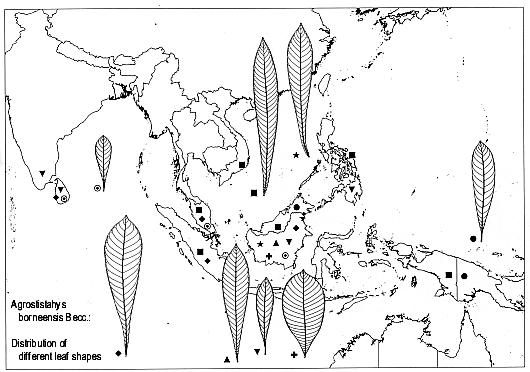


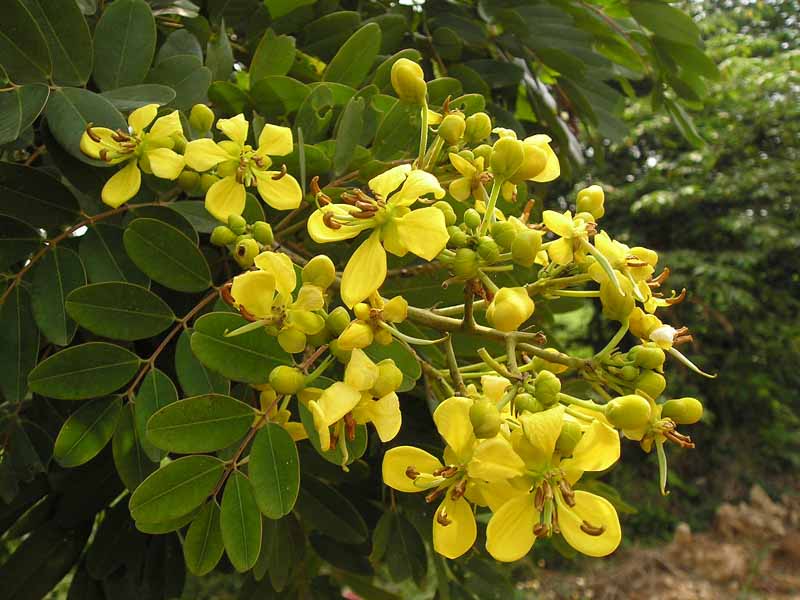

_in_Narsapur_forest,_AP_W_IMG_0165.jpg)


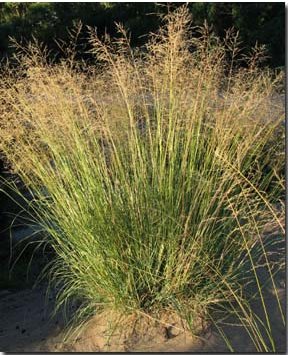


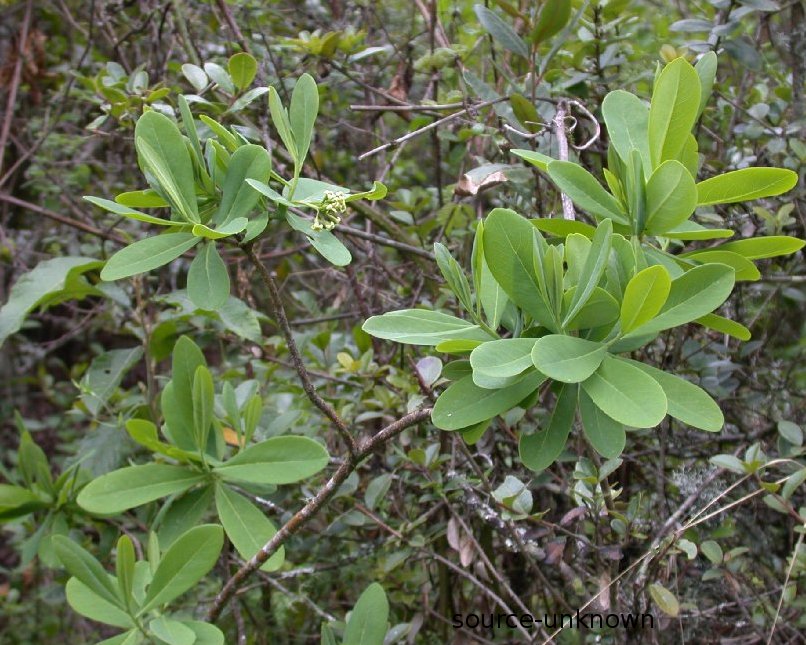

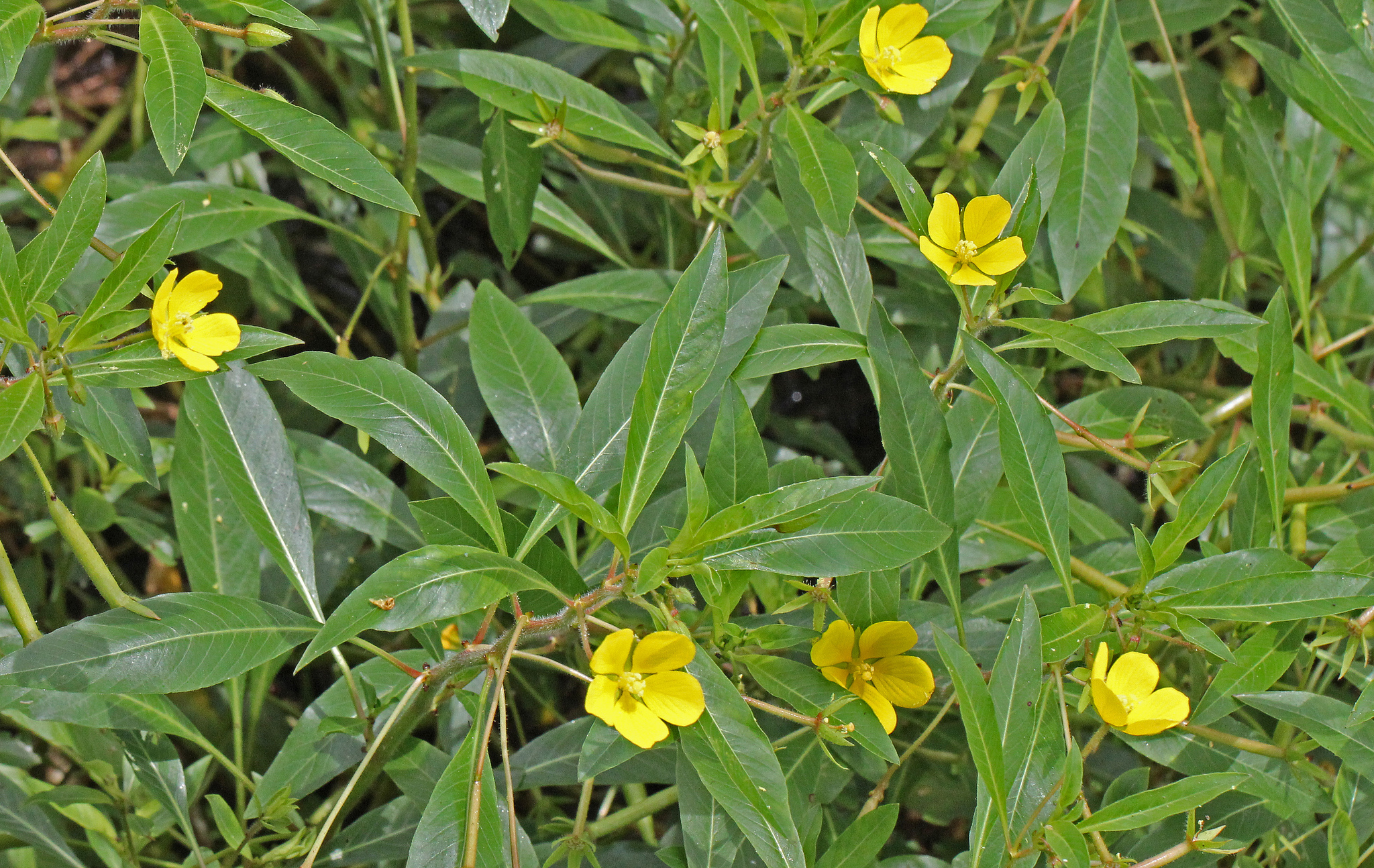

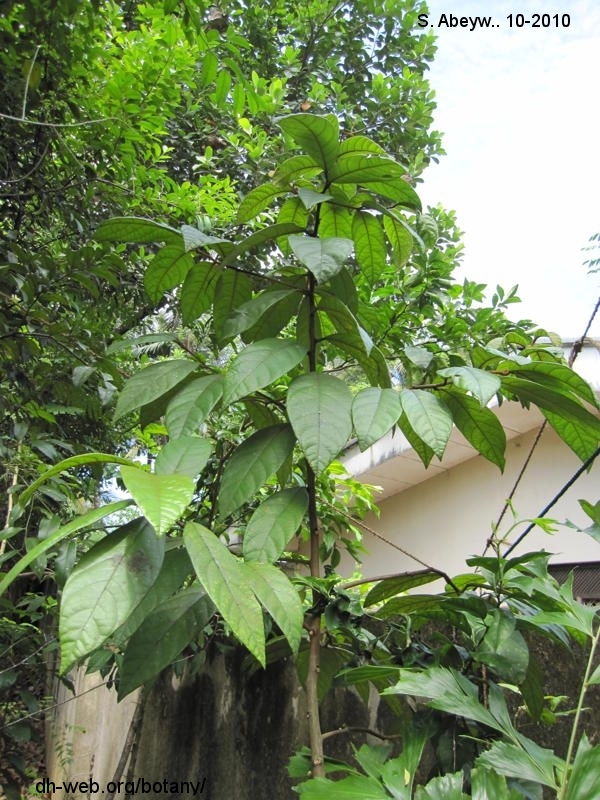

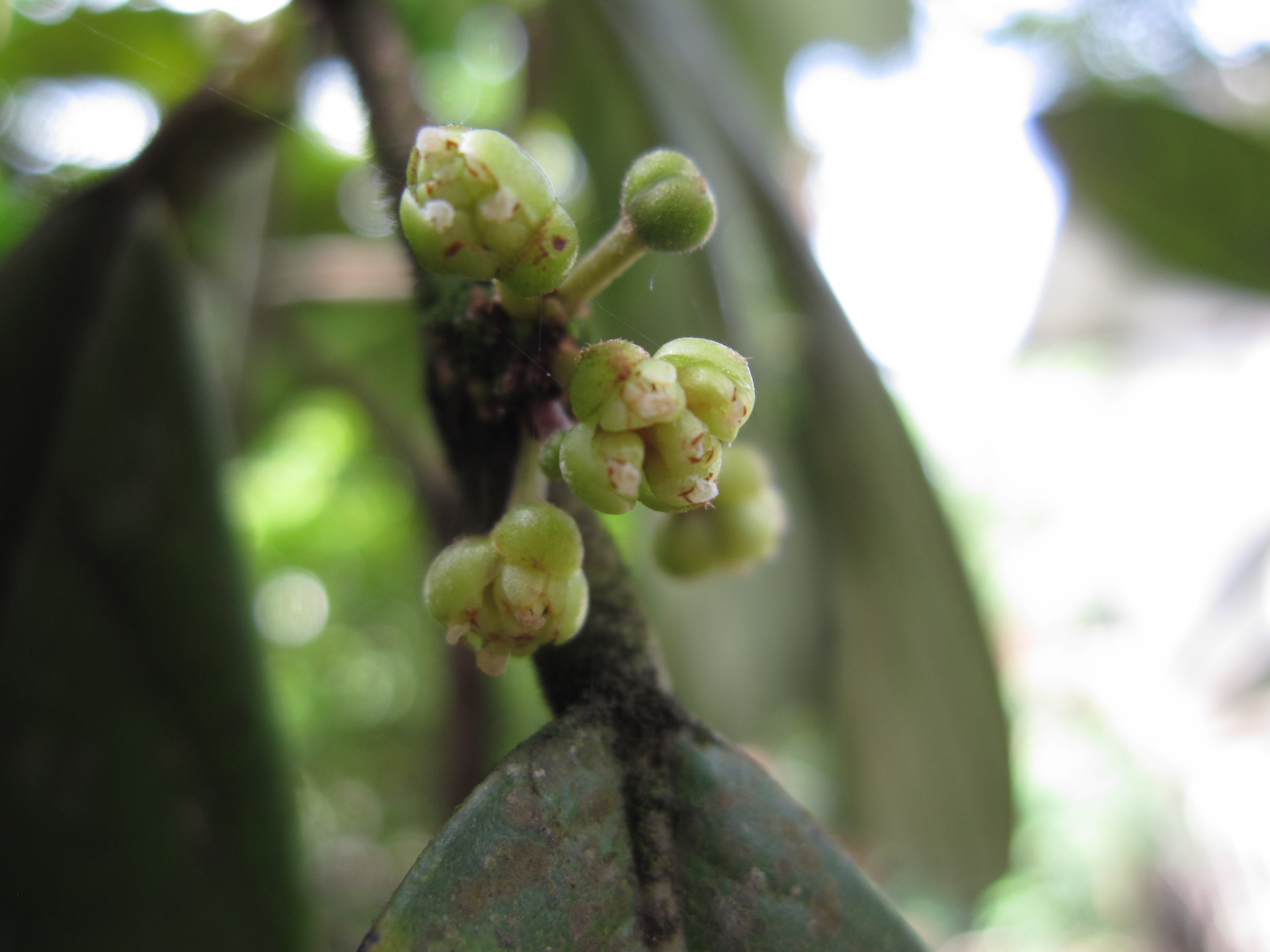
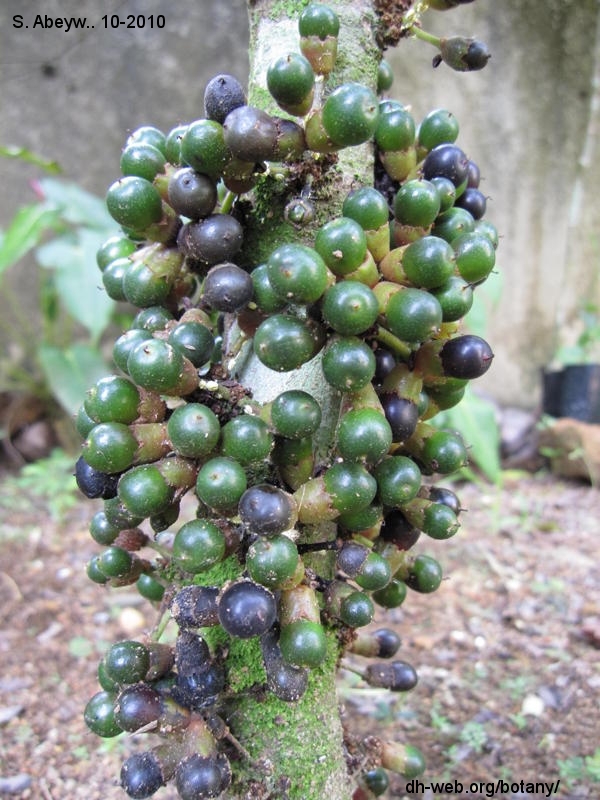
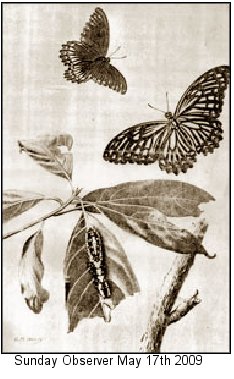
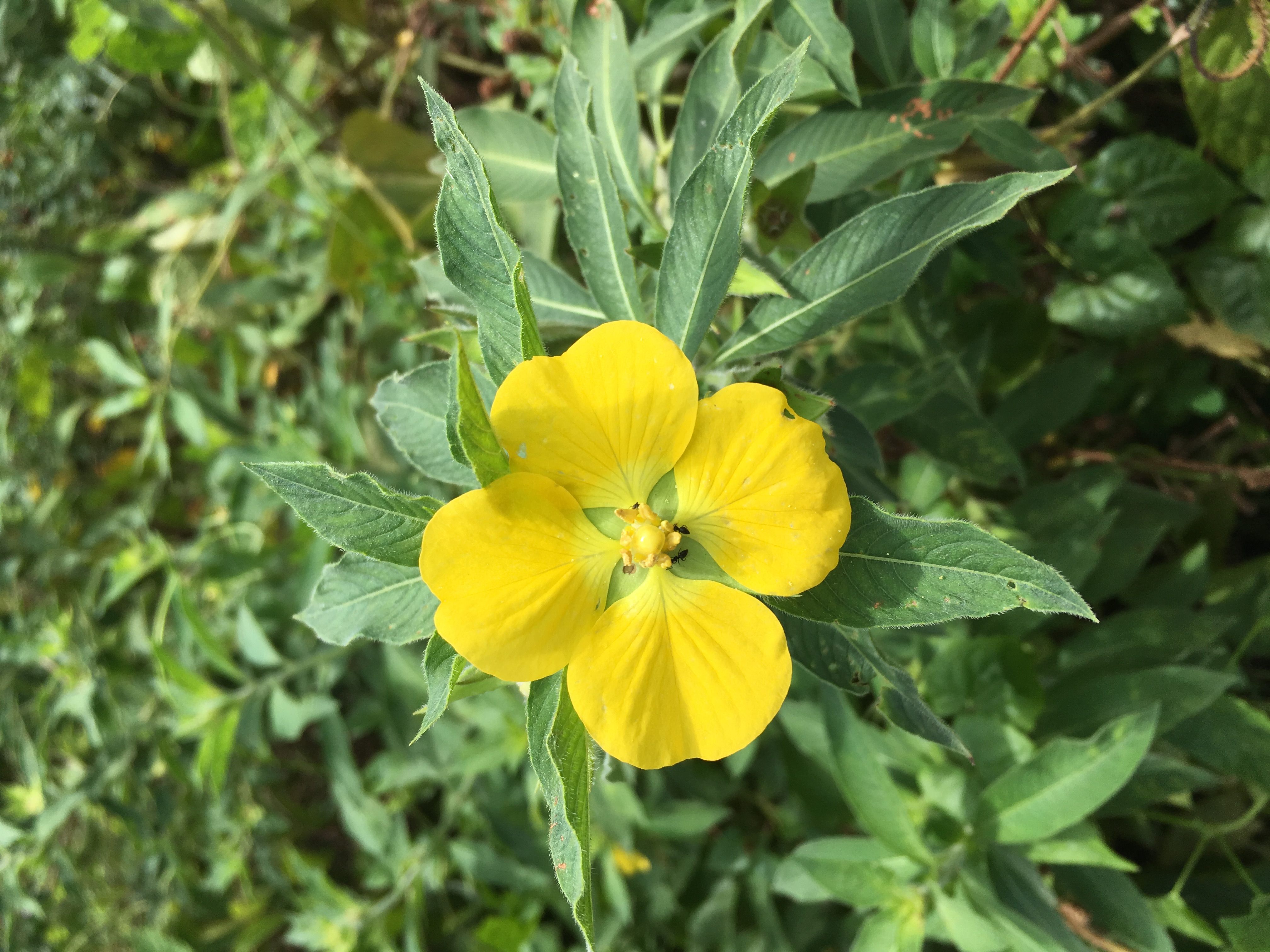

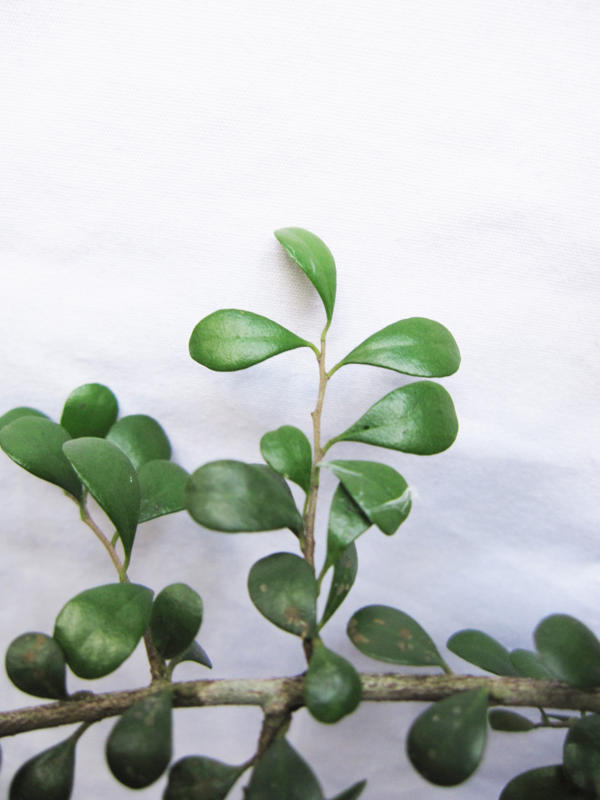
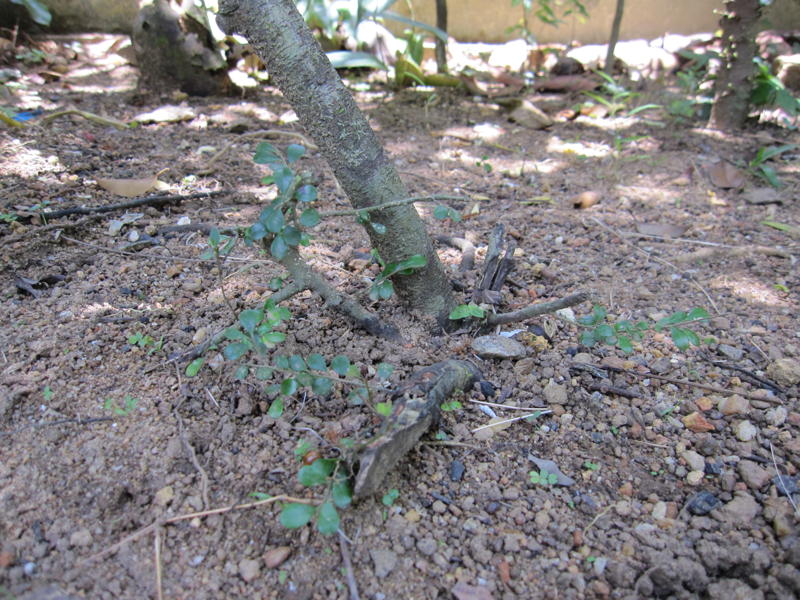
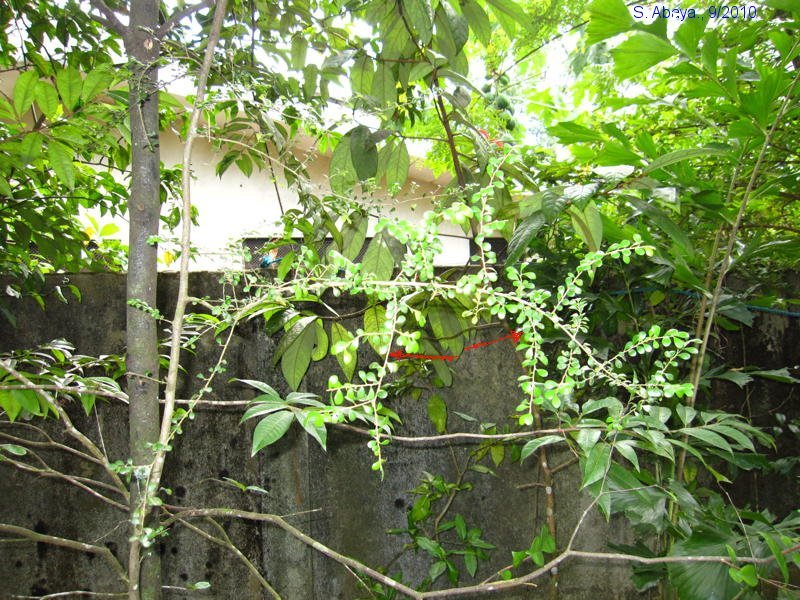
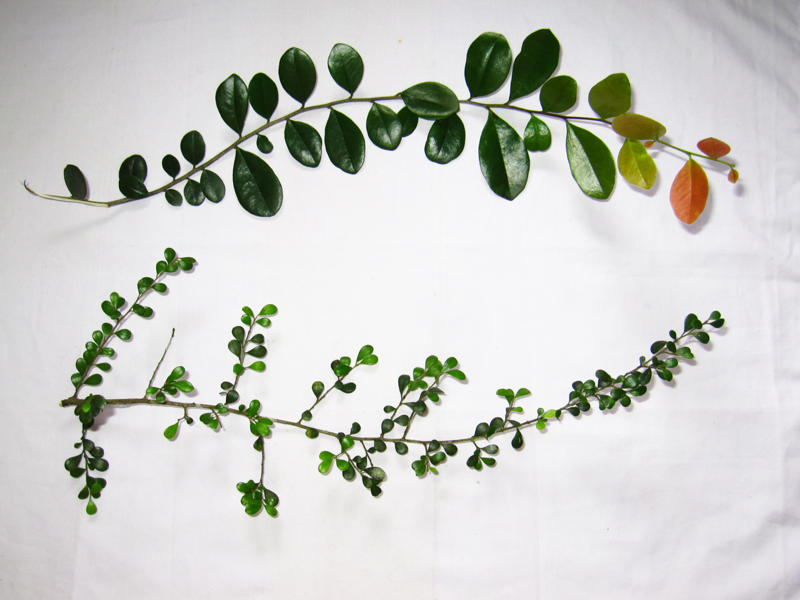
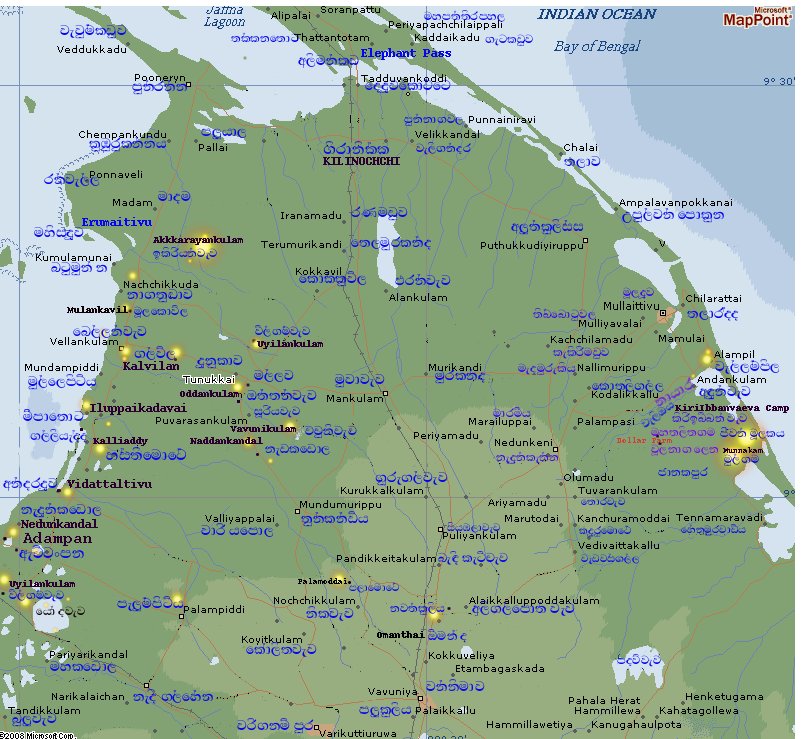
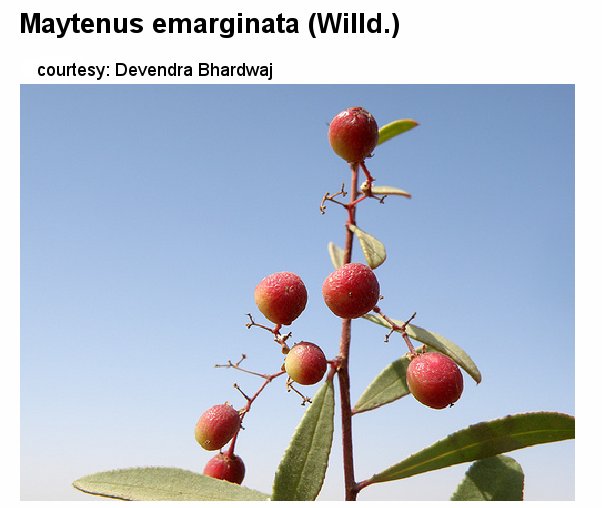


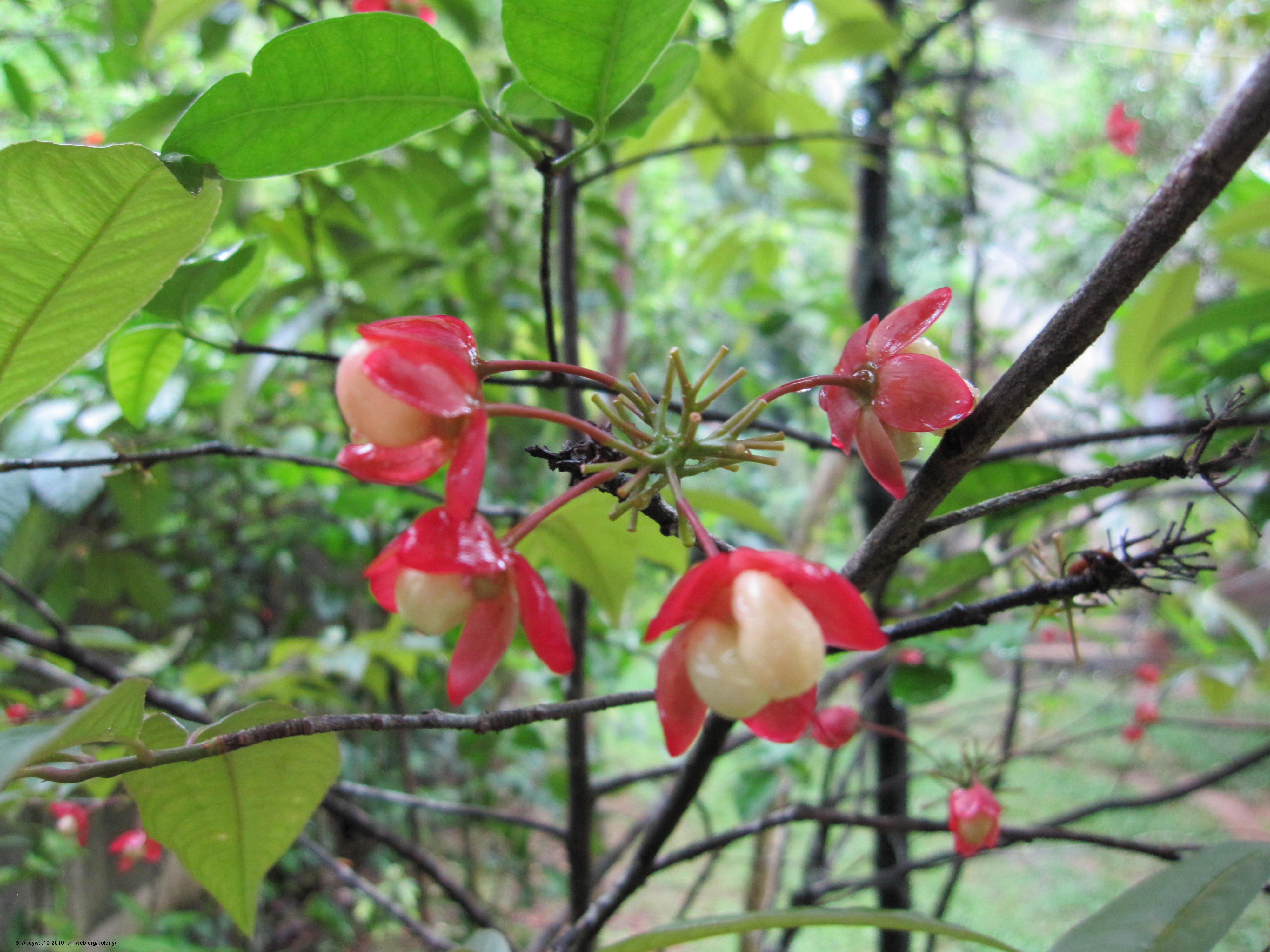
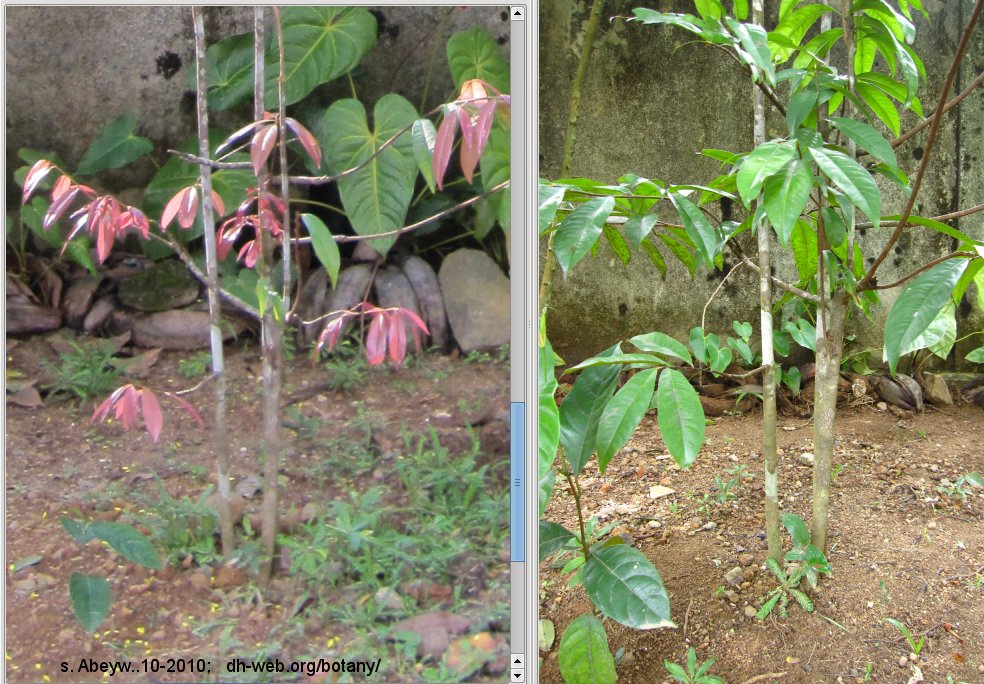


_in_Talakona_forest,_AP_W_IMG_8317.jpg)


